


Every merchant running a custom apparel store eventually faces the same question – how long does it take to print a shirt? It depends on the printing method, order size, design complexity, and whether you use a local printer or a print-on-demand (POD) platform.
This guide breaks down production timelines for every major method so you can plan ahead and meet tight deadlines without guesswork.
Printing speed depends on the technology involved. Here are the typical figures per method.
For POD orders routed through a platform like Printify, production time – from order placement to shipment – typically averages 48 to 72 hours. Shipping adds time on top, depending on the destination and whether you select standard or expedited options.
| Printing method | Setup time | Print time per unit | Best for |
| Direct-to-garment (DTG) | 15-30 min (pretreatment) | 2-3 min | Small batches, complex designs, multi-color prints |
| Direct-to-film (DTF) | 30-60 min (film printing + curing) | 30-60 sec (press) | Small details, dark garments, mixed fabrics |
| Sublimation | Minimal (digital file) | 45-60 sec | All-over print, polyester garments |
| Heat press | 5-15 min (weeding) | 15-30 sec | Urgent orders, simple designs, short runs |
| Screen printing | 2-5 hours (screen setup) | 10-20 sec | Bulk orders, simple designs, low per-unit cost at scale |
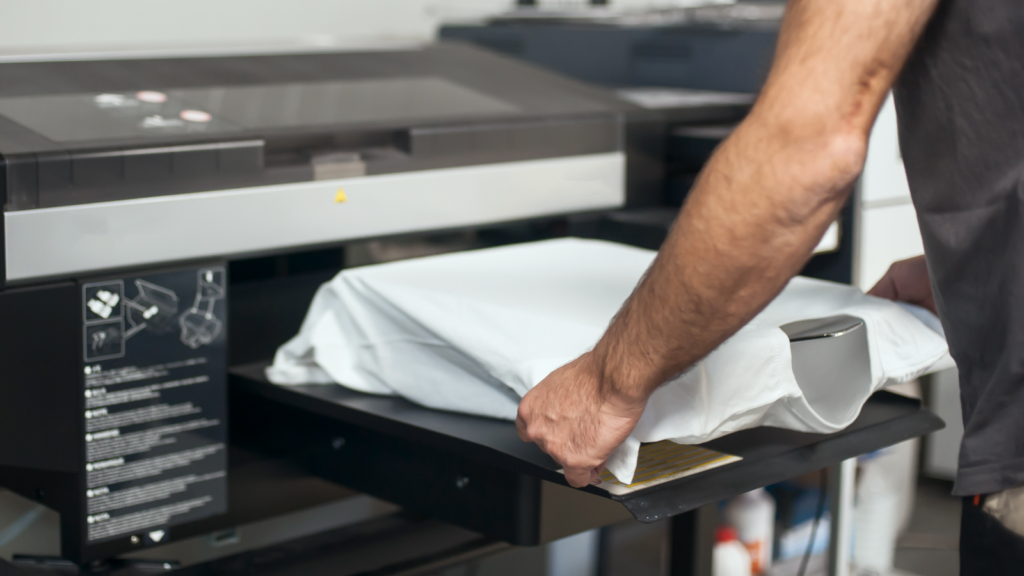
A DTG printer operates like a large-format inkjet – it sprays water-based inks directly onto a cotton garment positioned on a platen. The process supports complex designs and photographic detail without per-color screen setup costs.
For a 24-shirt order, total hands-on production time runs roughly 90-120 minutes, plus any queue time at the facility. With a POD service, this translates to a 48-72 hour turnaround time before shipping.
DTG printing suits small batches and custom t-shirts with multi-color prints – designs that would require dozens of screens under traditional screen printing.
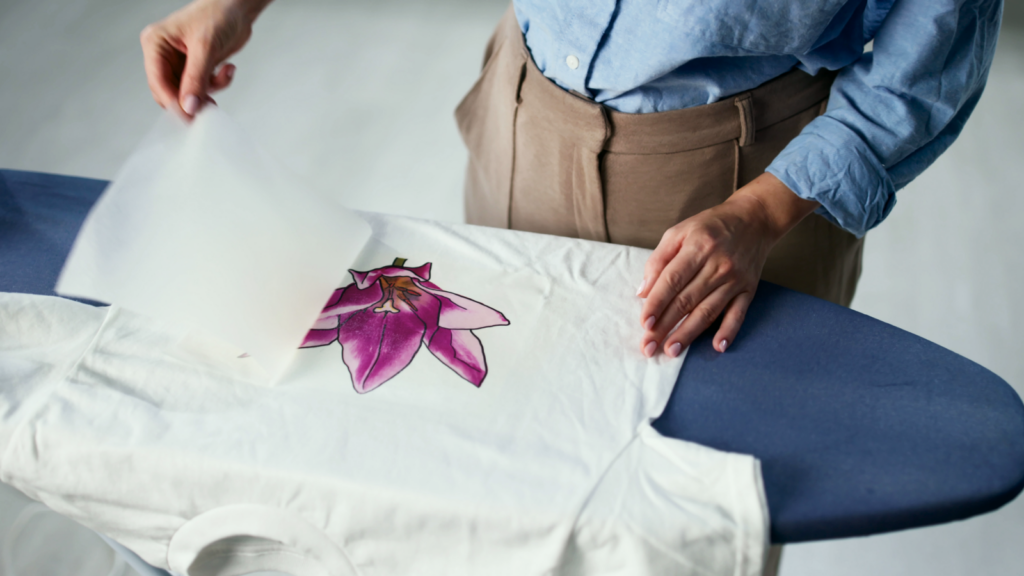
DTF printing transfers a pre-printed film onto the garment using heat and pressure. Unlike DTG, it works on virtually any fabric, including polyester and blends, and skips pretreatment entirely.
DTF excels at photographic detail and multi-color designs on dark garments. The production time per finished shirt – accounting for film transfers – runs one to two minutes.
For small batches of 10 shirts or less, DTF often completes faster than DTG because there are no pretreatment steps necessary.
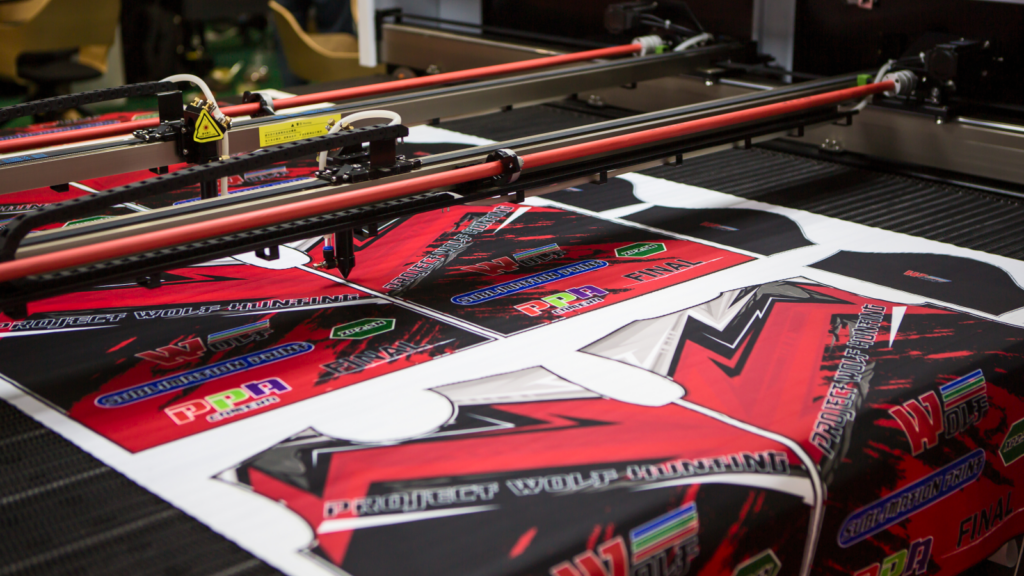
Sublimation converts solid dye into gas under heat, bonding it permanently into polyester fibers. Because the ink becomes part of the fabric, it produces vivid all-over prints (AOP) with no cracking or fading over time.
The constraint with sublimation is the garment type. It bonds only to synthetic fibers, typically with a polyester composition above 80%.
In terms of timelines, an experienced operator can run 40-60 shirts per hour – making sublimation efficient for larger quantities of apparel.
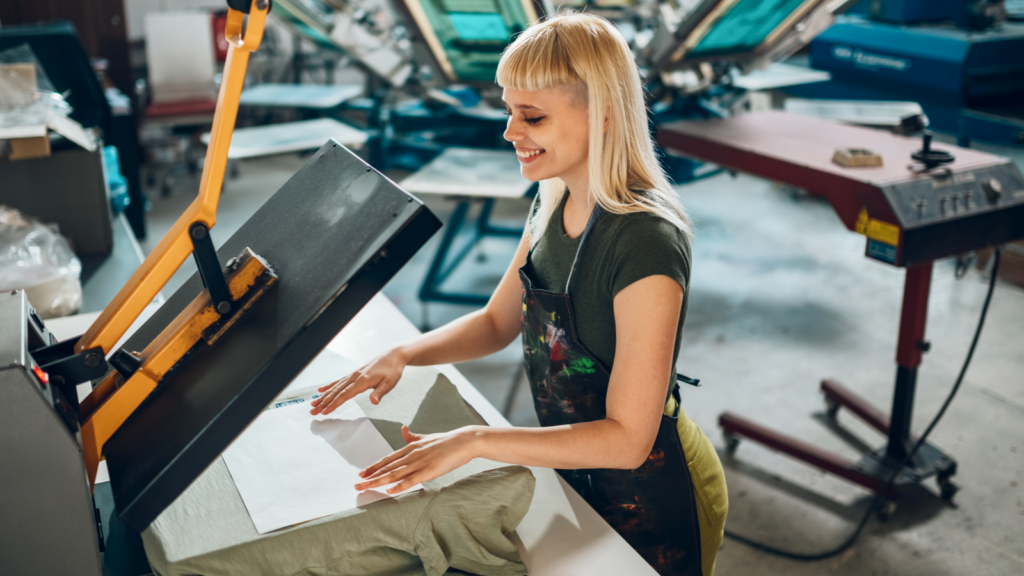
A heat press transfers a pre-made design – vinyl, HTV (heat-transfer vinyl), or a printed transfer sheet – onto a garment using controlled heat and pressure. It suits urgent orders and one-off pieces where the extra time to set up screens would be impractical.
How long does it take to heat-press a shirt for a rush job? Three to five minutes per unit, including weeding. For same-day shirts involving a handful of pieces, a heat press is often the fastest path.
However, the method does not scale efficiently for bulk production – labor costs compound quickly past 50 units.
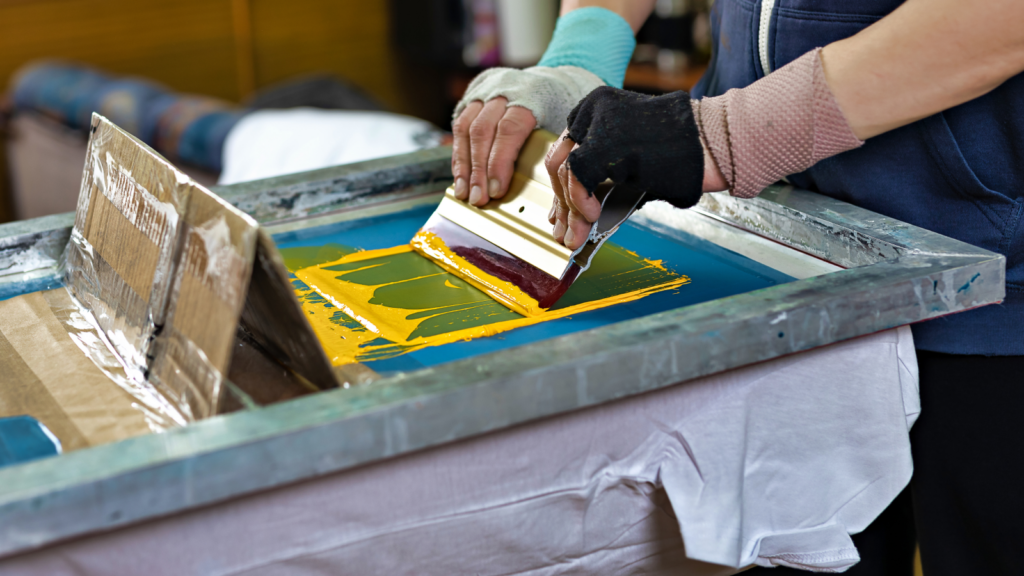
Screen printing works by pushing ink through a mesh screen stretched over a frame, one color at a time. It delivers vivid, durable prints and low per-unit costs at scale, but the upfront setup time is significant.
Combined, total screen setup across all steps takes two to five hours for a multi-color job.
Once the press runs, it can produce 150-400 screen-printed shirts per houron an automatic press. That makes screen printing the fastest per-unit method for bulk orders – but the slowest to get started, which is why lead time matters.
Shops generally require five to 10 business days for standard orders, with rush options available for an additional fee. For a 100-shirt order with a two-color design, screen printing is faster than DTG once setup is complete.
Explore our full breakdown of shirt printing methods to find the right fit for your order size and design.
Raw print speed covers only a fraction of total production time. Multiple upstream and downstream steps add to the timeline between design submission and delivery.
As covered above, each method carries a different setup time, actual printing speed, and drying time. Choosing the wrong printing method for your order size, design style, and fabric adds unnecessary days to the timeline.
DTG printing on dark cotton requires a pretreatment solution before printing, followed by heat drying – typically 15-30 minutes per batch. Skipping or rushing pretreatment can result in visible ink adhesion issues.
Similarly, screen-printed shirts require full conveyor drying before folding. Stacking undercured shirts causes ink transfer between garments.
A printer running at full capacity in December – peak holiday season – may carry a five-to-seven-day production queue. The same facility in February may produce your order the same day.
Planning ahead reduces this variable. For time-sensitive campaigns, ask vendors about their current lead time before placing an order rather than assuming standard timelines apply.
Artwork approval adds time when design files arrive in the wrong format, resolution, or color mode. Most screen printing shops require vector files for multi-color prints – low-resolution raster artwork may need to be redrawn or converted before printing.
Complex designs with gradients or photographic elements need additional review for DTG to ensure the pretreatment profile matches the garment color.
Submitting print-ready design files in the right specs – 300 DPI, correct color profile, proper bleed – eliminates this delay.
Check out our must-read design guide before sending your shirts to print.
Many garment industry facilities run a post-print quality check before packing. This includes inspecting ink coverage, design accuracy on multi-color prints, and drying completeness.
Rush orders sometimes skip secondary finishing steps, like individual poly-bagging or folding, which can reduce production time by 20-30 minutes per 100 units.
If the specific garment type you ordered is out of stock at the print facility, the provider must source blanks from a wholesale supplier before production begins.
Popular unisex t-shirt styles in standard sizes rarely go out of stock. But specialty garment types, limited colorways, and extended sizes (4XL and above) carry a higher out-of-stock risk.
With Printify, we route orders to providers with in-stock inventory, saving you time and preventing lost sales.
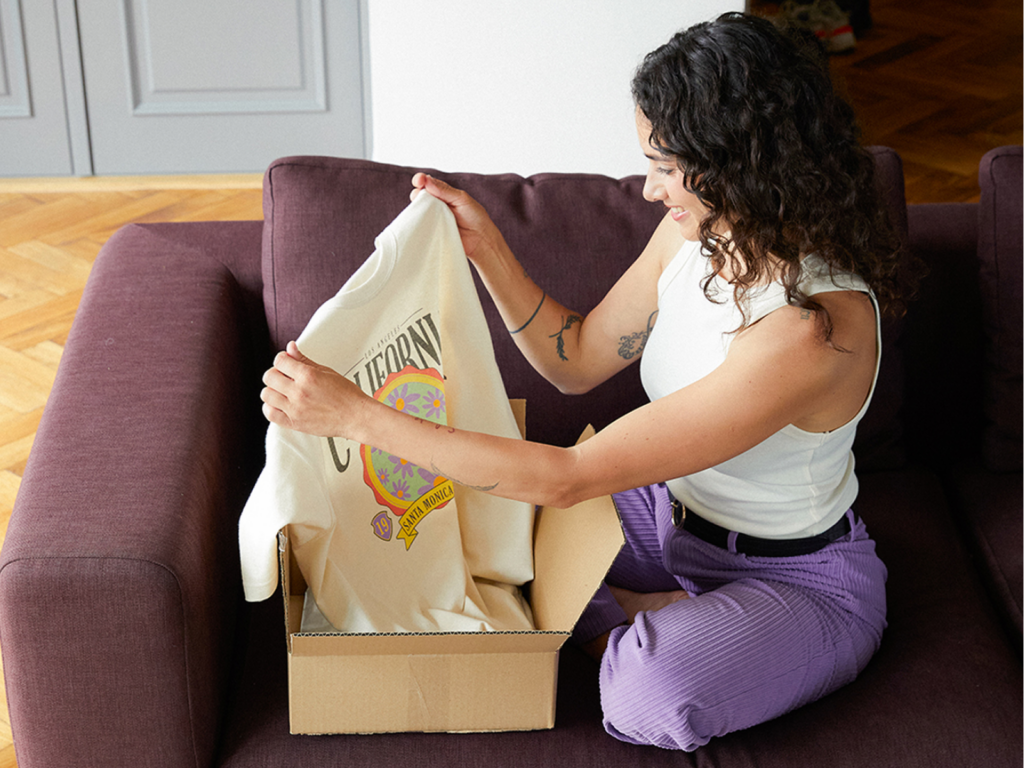
Printify connects merchants to a global network of Print Providers, each with listed production times visible before you publish a product.
Most DTG and DTF providers on our platform carry a 48-72 hour production time, with orders shipping directly to customers – no inventory for you to manage, no bulk production risk.
For those selling custom t-shirts on demand, this model eliminates the setup time, minimum order quantities, and lead-time negotiations that come with traditional screen-printing shops. You submit your design file once, and we handle artwork approval, production, and international shipping automatically.
Learn more about Printify’s production timelines.
Same-day shirts are possible with a local heat press or DTF shop that carries blank stock on-site. A single shirt takes three to five minutes to produce via heat press, but most shops reserve same-day slots for walk-in or pre-approved rush orders.
Screen-printing a shirt in one hour is not realistic, as screen setup alone takes at least two hours. For Print on Demand orders, 48-72 hours is the standard production time.
Yes, particularly for DTG and screen printing. A full-chest DTG print covering a larger area takes 30-60 seconds longer per shirt than a small left-chest logo.
For screen printing, design complexity matters more than physical size. A large, simple design with one color prints faster than a small design with six colors, because each additional color requires another screen and another pass on the press. Small details that require fine mesh counts also increase setup time.
Yes, once setup completes. Screen printing on an automatic press can produce 100 shirts in roughly 30-40 minutes of actual printing, while DTG takes three to five hours for the same quantity (two to three minutes per shirt, plus pretreatment).
The break-even point where screen printing becomes faster than DTG in total time – including setup – sits around 24-48 units, depending on the color count and facility.
For bulk orders above 72 units, screen printing delivers a lower per-unit cost and shorter production time after the initial screen setup.
Printing speed depends on the technology, order size, design complexity, and production queue.
Planning ahead, submitting print-ready design files, and selecting a garment type with confirmed stock availability keeps your production timeline on track and your shipments on schedule.
The post How long does it take to print a shirt: The 2026 definitive guide to production speed appeared first on Printify.





