

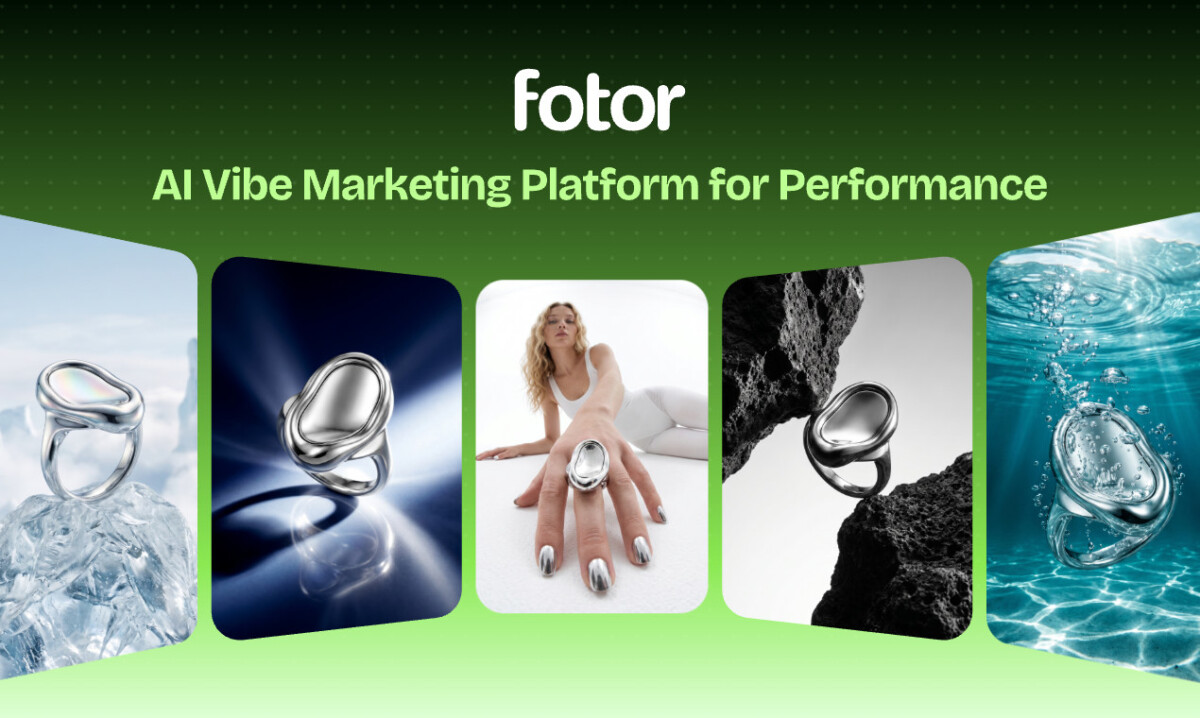
Fotor’s AI Vibe Marketing Platform helps DTC brands turn one aesthetic direction into product photos and growth creative in a single workflow. It fits small and mid-size Shopify teams that need visual volume and speed; brands with a dedicated creative team may still prefer specialist best-of-breed tools.
Shoppers decide in seconds whether a product is worth a closer look, and they make that call on the visual long before they read a word of the description.
For Direct-to-Consumer brands, the path to profitable growth has become more demanding. Customer acquisition costs remain high, ecommerce channels are crowded, and shoppers often decide within seconds whether a product feels worth exploring. In this environment, product imagery is no longer just a creative asset. It is part of the buying experience itself.
A shopper may first notice a product in a social ad, then visit the product page, compare alternatives, watch a short video, and return later through a retargeting campaign. At each moment, visual presentation influences whether the product feels credible, desirable, and easy to understand. This is why more DTC teams are looking beyond one-off image generation and toward AI-powered visual workflows that can support both product presentation and growth marketing.
Fotor is entering this conversation with the Fotor AI Vibe Marketing Platform, a visual-first workflow designed to turn ideas into product visuals, growth content, and high-performance campaigns. Rather than treating visuals as isolated outputs, Fotor frames them as part of a broader creative journey: the brand sets the aesthetic intent, and AI helps turn that intent into polished content for the channels where customers discover and evaluate products.
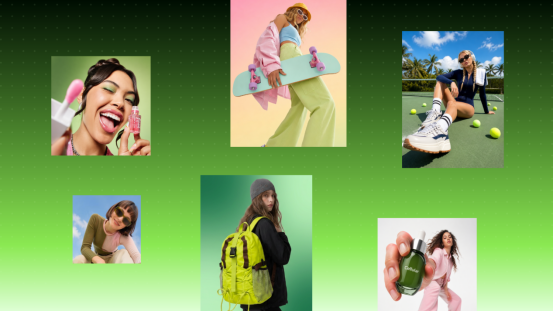
Vibe Marketing is useful for DTC brands because it starts with the feeling a brand wants to create. The question is not only, “What image should we make?” It is also, “What should this product feel like when a shopper first sees it?” A skincare brand may want to feel clean, clinical, and calm. A fashion label may want to feel expressive, editorial, and aspirational. A home goods brand may want to communicate warmth, texture, and everyday comfort.
For DTC operators, this matters because ecommerce growth depends on many small visual moments. A product image has to create trust. A lifestyle scene has to help customers imagine use. A social ad has to stop the scroll. A short video has to explain value quickly. When these assets are built around a clear aesthetic direction, the buying journey feels easier to follow and the product becomes more memorable.
This is where Fotor’s Vibe Marketing approach becomes especially relevant. It encourages brands to think of product photos, ad creatives, lifestyle visuals, short videos, and campaign content as connected parts of one conversion funnel. From first impression to checkout, the goal is to turn product appeal into visual momentum.
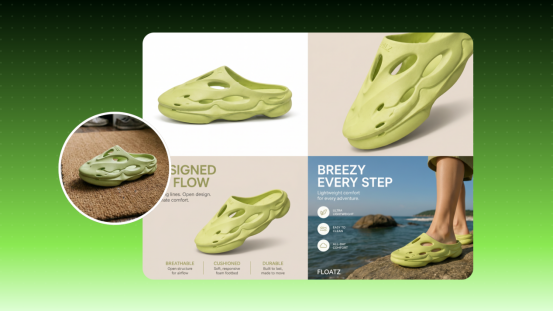
Fotor supports this workflow through two major creative hubs: Product Visuals and Growth Visuals. Product Visuals focus on the foundation of ecommerce presentation. According to Fotor, Product Visuals can turn raw product photos into studio-quality shots and help brands create stronger product assets in minutes. For DTC teams managing new launches, seasonal drops, or large SKU catalogs, this can make everyday visual production less slow and less dependent on traditional production cycles.
This foundation is important because product visuals often shape the first impression of quality. A cleaner product image, a more intentional scene, or a better composed listing visual can help a shopper understand the product more quickly. The point is not to make every image look identical. The point is to help each product show up with the level of polish and clarity that the customer expects.
The platform’s Product Visuals capabilities include tools such as Product Image Editor, Smart Listing, Virtual Model, Video Try-On, Batch Editor, and Product Video, as described in Fotor’s launch announcement. These functions are especially useful because they map to practical ecommerce needs. A fashion brand may need virtual model presentation for new apparel. A beauty brand may need refined product staging. A seller with many SKUs may need faster product updates. A brand preparing a launch may need a product image that can also become the basis for campaign content.
Growth Visuals extend the same workflow into performance marketing. Fotor’s Vibe Marketing page lists AI Marketing Video, Link to Video Ad, AI UGC Avatar, and AI Brand Kit as part of Growth Visuals. For channels such as TikTok, Instagram, Meta, and other scroll-driven environments, these tools can help DTC teams move from static product presentation to short-form content, product storytelling, and campaign variations.
The value is practical. A product URL can become a starting point for a video ad. A product image can support a launch post or a retargeting creative. A brand’s visual cues can guide future social assets. This does not remove the need for strategy, taste, or human judgment. It reduces the production friction between an idea and an asset that can be tested in the market.
Modern ecommerce has made visual content a continuous operating requirement. DTC brands do not only need one hero product image. They need product page visuals, marketplace assets, lifestyle scenes, paid social creatives, UGC-style clips, retargeting videos, and campaign variants. The challenge is not simply producing more content. It is producing content that feels intentional, useful, and connected to the way customers actually shop.
For smaller teams, this pressure can be especially difficult. They may not have a full studio, an in-house video team, or the budget for repeated creative production. Yet they still need to publish quickly, test new angles, and create visuals that make the product feel trustworthy. AI-assisted workflows can help close that gap by giving teams a faster way to move from product material to publishable content.
Fotor’s positioning speaks directly to this need. The company describes the AI Vibe Marketing Platform as a complete visual workflow for real business impact, serving 800 million users globally and powering more than 3 million visual creations daily. For ecommerce teams, the significance is not scale for its own sake. It is the possibility of making professional visual production more accessible to smaller brands and faster-moving teams.
The strongest DTC creative usually begins with a clear feeling. Before a customer reads a product description, they form an impression from color, lighting, composition, texture, model context, and motion. Those details shape whether the product appears trustworthy, aspirational, playful, refined, practical, or worth the price.
Fotor’s Vibe Marketing framework makes that aesthetic intent the starting point. A skincare brand might create product visuals that feel fresh, calm, and ingredient-led, then extend that mood into short educational videos and clean social ads. A fashion brand might begin with an editorial direction, then use virtual model visuals, campaign images, and video formats to communicate style and aspiration. A home goods seller might use texture-rich product scenes and warm short videos to help shoppers imagine the product in their own space.
In each case, AI is most useful when it supports a defined direction. It can help create variations, adapt formats, and speed up production, but the brand still decides what the product should feel like and why that feeling matters to the customer.
The future of ecommerce creative is not only about generating more images. It is about building a smoother path from product appeal to business impact. Brands need visuals that support discovery, consideration, trust, and conversion. They also need workflows that help teams move quickly without turning every asset into a separate production project.
This is the practical promise of the Fotor AI Vibe Marketing Platform. Fotor defines Vibe Marketing as a visual-driven approach where you bring the idea, and AI scales it into on-brand, studio-quality visual content that actually sells—across every channel, instantly.
It connects product presentation with growth content, bringing Product Visuals, Growth Visuals, AI Brand Kit, video ad creation, virtual model presentation, and product-focused editing into one visual-first workflow.
In a market where attention is limited and visual trust is formed quickly, the brands that grow will not simply be the brands with the most content. They will be the brands that understand what their products should make customers feel and can turn that feeling into polished, useful assets across the buying journey. Fotor’s Vibe Marketing approach offers DTC teams a more practical way to do that: set the aesthetic intent, create with speed, and turn product appeal into growth.
Yes, AI product photography is good enough for most Shopify stores today, provided you start from a decent raw photo and review every output before publishing. Background replacement, studio-style cleanup, and lifestyle scene generation are reliable enough that solo sellers now produce visuals that previously required a budget. The weak spots are still fine detail and physical accuracy: fabric texture, intricate logos, reflective surfaces, and exact product geometry can drift, which matters more for high-priced or detail-driven items. The practical rule is to use AI for volume and speed, then human-check anything where a misleading image could drive returns. Test on one product line and compare conversion and return rates before trusting it across a full catalog.
Vibe Marketing is a visual workflow that starts from the feeling a brand wants to create and carries that aesthetic direction across every asset, rather than generating disconnected one-off images. Regular AI image generation answers “make me this image.” Vibe Marketing answers “what should this product feel like, and how does that mood show up on the product page, the ad, and the retargeting clip.” The practical difference is consistency: instead of a different look on every channel, one defined direction threads through product shots, lifestyle scenes, and short-form video. It still depends on your taste and strategy to set the direction; the approach just reduces the friction of producing on-brand variations once that direction exists.
A small DTC brand should usually start with an all-in-one platform and graduate to specialist tools only where output quality clearly justifies it. All-in-one platforms like Fotor or Canva cover product photos, ad creative, and video in one subscription and one workflow, which is ideal when a lean team needs breadth and speed. Specialist tools (Photoroom for product photos, Creatify for video ads, Botika for virtual models) go deeper on a single job and tend to win on final quality for that job. The honest test is whether a specific task is core enough to your conversion that best-in-class output pays for the extra tool and the extra workflow. If it is not, breadth wins.
AI visuals can improve conversion, not just save time, but the lift comes from better and more relevant images, not from AI itself. Research consistently links higher-quality product imagery to higher purchase intent and lower returns, with the biggest effects on higher-priced and higher-uncertainty purchases. AI helps by letting you produce more variants, more lifestyle context, and more channel-specific formats than you could afford manually, which gives you more to test. The gain shows up when you actually test: run new visuals against a control and watch conversion, click-through, and return rates. If AI just lets you publish more mediocre images faster, it saves time without moving the number. Treat it as a way to test your way to better, not as an automatic win.
Start with a single product line, generate a focused set of new images and one or two ad variants, and measure before expanding. Re-shooting an entire catalog at once is the expensive mistake; a one-line pilot is cheap and fast. Pick a product where visuals plausibly limit conversion, create the new assets, and compare conversion, click-through, and return rates against your current visuals over a few weeks. Define who captures raw shots, who runs them through the tool, and who approves brand consistency, so the process scales cleanly if it works. If the pilot lifts the metrics that matter, roll it to the next line. If it does not, you have risked an afternoon instead of a quarter.





