




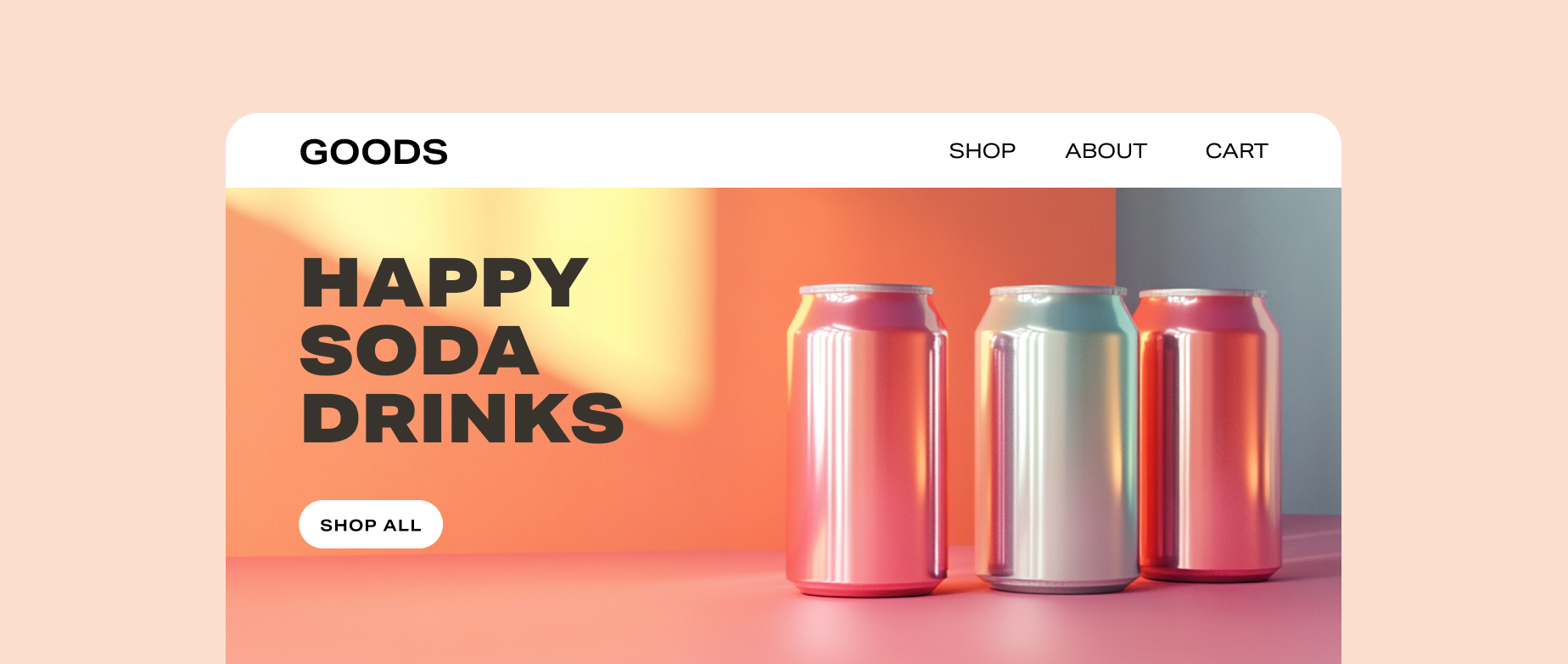
A website landing page is like the cover of a book: The title and graphics must instantly persuade readers to pick it up off the shelf and turn the page (or, in this case, scroll down the page). But you need more than appealing landing page design to keep someone engaged and clicking—especially on mobile devices, where user attention spans are fleeting.
For marketers and small business owners, landing page statistics can offer insight into the most effective elements and strategies for encouraging users to interact with your landing page—like load speed and data capture forms. Read on to learn more about landing page optimization and how the latest data can help you create high-converting landing pages that grab attention and compel visitors to take action.
What is a landing page?
A landing page is a type of web page designed to capture a user’s attention and drive a specific action, such as signing up for email newsletters, downloading marketing materials, or purchasing a product. Although other pages on a website—such as a homepage—might contain multiple offers, marketing materials, or navigation links, a landing page focuses on a single offer for customers to boost conversions.
Types of landing pages include:
-
Lead generation landing page. A lead generation landing page, also known as a lead capture page or a squeeze page, encourages prospective customers to complete a specific data capture form. These form fields typically request information like email addresses, phone numbers, or demographic data.
-
Click-through landing page. Click-through landing pages include call-to-action (CTA) buttons without data capture form fields. The goal is to move visitors into the next step of a conversion process, rather than to gather information.
-
Product landing page. A product landing page highlights the key features or benefits of the product, educating consumers and directly driving inquiries or purchases.
-
Dynamic landing pages. Dynamic landing pages automatically adjust features such as headlines, visual content, and CTAs based on user behavior or audience segments.
Common elements of top landing pages
Every top landing page shares similar qualities: concise messaging, purposeful visuals, and user-centric design. High-converting landing pages bring these qualities to life through key elements, such as:
-
A clear headline and subheading. Headlines should pique a user’s curiosity and encourage them to scroll.
-
Concise copy. Body copy provides essential information about your brand, product, or services.
-
Visual content. Photos, video content, and clickable graphics can both capture the user’s attention and convey information.
-
Responsive design. Landing pages should function across mobile, tablet, and desktop devices.
-
Social proof. Customer reviews or testimonials build user trust.
-
Artificial intelligence.AI-powered tools can personalize and test various landing page elements.
-
Call-to-action button. A prominent CTA clearly tells the user what to do next.
20 landing page statistics
- General landing page statistics
- Promotion channel statistics
- Conversion rate optimization statistics
- Copy and content statistics
- User experience and performance statistics
Landing page statistics reveal the impact that a strategically crafted landing page can have on the success of your marketing campaigns. From user behavior to conversion insights, the data highlights what separates average pages from high-converting landing pages that consistently turn global website traffic into customers.
General landing page statistics
1. Bounce rates are high
Roughly 48% of visitors do not engage with marketing collateral before leaving a primary landing page. That’s why it’s important to consider the whole customer journey when creating your page. Keep messaging consistent between external traffic channels (such as ads or emails) and your landing page, and communicate value quickly and clearly.
2. Marketing automation is gaining traction
According to a February 2024 survey by Statista, 27% of marketing decision-makers reported using marketing automation—technology that streamlines, personalizes, and measures marketing activities without manual labor—for landing pages. Automation can scale landing page creation, personalize elements, test variations, and track performance—reducing time spent on repetitive tasks, so your team can focus on more strategic creative decisions.
3. The average conversion rate is single digits
Across all industries, the median conversion rate from visits to a landing page is 6.6%. Another study from HubSpot found that nearly two out of three marketers report that their average landing page conversion rate is less than 10%. You can use the average landing page conversion rates in your industry for benchmarking conversion rate optimization goals.
Promotion channel statistics
4. Email converts best
Users who arrive on a landing page through email marketing have a conversion rate of 19.3%, making it the most effective channel for qualified web traffic. In fact, it converts 60% more visitors than paid social, 77% more than paid search, and 370% more than display ads.
5. Social media drives most traffic
While marketers promote landing pages across multiple channels, the largest percentage (51.5%) uses social media to drive users to landing pages.
6. Pay-to-play success varies
Paid media helps you reach new audiences across platforms, but not every channel is created equal. For example, paid social media posts convert 10% better than paid search results.
7. Google rules search
Google has become synonymous with searching for something on the web, so it might be no surprise that it’s the most effective source for paid search. Google paid search ads convert 95% better than Yahoo search ads and 41% better than Bing search ads.
Conversion rate optimization statistics
8. A/B testing delivers
A/B testing, a quantitative design research method that tests two or more versions of a design with users to identify a top performer, can increase conversions by up to 30% on landing pages.
9. Less is more
Multiple offers or links on a landing page can overwhelm visitors and negatively impact conversions. Simplifying the user experience makes it easier for users to take action. In fact, simply removing the navigation bar can increase conversions up to 336%.
10. Simple forms are most effective
Omnisend research found that most forms on landing pages only include one field (typically email address), and conversion rates drop significantly if there are more than three fields.
11. Gamification drives sign-ups
According to Omnisend’s sign-up form statistics, gamified sign-up forms (such as a spin-to-win wheel feature) excel on landing pages, achieving a sign-up rate of 11% and outperforming the 4% success rate of pop-ups.
12. Personalization enhances results
More than 95% of marketers report that personalization efforts have increased sales. You can personalize a landing page in many ways, from aligning landing page copy with the traffic source’s messaging or dynamically adjusting content based on user data, such as location or purchase history. For example, personalized calls-to-action perform 202% better than general CTAs.
Copy and content statistics
13. The shorter, the better
Lengthy copy can quickly bore or confuse visitors. Landing pages with fewer than 100 words convert 50% better than those with more than 500 words.
14. A 5th-grade reading level performs best
The reading difficulty of landing page copy inversely correlates with conversion rates. The highest landing page conversion rate, 11.1%, was achieved on landing pages written at the fifth- to seventh-grade reading level. In contrast, the lowest conversion rate, 5.3%, was observed on landing pages written at the college/university reading level.
15. Click-through pages are most effective
While 62.6% of landing pages use forms to collect customer information, click-through landing pages—which encourage visitors to click a CTA button that moves them to a different page—perform best for most industries.
16. Social proof is underrated
Testimonials, reviews, or user-generated content can increase conversion by building credibility and trust with customers—and yet, nearly 77% of marketers fail to include social proof on landing pages.
17. Video boosts conversion
Nearly 40% of marketers credited video as the number one element that positively impacted landing page conversion.
User experience and performance statistics
18. Mobile rules
Since most people are exploring the web on mobile devices, a mobile-friendly landing page is a must. In fact, depending on your industry, you might see up to seven times more visitors from mobile than desktop.
19. Desktop still matters
While mobile landing page visits drive 83% of traffic, desktop visitors are often warmer leads: Desktop landing page visits convert 8% better than mobile, which is why you need landing pages that shine across multiple devices.
20. Speed drives conversions
Attention spans shrank from 2.5 minutes in 2004 to 47 seconds in 2024—and your landing page needs to keep up to convert visitors. Landing pages that load within one second convert at three times the rate of landing pages that take five seconds to load.
Landing page statistics FAQ
What is the success rate of landing pages?
Across all industries, the median conversion rate from visits to a landing page is 6.6%, while top-performing landing pages can achieve conversion rates exceeding 10%. Success hinges on several key factors, including how quickly a page captures attention and how clearly it communicates the primary goal.
What are useful analytics to measure for landing pages?
Some of the most effective ways to measure landing page performance include total page views, bounce rate, average time on page, form submissions, page load speed, click-through rate (CTR), and landing page conversion rates. These landing page statistics can reveal how well your page can grab attention, generate leads, and drive conversions while identifying several factors that hinder your efforts—such as a slow load time, lack of a mobile-friendly design, and limited sources of web traffic.
What is the benchmark for landing page views?
As far as current marketing statistics are concerned, there is no universal benchmark for landing page views, because traffic volume varies significantly by industry, a brand’s audience size, and promotional strategy. Generally, businesses with more landing pages capture a larger share of overall web traffic, helping them reach their target audience more effectively.
