





Quick Decision Framework
- Who This Is For: Founders and operators running Shopify brands or multi-channel ecommerce businesses at $500K GMV and above who are moving money across borders regularly and losing margin to wire fees, FX markups, and banking delays.
- Skip If: You are pre-revenue, processing fewer than 50 orders a month, or operating entirely within a single domestic market with no international supplier or customer relationships.
- Key Benefit: Understand how to replace slow, expensive international bank wires with 24/7 USDT settlement that can cut cross-border transaction costs by 45% or more while eliminating banking hour constraints entirely.
- What You’ll Need: A Web3 wallet like Bitget Wallet, access to a compliant fiat on-ramp gateway, and a basic understanding of how stablecoin networks like Tron or BNB Chain operate. No prior crypto experience required.
- Time to Complete: 8 to 12 minutes to read. 2 to 5 business days to set up a compliant USDT treasury workflow, depending on your jurisdiction and KYB verification requirements.
The phrase “overnight transfer” made sense when global trade moved at the pace of a fax machine. In 2026, it is just a polite way of saying your money is sitting idle while your competitors move theirs in under 60 seconds.
What You’ll Learn
- Why traditional bank wires are structurally incompatible with the speed of modern cross-border ecommerce and supply chain operations.
- How USDT settlement on networks like Tron and BNB Chain works, and why it settles in under 60 seconds regardless of time zone, holiday, or banking jurisdiction.
- What the real cost difference looks like when you compare international wire fees plus FX markups against USDT transfer costs at scale.
- How to evaluate USDT’s reserve backing, peg stability, and audit transparency against the security standards a corporate treasury actually requires.
- How to integrate a USDT liquidity workflow into an existing ecommerce or logistics operation using compliant on-ramp infrastructure.
While traditional banking still dominates corporate finance, there is a growing interest among large corporations in the instant, round-the-clock liquidity of USDT. Managing these assets through platforms like Bitget Wallet is helping businesses, primarily in e-commerce, logistics, and high-risk sectors, explore new ways to manage cross-border cash flow and reduce transaction costs.
Why Corporations are Switching to USDT Liquidity
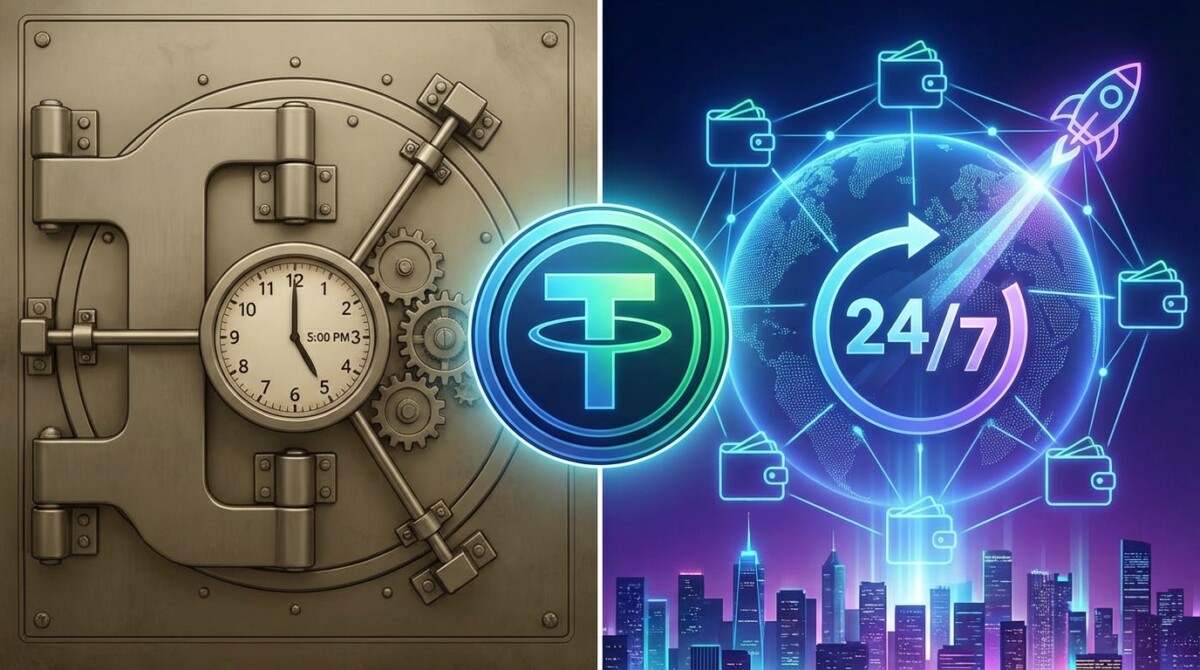
Traditional “overnight” bank transfers are no longer fast enough for the speed of modern global trade. While standard bank transfers can take 1 to 5 business days for ACH or require strict same-day wire cutoffs, USDT offers 24/7 instant settlement.
- Speed: Transactions on networks like Tron or BNB Chain are usually confirmed in under 60 seconds, ensuring that supply chains and international deals are never stalled by financial delays.
- Availability: Global trade never sleeps, but banks do. By using Bitget Wallet, treasury teams can execute high-volume trades during weekends or holidays, bypassing local bank hours entirely.
- Market Dominance: With a circulating supply of about $183.6 billion as of late February 2026, USDT holds 60% to 73% of the stablecoin market share. This deep liquidity ensures that even large-scale corporate moves can be executed with minimal slippage.
Comparing Costs: USDT vs. International Bank Wires
The financial incentive for shifting to stablecoins is significant when looking at high-frequency transfers. International bank wires often involve $15 to $65 in base fees, plus foreign exchange (FX) markups ranging from 0.6% to 1.4%. For a corporation moving millions monthly, these “hidden” costs add up quickly.
In contrast, moving USDT via Bitget Wallet typically costs less than $10 per transfer on low-fee networks, regardless of the transaction size. A recent case study of a logistics firm showed they cut their cross-border settlement costs by 45% simply by moving a portion of their payment flow to USDT.
| Aspect | USDT on Bitget Wallet | Overnight Bank Transfers |
| Availability | 24/7 global | Business hours only |
| Settlement Time | Seconds to minutes | 1-5 business days possible |
| Fees (per $1M) | <$10 | $15-65 sender + FX 0.6-1.4% |
| Volatility Risk | Pegged to $1 (±0.35% deviation) | Exposed to FX rates |
| Backing | ~$181-193B assets | FDIC up to $250K |
Stability and Security in Corporate Treasury
Stability is the most critical factor for any treasury department. In March 2026, USDT continues to maintain a tight peg of $1.0000 to $1.0001, with a minimal historical deviation of ±0.35%. This reliability makes it a viable alternative to volatile local currencies.
Security is backed by verifiable transparency:
- Strong Reserves: As of early 2026, USDT is supported by ~$181 billion in assets, including over $127 billion in US Treasuries.
- Verified Audits: USDT maintains roughly $6.8 billion in excess reserves (a 3.9% overcollateralization).
- Secure Infrastructure: Platforms like Bitget Wallet provide bank-grade security and access to real-time Proof of Reserves (PoR) audits, ensuring that corporate holdings are fully collateralized and transparent.
How to Integrate USDT into Your Business Workflow
Integrating USDT liquidity into an existing corporate treasury is a straightforward process with the right Web3 infrastructure:
- Deployment: Establish a secure interface via a USDT wallet like Bitget wallet to manage multi-chain assets.
- On-ramping: Convert fiat currency to USDT through integrated, compliant gateways that connect directly to your business accounts.
- Treasury Management: Use the Bitget Wallet dashboard to automate global payments, track real-time balances, or explore yield opportunities on idle capital, which can sometimes reach up to 10% APY in decentralized finance (DeFi) protocols.
Conclusion: The Future of Global Treasury
The era of waiting days for “overnight” transfers is coming to an end. USDT liquidity is no longer just a tool for crypto-native firms; it is becoming a standard for global enterprises looking for a competitive edge. By leveraging the speed and security of Bitget Wallet, corporations can bypass the limitations of traditional banking and lead the game in 24/7 global finance.
Frequently Asked Questions
What Makes USDT Ideal for Corporate Liquidity?
USDT’s steady $1 peg (±0.35% deviation) and the ability to make 24/7 swaps provide stable, instant liquidity that traditional banks cannot match outside of business hours.
How Do Fees Compare for Large Transfers?
Using USDT via Web3 wallets often costs less than $10 per transfer. In contrast, banks charge $15 to $65 for international wires, plus an FX markup of 0.6% to 1.4%, which scales up expensively on large volumes.
Is USDT Safe for Enterprise Use?
USDT is backed by real-world assets, currently showing ~$181 billion in reserves with roughly $6.8 billion in excess. Regular attestations provide a high level of transparency for corporate users.
Can Corporations Convert USDT to Fiat Easily?
Yes. Major platforms provide direct fiat on-ramps and off-ramps, allowing companies to exit into traditional currency very quickly.
Why is there growing interest in USDT in 2026?
The need for fast cross-border payments, especially in logistics and e-commerce, combined with the avoidance of traditional FX markups, makes USDT a practical upgrade for a modern corporate treasury.
Frequently Asked Questions
What makes USDT suitable for corporate treasury use rather than just crypto trading?
USDT is designed to maintain a stable $1 peg rather than appreciate in value, which is what makes it useful as a settlement instrument rather than a speculative asset. Its circulating supply of approximately $183.6 billion as of early 2026 means it has deep enough liquidity to handle large corporate transactions without meaningful slippage. The reserve backing, currently approximately $181 billion in assets including over $127 billion in US Treasuries, provides a structural foundation for that peg. For treasury teams, the combination of peg stability, deep liquidity, and 24/7 settlement availability addresses the three core constraints of traditional bank wires: cost, speed, and availability. It is not a perfect instrument, but for cross-border settlement specifically, it solves real problems that traditional rails do not.
How do USDT transfer fees compare to international bank wires at high transaction volumes?
The fee difference becomes most significant at scale. International bank wires carry base fees of $15 to $65 per transaction plus FX markups of 0.6% to 1.4% of the transfer value. On a $1 million transfer, that FX markup alone runs $6,000 to $14,000. USDT transfers on low-fee networks like Tron cost under $1 regardless of transaction size, and even on BNB Chain the cost stays under $10 per transfer. A logistics business cited in the source data for this article cut cross-border settlement costs by 45% by shifting a portion of payment flow to USDT. For operators running $1 million or more in monthly cross-border volume, the annual fee savings from even a partial migration can reach six figures.
Is USDT safe enough for a corporate treasury to hold meaningful balances?
The honest answer is that it depends on how you define safe and what you are comparing it to. USDT is backed by approximately $181 billion in assets as of early 2026, with a 3.9% overcollateralization ratio and regular reserve attestations. Its peg has maintained a historical deviation of plus or minus 0.35%, which is a workable range for settlement purposes. What USDT does not offer is FDIC insurance or the regulatory guarantees of a bank deposit. Operators should treat it as a settlement instrument rather than a long-term store of value, size their exposure appropriately relative to total treasury, and work with legal counsel to ensure compliance in their jurisdiction before deploying at scale.
How long does it take to convert USDT back to fiat when we need to exit?
Most compliant platforms that support USDT on-ramping also support fiat off-ramping through the same infrastructure. The conversion process itself is typically same-day or next-day, with funds reaching your business bank account within one to two business days depending on your banking institution and jurisdiction. This is meaningfully faster than the one to five business day window for incoming international bank wires. The off-ramp process is not a one-way door, and for operators who are concerned about liquidity access, the practical answer is to run a pilot with a portion of your payment flow before committing to a larger migration.
What do I actually need to set up a USDT payment workflow for my business?
The core requirements are a Web3 wallet configured for multi-chain asset management, access to a compliant fiat on-ramp gateway that supports business accounts, and completion of the KYB verification process required by your chosen platform. Bitget Wallet is one option that provides institutional-grade security alongside real-time Proof of Reserves access. The initial setup process, including KYB verification, typically takes two to five business days. After that, on-ramping fiat to USDT and executing transfers is operationally similar to using a business banking dashboard. You do not need prior crypto experience to operate it, though having a team member or advisor who understands network fee structures and chain selection will help you optimize costs over time.
