





Key takeaways 
SMS marketing boasts a staggering 98% open rate, making the effective use of text abbreviations essential for engaging with customers.
Familiarizing yourself with over 240 commonly used text abbreviations can enhance your communication in ecommerce, social media, and everyday interactions.
Tailoring your use of text abbreviations to match your audience’s preferences is crucial for maintaining clarity and professionalism in your messaging.
Omnisend’s platform empowers businesses to seamlessly integrate text abbreviations into SMS campaigns, boosting relatability and customer engagement.
With a 98% open rate, SMS marketing remains at incredible heights, even in 2026, so if you want to make the most out of your marketing efforts, you need to make sure you know how to properly use text abbreviations. They save you space and allow you to communicate more by saying less.
While you might be searching for all of the abbreviations in texting, the internet moves too fast to capture every single one. Instead, we’ll cover 240+ of the most commonly used text abbreviations to help you navigate modern ecommerce communication, social media, and everyday conversations.
This list provides you with everything you need to know to connect with your audience naturally: professional business acronyms, newest social slang, and more.
Start using text abbreviations in your SMS campaigns to connect with customers
Quick sign up | No credit card required
What are text abbreviations?
Text abbreviations are shortened versions of common words or phrases. The most popular one might be “LOL” (or laugh out loud). They help users save time and stick to the character limit when sending text messages. When used in SMS campaigns, texting abbreviations help businesses keep their messages short without losing the intended meaning.
The origins of abbreviations for texting date back all the way to when the first SMS messages were limited to just 160 characters. Sending texts was an expensive hobby, so you had to put a lot of effort just to make your answer fit into one message. While times have changed, and people now mostly use these abbreviations to save time, send texts more quickly, or just go with the times, it’s humbling to remember where we came from.
Most abbreviations follow predictable linguistic patterns such as vowel removal, phonetic spelling, or the creation of acronyms. For example, “txt” shows vowel removal, while “u” (you) and “r” (are) rely on phonetic sounds to replace entire words. As far as acronyms are concerned, “LOL” and “BRB” were among the first to become mainstream, and for a good reason. They allowed you to condense not a word, but a phrase or an emotion into a three-lettered abbreviation.
Today, abbreviations have evolved from a technical necessity into a stylistic choice that signals familiarity and current trends. They allow you to maintain a friendly and conversational flow in your chats or marketing messages. It’s especially important if you want to maintain contact with a younger audience.
Learning text acronyms is important for marketers who want to keep up with today’s bite-sized communication style. Using popular abbreviations in their SMS makes it easier for brands to engage and build thriving customer relationships.
What are texting abbreviations called?
Depending on the person you’re talking to, texting abbreviations might be called several different names. If you’re hanging out with a professional linguist, you might hear terms like textese, SMS language, netlingo, and text speak. More often, however, people just call them chat abbreviations or internet slang.
Text abbreviations are especially valuable for SMS marketing campaigns where character limits and quick readability drive customer engagement. Platforms like Omnisend enable businesses to leverage these abbreviations effectively in automated text messages, which helps you reach customers with messages that feel personal and direct.
Here’s a breakdown of the categories we’ll cover in this article:
- Common text abbreviations
- Text abbreviations for business
- Marketing-related text abbreviations
- Social media text abbreviations
- Romantic text abbreviations
- Funny text abbreviations
- Text abbreviations for seniors
Before you can use any of these abbreviations, it’s important to understand what they mean, what the most common ones are, and in what contexts it’s okay to use them. In this section, you’ll find the ones that people often use in conversations, group chats, social media, etc.
Some of these abbreviations for texting are still used day-to-day, like “LOL” or “BRB”, while others are quite niche and require a specific context to warrant their use. It’s also important to keep in mind that some, like “LOL”, can also be used sarcastically, so if you’re unsure about it, it’s better to find another one altogether.
You can, however, use most of these common text abbreviations in your SMS campaigns to save space and maintain a conversational style. Omnisend makes it easy to incorporate these abbreviations in your messages so you can make your brand feel more human and maintain a healthy contact with your audience.
Quick-reference table for common shortcuts
| Abbreviation | Meaning | Example usage | Context (when to use) |
|---|---|---|---|
| LOL | Laugh out loud | “That was a great joke, LOL!” | Universal casual reactions |
| BRB | Be right back | “Doorbell rang, BRB.” | Notifying of a quick break |
| OMG | Oh my god | “OMG, I love this sale!” | Expressing surprise or excitement |
| BTW | By the way | “BTW, your order shipped today.” | Adding extra information |
| TTYL | Talk to you later | “Going to a meeting now, TTYL.” | Ending a conversation politely |
| IKR | I know, right? | “- This movie is so bad. – IKR?” | Agreeing with a statement |
| IDK | I don’t know | “IDK when they’ll restock those.” | Expressing uncertainty |
| IDC | I don’t care | “IDC about what they said.” | Expressing disregard |
| IMO | In my opinion | “IMO, the blue one is better.” | Sharing a personal thought |
| TBH | To be honest | “TBH, I prefer the old logo.” | Being direct or candid |
| NVM | Never mind | “Found it myself, NVM” | Canceling a previous thought |
| OMW | On my way | “Just left the office, OMW.” | Giving a travel update |
| RN | Right now | “I need a coffee RN.” | Emphasizing immediate timing |
| FR | For real | “- That’s a huge discount. – FR!” | Verifying or emphasizing truth |
| LMK | Let me know | “LMK if you need more help.” | Asking for a follow-up |
| OFC | Of course | “OFC I’ll be there!” | Giving an enthusiastic yes |
| SMH | Shaking my head | “Another shipping delay? SMH.” | Showing disappointment |
| BC | Because | “Late BC of the rain.” | Explaining a reason briefly |
| THX | Thanks | “THX for the invite.” | Expressing quick gratitude |
| VIP | Very important person | “VIPs only” | Acknowledging status |
Here is a more comprehensive list of abbreviations for texting used frequently in 2026:
- ABT – about
- AFAIK – as far as I know
- AFK – away from keyboard
- AKA – also known as
- B4 – before
- BC – because
- BOGO – buy one, get one
- BRB – be right back
- BRT – be right there
- BTS – behind the scenes
- BTW – by the way
- BYOB – bring your own beer
- DIY – do it yourself
- FOMO – fear of missing out
- FR – for real
- FAV – favorite
- FTW – for the win
- FYI – for your information
- GG – good game
- GTG/G2G – got to go
- GR8 – great
- H8 – hate
- HB – Happy birthday
- HMU – hit me up
- ICYMI – in case you missed it
- IDC – I don’t care
- IDGAF – I don’t give a f***
- IDK – I don’t know
- IKR – I know, right
- IMHO – in my humble opinion
- IMO – in my opinion
- IRL – in real life
- K – OK
- LOL – laugh out loud
- IYKWIM – if you know what I mean
- IYKYK – if you know, you know
- JW – just wondering
- LMK – let me know
- MYOB – mind your own business
- NBD – no big deal
- NGL – not gonna lie
- NVM – never mind
- OG – original gangster
- OMG – Oh my God (Gosh)
- OMW – on my way
- OFC – of course
- PDA – public display of affection
- POV – point of view
- RN – right now
- SMH – shaking my head
- STFU – shut the f*** up
- SUS – suspicious
- TBA – to be announced
- TBD – to be decided
- TBF – to be frank
- TBH – to be honest
- TGIF – thank goodness it’s Friday
- TL;DR – too long, didn’t read
- TMI – too much information
- TW – trigger warning
- TY – thank you
- THX – thanks
- VIP – very important person
- W/E – whatever
- TTYL – talk to you later
- W/O – without
- WTF – what the f***
- WTH – what the h***
- WYD – what are you doing?
- WYSIWYG – what you see is what you get
- YW – you’re welcome
Text abbreviations for business
For business matters, text message abbreviations take a different turn. People often use business text abbreviations like “EOD” (end of day) and “MVP” (most valuable player or minimum viable product) for internal communication or client updates, and other, more common abbreviations for texting or marketing messages (depending on the industry).
However, understanding the appropriate context is vital for maintaining your brand’s reputation. While some text message abbreviations are widely accepted in professional settings, others might come across as too casual for a formal client update.
Business text abbreviations are particularly valuable in professional SMS campaigns. Omnisend’s SMS features enable businesses to use these abbreviations in appointment reminders, meeting notifications, customer service messages, and more, while maintaining a professional tone through personalization and segmentation.
Formal vs. informal business contexts
When choosing which abbreviations to use, consider your relationship with the recipient. If you want to be more formal, it’s better to stick with “FYI” (for your information) or “ASAP” (as soon as possible). They are clear, professional, and still fitting for a formal environment.
In more informal internal messages, you can use abbreviations like “WFH” (work from home) or “OOO” (out of office) to keep your team in the know. The goal is to enhance clarity rather than create confusion, so it’s best to use terms that people recognize better as abbreviations than they do as full phrases.
Here are some abbreviations for business you can use:
- ACCT – account
- ACK – acknowledge
- API – Application Programming Interface
- ASAP – as soon as possible
- AOV – average order value
- B2B – business to business
- B2C – business to consumer
- BD – business development
- BOGO – buy one, get one free
- CEO – Chief Executive Officer
- CFO – Chief Financial Officer
- COO – Chief Operating Officer
- CRM – customer relationship management
- CTA – call to action
- CX – customer experience
- EOD – end of day
- EOW – end of week
- EPS – earnings per share
- ETA – estimated time of arrival
- FAQ – frequently asked questions
- FF – Follow Friday
- FYI – for your information
- GA – Google Analytics
- GDPR – General Data Protection Regulation
- HQ – headquarters
- HR – human resources
- HTH – hope this helps
- IPO – Initial Public Offering
- KPI – key performance indicator
- MoM – month over month
- MRR – monthly recurring revenue
- N/A – not applicable
- NDA – non-disclosure agreement
- NGO – non-governmental organization
- NFS — not for sale
- NP – no problem
- OOO – out of office
- OTP – one-time password
- P2P – peer to peer
- POC – point of contact; proof of concept
- POS – point of sale
- PR – public relations
- R&D – Research and Development
- RFI – Request for Information
- RFP – Request for Proposal
- ROI – return on investment
- SaaS – Software as a Service
- SLA – service level agreement
- SMB – small and medium-sized business
- SME – subject matter expert
- T&C – terms and conditions
- TBA – to be announced
- TBC – to be confirmed
- TBD – to be determined
- TIA – thanks in advance
- TOS – terms of service
- UI – user interface
- UX – user experience
- VFM – value for money
- VPN – virtual private network
- WFH – work from home
- YoY – year over year
Marketing-related text abbreviations
Marketing takes a lot of planning, so it’s only natural that we turn nearly every single phrase into an abbreviation. Otherwise, communication would be nearly impossible. Using marketing-specific text message abbreviations allows us to be as clear as possible when it comes to analytics discussions, campaign planning, social media marketing, and keeping email subject lines concise.
You’ll frequently use these, originally SMS text abbreviations, across various marketing channels to measure effectiveness and track your goals. For example, you might want to look at your CTR (click-through rate) in SMS analytics, discuss your overall ROI (return on investment) in campaign reporting, or focus on designing a strong CTA (call to action) in your messages.
Understanding these terms is not only helpful when talking to each other or planning strategies, but also when using marketing software. Every single tool in the market uses these abbreviations left and right, so if you don’t know any, you’ll have a tough time understanding what to do. Omnisend’s reporting dashboard, for example, also displays these metrics clearly, so you can see what works, what doesn’t, and where you currently stand.
Here are some marketing-related text message abbreviations you should know:
- AMA – ask me anything
- B2B – business to business
- B2C – business to consumer
- CLV – customer lifetime value
- CMS – content management system
- CPC – cost per click
- CPM – cost per mille (thousand)
- CR – conversion rate
- CRM – customer relationship management
- CTA – call to action
- CTR – click-through rate
- ELI5 – explain like I’m 5
- FBF – Flashback Friday
- FF – Follow Friday
- FOMO – fear of missing out
- HMU – hit me up
- IM – instant message
- MFW – my feeling when
- OOTD – outfit of the day
- OP – original post
- PPC – Pay-Per-Click
- PSA — public service announcement
- QOTD – quote of the day
- RT – retweet
- ROI – return on investment
- ROAS – return on ad spend
- SEM – Search Engine Marketing
- SEO – Search Engine Optimization
- SMP – social media platform
- PSA – public service announcement
- TBT – Throwback Thursday
- TCPA – Telephone Consumer Protection Act
- TIL – today I learned
- UGC – user-generated content
- VIP – very important person
- WOM – Word of Mouth
Social media text abbreviations
One of the worst things you can do as a brand on social media is try to be hip and cool without knowing what you’re doing. If you want to sound natural and engaging while posting or replying to comments, you need to know the right abbreviations. Customers use them all the time, so you need to start matching their style and tone if you want to remain on their minds. Deciding between text message abbreviations and full words, however, often comes down to your brand voice and the platform you’re on.
If your brand is highly formal, writing out words might be safer, but for modern ecommerce brands, using these shortcuts can make you feel more approachable. As mentioned before, the platform matters, too. For example, on Twitter (or X), strict character limits make abbreviations a necessity to fit your entire message into a single post.
Instagram DM conventions, on the other hand, allow for longer texts, but people still often prefer using quick acronyms like “DM” (direct message) or “OOTD” (outfit of the day) just because. Going even further down the rabbit hole, TikTok comments and captions heavily rely on abbreviations, and you can usually find acronyms like “GRWM” (get ready with me) or “FYP” (for you page). If you talk in full phrases on TikTok, you’ll most likely feel like an outsider. Meanwhile, Facebook often leans toward the more traditional side. You’ll still see popular text message abbreviations used there, but probably more conservatively.
What’s more interesting is that some of these platforms have “patented” some of these acronyms. For example, Twitter users rely heavily on terms like “RT” (retweet), Instagram is home to the popular “DM” (direct message), and TikTok owns the “FYP” (for you page).
Anyway, here are some abbreviations used frequently on social media:
- DM – direct message
- IG – Instagram (or I guess)
- FB – Facebook
- LI – LinkedIn
- SC – Snapchat
- YT – YouTube
- FR – for real
- PM – private message
- OP – original poster
- QOTD – quote of the day
- OOTD – outfit of the day
- NSFW – not safe for work
- SKL – school
- BBL – be back later
- C U L8R – see you later
- GN – good night
- TTYL – talk to you later
- TTYS – talk to you soon
- WDYT – what do you think?
Romantic text abbreviations
Romantic text abbreviations can add a playful and affectionate tone to your messages. It can also be used to spice up some conversations. These shortcuts become incredibly popular around Valentine’s Day when people want to send quick notes of affection to their loved ones
However, these abbreviations can get out of hand really quickly if not controlled properly. Unless you’re a brand that does it all the time, and people know and appreciate you for it, you should maintain professional boundaries with your audience. They usually don’t have a place in business charts or professional campaigns. As with everything, think of context first, and then make the decision.
Here are 20 common abbreviations used to express affection in texting:
- BAE – before anyone else; baby
- ILY / ILU – I love you
- ILYSM – I love you so much
- IMU / IMY – I miss you
- FYEO – for your eyes only
- IOU – I owe you
- LOML – love of my life
- XOXO – hugs and kisses
- MUAH – a kiss
- CWYL – chat with you later
- LDR – long-distance relationship
- DTR – define the relationship
- SWAK – sealed with a kiss
- TLC – tender loving care
- BF – boyfriend
- GF – girlfriend
- MCM – man crush Monday
- WCW – woman crush Wednesday
- WYCM – will you call me?
- WYWH – wish you were here
Funny text abbreviations
Humor is subjective, especially nowadays, so what you think is funny may be deemed cringeworthy by a younger or older audience, especially when it comes to abbreviations, since most of these were used by young people ten years ago.
The only case where we could approve sending these in your campaigns would be if you’re trying to be intentionally unfunny or delivering some dad jokes if they fit the context. So, while funny abbreviations may add personality, Omnisend’s SMS campaigns work best with clear, professional messaging that balances engagement with brand credibility.
Here are some funny abbreviations you should know, but shouldn’t use:
- LMAO – laughing my a** off
- LMFAO – laughing my f*cking a** off
- ROFL – rolling on the floor laughing
- OMGWTF – oh my God, what the f*ck
- YOLO – you only live once
- BION – believe it or not
- FML – f*ck my life
- WTFBBQ – what the f*ck, barbecue (a humorous way to say “WTF”)
- JK – just kidding
Text abbreviations for seniors
Staying connected with family and friends is more important than ever. However, adapting to modern digital communication can sometimes feel overwhelming. Text abbreviations can actually make this process easier by simplifying typing for less tech-savvy users.
This category matters deeply for digital inclusion and everyday family communication. When older adults use simple acronyms, it reduces the physical strain of typing long sentences on small smartphone screens. It also makes chatting with grandchildren or sending quick updates much more enjoyable.
Embracing a few common shortcuts helps bridge the generational gap ever so slightly and ensures everyone stays in the loop.
Here are a few straightforward abbreviations that are perfect for simplifying family communication:
- ASAP – as soon as possible
- ATB – all the best
- LOL – laughing out loud
- JK – just kidding
- BRB – be right back
- BTW – by the way
- BFF – best friends forever
- FTT/F2T – free to talk?
- FYI – for your information
- IDK – I don’t know
- IMO – in my opinion
- ASAP – as soon as possible
- TTYL – talk to you later
- G2G – got to go
- GGPBL – gotta go, pacemaker battery low
- OMW – on my way
- HAGD – have a good (great) day
- NM – nothing much
- NP – no problem
- TMB – text me back
- TYT – take your time
- PLS – please
- WTM – what’s the matter?
How to use text abbreviations
Using text message abbreviations correctly depends entirely on the context of your communication. What works for a casual VIP loyalty club might feel completely out of place in a serious billing update. It’s important to match your abbreviations for texting to the specific goal of your campaign and the expectations of your audience.
Check out these examples and tips on using SMS text abbreviations in your business and marketing SMS:
Example 1: Sharing a discount
“Visit ABC Clothing Store ASAP for a great deal! 20% off any clothing item when you show this text.”
Example 2: Announcing a sale
“PSA: Our back-to-school sale starts TODAY! 50% off all books and stationery. Shop now here: kidsbookstore.com/back-to-school. “
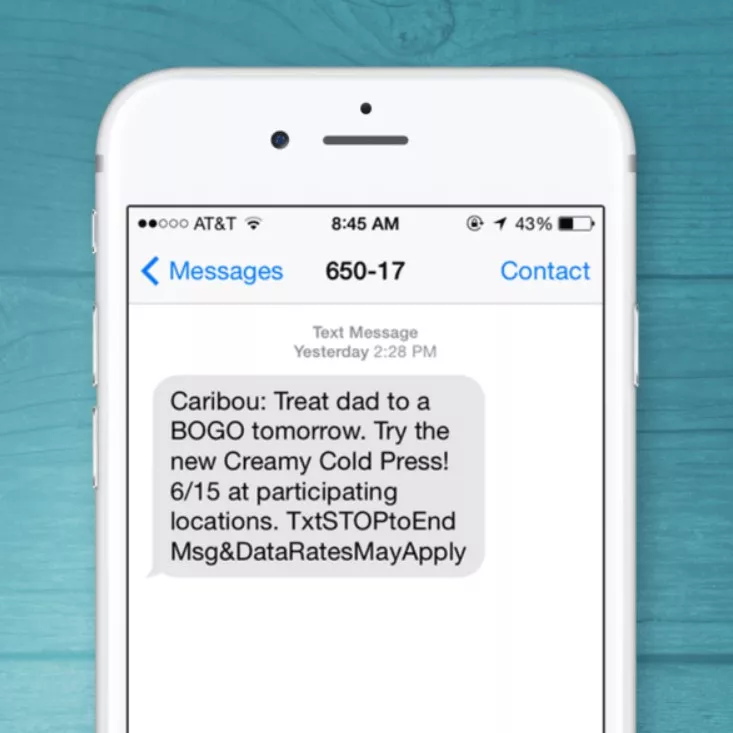
Here’s another example from Caribou Coffee Company.
Example 3: Promoting a new product
“Our long-awaited video game console is now available for pre-order. Place your order ASAP for a 20% discount. Only available to VIP members.”
Example 4: Customer service
“Thank you for contacting Omnisend. Your request has been lodged, and a customer agent will contact you before EOD.”
Example 5: Text alerts
“TGIF! Celebrate the start of the weekend at our cheese shop. Show this text at the counter for 20% off our artisanal cheeses.”
Example 6: Order updates
“Greetings, John. Your package, Order No. 12345 has been dispatched. ETA is 5.00 pm.”
Example 7: Appointment reminders
“Hi, Grace! Your dentist appointment is today at 2:15 pm. LMK if you need to reschedule.”
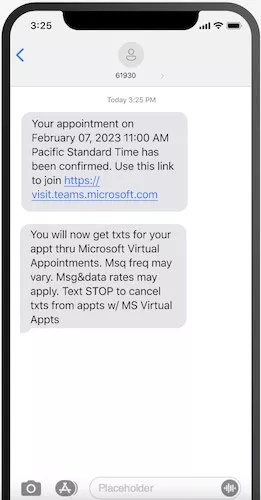
See how Microsoft sends appointment reminders using SMS text abbreviations in the image below.
Example 8: Internal communication
“Hi, Anna. We have a meeting with our B2B clients today. Prepare their acct reports and LMK when you’re done.”
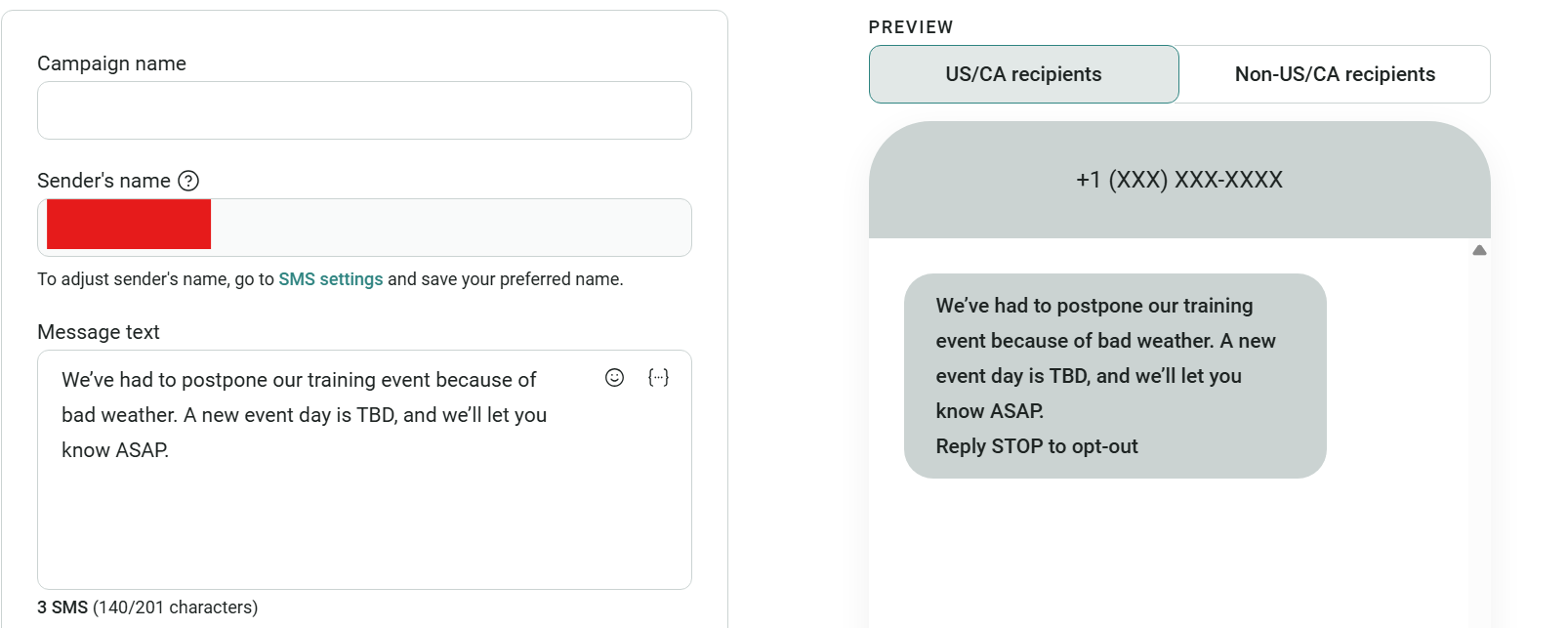
Example 9: Postponing an event
“We’ve had to postpone our training event because of bad weather. A new event day is TBD, and we’ll let you know ASAP.”
Example 10: Celebrating loyal customers
“HB! Celebrate your big day with 30% off your next order. Use the code HBD001 at checkout.”
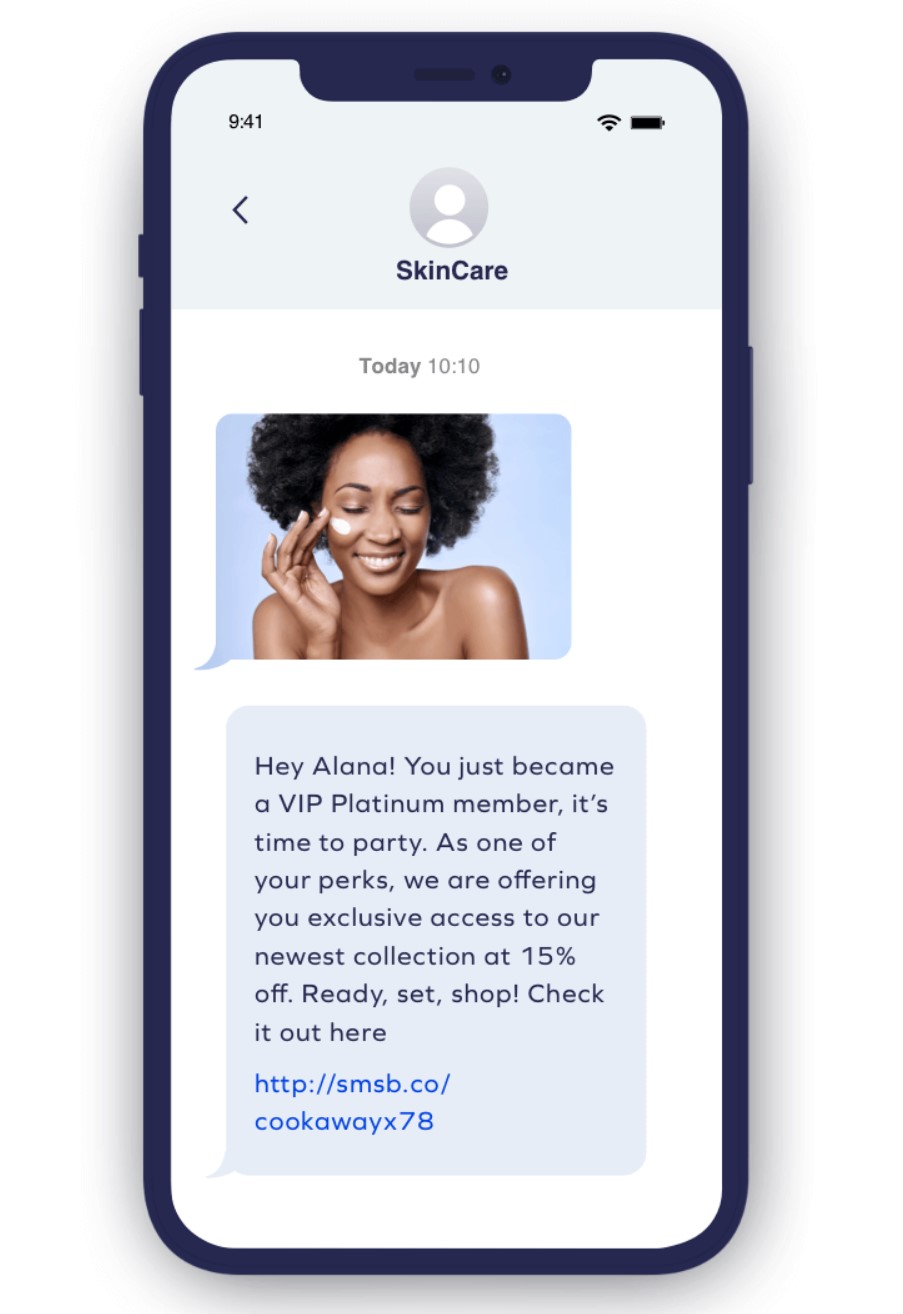
Here’s another example of celebrating the latest VIP Platinum member using SMS text abbreviations:
Example 11: Feedback request
“We’d love your feedback! TBH, it helps us improve. Take our 1-min survey: [Link].”
Example 12: Security/verification
“Your login code is 5543. FYI, this code expires in 10 minutes.”
Texting abbreviations with Omnisend
Omnisend’s omnichannel marketing platform enables the strategic use of SMS text abbreviations to engage customers. Here’s how:
- SMS marketing: Text abbreviations are not only ideal but also effective in SMS marketing. They save character space, sound more relatable to younger audiences, and boost engagement.
- Personalization and brevity: You can combine Omnisend’s personalization options with text message abbreviations. This allows you to keep your marketing messages concise, impactful, and within character limits.
- Automation: Using automated text messages results in timely and personalized customer engagement. Incorporate appropriate abbreviations in automated messages to convey information clearly and succinctly.
- Engagement rates: A/B test your messages to review how text abbreviations impact your customer engagement marketing. While text acronyms can increase relatability and interaction, you must tread carefully to avoid misinterpretation.
- Best practices: Balancing professionalism with casualness in text abbreviations is key. Doing so helps you maintain engagement without compromising your brand image and voice.
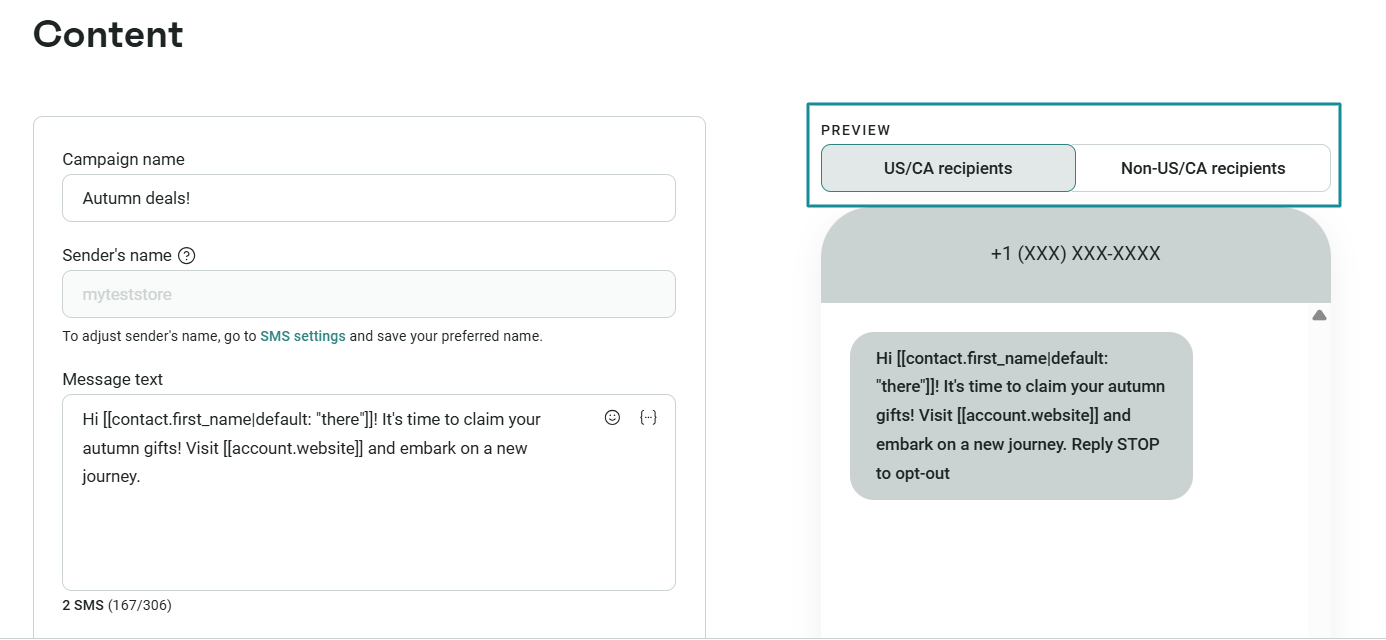
Also, Omnisend’s personalization features let you use abbreviations like [FirstName] while maintaining a professional tone:
Tips to avoid mistakes
Let’s now go over tips for texting in a business environment using text abbreviations. While shorthand is useful, poor etiquette or out-of-touch references can quickly alienate your audience. Follow these best practices and make sure your messages remain effective and well-received.
1. Understand your audience
The key to successfully using text abbreviations in a business setting is to understand your audience. This will help you know which acronyms to use and how to use them effectively.
Generational usage patterns and cultural context have a huge impact on how messages are interpreted. For example, younger audiences might naturally understand trendy social acronyms, while older demographics or international customers might prefer straightforward, traditional shorthand.
Before using abbreviations for texting in your marketing messages, ask yourself:
- Do my target users use text abbreviations regularly?
- Do they know what the popular abbreviations mean?
- Do they like abbreviations in the messages they receive?
- Are my target users young or old?
2. Don’t overuse abbreviations
You don’t want to use too many abbreviations in one message, as this could hinder readability. Check this example, “Sup, our fav customer. ICYMI, our summer sale is on. Shop ASAP for 10% off RN.”
An SMS like this is confusing, looks spammy, and can easily miss the intended message. Stick to one or two well-placed shortcuts per text to maintain clarity and keep the reader focused on your main offer.
3. Don’t forget to personalize
Using SMS text abbreviations allows you to save on the character count, giving you more space to personalize the text message for your recipient. According to Omnisend’s 2026 Ecommerce Marketing Report, sending irrelevant, generic messages remains the biggest turnoff for SMS recipients.
To boost engagement, personalize the message even if you use abbreviations to cut the character count. You can achieve this by:
- Collecting relevant customer data during the signup process
- Segmenting your audience into different groups to help you send targeted automated text messages
- Addressing the recipient by name
- Incorporating a clear CTA in the SMS
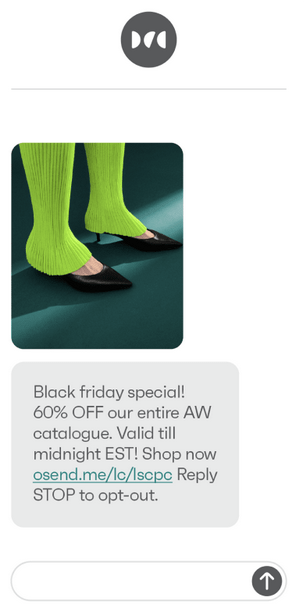
Here’s how Moon Magic personalizes its messages:

4. Be creative, but remain professional
You can get as creative as possible with your text abbreviations without being unprofessional. However, you must recognize when abbreviations might be inappropriate, such as during formal billing disputes or serious customer service resolutions. For example, always avoid abbreviations for swear words in your professional messages.
5. Keep it simple
Don’t make it hard for your recipient to understand the acronyms in your text messages. Stick to the standard abbreviations in texting that you’re sure your audience understands. If a shortcut requires your customer to look up its meaning, it defeats the purpose of quick, convenient communication.
Conclusion
Using text abbreviations in your business and marketing messages allows you to speak casually with your recipients. Used authentically, it also helps to position you as a modern and forward-thinking brand. To help you get there, we’ve equipped you with comprehensive, categorized lists, practical usage examples, platform-specific guidance, and essential best practices.
As we continue with SMS marketing, relying on effective text abbreviations will remain crucial for keeping your campaigns concise, relatable, and engaging. Just make sure you don’t overdo it, and your message doesn’t look like infant art.
Ready to implement text abbreviations in your SMS marketing? Omnisend’s SMS campaigns make it easy to create effective, personalized messages that drive customer engagement and sales. Hop on the free plan today to access all ecommerce-focused SMS features.
FAQ
What are some common text abbreviations?
Some of the most common abbreviations for texting that people use are the ones that became a thing way back when and are still relevant today, such as LOL (laugh out loud), BRB (be right back), OMG (oh my god), ASAP (as soon as possible), and FYI (for your information). You can refer to our full list of 71+ common text abbreviations earlier in the article.
What does JT mean in text?
The abbreviation JT means “just teasing” in a text message. People use it to let you know they’re joking and they don’t mean to cause any offense. It’s a quick way to keep the tone light and friendly.
What does cu mean in texting?
In texting, “CU” is simply a phonetic shorthand that means “see you”. It’s mostly used as a casual and friendly way to say goodbye or sign off.
What is “sks” in chat?
In modern chat, “sks” (often typed out as a keyboard smash like “sksksk”) represents the sound of someone laughing or expressing intense excitement. It’s more popular among younger audiences on social media to show they find something incredibly funny or awkward.
What are some abbreviations in text?
Text message abbreviations vary widely depending on your communication context. For instance, business settings rely on terms like EOD and ASAP, social media users prefer TBH and IMO, while casual chats often use LOL and BRB. We have categorized more than a hundred of these in our lists above, so you can easily find exactly what you need for any situation.
What does 1174 mean in texting?
The number 1174 is a highly specific piece of regional slang that refers to an invitation to meet up, often associated with a nude club or adult party. Because of its mature context, it’s generally kept out of professional messages and everyday family communication.
What does skl mean in texting?
The abbreviation “skl” stands for “school” among students to type faster between classes or when making plans.
What does tyt mean in a text message?
The acronym “tyt” means “take your time” in a text message. It’s a polite way to let the recipient know there’s no rush to respond or arrive. It helps you build rapport, and you can use these abbreviations in SMS marketing campaigns where relevant.
