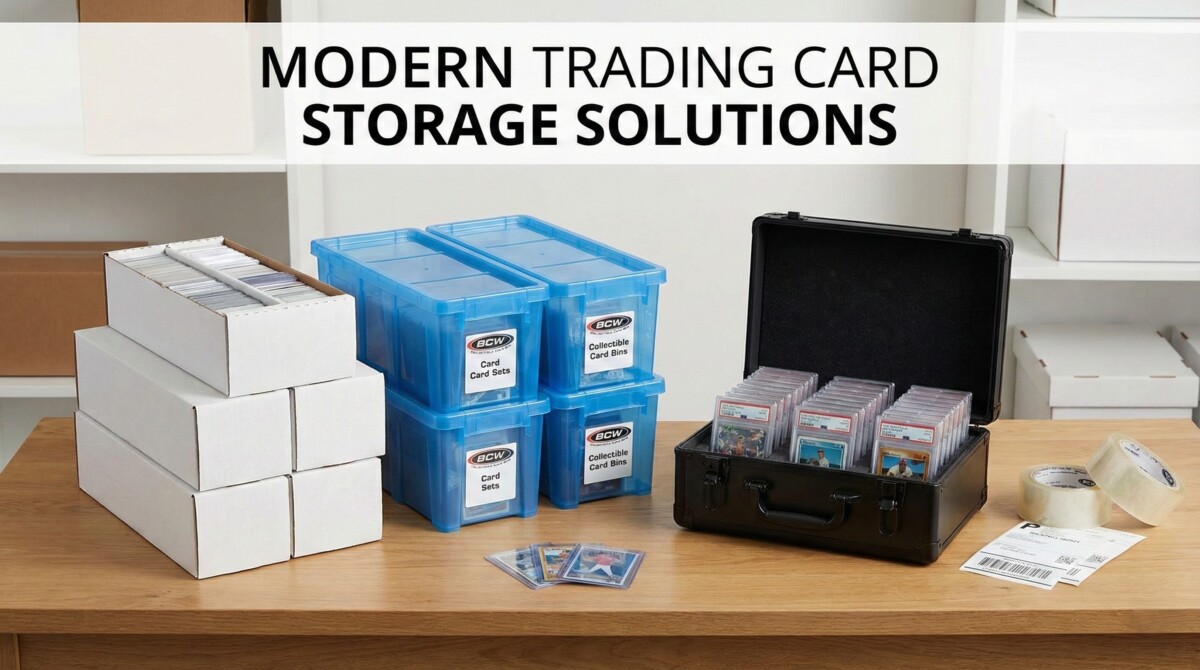
A single dinged corner can wipe out a $500 sale.
When you run an online card shop—on Shopify, eBay, or a fast-growing Whatnot channel—every card is money on the shelf, so storage doubles as risk management.
We mined spec sheets, seller forums, and hands-on stress tests to pinpoint boxes that shield inventory and speed fulfillment. Up next: the criteria that matter, five best-in-class options for different business models, a buyer’s checklist, pro shipping tactics, and rapid-fire FAQs—all designed to keep your margins safe.
How We Chose The Five Standouts
We followed a three-step method to vet trading-card storage boxes: listen to seller pain points, verify manufacturer specs, and run hands-on stress tests.
We began where sellers talk (the Blowout forums, Reddit’s r/sportscards, and Discord rooms) to learn about crushed corners, bowed lids, and damp basements. We then compared those complaints with hard numbers from spec sheets and retailer listings.
Next, we ran each candidate through a real e-commerce workflow—shelf storage, pick-and-pack, and a simulated cross-country shipment. Card counts, stack height, and impact resistance fed a shared scorecard. When a spec sheet promised “acid-free plastic with interlocking feet,” we stacked three loaded bins and shook the tower. The BCW Collectible Card Bin stayed locked and kept every row straight.
From this blend of field insight and lab-style testing, six evaluation pillars emerged:
- Capacity and scalability: how many raw, sleeved, or graded cards fit before the lid closes
- Material strength: cardboard test weight or polymer rigidity and resistance to warehouse humidity
- Protective features: latches, foam, dividers—anything that prevents shifting in transit
- Fulfillment compatibility: whether the box slides into a USPS flat-rate and accepts labels quickly
- Cost per card stored: because margins matter more than aesthetics
- Brandability and presentation: polish that elevates subscription boxes or trade-show booths
Every product that follows cleared these six pillars, so you won’t see flimsy shoe boxes or novelty tins. Our focus stays on gear that protects inventory, ships efficiently, and scales with your sales.
The Five Best Storage Solutions for Ecommerce Sellers
1. Vaulted Card Case: best premium protection for high-value cards.
Built for serious collectors, the Vaulted Card Case Stealth pairs a hard-shell ribbed aluminum exterior with collector-grade EVA foam to deliver uncompromising collectables protection. Imagine an aluminum briefcase that doubles as a mini museum.
The ribbed shell resists dents and moisture, while a clear window lets top hits stay visible without lifting the lid. Inside, Friction Fit EVA foam keeps each slab locked upright—even when you flip the case.
Capacity: up to 112 PSA slabs or about 300 top-loaded cards, yet it still fits under a trade-show table. Dual latches accept small padlocks, adding security for a vintage Jordan rookie. An ergonomic handle balances weight for quick show-floor sprints.
At roughly $180, one saved Charizard covers the cost. High-average-order shops also gain built-in brand polish, since Vaulted will engrave a logo on request.
2. BCW Monster Box: best budget workhorse for bulk inventory.
The classic five-row monster box remains the backbone of high-volume card businesses. BCW’s 5,000-count model uses thick white corrugate rated at 200-pound test strength. Load fifteen pounds of cards, stack three boxes high, and the walls stay square.
Cost hovers near half a cent per card—hard to beat. Dividers slide between sets, and SKU numbers on the lid turn each box into a simple picking bin. A filled monster nests inside a 14-inch shipping carton, so a 3,000-card order ships without repacking individual stacks.
Cardboard dislikes puddles, and overfilling can pop a lid. Store boxes off concrete floors and add silica packs in humid climates for years of service.
3. BCW Collectible Card Bin: best stackable choice for growing warehouses.
Cardboard excels until humidity, forklifts, or vertical ambition join the mix. The BCW Card Bin solves those issues with rigid, acid-free plastic that shrugs off moisture and won’t bow under weight. Interlocking feet seat into the lid below, so a six-bin tower feels steadier than two taped monsters.
Hinged lids swing open during picking, then lock shut with sliding latches for transport. Two movable partitions separate raw singles from top-loaded hits. Each bin stores about 3,200 loose cards or a blend of slabs, loaders, and sleeved decks. At around $35, protection lands near a penny per card—ten times cardboard, yet bins last practically forever and prevent crushed corners.
Exterior label slots fit a standard toploader sleeve, turning each bin into a mobile filing drawer. If your inventory lives on metal racks, the Card Bin pays for itself before the next rainy season.
4. CASEMATIX Graded-Card Case: best carry-on shield for slabs.
Graded cards are heavier and pricier than raw singles, so they need hard-shell protection. The CASEMATIX polypropylene case laughs at baggage-handler drops, and a rubber O-ring forms a waterproof, airtight seal once the latches snap shut. Dual foam channels cradle 40-plus PSA slabs (or about 70 top-loaded hits) upright, so surfaces never touch.
Padlock rings add security for six-figure inventories. The case measures roughly 16 × 13 × 6 inches, sliding under trade-show tables and into overhead bins. At about $60, that’s close to one dollar per slab—small change when the average card inside sells for twenty times that.
5. BCW Card House plus 800-count boxes: best high-capacity organizer for massive sets.
Turn a wobbly stack into a tidy library. The BCW Card House folds together in minutes and holds twelve 800-count boxes that slide like drawers. Fill each drawer with a team, set, or release year, label the front, and you have a quick-reference filing system.
Twelve boxes equal roughly 9,600 raw cards in the footprint of a large shoebox. Stack another Card House on top to break five figures without adding floor clutter. Each small drawer weighs far less than a loaded monster, so you carry only what you need to the packing table.
Cardboard remains low cost and easy to replace, while the outer shell provides extra rigidity for daily drawer pulls. Assembly takes a short video and packing tape, but the payoff shows every time you reach Box 7, Row B, and ship an order in under a minute.
Buyer’s Guide: Match The Box To Your Business
Choosing storage starts with the math. If you handle hundreds of thousands of commons, cardboard monsters offer the best cost per card. About five dollars guards 5,000 pieces, a rounding error in most P&Ls. Try the same volume in plastic and the bill grows faster than a three-day Whatnot marathon.
Card type comes next. Raw singles cope with tight quarters, but graded slabs need rigid walls and foam. Use Vaulted or CASEMATIX cases for premium cards and let budget boxes corral base. Mix the two and a loose sleeve may scratch a PSA 10, turning a $300 card into a $120 loss.
Climate matters. Sellers in humid Gulf states have seen cardboard lids bow after one season. If your warehouse sits in damp air or a leaky basement or you decide to spring for a climate-controlled storage unit — plastic bins plus a desiccant pack remove that risk.
Mobility also guides the choice. When inventory stays on racking, pick stackability and label slots. BCW Card Bins excel: one glance shows where the 2024 Topps Chrome rookies sit. Driving to shows or meeting local buyers? Look for padlock rings and grab handles; that preference points to CASEMATIX.
Finally, weigh brand experience. A customer who opens a Vaulted case engraved with your logo feels curated value a plain white box can’t deliver. Strong presentation increases perceived worth and invites repeat orders.
Shipping and Handling Tips That Keep Cards Mint
Great storage covers only half the risk. Smart shipping protects the rest. Before anything leaves the dock, match order size to carton size. A 200-count card box nests inside a USPS Small Flat Rate box, guarding a draft-deck order without raising postage. Larger sets fit an 800-count inner box that slides into a Medium Flat Rate with room for bubble wrap.
Snug boxes still need interior padding. Lay a thin bubble sheet over the top row, then tape the lid seams so they stay closed even if the carrier drops the parcel. For high-value slabs, double-box: seal them inside a CASEMATIX, cushion that case, then place everything inside a standard shipping carton. The outer box absorbs impact, while the inner case keeps acrylic flawless.
Always sleeve any card worth more than pocket change. Penny sleeve first, top-loader second, then into the storage box. That redundancy pays off when a sorter lets a package tumble yet the buyer still receives a perfect refractor.
Label discreetly and omit words such as “collectibles” or “cards.” A plain address discourages theft and speeds processing. When insurance makes sense (typically any shipment above $200), add it and require a signature. Your margin prefers certainty.
Finish with a silica pack for routes through humid regions. It weighs almost nothing, costs pennies, and blocks moisture that can warp foil.
Conclusion
In the trading card business, profit is not just made when you source a great card. It is protected in the moments between listing and delivery. The right storage system is what keeps your inventory crisp, organized, and ready to ship without last-minute scrambling. Whether you are stacking thousands of commons for bulk sales or safeguarding high-end graded slabs, your storage choices directly impact condition, fulfillment speed, and long-term scalability.
The best part is that there is not one perfect box for every seller. There is a best option for your workflow. If you are moving high volume and need unbeatable cost-per-card efficiency, cardboard monster boxes still rule. If your operation is growing into racks, shelves, and repeat picking cycles, durable plastic bins bring stability and long-term protection. And if your business includes high-value slabs, travel to shows, or premium customer experiences, hard-shell cases are not a luxury. They are a smart insurance policy.
But storage is only half the equation. Smart shipping habits finish the job. Tight-fitting cartons, clean internal padding, taped seams, discreet labeling, and double-boxing for premium orders can prevent the kind of damage that turns a five-star buyer into a refund request. Small upgrades like silica packs in humid climates or signature confirmation on higher-ticket shipments may seem minor, but they add up to fewer losses and more trust.
Ultimately, the goal is simple: keep cards mint, keep fulfillment fast, and keep your margins safe. When your storage and shipping systems work together, you spend less time fixing problems and more time scaling listings, improving inventory turnover, and building a reputation buyers return for. Choose the storage solution that fits your current stage, upgrade as volume grows, and you will build a card operation that is not just profitable, but durable.