






Quick Decision Framework
- Who This Is For: Shopify merchants generating $20,000 or more per month from international markets who suspect currency conversion is quietly eroding their margins but have never audited where the losses actually occur.
- Skip If: You sell exclusively in your home currency to domestic customers only. None of this applies until you have real international volume hitting your payout account.
- Key Benefit: Identify and close the 2% to 4% margin gap that most cross-border merchants are silently losing to FX spreads, platform conversion fees, and settlement timing mismatches.
- What You’ll Need: Access to your payment processor dashboard, your last 90 days of international payout records, and your Shopify Payments or gateway settings.
- Time to Complete: 12 minutes to read. Two to four hours to run the audit and implement the structural fixes.
The stores winning in international markets are not just the ones with the best products. They are the ones treating every layer of their revenue architecture with the same rigor, including the invisible layer that sits between the customer’s payment and their bank account.
What You’ll Learn
- Identify exactly where currency conversion costs are hiding in your payment stack and why most merchants never see them itemized on any invoice
- Calculate the real annual cost of FX spreads on your international revenue so you have a number worth acting on
- Understand how settlement timing creates exchange rate exposure that compounds during macro volatility events
- Build a multi-currency account structure that reduces conversion friction by up to 70% compared to automatic real-time conversion
- Recognize when your international volume justifies working with institutional-grade currency execution channels
You expanded into the EU. You opened up to the UK, the Gulf, Southeast Asia. Orders are coming in from everywhere, and on paper the numbers look solid. But somewhere between checkout and your bank account, a quiet erosion is happening. A percentage point here, a spread there, a settlement delay during a volatile week — and before you realize it, your international growth is subsidizing someone else’s margins.
This is not about whether you accept multiple currencies. Most store owners at this stage already do. This is about whether you have ever sat down and treated currency conversion as a margin optimization discipline — the same way you’d audit your ad spend or renegotiate supplier contracts. Almost nobody does. And that gap is costing real money.
The Revenue Leak Nobody Is Talking About
International revenue feels clean until you trace it. A customer in Dubai pays AED 370 for your product. That’s roughly $100 USD. By the time it lands in your operating account, you might be looking at $93 — and that $7 didn’t go to taxes or shipping. It vanished into the infrastructure of the international payment stack.
The problem is structural. Every layer of the cross-border payment process — the payment processor, the currency conversion engine, the acquiring bank, your payout provider — is extracting a toll. None of them are doing anything wrong. But none of them are advertising the full cost to you either.
What the Spread Actually Means for Your Bottom Line
When your payment processor converts AED to USD, they use an exchange rate. That rate is not the interbank rate you see on Google. It’s marked up — typically by 1.5% to 3.5% above the mid-market rate. That markup is called the spread, and it is the single largest hidden cost in international eCommerce.
On a $50,000/month international revenue stream, a 2.5% spread costs you $1,250 per month — $15,000 per year — in pure margin compression. That’s money you never see itemized on any invoice.
Platform Conversion Fees on Shopify and Beyond
Shopify Markets is a powerful tool, but it comes with a currency conversion fee baked into its pricing. When Shopify converts a foreign currency sale into your payout currency, it charges between 1.5% and 2% depending on your plan. That’s layered on top of standard payment processing fees.
If you’re using third-party payment gateways through Shopify, you may be paying an additional transaction fee on top of that. According toInvestopedia’s analysis of international payment costs, multi-layer payment chains are one of the primary drivers of inflated cross-border transaction costs — a reality that Shopify merchants running high international volume feel acutely.

Banking Intermediary Charges and Where They Hide
For merchants receiving payouts to traditional business bank accounts, SWIFT transfers are often involved. These introduce correspondent bank fees — charges levied by intermediary banks that route your money internationally. These fees are typically deducted directly from the transfer amount rather than billed separately, so you may not even notice they happened unless you reconcile at the transaction level.
How Currency Volatility Is Quietly Eroding Your Margins
Exchange rate risk is not just a concern for large enterprises hedging multi-million dollar contracts. It is a daily operational reality for any eCommerce store pricing products in foreign currencies.
The Settlement Window Problem
When a customer in the UK pays £80 for your product today, you may not receive that payout for 2 to 7 business days, depending on your processor and plan. During that window, GBP/USD could move meaningfully. If sterling weakens against the dollar by 1.2% during settlement, that product just became 1.2% cheaper to you — on top of all the other costs already baked in.
This is compounded during macro volatility events. Brexit-era fluctuations, Federal Reserve rate decisions, regional geopolitical shocks in MENA — these are not theoretical risks for a global seller. They are recurring events that periodically turn profitable international segments into margin sinkholes.
Building a Currency Conversion Strategy That Actually Works
Getting systematic about this does not require a treasury department. It requires four things: awareness of where costs occur, the right tooling, disciplined pricing review cycles, and — for stores doing meaningful international volume — a relationship with the right financial partners.
Multi-Currency Accounts and Local Acquiring
The single most effective structural fix for most international eCommerce operators is moving away from automatic conversion at the point of sale. Instead of letting Shopify or your payment processor convert everything to your home currency in real time, you hold foreign currency balances in dedicated accounts and convert on your own schedule.
Services like Wise Business, Airwallex, or Currenxie allow you to receive GBP as GBP, EUR as EUR, and AED as AED — then convert when rates are favorable or when you have a operational need. This alone can reduce conversion friction by 50% to 70% compared to real-time automatic conversion.
When Working with a Forex Broker Makes Sense
For stores generating $30,000 or more per month in a single foreign currency, working directly with a forex broker can unlock institutional-grade exchange rates that are materially better than anything a payment processor or business banking app will offer. A professional forex broker provides access to tighter spreads, dedicated dealing desks, and structured conversion timing — all of which are out of reach in a standard merchant account context.
This is not a complex financial maneuver. It is a straightforward business practice used by mid-market importers and exporters globally. The threshold where it starts making sense is lower than most eCommerce operators assume.
Forward Contracts and Rate Locking
If you run seasonal campaigns or have predictable revenue patterns in a foreign market, forward contracts allow you to lock in today’s exchange rate for conversions that will happen weeks or months from now. This eliminates rate uncertainty from your forecasting and can protect a significant portion of your international margin during volatile periods.
What Shopify Merchants Are Missing in Their Payment Settings
Most Shopify store owners configure their currency settings once and never return to them. That is a costly habit.
Shopify Markets — Presentation vs Settlement Currency
Shopify Markets allows you to present prices in local currencies to international shoppers. But there is a critical distinction between presentation currency (what the customer sees) and settlement currency (what you actually receive). If your settlement is happening in a currency you did not intend — or through Shopify’s automatic conversion — you may be absorbing fees and spread costs that are entirely avoidable.
Review your Shopify Payments or gateway settings and identify exactly where conversion is happening, at what rate tier, and whether there is an option to defer or redirect that conversion to a more cost-efficient channel.
Dynamic Pricing Adjustments for Exchange Rate Fluctuations
Most Shopify merchants set international prices as static multipliers of their base price and adjust them quarterly at best. A more disciplined approach involves building a buffer into international pricing that accounts for expected conversion costs plus a margin for rate movement. Repricing monthly — or even building dynamic rules that adjust automatically based on rate thresholds — can prevent margin compression from accumulating silently.
Regional Nuances You Cannot Ignore
Selling into MENA
The Gulf Cooperation Council markets — UAE, Saudi Arabia, Kuwait, Qatar — are high-value eCommerce territories, but the payment infrastructure presents specific challenges. Many GCC currencies are pegged to the USD, which reduces volatility risk, but local payment preferences (KNET in Kuwait, mada in Saudi Arabia) often route through processors that layer in additional conversion steps when funds leave the region.
The EU and GBP Reality Since Brexit
Since Brexit, GBP and EUR are no longer operationally linked for British eCommerce operators or merchants selling cross-channel into both markets. If you are pricing in both currencies and holding both in the same settlement account, you are almost certainly leaking margin on one side of every swing. Segregating these currency flows is non-negotiable at meaningful volume.
Asia Pacific Payment Fragmentation
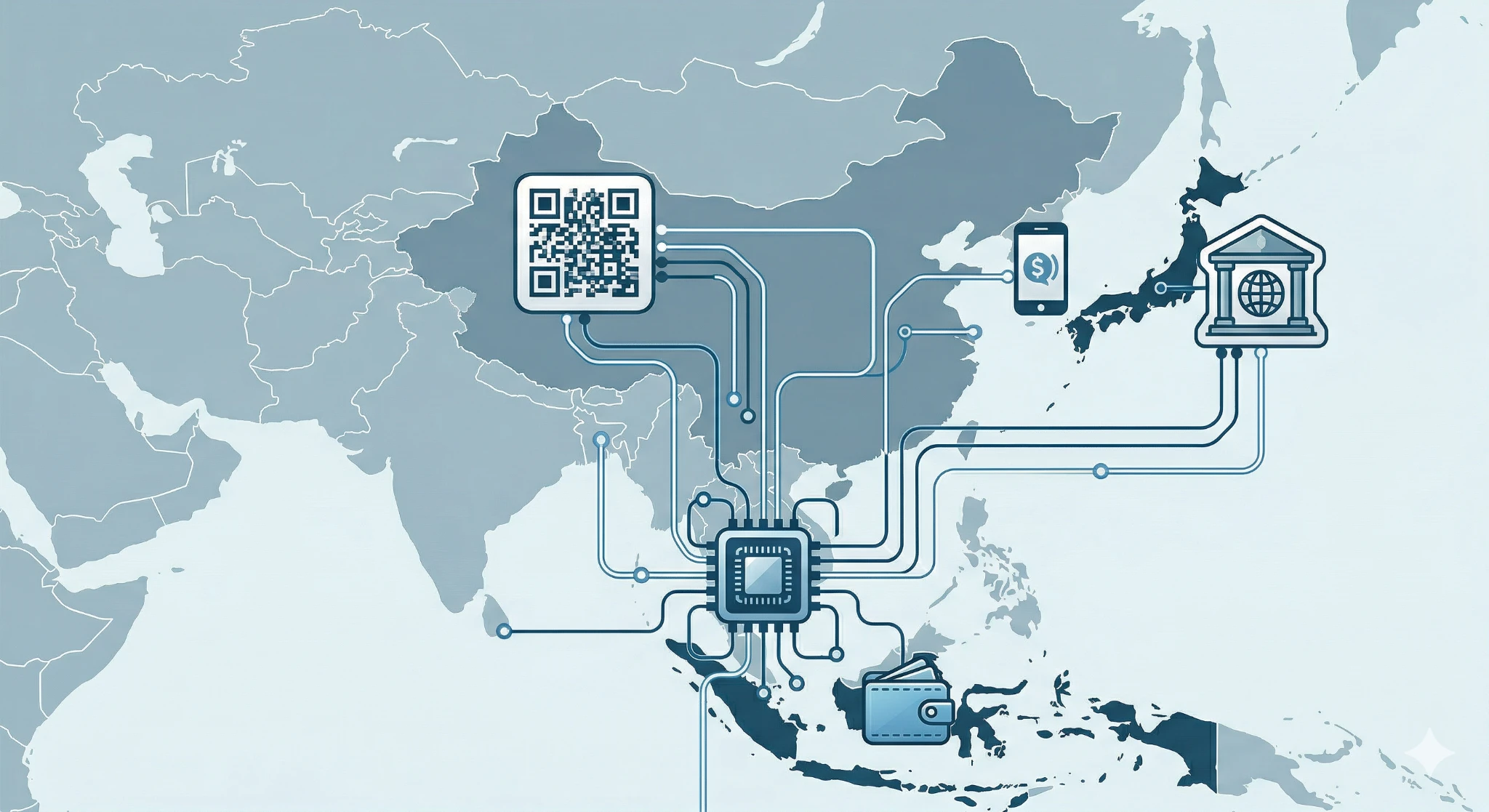
Selling into Japan, South Korea, Indonesia, or Thailand involves navigating one of the most fragmented payment landscapes in the world. Local wallets, bank transfer systems, and regional processors each introduce conversion overhead. Unless you have local acquiring relationships in these markets, you are running through global processors that are optimizing for their own margins, not yours.
Turning Currency Management into a Competitive Advantage
The operators who understand this see it not as a cost-reduction exercise but as a structural margin advantage. When your competitors are losing 3% to 4% of international revenue to sloppy currency handling and you are losing 0.5%, you can price more aggressively in foreign markets, run deeper promotional campaigns without destroying margin, or simply retain more profit per order.
Every percentage point of international revenue you recover through smarter currency management is pure margin. It costs no additional ad spend, no new inventory, no new headcount. It is recovered value — money that was always yours.
Final Thoughts — From Cost Center to Margin Lever
The currency layer of your international business is not a cost you simply accept. It is a variable you can optimize, and the tools to do so are accessible, practical, and increasingly designed for eCommerce operators rather than just corporate treasurers.
Start with an audit. Pull your last three months of international payouts and map exactly where conversion is happening and at what rate. The number you find will likely surprise you. Then start building the infrastructure — multi-currency accounts, smarter gateway routing, and where volume justifies it, professional currency execution through institutional channels.
The stores winning in international markets in the years ahead will not just be the ones with the best products or the sharpest ads. They will be the ones who treated every layer of their revenue architecture with the same rigor — including the invisible one that sits between the customer’s payment and your bank account.
Frequently Asked Questions
How much am I actually losing to FX spreads on my Shopify international sales?
The honest answer depends on your processor and plan, but the typical range is 1.5% to 3.5% above the mid-market rate on every conversion. On $50,000 per month in international revenue, a 2.5% spread is $1,250 per month or $15,000 per year. That number does not include Shopify’s own currency conversion fee of 1.5% to 2%, which layers on top of processing fees. The only way to know your specific number is to pull three months of international payouts, identify where each conversion happened, and compare the rate applied against the mid-market rate on that date. Most merchants who do this exercise for the first time find the total is meaningfully higher than they expected.
At what monthly revenue does it make sense to open a multi-currency business account?
The practical threshold is around $5,000 to $10,000 per month in a single foreign currency. Below that, the administrative overhead of managing separate currency balances and timing conversions outweighs the savings. Above that, the math shifts quickly. Services like Wise Business and Airwallex have low or no monthly fees, so the barrier to entry is low. The more meaningful question is whether you have the operational bandwidth to monitor rates and convert on a schedule rather than automatically. If you do not, automatic conversion at a slightly worse rate is still better than letting conversion timing be entirely random.
Does working with a forex broker actually make sense for an eCommerce store or is that just for big companies?
It makes sense at a lower volume than most operators assume. The practical entry point is $30,000 or more per month in a single foreign currency. At that level, the rate improvement a professional forex broker provides over a standard business banking app is typically 0.5% to 1.5% per conversion. On $30,000 per month that is $150 to $450 per month in recovered margin, or $1,800 to $5,400 per year, for a relationship that costs nothing to establish. The process is straightforward: you open a business account with a regulated broker, transfer your foreign currency balance, and execute conversions when rates are favorable. It is the same thing mid-market importers and exporters have been doing for decades.
How does Shopify Markets handle currency conversion and where does the cost actually hit?
Shopify Markets presents prices in local currencies to international shoppers, which is the presentation layer. The settlement layer is separate and is where the cost hits. When Shopify converts a foreign currency sale into your payout currency, it applies a conversion fee of 1.5% to 2% depending on your plan and region. This fee is charged on top of your standard payment processing rate. If you are also using a third-party gateway rather than Shopify Payments, an additional transaction fee of 0.5% to 2% applies on top of that. The most cost-efficient setup is Shopify Payments with a multi-currency payout account that defers conversion rather than converting automatically at the point of sale.
What is a forward contract and when should a Shopify merchant actually use one?
A forward contract is an agreement to exchange a set amount of foreign currency at a fixed rate on a future date. You lock in today’s rate for a conversion that will happen weeks or months from now. For a Shopify merchant, the practical use case is predictable seasonal revenue. If you know you will generate roughly £50,000 in UK sales during your Q4 peak and you want to protect your USD margin from GBP volatility during that period, you lock a forward contract in September for a November or December settlement. The rate you lock may not be the best rate available in November, but it will not be the worst either. What you are buying is certainty, and certainty has real value when you are building a promotional budget around a margin assumption.
