





Your acquisition costs keep climbing, data lives in too many places, and getting a clear view of your customer journey feels impossible.
You’re probably paying what I call a “complexity tax,” a few thousand dollars each month on apps that don’t quite talk to each other.
I’m Steve Hutt, founder of EcommerceFastlane. After working with hundreds of Shopify brands that scaled past seven figures, I’ve seen these exact data silos slow down growth. We don’t just chase trendy new apps here. Our reviews focus on what helps you scale, improves your profit and loss, and what teams actually use to get results.
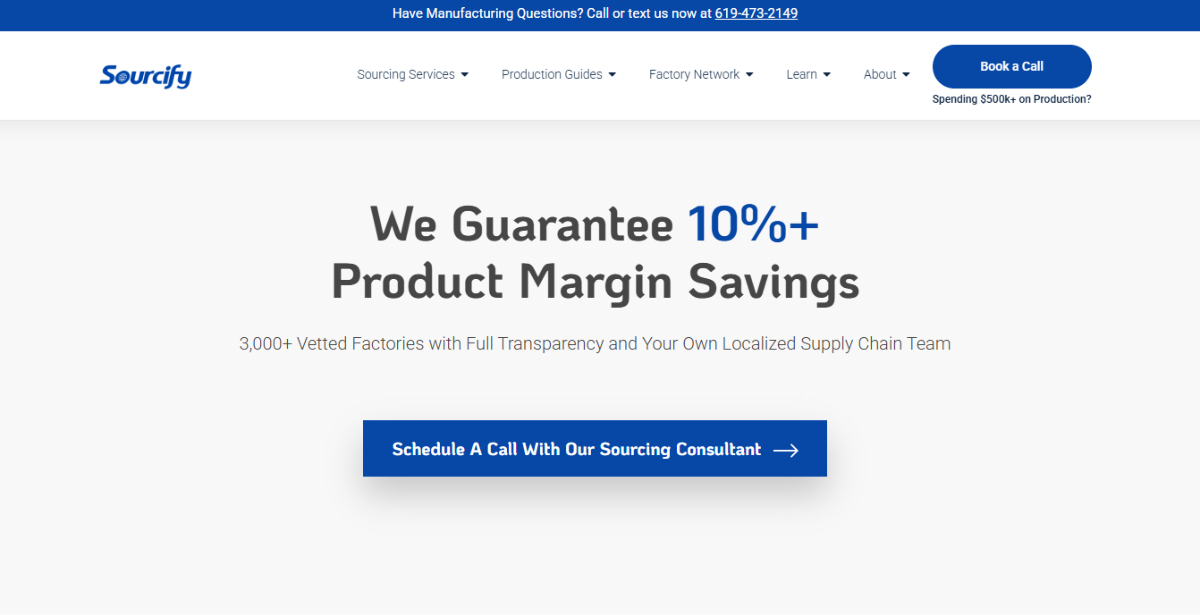
Today, we’re taking a deep look at Sourcify. It’s a platform that promises to solve some of the biggest sourcing headaches for growing brands. Can it deliver on that promise and give you a real strategic advantage? Let’s find out.
Who Is Sourcify For? (And More Importantly, Who Should Pass?)
When you are growing a brand, deciding on a new platform always comes down to timing and specific needs. Sourcify is not a one-size-fits-all solution, and that’s a good thing. Before you jump in, let’s break down exactly who gets the most out of it and, perhaps more critically, who might be better off sticking with their current setup. This isn’t just about features; it is about how it fits into your strategic play.
You should seriously consider Sourcify if:
You have hit a wall with your current sourcing methods. Maybe your spreadsheets are a mess, or communicating with manufacturers feels like a full-time job. What if you could consolidate all that into one place?
- You are a scaling brand owner looking to centralize and streamline your entire product sourcing and production pipeline. Your primary goal is to gain efficiency and reduce costly communication errors.
- You are a DTC leader frustrated by the lack of transparency and control over your supply chain. You need a clear, updated view of your orders, from initial sample to final delivery.
- You are an operations manager who needs to standardize your manufacturing interactions and project management. You want to bring everyone, from designers to factory contacts, onto the same page.
- You are managing multiple product lines or SKUs and are tired of juggling emails, WhatsApp messages, and countless documents. Sourcify offers a centralized hub for all your product development files and communications.
You should probably stick with your current stack if:
Sometimes, the best move is no move at all, especially if your current process is already lean and effective for your specific scale.
- Your team lacks a dedicated project manager or operations lead to oversee the implementation and ongoing use of a comprehensive sourcing platform. This tool needs an owner to maximize its power.
- You are comfortable with very low-volume, highly specialized production where direct, informal communication with a single, trusted manufacturer is already working perfectly.
- You are currently in the early stages of your brand’s journey, with revenue under $1 million. The full strategic benefits of Sourcify truly kick in once you are dealing with more complexity and higher volumes.
- You only ever work with one or two suppliers and have extremely straightforward product development cycles that do not require extensive project management.
Sourcify’s Core Strategic Capabilities: How It Drives Margin and Transparency
Alright, so we have talked about who Sourcify is for, but let’s get into the how. How does this platform actually help you make more money and gain real control? It comes down to a few core strategic capabilities. These are the levers that, when pulled correctly, translate directly into better margins and a clearer view of your supply chain operations. This isn’t just about managing suppliers; it’s about building a smarter, more profitable production backbone for your brand.
Capability 1: Access to a Vetted Global Factory Network
One of the biggest headaches I hear from founders scaling past seven figures is finding reliable manufacturers. It is a minefield out there; you risk bad quality, missed deadlines, or ghosted communication. What if you could cut through all that noise?
Sourcify has built a vetted network of factories across the globe. This isn’t just a list; it is a curated group where each factory undergoes a rigorous screening process. They check for things like:
- Verified operational history: Do they have a proven track record?
- Quality control standards: Are they consistently hitting the mark?
- Ethical labor practices: Are they compliant with regulations?
This effectively removes much of the upfront risk from your sourcing. Think of it like this: instead of hiring every potential employee and hoping for the best, you are working with an agency that has already done the background checks and reference calls. This saves you weeks, sometimes months, of due diligence. What would an extra month of production time or avoiding a bad batch of inventory mean for your bottom line? I have seen these benefits directly impact quarterly profit reports for brands, consistently.
Capability 2: Streamlined Sourcing Process and Software Visibility
Let’s be honest, how many of you are still tracking samples, quotes, and production timelines across spreadsheets, email chains, and WhatsApp messages? Most scaling brands I work with are running a Frankenstein’s monster of communication tools. This creates massive blind spots and delays.
Sourcify centralizes your entire sourcing workflow within its platform. This means:
- Unified communication: All factory communication lives in one place, not scattered across different inboxes.
- Quote comparison: You can easily compare quotes from multiple manufacturers side-by-side, within the platform, making cost analysis straightforward.
- Project management: Track samples, production milestones, and shipping dates through an intuitive dashboard.
This unified approach gives you software visibility that is hard to achieve otherwise. You get a real-time snapshot of every project, from concept to delivery. This visibility is not just a nice-to-have; it is a direct driver of efficiency and transparency. When you can see potential delays or cost increases early, you can act on them. That responsiveness protects your margins and keeps your customers happy. I have seen brands reduce their product development cycles by leveraging tools like this.
Capability 3: Dedicated Accountability and Quality Control
When you are dealing with factories halfway across the world, who is truly on the ground making sure things are right? This is a question many founders grapple with. Without dedicated oversight, quality issues can quickly become expensive problems.
Sourcify provides dedicated accountability through its team. They act as your on-the-ground eyes and ears. This includes:
- In-person factory visits: They conduct checks to confirm production standards and timelines.
- Quality inspections: Before products ship, they verify that your specifications are met.
- Issue resolution: If a problem comes up, they work directly with the factory to fix it.
This level of quality control is essential for protecting your brand’s reputation and avoiding costly recalls or returns. Imagine the impact of catching a defect before 10,000 units ship, rather than when they arrive at your warehouse. It is the kind of proactive measure that saves serious money and maintains customer trust. I have seen firsthand how easily a single quality issue can derail a brand’s growth, and this capability truly helps prevent those situations.
What is Product Sourcing School?
You know the headache of scaling: finding reliable suppliers, managing quality, and staying on top of production. It’s tough. Most brands figure this out through trial and error, which usually means wasted time and money. What if there was a better way, a structured path to mastering your supply chain?
Product Sourcing School: Learn How to Build a Better Supply Chain
Sourcify and their CEO, Nathan Wenner, launched Product Sourcing School to address this exact problem. Think of it as your in-depth guide to product development and sourcing, without the missteps many founders make. It’s not just a collection of tips; it’s a comprehensive program designed to give you a strategic edge. I have seen countless brands make expensive mistakes here, mostly because they lack a clear roadmap. This school offers that roadmap.
The goal? To teach you the exact process that leading brands use to find, vet, and work with manufacturers globally. This includes understanding everything from initial product idea to final delivery.
How it Works: Modules Focused on Key Areas
The school breaks down the complex world of sourcing into manageable modules. This structured approach helps prevent you from feeling overwhelmed.
Here are some of the areas they cover:
- Product Development Fundamentals: This covers refining your product idea, understanding specifications, and creating the right documentation. From my experience, a clear product brief saves more money than almost anything else.
- Supplier Identification and Vetting: How do you find trustworthy factories? This module teaches you the process for researching, identifying, and evaluating potential manufacturing partners.
- Negotiation Tactics: Getting the best price and terms is critical. They teach you how to negotiate effectively with factories, covering MOQs (Minimum Order Quantities) and payment terms. I have seen good negotiation save brands thousands per order.
- Quality Control and Assurance: This is where many brands stumble. What are the steps to ensure your product meets your standards before it ships? This section focuses on inspection protocols and managing quality throughout production.
- Logistics and Shipping: Once your product is made, how does it get to your warehouse or customer? This covers Incoterms, freight forwarding, and managing international shipments.
Each module gives you practical knowledge you can apply immediately within your business. It is about equipping you with the same frameworks that Nathan and his team use daily.
Who Benefits Most from This Education?
Product Sourcing School is particularly valuable for a few types of individuals:
- New Brand Founders: If you are just starting and need to understand the entire sourcing process from the ground up, this school can save you from costly beginner mistakes.
- Scaling Founders and Operations Leads: Perhaps you have some experience, but your current sourcing methods feel inefficient or chaotic. This program helps you formalize processes and gain better control.
- Product Managers: Anyone responsible for product development and manufacturing will find deep insights here to optimize their workflow and improve supplier relationships.
Ultimately, this school exists to provide the knowledge that directly impacts your profit and loss statement. When you source smarter, you spend less, reduce risk, and get better products to market faster. This isn’t just about learning; it’s about gaining a distinct competitive advantage.
The Shopify Integration
Most of us run our businesses on Shopify. It is the core of our operations, handling everything from product listings to customer orders. What happens when your sourcing platform can truly connect with it? That is where the Shopify integration with Sourcify comes in, creating a more cohesive, less manual workflow for your brand. This isn’t just about linking two apps; it is about extending your supply chain visibility directly into your sales channel.
Depth of Connection
When we talk about integration, what kind of connection are we actually getting? Sourcify is focused on providing practical data flow, specifically designed to help you manage products and orders. You are not going to see every single Shopify setting mirrored. Instead, Sourcify pulls in the essential details required to keep your production and fulfillment aligned with what is happening in your store.
This means you can expect:
- Product syncing: Your product details, like SKUs, titles, and even images, flow from Shopify into Sourcify. This prevents manual entry errors and keeps your sourcing projects updated.
- Order visibility: While direct order fulfillment is not Sourcify’s primary job, the integration can give you visibility into order volumes, helping you tie back production quantities to actual sales data within the platform. This is critical for demand planning.
Think of it like this: your product development team now sees real-time changes from your Shopify store, not just a static spreadsheet from last week. This is how you avoid miscommunications and ensure everyone is working with the latest product information. What would keeping your production and sales teams fully aligned mean for your lead times?
Key Use Cases Unlocked
So, what can you actually do with this connection? The real power of Sourcify’s Shopify integration emerges in how it streamlines classic pain points for growing brands. It solves issues that usually require manual updates or disjointed communication.
Here are a few ways the integration helps you:
- Faster product launches: When your product data lives seamlessly between Shopify and Sourcify, you spend less time manually updating information. This shaves days off your product development cycle. I have seen brands cut their launch calendar by a week just by eliminating these kinds of data entry points.
- Accurate production planning: By connecting your sales data (even if it is just a high-level view) to your sourcing platform, you gain a clearer picture of demand. This helps you order the right quantities, reducing overstock or stockouts, both of which hit your profit and loss statements hard.
- Centralized product information: Your designers, sourcing managers, and marketing team can all reference the same product specifications and images directly within Sourcify, knowing they are consistent with what is live on your Shopify store. This consistency is not just a “nice to have,” it is vital for brand integrity.
Imagine an updated product variant on Shopify automatically reflected in your production order. That eliminates a classic point of failure for many of us.
Gaps & Workarounds
While the integration brings a lot to the table, it is important to understand its current scope. This is not a full-fledged ERP system that handles every single data point between the platforms. We are looking at a targeted integration here.
The main areas where you might see some gaps include:
- Deep inventory synchronization: You are not going to manage your warehouse or exact stock levels directly from Sourcify. Its focus is on the manufacturing side, not the daily fulfillment operations.
- Complex order routing: If your brand relies on intricate Shopify Flow automations for specific order actions, the integration might not directly trigger those within Sourcify’s environment.
- Native loyalty data: Customer loyalty points or highly specific customer tags that do not directly relate to product attributes are typically outside this integration’s scope.
For some of these gaps, you might find yourself connecting tools like Zapier for specific automations, essentially bridging the platforms. For example, if you need a specific action in Sourcify to trigger when an order hits a certain value in Shopify, Zapier could serve as that intermediary. It is about understanding what the core integration handles and supplementing with other tools for highly specialized needs, just like we often do with other parts of our tech stack.
Pricing vs. ROI: The P&L Conversation
Making a smart investment in your tech stack always comes back to one crucial question: Does the cost justify the return? For something like Sourcify, it is not just about the sticker price; it is about how it impacts your profit and loss statement, month after month. What is the real cost of keeping your current, fragmented sourcing process? We need to look at the numbers.
The Tech Stack Consolidation Math
Let’s do some quick math on what most scaling brands are actually paying for. I have seen this scenario many times. You are likely combining a few different tools, each carrying its own monthly fee, just to manage your sourcing and manufacturing.
Consider a typical “siloed” stack for brands doing $1M to $10M in revenue:
- Manufacturer CRM (e.g., a basic project management tool): $150/month
- Communication tools (e.g., dedicated Slack channels, international calling apps, file sharing services): $100/month
- Spreadsheet management (time spent managing multiple sheets): $500/month (this accounts for labor, if you are paying someone $30/hour to manually track, you know this number can climb fast)
- Supplier vetting fees (one-off costs for new suppliers, audits): $300/month (averaged out)
That adds up pretty quickly, right? You are looking at a total of $1,050 per month in direct and indirect costs, and that does not even include the missed opportunities from slow processes or quality control issues. This “complexity tax” is real, and it eats into your margins.
Now, let’s consider a consolidated stack with Sourcify. While their pricing requires a direct conversation with their team to get an exact quote based on your specific needs, the core value proposition is clear: centralization. You are often replacing several of those line items with one platform. This often results in a significant reduction in direct software spend, plus the intangible savings from increased efficiency.
Here is the table to analyze pricing tiers for Sourcify:
ROI Justification
The true return on investment from Sourcify extends well beyond just saving a few hundred dollars on software subscriptions. You are looking at a more profound impact on your operations and, critically, your P&L.
Here is what I have seen consistently:
- Reduced time-to-market: When all your sourcing, communication, and project management happen in one place, you cut down on delays. Think about how much revenue you lose for every week a new product launch is pushed back. If Sourcify shaves even two weeks off your product development cycle, that is money in the bank. I have seen brands reduce their time from concept to production by weeks, sometimes months, by adopting a tool like this.
- Fewer costly errors: Miscommunication with manufacturers, wrong specifications, missed quality checks. Each of these can lead to scrapped inventory, customer returns, or brand damage. Sourcify’s centralized communication and dedicated quality control features directly mitigate these risks. What is the cost of a failed production run? It is often tens of thousands of dollars, easily. Avoiding just one of these major issues can pay for the platform for a year or more.
- Better supplier negotiations: With clear data and streamlined communication, you are in a stronger position to negotiate better terms and pricing with factories. The ability to quickly compare quotes and manage multiple relationships gives you leverage. A 1 2% saving on unit cost across a large order volume adds up to serious profit.
- Increased team efficiency: Imagine your team spending less time chasing emails and updating spreadsheets. That freed-up time can go into product innovation, marketing, or strategic planning. What is the value of your team gaining an extra 5 10 hours a week in focused work?
The ROI is not just the immediate dollar savings. It is the X hours saved by your team no longer juggling disjointed tools. It is the Y% increase in production efficiency that translates into getting products to market faster. It is the Z% reduction in quality control issues that protect your brand’s reputation and bottom line. These are the factors that truly move the needle for scaling brands.
User Experience & Team Adoption
When you introduce a new platform, it is natural to ask: How easily will my team actually use this? Will it speed up our work, or just add another login to our already long list? For scaling brands, adoption and efficiency are paramount. We are talking about real people, with real daily tasks, and their ability to integrate something new into their workflow directly impacts your profit and loss.
Workflow Efficiency
Let’s be candid. You have likely experienced the frustration of investing in a tool only to have your team struggle with it, resorting to old habits. The true test of any platform’s user experience is how it streamlines daily tasks, making complex processes feel natural.
Here is what I have learned from watching dozens of teams implement new systems:
- Centralized Communication: Sourcify consolidates communication with manufacturers, moving it out of scattered email threads and WhatsApp groups. This means your project managers spend less time digging for information and more time moving projects forward. What would a 10% reduction in communication overhead mean for your team’s productivity?
- Intuitive Project Tracking: The platform provides a clear dashboard to track every stage of a production run. From initial sample requests to final quality checks, the process is laid out visually. This transparency helps avoid bottlenecks, because everyone can see exactly where a project stands. This feature minimizes “where is this at?” questions, which eat up valuable time.
- Document Management: All product specifications, design files, and quality control reports live in one place. Your team isn’t searching across multiple cloud drives and local folders. This reduces errors and ensures everyone is working from the latest version of critical documents.
While the workflow builder in Sourcify makes a lot of sense, some aspects, like a highly tailored email editor, might feel a step behind what some are used to in best-in-class email marketing platforms. However, its core strength isn’t advanced email design; it’s robust sourcing project management.
Time-to-Value
When you invest in a new platform, you are not just spending money; you are spending valuable team time on implementation and training. The question becomes: How quickly can your team start seeing tangible benefits? How long until you get your first high-impact project managed through Sourcify, producing results?
Based on my experience, here is a realistic view of the time-to-value with Sourcify:
- Initial Setup (1-3 days): Getting your existing projects and suppliers into the system, though it requires some data entry, is straightforward. The team at Sourcify often assists here, which accelerates this phase.
- First Project Management (1-2 weeks): Launching your first few sourcing projects within the platform allows your team to experience the full workflow. This is where they become familiar with vendor communication, quote management, and tracking milestones directly in the tool.
- Proactive Savings (3-6 weeks): This is where you start to see the real impact. After a few weeks of consistent use, the cumulative effect of improved communication and centralized data typically leads to:
- Reduced delays: Faster approvals and clearer timelines.
- Better pricing: Easier quote comparisons and negotiation leverage.
- Fewer quality issues: Proactive checks catch problems early.
You might not see a conversion lift in the traditional sense, but you will see a direct impact on your supply chain efficiency and, ultimately, your margins. Think about the effect of shaving even a few days off your production cycle, or avoiding a single costly quality error. That is the kind of immediate return you can expect. Sourcify offers onboarding resources and support to help you get there efficiently, which is critical for maximizing that early impact.
Pros & Cons
Alright, so you’ve seen how Sourcify streamlines your sourcing, helps you find reliable factories, and even ties into your Shopify store. But like any powerful tool, it has its strengths and weaknesses. Before you make a decision, let’s lay out the honest pros and cons. This way, you can see if the specific advantages align with your brand’s biggest challenges and if any potential hurdles are manageable for your team.
Pros
Sourcify brings some significant benefits to the table, especially for scaling brands tired of the chaos that often comes with growing production. I’ve seen these advantages directly impact a business’s capacity to grow without breaking its operational back.
Here are a few of the core advantages I consistently observe:
- Unprecedented All-in-One Power: This platform pulls together tasks that used to live in separate apps, email chains, and spreadsheets. Think about how much time your team spends jumping between systems. Sourcify centralizes communication, project tracking, and document management for all your sourcing needs, creating a single source of truth.
- Access to a Vetted Global Partner Network: Finding reliable manufacturers is one of the biggest headaches. Sourcify’s pre-vetted network significantly reduces your risk of encountering bad actors or quality issues. This means less time on due diligence and more time on product development, which moves the needle on your launch schedules.
- Dedicated Accountability and Quality Control: This is huge. Having an objective third party on the ground to oversee production and conduct quality checks before shipment is invaluable. It protects your brand’s reputation and prevents costly mistakes, saving you from inventory you can’t sell or unhappy customers.
- Time Savings and Efficiency: Look, time is money. Consolidating your sourcing processes means your team spends less time on administrative tasks and more time on strategic work. This efficiency gain directly impacts your operational costs and can accelerate your product development cycles. This is how you gain an edge.
Cons
No platform is perfect for everyone, and Sourcify has a few areas where you might need to adjust or plan around. It’s about understanding these potential sticking points upfront.
Here are some points you should consider:
- Requires a Dedicated “Owner” for Full Impact: Like any sophisticated tool, Sourcify needs someone on your team to champion it. If you don’t have a dedicated project manager or operations lead to integrate it into daily workflows and manage its functions, you might not get the full return on your investment. It’s not a set-it-and-forget-it solution.
- Pricing Structure for Smaller Brands: While the ROI can be substantial for scaling brands, the investment might be higher than what very early-stage brands (under $1 million in revenue) are ready for. Its full strategic benefits truly kick in when you are dealing with a certain level of complexity and volume.
- Learning Curve for Comprehensive Use: While user-friendly overall, integrating any new platform requires a learning period. Your team will need time to adapt to new workflows and fully utilize all the features. The initial weeks might involve a dip in immediate productivity as everyone gets up to speed.
Key Alternatives & The Deciding Factor
When you’re evaluating a platform like Sourcify, it’s not just about what it does well; it’s also about how it stacks up against other options out there. This isn’t a one-size-fits-all world. What works best for one scaling brand might not be the right fit for yours. Understanding the alternatives helps you pinpoint what truly makes Sourcify a strategic play for your specific needs. It’s about figuring out your absolute top priority.
Dissecting Your Sourcing Strategy: Where Does Sourcify Fit?
Let’s break down where Sourcify truly shines in the sourcing ecosystem, and when another tool might be a better fit. This decision ultimately comes down to your core needs and what problem you are trying to solve right now. Are you looking to completely overhaul your supply chain, or do you just need a better way to manage existing relationships?
Your Deciding Factor: When Sourcify Makes the Most Sense
So, with these alternatives in mind, how do you decide if Sourcify is the right tool for your brand? I’ve seen brands grapple with this question countless times. The answer often comes down to your operational maturity and your growth ambitions.
Here is what I have learned from working with high-growth brands: if your priority is scaling your direct to consumer (DTC) brand by consolidating all aspects of product development and manufacturing onto a single, transparent platform, then Sourcify is a strong contender. You are looking for a system that gives you not just access to factories, but also the project management, communication, and quality assurance that prevents your supply chain from becoming a bottleneck.
Consider this: are you tired of the “complexity tax” from managing multiple spreadsheets, communication apps, and one-off audits? If the answer is yes, and you have hit a wall trying to scale your production using fragmented tools, Sourcify provides the integrated solution that cuts through that chaos. It’s about bringing order to your sourcing world, so you can focus on building your brand, not wrangling manufacturers.
You got it, Steve. A strong summary is key to delivering a powerful message and reinforcing your expertise. Here’s a summary section crafted to meet your specifications, highlighting critical insights and offering clear, actionable advice:
Summary
Scaling a direct-to-consumer (DTC) brand means dealing with complex supply chains. Many founders face rising costs, scattered data, and constant communication challenges with manufacturers. This “complexity tax” eats into profits and slows growth. Our review of Sourcify shows it can be a vital tool to fight these issues.
Sourcify centralizes your entire product sourcing and production process. This means you gain access to a network of vetted factories. You get streamlined project management for all your product development. It also provides dedicated accountability and quality control checks. This helps reduce errors and ensures your products meet your standards before they ship. By bringing all these pieces together, Sourcify helps you run a smarter, more transparent operation.
For DTC brands generating over $1 million in revenue, Sourcify offers clear benefits. It helps cut down on the time it takes to launch new products and reduces costly mistakes. This translates directly into better margins and a healthier profit and loss statement. While it requires a team member to lead its use, the insights from Product Sourcing School, run by Sourcify’s CEO Nathan Wenner, further equip you with expert knowledge.
If your brand is struggling with fragmented sourcing or you want to confidently scale your production, consider this: the power of consolidating your tech stack is real. Visit Sourcify’s website and schedule a demo. Ask them how their platform can solve your biggest sourcing headaches. Taking this step can quickly show you how a unified approach can deliver measurable gains and help you lead in the fast-paced world of ecommerce.
Frequently Asked Questions
What is Sourcify, and how does it help scaling brands?
Sourcify is a platform designed to centralize and streamline product sourcing and manufacturing. It helps scaling direct-to-consumer (DTC) brands find vetted factories, manage production projects, and oversee quality control. This consolidation reduces errors and improves efficiency in your supply chain.
How does Sourcify ensure factory quality and reliability?
Sourcify uses a vetted network of global factories. They perform rigorous screening for operational history, quality control standards, and ethical labor practices. This process helps ensure brands connect with reliable manufacturing partners.
Can Sourcify integrate with my Shopify store?
Yes, Sourcify offers a Shopify integration. This connection allows for product syncing, making sure your SKUs and product details are consistent between platforms. It also gives you visibility into order volumes, which helps with future production planning.
Who is Sourcify best suited for in terms of business size?
Sourcify provides the most value for scaling brands, typically those with revenues above $1 million. Its comprehensive features truly shine when managing more complex supply chains and higher production volumes. Smaller brands with simpler sourcing needs might find it more than they currently require.
How does Sourcify save my brand money and improve profit?
Sourcify improves profit by centralizing communication, reducing costly errors, and offering better supplier negotiation data. It also shortens the time it takes to bring new products to market. These efficiencies directly impact your operating costs and P&L.
What is Product Sourcing School, and who created it?
Product Sourcing School is an educational program launched by Sourcify and its CEO, Nathan Wenner. It teaches brands how to master product development and sourcing, from initial idea to final delivery. It offers structured modules on finding suppliers, negotiation, quality control, and logistics.
Does Sourcify handle my inventory or warehousing directly?
No, Sourcify’s primary focus is on the manufacturing and sourcing side of your business, not direct inventory management or warehousing. While it helps with production planning, you will manage your stock levels through other systems.
What if I only work with one or two suppliers? Is Sourcify still a good fit?
If you only work with a very limited number of suppliers and have extremely simple product development cycles, Sourcify might be more robust than you need. Its benefits are most evident when managing a more complex network or multiple product lines.
What makes Sourcify different from using platforms like Alibaba for sourcing?
Sourcify differs from direct sourcing platforms like Alibaba because it offers a vetted network and comprehensive project management. While Alibaba provides direct factory access, Sourcify adds layers of quality control, communication centralization, and dedicated accountability to reduce your risk and workload.
What’s the biggest challenge new users might face with Sourcify?
The biggest challenge for new users is often the initial learning curve. Like any powerful platform, Sourcify requires a dedicated team member to champion its use and integrate it into daily workflows. Investing time upfront in adoption is key to maximizing its long-term benefits.
