






Why Affiliate Influencer Marketing Works in 2026
Affiliate influencer marketing works because the creator economy has matured. We have moved past the “Wild West” days of vanity metrics (likes and followers) and into a period of validated ROI. Brands are more intentional. Creators are more selective. And performance matters on both sides.
Instead of running disconnected campaigns, brands are using affiliate influencer marketing to build systems, create accountability, and make smarter decisions from the start. Here’s what that looks like in practice.
1. A Mindset Shift: From Campaigns to Systems
In 2026, affiliate influencer marketing is no longer treated as a one-off activation. Brands build ongoing programs that run in the background of their marketing strategy. An always-on ecosystem, if you will.
Creators are onboarded once, educated properly, and supported over time. Content keeps working after it’s published. Results compound instead of resetting with every campaign. This system-based approach makes affiliate influencer marketing more predictable and easier to scale.
2. Accountability on Both Sides (Brands and Creators)
Affiliate influencer marketing creates shared responsibility. Brands stop paying simply for exposure, and creators stop promoting products without a clear incentive to perform.
Creators earn based on the impact of their content. Brands stay invested in providing the right products, messaging, and support. This balance leads to more thoughtful partnerships and better outcomes for everyone involved.
3. The Maturity of the Creator Economy
The creator economy in 2026 is no longer experimental. Many creators now treat their platforms like businesses, not hobbies.
This maturity is one of the main reasons affiliate influencer marketing works so well today. Performance-based partnerships are no longer seen as risky or untested. In fact, affiliate programs consistently outperform many traditional digital channels, with brands earning $15 in revenue for every dollar invested.
Affiliate influencer marketing fits this shift perfectly. Creators think in terms of long-term value, audience trust, and consistent income. Brands work with partners who understand their role in the sales journey, not just content creation.
4. Decision-Making Without Guesswork
Successful affiliate influencer marketing starts before outreach begins. Brands need clarity on who to work with, why they are a good fit, and how they are likely to perform.
Tools like CreatorGPT help brands plan smarter by identifying creators aligned with specific audiences, niches, and goals. Instead of relying on gut feeling, affiliate influencer marketing becomes a structured, data-informed process.
5. Sustainability for Creators (Not Burnout)
Creators are tired of the “treadmill” of chasing the next brand deal. Affiliate influencer marketing offers creators a more sustainable way to earn. Income is not tied to constant pitching or endless sponsored posts.
Creators can recommend products naturally, build evergreen content, and earn over time. This reduces burnout and allows creators to focus on quality, not volume.
How CreatorGPT Supports Affiliate Influencer Marketing
CreatorGPT is an AI assistant designed specifically for influencer and creator marketing. It helps brands think through creator partnerships more strategically, before outreach or budgets are locked in.
For affiliate influencer marketing, CreatorGPT is useful because it turns planning into a structured process. Instead of guessing which creators might be a good fit, brands can use AI-driven prompts to explore creator types, audience alignment, outreach messaging, and commission approaches.
CreatorGPT can support tasks like:
- Identifying creators that match a specific niche or audience
- Brainstorming outreach messages tailored to affiliate partnerships
- Thinking through incentive structures that motivate creators to perform
- Clarifying campaign goals before launching an affiliate program
When affiliate influencer marketing is planned upfront, campaigns are easier to manage and more likely to convert. CreatorGPT helps brands move away from trial-and-error and toward more intentional creator partnerships.
How to Approach Influencers for Affiliate Marketing: A Seven-Step Guide
Here’s how to approach influencers for affiliate marketing. It isn’t as simple as finding an influencer and sending a “we want to work with you” message. Most influencers do not take such messages seriously. It’s important to plan like a pro and take affiliate marketing seriously.
#1 Study the Market
Creating an affiliate program can be a lengthy process that involves several technical elements. Start by studying the market and understanding what your competitors are doing. An affiliate program only succeeds if there’s proven demand for your product.
It is best that you concentrate on products that sell well. However, there’s no harm in including products that are not so popular in the program as the success of your campaign could boost sales of all items.
Learn what others are doing in your niche and how popular they are. A quick Google search for competitor + ‘affiliate program’ will show if they’re active.
This will tell you if they have an active affiliate marketing program or not. Check their offers and the techniques they’re using to attract affiliates. Remember that you’d be in direct competition with them and you must have a competitive offer.
Furthermore, check social media using similar keywords. This will tell you more about who they work with and what kind of response they receive. It will be hard to know the ROI but you’ll be able to gauge the popularity of their program through social media. Plus, you can even check reviews online to know what experts think of the program.
In 2026, research goes beyond Google. Look at affiliate networks like ShareASale, or Impact to see who’s signed up with competitors. Explore TikTok Shop affiliates in your niche — travel brands, for example, often appear in creator videos with direct shoppable links. Or check Amazon influencer storefronts where lifestyle creators curate their best-selling picks. These sources reveal not only who’s active but also which products influencers are confident promoting.
AI tools now make competitor analysis faster. CreatorGPT, for example, can scan influencer profiles, pull engagement insights, and suggest which competitor campaigns are gaining traction.
#2 Decide on Commission Rates
The next step is to take care of the numbers. Decide how you wish to reward affiliates. Most companies offer a fixed commission based on a percentage of each sale, though you can also offer a flat-rate commission if you have a single product or consistent pricing.
Affiliate commissions largely depend on the niche and can be as high as 30 percent. In most cases, the more expensive or rare the product, the higher the commission. Companies that sell everyday items usually have lower rates, but you must remain competitive so affiliates choose you over others.
Make sure to carefully calculate your net profit after commission. Do not commit to a rate that eats heavily into your margin — but remember, rates that are too low won’t attract quality partners. Use large programs like Amazon or Shopify as benchmarks when setting your own rates.
Here’s an example of Amazon’s commission rates based on product categories:
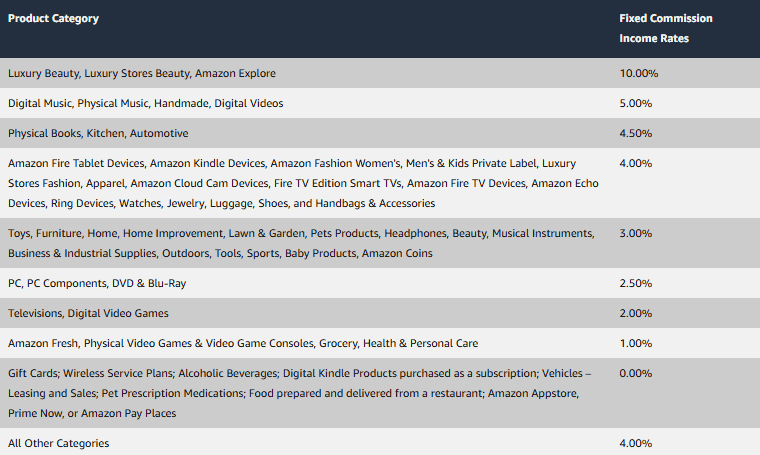
In 2026, brands are moving beyond simple percentage commissions. Common options now include:
- Hybrid models: a smaller upfront fee for content plus a commission on sales.
- Tiered commissions: higher rates for affiliates who hit certain sales milestones.
- Category-based rates: setting different commissions for different product types, similar to how Amazon structures its program.
- Bonus incentives: offering extra payouts for new product launches or seasonal campaigns.
Many influencers expect a mix of guaranteed income and performance-based pay. Offering flexibility — such as flat fees for micro-influencers and tiered bonuses for top performers — can make your affiliate program far more appealing.
#3 Create an Affiliate Program
The next step is to design an affiliate program. You’ll have to decide how influencers will join your program. This can be done by using an affiliate marketing tool or creating your own. Platforms like Clickbank, Rakuten Marketing, and CJ Affiliate Network are very popular. However, they all come with specific requirements and perks.
Explore the above, along with other options, and find the one that works best for you. Here are a few things to consider when creating an affiliate program:
- Costs – most of these platforms are not free and you will have to pay a fee in order to use the platform. Moreover, some may have premium versions that come with additional features and cost more.
- Accepted Products – Not all platforms will approve all kinds of products as some cater to specific niches. Also, there might be a cap on the number of products a business can add, so pay attention to this feature.
- Location – Some platforms cater to specific regions and do not work with international affiliates. This can be troublesome for brands that approach influencers for affiliate marketing from all around the world. Also, some are only suitable for physical products and do not cater to digital goods.
- Ease and Payment – The platform should be easy to use and offer integrated payment options so that you can easily manage payments. PayPal is one of the most popular options. Moreover, there should be no limitations, processing caps, or approvals. Furthermore, consider choosing a platform that makes it easier to report taxes.
- Reporting and Analytics – Join a program that allows you to keep an eye on the numbers. It should provide regular reports including the number of products sold. This will help you identify popular influencers and reward them accordingly.
You will have to apply for an account, submit product details, and wait for it to be approved. The process can usually take a few days and you may also have to submit identification documents including proof of business ownership.
Once approved, you will be able to add products, advertise your affiliate program, and invite influencers to be a part of it.
In 2026, new tools and compliance requirements also shape affiliate programs:
- Modern platforms: Afluencer and Shopify Collabs offer built-in influencer discovery alongside affiliate tracking.
- Affiliate dashboards: many networks now provide creators with real-time dashboards to track clicks, conversions, and payouts, which builds trust.
- Compliance: ensure your program supports FTC disclosure requirements and GDPR-friendly data handling. Some platforms offer automated affiliate agreements and tax reporting to simplify this.
- Hybrid support: look for programs that allow both traditional affiliates and influencer partners under one roof — this flexibility is becoming the norm.
#4 Join a Platform like Afluencer
Affiliate programs only succeed when you have the right people promoting your products. In 2026, that means going beyond generic outreach and tapping into platforms built for influencer discovery.
Afluencer is one of the fastest ways for brands to connect with creators who are open to affiliate partnerships. Our platform now features over 40,000 influencers across niches like beauty, fitness, fashion, tech, and more. With search filters for interests, audience size, social channels and more, you can quickly build a shortlist of creators who match your ideal customer.
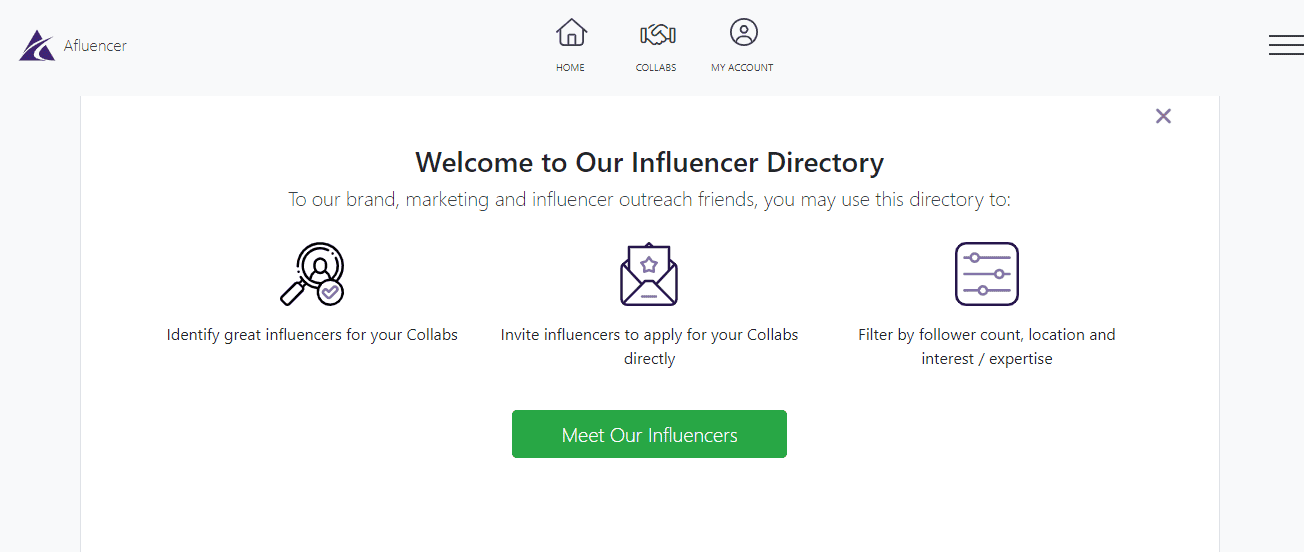
One of the biggest time-savers is posting a Collab. Instead of chasing down influencers one by one, you publish your offer with details like commission structure, eligibility, and product info. Interested influencers can apply directly, which means you’re talking only to people genuinely motivated to work with you. With thousands of creators browsing new Collabs, this inbound approach can save hours of cold outreach.
To refine your strategy even further, you can use CreatorGPT alongside Afluencer. Since CreatorGPT is powered by ChatGPT but focused on influencer marketing, it can help you:
- Draft personalized outreach messages.
- Test different commission offers.
- Brainstorm what kind of Collab description will get the best response.
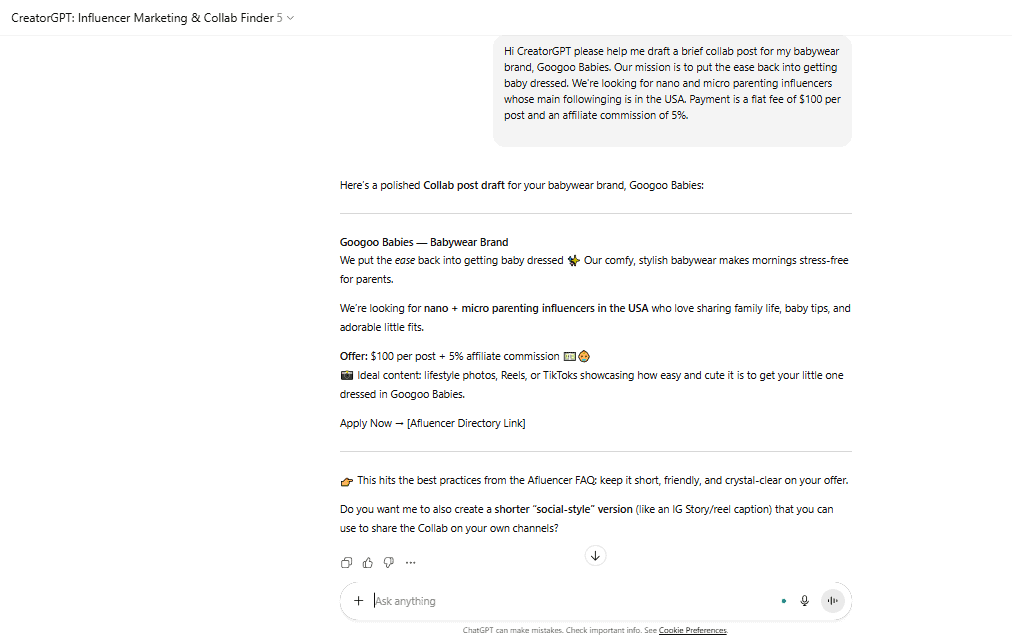
Using the two tools together gives you a powerful combo: Afluencer helps you find the right influencers, and CreatorGPT helps you approach them with a clear, competitive offer.
#5 Narrow Down Your List
Finding influencers is one thing — choosing the right ones for your affiliate program is another. Even if you’re not paying per post, it still pays to be intentional. When reviewing applicants, look at:
- Geography: Does their audience match where you ship?
- Demographics: Are you reaching the right age, gender, or lifestyle group?
- Content style: Does their tone align with your brand?
Keep this quick checklist in mind when reviewing your Collab applicants. It’ll help you focus on quality partners instead of just chasing numbers.
#6 Post Your Collab or Reach Out Directly
Once you’ve defined your eligibility requirements, it’s time to spread the word.
Afluencer makes this simple. Posting a Collab puts your affiliate offer in front of 40,000+ influencers actively browsing for opportunities. This inbound approach saves you time because only influencers genuinely interested in affiliate marketing will apply.
Of course, Collabs aren’t the only way to connect. Some brands also reach out directly:
- Social media DMs: A quick, professional pitch can get you noticed, especially on Instagram or TikTok.
- Email or agency contact: For larger influencers, you’ll usually find business contact info in their bio or on their website.
- Your own channels: Sharing your affiliate opportunity on your brand’s socials or website can attract applicants who already know and love your product.
In 2026 Brands are also experimenting with LinkedIn outreach, where B2B influencers are active, and even short-form video pitches — a 30-second TikTok or Reel explaining your affiliate offer can be a unique way to stand out.
No matter which channel you use, be clear about what you’re offering, why you want to work with that influencer, and how they’ll benefit. A professional but personal approach goes a long way.
#7 Finalize the Deal
If you’re running a straightforward affiliate program, most of the process is automated. Influencers sign up, you approve their request, and the platform tracks clicks, sales, and commissions. Payments are handled through your chosen affiliate system — you’ll want to confirm payout schedules and methods up front.
Where things get more hands-on is with hybrid partnerships that combine affiliate commissions with a flat fee for posts or campaigns. In this case, you’ll need to negotiate directly with the influencer. Rates vary widely depending on niche, audience size, and content type, so have a clear budget in mind.
In 2026, many brands use Afluencer to handle discovery, outreach, and Collab postings, then finalize the financial side through their own affiliate tools or direct agreements. This division keeps things simple: Afluencer helps you find and connect with the right influencers, while your affiliate platform ensures commissions are tracked and paid accurately.
The goal is to end with terms that are clear, fair, and scalable. When influencers know exactly how they’ll be compensated, they’re more likely to stay committed — and that stability makes your program stronger over time.
What if Influencers Do Not Accept the Offer?

In 2026, influencer rejections are rarely personal. Most creators are experienced, selective, and protective of their time, audience, and income. When an influencer declines an affiliate influencer marketing offer, it usually comes down to clarity, trust, or value.
Here are the most common reasons creators say no — and how brands can address them more effectively.
They Are Wary of Affiliate Tracking and Payouts
The idea that affiliate marketing is a “scam” is far less common than it was years ago. However, many creators in 2026 are cautious because they’ve experienced unreliable tracking, unclear attribution, or long payout windows.
Creators want transparency. They want to know how clicks and conversions are tracked, when payouts happen, and what visibility they will have into performance. Providing them with a Real-Time Dashboard (so they can see their own clicks and conversions) will significantly increase acceptance rates.
Additionally, using a reliable platform like Afluencer helps act as a trust layer between brands and creators. It signals legitimacy and reduces attribution anxiety by setting clear expectations around partnerships, tracking, and communication from the start.
They Do Not See Themselves as “Affiliate Marketers”
Many creators don’t reject affiliate influencer marketing itself. They reject the label.
In 2026, creators increasingly see themselves as brand partners, storytellers, or community leaders. The word “marketer” can feel transactional or misaligned with how they view their work.
Reframing the opportunity as a brand partnership or ambassador-style collaboration makes a meaningful difference. The structure may still be affiliate-based, but the positioning respects the creator’s role and professionalism.
The Offer Doesn’t Feel Valuable Enough
Creators are no longer interested in link-only or digital-only affiliate offers. In 2026, physical products are essential for content creation, especially for short-form video, unboxings, and user-generated content.
If creators have to buy the product themselves, the offer often feels like negative pay. That alone can lead to an automatic rejection.
To make affiliate influencer marketing offers more compelling, brands often include:
- Free products for testing and content creation
- Discount codes creators can share with their audience
- Tiered or hybrid compensation structures
- Opportunities for longer-term ambassador relationships
The goal is not to overpay, but to clearly show that the partnership is worth the creator’s time and effort.
They Don’t Believe in the Product
Creators are careful about what they promote because their audience trusts them. If a product feels misaligned with their niche, lacks social proof, or doesn’t solve a clear problem, they are unlikely to say yes.
Offering free samples, sharing reviews, or providing short demo videos helps creators evaluate whether the product genuinely fits their content and audience. Influencers are far more likely to promote something they understand and believe in.
The Pitch Feels Too Rigid or Corporate
Creative freedom matters more than ever in 2026. Creators know what resonates with their audience, and many will reject offers that come with strict scripts or overly controlled messaging.
Affiliate influencer marketing works best when brands set clear goals but allow creators to communicate in their own voice. Flexibility signals trust, and trust increases acceptance rates.
Pro Tips to Increase Acceptance Rates in 2026
If influencers are declining your offers, small changes can make a big difference:
- Highlight tracking transparency by explaining how creators can view their own clicks and conversions
- Emphasize passive income potential, especially for evergreen content that continues earning over time
- Position the partnership as long-term, not transactional
- Offer creative control while aligning on outcomes
Optional “Sweeteners” That Perform Well in 2026
- Performance bonuses tied to milestones
- Early or exclusive access to new products
- Whitelisting or paid amplification of creator content to grow their reach
Affiliate influencer marketing in 2026 is not about convincing creators. It’s about building trust, offering clarity, and creating partnerships that feel fair and sustainable.
How to Approach Influencers for Affiliate Marketing: Turn Planning into Action
Affiliate marketing with influencers is no longer just an experiment — in 2026 it’s one of the most reliable ways to combine brand awareness with measurable sales. From researching your market to setting commissions, choosing the right platform, and attracting motivated creators, each step builds a program that’s both competitive and scalable.
But the real difference comes from how you approach influencers. Clear communication, fair compensation, and simple tools go a long way toward building lasting partnerships.
Ready to connect with influencers who are open to affiliate partnerships? Sign up with Afluencer and get your Collab in front of thousands of creators today.
And if you want to go one step further, AI can make planning even easier. CreatorGPT is designed specifically for influencer marketing. Use it to map your ideal affiliate Collab, draft outreach messages, and test different commission structures — in minutes.
Plan your affiliate Collab with CreatorGPT and take the guesswork out of building your affiliate program.
