





Quick Decision Framework
- Who this is for: Shopify store owners spending $3,000+ monthly on video content, product demos, or influencer partnerships who need scalable video production
- Skip if: You have fewer than 20 SKUs, your products don’t benefit from visual demonstration, or you’re satisfied with static product images
- Key benefit: Produce unlimited professional product videos at 10% of traditional costs while increasing conversion rates by 80% through engaging AI avatar presentations
- What you’ll need: AI avatar platform subscription ($50-500/month), product scripts or descriptions, willingness to test different avatar styles and messaging approaches
- Time to complete: 1-3 days to create your first video library, with ongoing production taking 15-30 minutes per video once workflows are established
Product videos increase conversion rates by 80% on average, yet traditional video production costs $1,000-5,000 per video. In 2026, AI avatars deliver the same conversion lift at 10% of the cost, with 93% of consumers preferring brands that offer video content—making this technology a competitive necessity, not an option.
What You’ll Learn
- How AI avatars reduce video production costs by 90% while delivering the same 80% conversion rate increase as traditional video
- Why 93% of consumers prefer brands with video content and how AI avatars make this expectation affordable for any store size
- The five high-impact use cases where AI avatars drive immediate sales lift: product demos, testimonials, tutorials, FAQs, and personalized recommendations
- How to implement AI avatars in your Shopify store within 72 hours and start seeing measurable conversion improvements
- The quality standards and authenticity balance required to maintain consumer trust while scaling video production 10x
Video sells. Everyone knows this. Product videos can lift conversions by 80% or more. The problem is that producing quality video content is expensive, slow, and requires skills most small teams don’t have. Hiring videographers, editors, and on-camera talent adds up fast. For Shopify stores with hundreds of products, traditional video production becomes impossible to scale without massive budgets.
AI avatar change the math completely. These digital presenters can explain your products, answer common questions, and guide customers through your catalog—all without hiring a single person to appear on camera. The technology has matured to the point where AI avatars look and sound natural, engage viewers effectively, and cost a fraction of traditional video production.
The numbers are compelling: in 2026, the AI avatar market is projected to reach $527.58 million, growing at 46.4% CAGR through 2030. This explosive growth is driven by measurable business impact—93% of consumers say they prefer brands that offer video content, yet most small businesses can’t afford traditional production at scale. AI avatars solve this fundamental constraint.
This article breaks down exactly how Shopify stores are using AI avatars to sell more products, improve customer experience, and cut content costs—without sacrificing the quality that builds trust.
The 2026 Reality: Video Is No Longer Optional
Consumer expectations have shifted decisively. Video content generates 1200% more shares than text and images combined. Product videos increase purchase likelihood by 85%. Yet 72% of customers prefer learning about products through video rather than text, and 88% say they’ve been convinced to buy after watching a brand’s video.
The gap between consumer expectations and merchant capabilities has never been wider. Traditional video production costs $1,000-5,000 per video, making comprehensive product video coverage financially impossible for most Shopify stores. A catalog of 100 products would require $100,000-500,000 in video production—a budget that only enterprise brands can justify.
AI avatars collapse this cost structure. The same 100 videos that would cost $100,000+ traditionally can be produced for $500-2,000 using AI avatar platforms. The quality has reached a threshold where consumers can’t reliably distinguish AI avatars from human presenters in product demonstration contexts.
More importantly, the conversion lift is equivalent. Whether a human or AI avatar explains your product, the impact on purchase decisions is comparable—both deliver the 80% conversion increase that makes video essential for competitive e-commerce in 2026.
What AI Avatars Actually Do
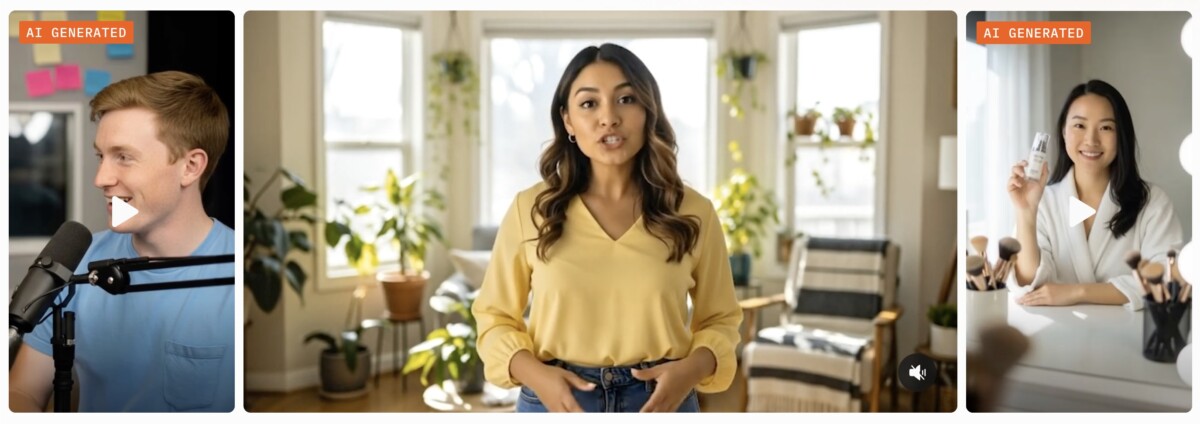
AI avatars are digital humans that can present your content in video format. You provide a script, select an avatar, choose a voice, and the platform generates a video where the avatar delivers your message with natural gestures, expressions, and lip-sync accuracy.
The technology has evolved dramatically. Early AI avatars looked robotic and felt uncanny. Modern versions in 2026 feature realistic facial movements, natural body language, and voice synthesis that matches emotional tone to content. They can speak in 70+ languages, adjust presentation style to match brand personality, and maintain consistency across hundreds of videos.
For Shopify stores, this means you can create product demonstrations, explain features and benefits, answer frequently asked questions, and guide purchasing decisions—all through engaging video content that looks professional and feels authentic.
The workflow is straightforward: write a script describing your product, upload product images or video clips, select an avatar that matches your brand aesthetic, generate the video, and embed it on your product pages. The entire process takes 15-30 minutes per video once you’ve established your workflow.
Five High-Impact Use Cases That Drive Immediate Sales
1. Product Demonstrations That Show, Don’t Just Tell
Static images and text descriptions force customers to imagine how your product works. Video demonstrations remove that friction by showing the product in action. AI avatars can walk customers through features, highlight benefits, and demonstrate use cases in ways that static content simply cannot.
For complex products—electronics, beauty tools, kitchen gadgets, fitness equipment—demonstration videos dramatically reduce purchase hesitation. The avatar can point out specific features, explain how components work together, and address common confusion points that typically require customer service intervention.
The conversion impact is measurable: product pages with demonstration videos see 80% higher conversion rates on average. For a Shopify store doing $50,000 monthly revenue, that translates to an additional $40,000 monthly—a return that justifies AI avatar investment within days.
2. Customer Testimonials at Scale
Social proof drives purchasing decisions, but collecting and producing video testimonials is time-consuming and expensive. AI avatars can present written testimonials in video format, adding the emotional impact of a human presenter without requiring customers to appear on camera.
This approach solves a critical problem: you likely have dozens or hundreds of positive written reviews, but converting those into video testimonials traditionally requires contacting customers, coordinating filming, and editing footage. With AI avatars, you simply input the testimonial text, and the avatar delivers it with appropriate emotional tone and emphasis.
The authenticity question matters here. Clearly label these as AI-presented testimonials using actual customer feedback. Transparency maintains trust while delivering the conversion benefits of video social proof. Research shows 79% of consumers have been convinced to buy software or apps by watching a brand’s video—the same psychological trigger applies to product testimonials.
3. Tutorial and How-To Content
Post-purchase education reduces returns, increases satisfaction, and builds customer lifetime value. AI avatars excel at creating tutorial content that helps customers get maximum value from their purchases.
For products that require assembly, setup, or skill development, tutorial videos dramatically improve the customer experience. The avatar can walk through step-by-step instructions, highlight common mistakes, and provide troubleshooting guidance—all without requiring you to film multiple takes or hire instructional designers.
This content also serves a pre-purchase function. Customers researching products often want to understand the learning curve and complexity before buying. Comprehensive tutorial content visible on product pages reduces purchase anxiety and positions your brand as supportive and customer-focused.
4. FAQ Videos That Reduce Support Load
Every product generates predictable questions: How does it work? What’s included? What are the dimensions? Is it compatible with X? Creating individual AI avatar videos answering each common question provides immediate value to customers while reducing support ticket volume.
These FAQ videos can be embedded directly on product pages, linked from customer service emails, or compiled into comprehensive product guides. The format makes information more accessible than text-based FAQs—customers can watch a 30-second video rather than reading through paragraphs of documentation.
The efficiency gain compounds over time. Each FAQ video answers the same question hundreds or thousands of times, freeing your support team to handle complex issues that require human judgment. For Shopify stores processing hundreds of orders monthly, this support load reduction delivers measurable cost savings and improved customer satisfaction.
5. Personalized Product Recommendations
AI avatars can present personalized product suggestions based on browsing behavior, purchase history, or customer segments. Rather than generic “you might also like” carousels, video recommendations feel more engaging and trustworthy.
The avatar can explain why specific products complement previous purchases, highlight seasonal offerings relevant to the customer’s location, or introduce new arrivals that match demonstrated preferences. This approach transforms product discovery from passive browsing to guided exploration.
For cross-selling and upselling, video recommendations significantly outperform static suggestions. The avatar can articulate value propositions, address potential objections, and create urgency—all tactics that drive incremental revenue but require human-like presentation to feel authentic rather than pushy.
Implementation: Getting AI Avatars Live in 72 Hours
The technical implementation is straightforward for Shopify stores. Most AI avatar platforms provide embed codes or Shopify app integrations that require no coding knowledge.
Step 1: Choose Your Platform (Day 1, 2-3 hours)
Leading AI avatar platforms in 2026 include Synthesia, HeyGen, D-ID, and Colossyan. Evaluate based on:
- Avatar quality and variety: Does the platform offer avatars that match your brand aesthetic and target demographic?
- Voice options: Can you select voices that sound natural and match your brand personality?
- Language support: If you sell internationally, does the platform support your target markets?
- Pricing structure: Most platforms charge per video minute or offer monthly subscription tiers
- Shopify integration: Native apps or embed codes that work seamlessly with your theme
Most platforms offer free trials. Create 2-3 test videos to evaluate quality before committing to a subscription.
Step 2: Create Your First Video Library (Day 1-2, 4-6 hours)
Start with your top 10-20 products—the ones driving the most revenue or requiring the most customer education. For each product, create:
- Product overview (30-60 seconds): What it is, key benefits, who it’s for
- Feature demonstration (60-90 seconds): How it works, what makes it unique
- FAQ video (20-30 seconds each): Answer the 3-5 most common questions
Use your existing product descriptions and customer service data to write scripts. The best scripts sound conversational rather than sales-focused—imagine you’re explaining the product to a friend who asked about it.
Step 3: Embed Videos on Product Pages (Day 2-3, 2-3 hours)
Place videos strategically on product pages:
- Above the fold: Primary product demonstration video near main product images
- Mid-page: Feature breakdown videos in the product description section
- Below reviews: FAQ videos addressing common questions or concerns
Most Shopify themes support video embedding through custom HTML blocks or native video sections. Test on mobile devices—70%+ of e-commerce traffic comes from mobile, and video must load quickly and play smoothly on smaller screens.
Step 4: Measure and Iterate (Ongoing)
Track these metrics to quantify AI avatar impact:
- Conversion rate comparison: Products with videos vs. without
- Video engagement: What percentage of visitors watch, and how much of each video?
- Time on page: Do videos increase engagement and reduce bounce rates?
- Support ticket reduction: Do FAQ videos decrease common questions?
- Return rate changes: Do tutorial videos reduce returns for complex products?
Use this data to refine your approach. If certain video types drive stronger results, prioritize creating more of that content. If engagement drops off at specific points, edit videos to be more concise or engaging.
The Quality Standard: What Actually Works in 2026
Not all AI avatar implementations succeed. The difference between videos that convert and videos that feel off comes down to quality standards and authenticity balance.
Script Quality Matters More Than Avatar Quality
A mediocre avatar delivering a great script outperforms a photorealistic avatar reading generic copy. Invest time in script development:
- Conversational tone: Write how people actually speak, not how marketing copy reads
- Specific benefits: Avoid generic claims—explain exactly how the product solves specific problems
- Natural pacing: Include pauses, emphasis, and varied sentence structure
- Clear calls-to-action: Tell viewers exactly what to do next
Avatar Selection Impacts Trust
Choose avatars that match your target demographic and brand positioning. A luxury skincare brand needs a different avatar aesthetic than a budget electronics store. Consider:
- Age and appearance: Does the avatar look like your target customer or an aspirational figure they trust?
- Professionalism level: Formal business attire vs. casual approachable style
- Diversity representation: Rotate avatars to reflect your customer base
- Consistency: Use the same avatar across related products to build familiarity
Transparency Builds Trust
The authenticity paradox: 52% of consumers reduce engagement when they suspect AI-generated content, yet AI avatars deliver equivalent conversion rates when implemented correctly. The solution is selective transparency.
For product demonstrations and educational content, most customers don’t care whether a human or AI avatar presents the information—they care about clarity and usefulness. For testimonials and personal stories, transparency is essential. Label AI-presented customer testimonials clearly to maintain trust.
The winning approach: use AI avatars for functional content (demos, tutorials, FAQs) without extensive disclaimers, but be transparent when presenting user-generated content or personal narratives through AI avatars.
Cost-Benefit Analysis: The Math That Matters
Let’s compare traditional video production to AI avatars for a Shopify store with 100 products:
Traditional Video Production
- Cost per video: $1,000-5,000 (professional production)
- Total cost for 100 products: $100,000-500,000
- Production time: 2-4 weeks per batch of 10 videos
- Revision costs: $500-2,000 per video for updates
- Scalability: Linear cost increase with product catalog growth
AI Avatar Production
- Platform subscription: $50-500/month ($600-6,000/year)
- Cost per video: $5-50 depending on length and platform
- Total cost for 100 products: $500-5,000 + annual subscription
- Production time: 15-30 minutes per video once workflow established
- Revision costs: $5-50 per video (regenerate with updated script)
- Scalability: Marginal cost for additional videos
The cost difference is 90-95% in favor of AI avatars. More importantly, the low marginal cost of additional videos makes comprehensive catalog coverage financially viable. You can create videos for every product, every variation, every use case—something impossible with traditional production budgets.
Revenue Impact Calculation
For a Shopify store generating $50,000 monthly revenue with a 2% conversion rate:
- Baseline: $50,000/month, 2% conversion rate
- With AI avatar videos: 80% conversion increase = 3.6% conversion rate
- New revenue: $90,000/month
- Incremental revenue: $40,000/month ($480,000/year)
- AI avatar investment: $5,000 first year (setup + subscription)
- ROI: 9,600% first year
Even if your conversion lift is half the average (40% instead of 80%), the ROI remains extraordinary. The math works for stores of any size because the cost structure scales with your catalog, not your revenue.
Advanced Strategies: Beyond Basic Product Videos
Once you’ve mastered basic product demonstrations, these advanced applications unlock additional value:
Multilingual Expansion Without Translation Costs
AI avatars can present the same script in 70+ languages with native pronunciation and cultural adaptation. This enables international expansion without hiring translators, voice actors, or international video production teams.
For Shopify stores testing new markets, create product videos in target languages before investing in full localization. If the market shows promise, you’ve already got video content live. If it doesn’t, you’ve risked minimal investment.
Seasonal and Promotional Content at Scale
Traditional video production makes seasonal content economically challenging—by the time you produce Black Friday videos, the season has passed. AI avatars enable same-day production of promotional content.
Create holiday gift guides, flash sale announcements, and seasonal product recommendations in hours rather than weeks. Update pricing, availability, and offers in real-time without reshooting or re-editing.
A/B Testing Video Messaging
The low cost of AI avatar videos makes comprehensive A/B testing viable. Test different:
- Script approaches: Feature-focused vs. benefit-focused vs. problem-solution
- Video length: 30-second overview vs. 90-second deep dive
- Avatar styles: Professional vs. casual, male vs. female, different age ranges
- Call-to-action placement: Beginning vs. end, urgent vs. informative tone
Traditional video production makes this testing prohibitively expensive. With AI avatars, you can create 10 variations for the cost of one traditional video and let data determine the winning approach.
Personalized Video at Scale
Advanced implementations use AI avatars to create personalized videos based on customer data. Welcome videos addressing customers by name, abandoned cart reminders explaining specific products left behind, or post-purchase tutorials customized to purchased items.
This level of personalization was previously available only to enterprise brands with massive budgets. AI avatars make it accessible to Shopify stores of any size, creating competitive advantages through superior customer experience.
Common Mistakes and How to Avoid Them
Mistake 1: Using AI Avatars for Everything
AI avatars excel at functional content—product demonstrations, tutorials, FAQs. They’re less effective for brand storytelling, founder narratives, or emotional connection-building. Use human presenters for content where authenticity and personal connection matter most.
Mistake 2: Generic Scripts That Sound Like Ads
The biggest quality killer is sales-focused copy that sounds like an infomercial. Write scripts that educate and inform rather than hype and sell. Let the product benefits speak for themselves through clear demonstration and explanation.
Mistake 3: Ignoring Mobile Optimization
70%+ of e-commerce traffic comes from mobile devices. Videos must load quickly, play smoothly, and remain engaging on small screens. Test every video on actual mobile devices before publishing.
Mistake 4: No Measurement or Iteration
Creating videos is step one. Measuring their impact and iterating based on data is where real value compounds. Track conversion rates, engagement metrics, and customer feedback. Double down on what works, eliminate what doesn’t.
Mistake 5: Overproduction Without Testing
Don’t create 100 videos before testing whether AI avatars work for your audience. Start with 10-20 videos on your best-selling products. Measure results. Refine your approach. Then scale production once you’ve validated the impact.
The Competitive Reality: Video Is Now Table Stakes
In 2026, video content is no longer a differentiator—it’s an expectation. 93% of consumers prefer brands that offer video content. 88% say they’ve been convinced to buy after watching a brand’s video. Product videos increase purchase likelihood by 85%.
The stores winning in this environment aren’t necessarily the ones with the biggest video budgets. They’re the ones that figured out how to produce high-quality video content at scale without breaking the bank. AI avatars are the technology that makes this possible.
For Shopify stores competing against Amazon, large retailers, and well-funded DTC brands, AI avatars level the playing field. Your product videos can look as professional and engaging as those from brands spending 10x more—because you’re using the same technology they are, just at a fraction of the cost.
Getting Started: Your 30-Day Implementation Plan
Week 1: Research platforms, create test videos, evaluate quality and workflow
Week 2: Write scripts for your top 20 products, create initial video library
Week 3: Embed videos on product pages, implement tracking, launch to customers
Week 4: Analyze performance data, identify winning patterns, plan expansion
By day 30, you’ll have measurable data showing whether AI avatars drive conversion improvements for your specific products and audience. For most Shopify stores, the answer is overwhelmingly yes—but testing on your own catalog with your own customers is the only way to know for certain.
The brands that move fast on this technology gain a compounding advantage. Every day without video content is a day of lost conversions and competitive disadvantage. AI avatars remove the last remaining barrier—cost and complexity—that prevented comprehensive video coverage.
Start now. Test quickly. Scale what works. Your competitors are already doing this. The question is whether you’ll lead or follow.
Frequently Asked Questions
How much do AI avatars actually cost compared to traditional video production?
AI avatar platforms typically cost $50-500/month in subscription fees, with individual videos costing $5-50 depending on length and platform. For a 100-product catalog, total cost is $500-5,000 plus annual subscription ($600-6,000). Traditional video production costs $1,000-5,000 per video, making the same 100 videos cost $100,000-500,000. That’s a 90-95% cost reduction. More importantly, AI avatars make revision costs negligible ($5-50 to regenerate) compared to traditional reshoots ($500-2,000). The low marginal cost enables comprehensive catalog coverage that’s financially impossible with traditional production.
Do AI avatar videos actually convert as well as human-presented videos?
Yes, when implemented correctly. Product videos increase conversion rates by 80% on average regardless of whether a human or AI avatar presents the content. The conversion lift comes from showing products in action, explaining benefits clearly, and reducing purchase hesitation—all of which AI avatars accomplish effectively. However, quality matters: well-scripted AI avatar videos with natural pacing and clear messaging convert better than poorly produced human videos. The key is focusing on script quality, avatar selection that matches your brand, and functional content (demos, tutorials, FAQs) rather than emotional storytelling where human presenters excel.
Will customers trust AI avatars, or will it hurt my brand credibility?
Consumer acceptance depends on context and transparency. For functional content like product demonstrations, tutorials, and FAQs, most customers focus on information quality rather than presenter authenticity. Research shows 52% of consumers reduce engagement when they suspect AI content, but this primarily applies to testimonials and personal narratives. The winning approach: use AI avatars for educational and demonstration content without extensive disclaimers, but be transparent when presenting user-generated content through AI avatars. Quality execution matters more than the technology itself—a professional AI avatar video builds more trust than a poorly shot human video.
How long does it take to create AI avatar videos, and what skills do I need?
Initial setup takes 2-3 hours to evaluate platforms and create test videos. Once your workflow is established, producing individual videos takes 15-30 minutes each. No technical skills are required—if you can write a product description, you can create AI avatar videos. The workflow: write a conversational script explaining your product, select an avatar that matches your brand aesthetic, choose a natural-sounding voice, generate the video, and embed it on your product page. Most platforms offer Shopify integrations or simple embed codes. The learning curve is minimal, and most store owners create their first production-quality video within their first hour of using the platform.
What are the best use cases for AI avatars in Shopify stores?
The five highest-impact use cases are: (1) Product demonstrations showing features and benefits in action—drives 80% conversion increase; (2) Tutorial and how-to content reducing returns and support tickets; (3) FAQ videos answering common questions directly on product pages; (4) Customer testimonials presented at scale using actual review text; (5) Personalized product recommendations based on browsing or purchase history. Start with product demonstrations on your top 10-20 revenue-generating products to validate impact before expanding. Avoid using AI avatars for brand storytelling, founder narratives, or emotional content where human authenticity matters most. Focus on functional content where clarity and information delivery drive purchasing decisions.
