





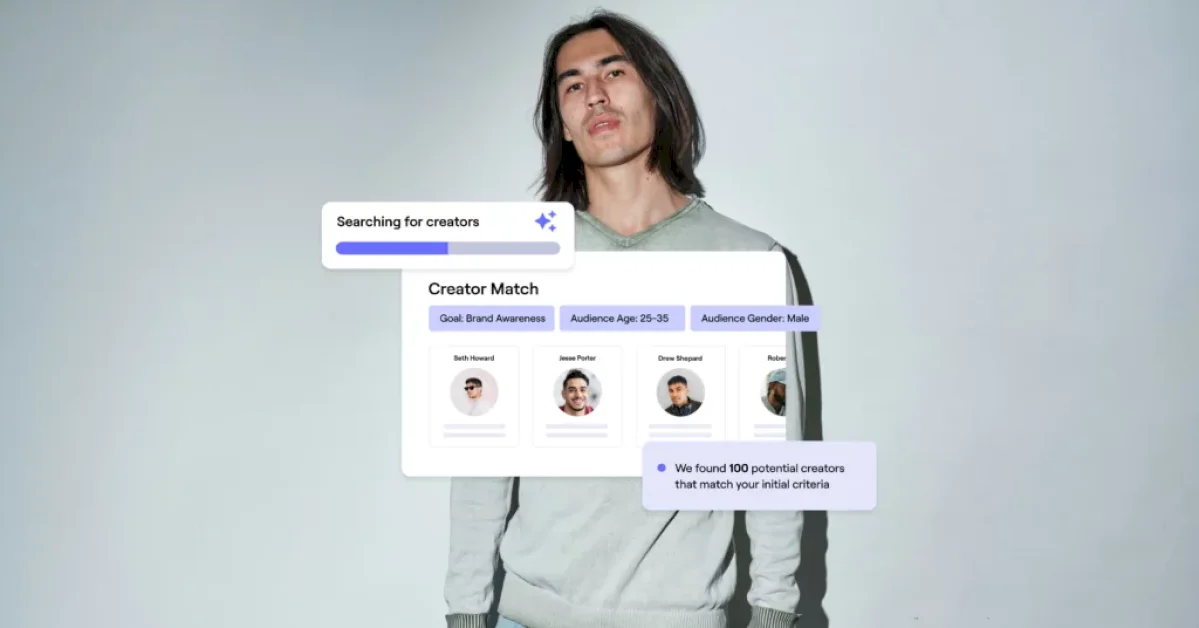
AI is transforming influencer marketing by removing guesswork, predicting performance, and automating the busywork so marketers can focus on creativity and relationships. Here’s how brands can use AI today.
If influencer marketing used to feel like “vibes-based marketing,” AI is officially ending that era.
For years, creators and brands relied on gut checks, screenshots of analytics, and trial-and-error to decide who to work with. But the stakes are higher now. Margins are tighter, creators are savvier, and leadership wants measurable ROI.
Enter AI.
Not the scary “robots replacing marketers” kind, the kind that sits next to you and whispers, “Hey, this campaign will fail for three very specific reasons. Want help?”
This is the moment influencer marketing becomes predictable.
Let’s break down what AI actually does in influencer marketing, and how to start using it today.
What AI Actually Does (Without the Buzzwords)
1. Predicts what creators will perform — before you hire them
AI can look at thousands of signals across creators:
- Past engagement trends
- Conversion patterns
- Audience sentiment
- Category alignment
- Seasonal performance
So instead of choosing creators based on vibes or follower count, brands can finally predict who will drive actual revenue before the contract is signed.
2. Eliminates manual campaign management
Every marketer has had “spreadsheet fatigue syndrome.”
AI kills that.
It automates:
- Creator sourcing
- Outreach
- Contract tracking
- Product seeding
- Reminders
- Approvals
- Reporting
You stop being the “campaign babysitter” and go back to being a strategist.
3. Surfaces insights you’d miss manually
AI can spot micro-anomalies in performance like:
- Downward engagement trends
- Poor PDP copy affecting conversion
- Creative fatigue
- Products with negative sentiment
- Audiences aging out of a category
It connects dots humans don’t have time to connect.
How Brands Are Using AI Today
1. Creator discovery at scale
Instead of filtering creators down to 10 people (classic mistake), AI widens the funnel and finds creators you never would’ve found manually.
2. Forecasting campaign ROI
Brands are now better able to predict:
- Revenue
- Content output
- Click-through rates
- Potential cost savings
- Creator channel performance
Before they even launch.
3. Automated influencer outreach
AI writes:
- High-performing outreach sequences
- Personalized messages
- Follow-ups
- Answers to FAQs
…while keeping your tone and brand voice in mind.
4. Content planning + recommendations
AI recommends:
- What content type performs best
- Ideal posting day/time
- Captions that convert
- Hooks for Reels & TikTok
- Top keywords for SEO-friendly content
Why AI Won’t Replace Influencer Marketers
Because AI can’t:
- Build relationships
- Understand brand nuance the way humans do
- Interpret cultural trends with emotional intelligence
- Think creatively
- Collaborate with creators
AI does everything that is repetitive, predictable, or data-heavy.
Marketers do everything that requires taste, nuance, and judgment.
It’s a partnership, not a takeover.
How to Get Started (Even if You’re Skeptical)
1. Start by automating one workflow
Try:
- Outreach
- Reporting
- Content approval
- Product seeding
Once you see the time saved, you won’t go back.
2. Use AI as a strategist, not a substitute
Have AI give you:
- Insights
- Creator recommendations
- Predicted ROI
- Performance risks
Then you, the marketer, make the final call.
3. Let AI handle your “wish list” tasks
Every marketer has a list of things they wish they had time for:
- Microtrend analysis
- Competitor benchmarking
- Sentiment tracking
- A/B testing content themes
AI finally makes those possible.
The Bottom Line
AI in influencer marketing isn’t about replacing humans.
It’s about finally giving marketers the tools they’ve always needed:
- Faster insights
- Better data
- Stronger predictions
- Higher ROI
- Way less manual work
Influencer marketing isn’t guesswork anymore.
It’s a strategy, powered by AI.
Want to see how AI can help your influencer program scale? Explore GRIN’s AI-powered workflows and discover what creator marketing looks like without the guesswork.
