






Product visualization has evolved significantly from simple static photos and 2D sketches.
Key Takeaways
- AI transforms product visualization by creating interactive 3D models, AR previews, and virtual showrooms, helping customers make more confident buying decisions.
- Automated image editing and 3D modeling save significant time for businesses, letting teams focus on strategic work instead of repetitive tasks.
- Virtual try-ons and AR integration help reduce return rates by giving shoppers a clearer understanding of products before purchase.
- AI personalizes the shopping experience by tracking customer preferences and suggesting relevant product variations, leading to higher conversion rates.
- The future of AI visualization includes real-time product customization, virtual shopping spaces, and improved body scanning for more accurate fit predictions.
- Businesses across retail, interior design, manufacturing, and fashion are using AI visualization to streamline operations and enhance customer experience.
Consumers can now spin 3D models, use augmented reality (AR) “try-ons,” and even walk through virtual showrooms, all without leaving their homes. Artificial intelligence (AI) is at the heart of these immersive experiences, capable of analyzing and creating dynamic, interactive product representations. But how exactly does AI power these immersive experiences, and how can businesses harness it without diving too deep into technical complexities? In this post, we’ll explore the core ways AI enhances product visualization, highlighting the real-world benefits and tangible outcomes it offers. We’ll also address common hurdles and emerging trends so you can stay ahead in this quickly evolving landscape.
Understanding AI in Product Visualization
At its core, AI is transforming product visualization by using machine learning to build, refine, or adapt digital product representations. This includes AI 3D rendering for photorealistic images, interactive AR previews to see products in real-world settings, and even generative design that instantly generates new concepts. The result is a more immersive, efficient way for customers to explore and understand what they’re buying.
To accomplish this, AI models typically rely on large, high-quality datasets – such as multiple angles of product photography, CAD (Computer-Aided Design) files, or user engagement data. Once trained, these models can do things like clean up images automatically, produce photorealistic 3D mockups, or personalize visuals based on customer preferences (for example, changing colors, patterns, or styles). The end result is a more engaging and immersive encounter with the product, improving both the shopping experience for customers and workflow efficiencies for businesses.
AI design tools like Sivi are transforming visual content creation by enabling businesses to produce fully customizable, high-quality designs quickly. Sivi with its proprietary Large Design Model (LDM) eliminates the need for templates, allowing for unique and adaptable visuals that align with specific brand requirements. With support for multiple languages and dynamic adjustments, ai design tools like this cater to diverse audience preferences, enhancing the effectiveness of marketing strategies. This approach streamlines workflows, making the process of generating professional visuals more efficient and accessible, while also improving audience engagement through tailored content.
Why eCommerce Businesses Are Integrating AI
For many brands, adopting AI for product visualization is about building buyer confidence. When customers can zoom in on details, experiment with different color options, or “try on” items virtually, they’re less likely to be caught off guard once the product arrives. This also means fewer returns and fewer logistical headaches.

On top of that, personalization plays a pivotal role. AI algorithms track browsing habits and suggest product variations that match a shopper’s style or preferences. Rather than wading through endless pages of options, buyers quickly zero in on what they’re really interested in. Throw in the potential for streamlined workflows like automated photo editing or rapid 3D modeling and you can see why AI’s appeal is steadily climbing.
Applications of AI in Product Visualization
1. Automated Image Editing
Editing product photos can be time-consuming when done manually. AI speeds up tasks like background removal, lighting corrections, or color enhancements, ensuring a consistent and polished look across all online listings.
2. 3D Modeling and Rendering
Rather than manually building 3D assets from scratch, today’s AI tools can generate realistic models using just a few photos. For example, CGDream not only generates the 3D models but also handles key rendering steps like lighting by processing short, simple text prompts and adjusting angles using a 3D viewer. This means retailers and designers can showcase products from multiple perspectives—whether online or via AR—without spending endless hours on manual tasks.

3. Generative Design
AI can also drive creative exploration. By studying existing designs and materials, it proposes fresh variants – think new color palettes or shapes – that might otherwise never be considered, giving brands more ways to stand out.
4. AR and VR Integration
Beyond static images, augmented reality (AR) places digital objects into real-world environments, while virtual reality (VR) transports users into fully immersive spaces. AI handles complex details like lighting and real-time object scaling, making these experiences feel authentic and engaging.
5. Virtual Fitting Rooms
For fashion retailers, virtual fitting rooms let shoppers see how garments might drape on different body types. While not 100% flawless, simulated try-ons reduce size uncertainty and encourage customers to experiment with styles they might not have tried otherwise.
Use Cases Across Industries
Retail and Consumer Goods
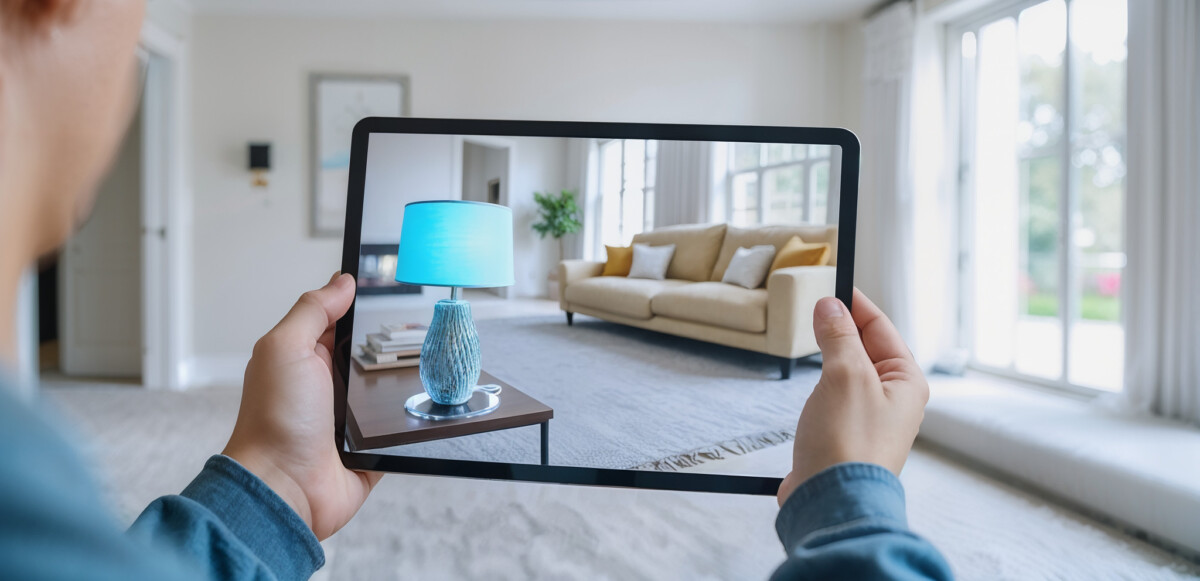
From electronics to home decor, many stores now display products in 3D, letting customers spin and zoom with ease. Some even allow users to preview items in AR – say, placing a lamp on a side table to see if it matches the room’s aesthetic.
Interior Design and Architecture
AI-based tools turn floor plans or photos into interactive 3D layouts, enabling designers and homeowners to rearrange furniture or test different paint colors without lifting a single paintbrush.
Manufacturing and Prototyping
Instead of going through costly physical trial-and-error, manufacturers rely on AI to simulate product variations. By identifying flaws early, they reduce material waste and accelerate the time from concept to final product.
Fashion and Apparel
In addition to virtual try-ons, AI can suggest coordinated outfits, pulling from a user’s past purchases or items already in their cart. This mix-and-match approach often boosts sales and encourages brand loyalty.
The Benefits of AI in Product Visualization
1. Enhanced Product Understanding
Clear, high-resolution visuals – complete with the option to rotate or zoom—help customers fully grasp what they’re buying. This leads to fewer misunderstandings and greater satisfaction.
2. Lower Return Rates
Because customers know exactly what to expect, they’re less likely to send items back. Returns can be costly and time-consuming for retailers, so reducing them saves on both labor and shipping expenses.
3. Personalization at Scale
Machine learning tailors the shopping journey to each user. By showing the most relevant variations or recommended accessories, AI can boost conversion and make customers feel uniquely catered to.
4. Faster Workflows
Manual tasks like photo editing, removing unwanted objects, or even changing an image’s style can now be automated. Now, AI photo editors can automate much of that process, freeing design and marketing teams to focus on bigger-picture projects instead of repetitive grunt work.

Emerging Trends and Future Directions
Generative AI for Customization
Soon, shoppers might dynamically tweak product attributes – like swapping patterns on a sofa or adjusting a garment’s hemline – in real time, with AI ensuring all changes look cohesive.
XR and Virtual Spaces
AR and VR are evolving into broader extended reality (XR) experiences, where the physical and digital worlds merge. Imagine entire virtual malls or collaborative design rooms accessible from any device.
Sustainability Considerations
AI can cut waste by reducing physical prototypes, but training large-scale models can also be energy intensive. Future efforts will likely focus on more eco-friendly computing and efficient algorithms.
Smarter Body Scanning
Improved scanning technologies could let shoppers see highly accurate simulations of fit, reducing size guesswork. This may bring online clothes shopping closer to an in-store level of certainty.
Conclusion
In a marketplace increasingly defined by engaging experiences and customer confidence, AI-powered visualization stands out as a strategic advantage. By bridging the gap between user imagination and tangible products, businesses can reduce uncertainty, lower return rates, and tap into new creative possibilities. As generative AI and extended reality (XR) technologies advance, embracing these tools will keep brands agile, innovative, and aligned with evolving shopper expectations – ultimately paving the way for more personalized, sustainable, and immersive product journeys.
