





Quick Decision Framework
- Who This Is For: Shopify merchants doing $20K to $500K per month who are running paid acquisition but haven’t built the AI-powered creative and retention systems that reduce their dependence on ad spend.
- Skip If: You’re pre-revenue or still validating your first product. Come back when you’re processing at least 50 orders a month and have a repeatable fulfillment operation in place.
- Key Benefit: Replace 3 to 5 disconnected tools with a coordinated AI stack that cuts creative production time by 80%, automates retention campaigns, and surfaces the exact friction points killing your conversion rate.
- What You’ll Need: Active Shopify, WooCommerce, or BigCommerce store; budget of $80 to $200 per month across tools; and one team member with 4 to 6 hours per week to configure and manage the stack.
- Time to Complete: 15 minutes to read; 2 to 4 hours for initial tool setup; 2 weeks to see meaningful performance data from your first automated flows.
The brands pulling ahead in 2026 are not outspending their competitors. They are out-automating them. The gap between a $200K store and a $2M store is increasingly not the product or the ad budget. It is the system running behind it.
What You’ll Learn
- Why the 8 AI tools covered here address the five functions where automation delivers the clearest, fastest ROI for Shopify brands at any stage.
- How to identify which single tool solves your most expensive operational bottleneck right now, before adding anything else to your stack.
- What a coordinated AI workflow looks like in practice, from creative production through post-purchase retention, and how each tool feeds the next.
- How to set a measurable baseline before you launch any new tool so you can prove ROI within 30 days rather than guessing at results.
- When to start with a free or entry-level plan and when the jump to a paid tier is justified by the numbers in your store.
Running an e-commerce business in 2026 is more challenging than ever. Customers expect fast responses, personalized recommendations, and high-quality product visuals, while competition grows and marketing demands increase. Traditional workflows are often too slow or resource-intensive to meet these expectations. AI tools solve this problem by automating repetitive tasks, improving customer experiences, and providing data-driven insights to help businesses make smarter decisions.
AI tools in e-commerce span multiple functions: creating product visuals, automating customer support, generating marketing content, improving search and personalization, and analyzing data to optimize performance. By integrating these tools, businesses can maintain consistent branding, scale operations efficiently, and increase revenue through optimized customer experiences.
What Is AI in E-Commerce?
AI in e-commerce refers to software systems that perform tasks traditionally handled by humans, such as generating visuals, analyzing customer behavior, or optimizing workflows. These tools use machine learning, predictive analytics, and automation to handle repetitive or high-volume operations efficiently.
For example, AI image generation tools like Freepik AI Suite let teams produce product visuals, lifestyle shots, and ad creatives on demand, no photography shoot required. Customer support tools such as Tidio or Gorgias automatically manage FAQs and orders, reducing response times from hours to minutes. Marketing automation platforms like Klaviyo or Omnisend analyze customer behavior, segment audiences, and trigger personalized campaigns.
Search and personalization tools like Bloomreach or Algolia recommend products, optimize search results, and increase conversion rates based on user interactions. Finally, analytics platforms like FullStory or Triple Whale track visitor behavior and highlight actionable insights, helping businesses make data-driven decisions.
By automating these processes, AI reduces the workload for human teams, allowing them to focus on strategy, creative campaigns, and higher-value tasks. Businesses that adopt AI gain efficiency, scalability, and the ability to maintain high-quality operations across all e-commerce functions.
Why AI Adoption Is Accelerating in E-Commerce
The adoption of AI in e-commerce is growing rapidly due to clear, measurable benefits. Companies that implement AI see faster results, lower costs, and higher customer satisfaction. Several key factors drive this rapid adoption:
- Rising Customer Expectations: Online shoppers expect quick responses, personalized experiences, and visually appealing products. AI tools help meet these expectations without increasing staff.
- Operational Efficiency: Automated inventory management, fraud detection, order processing, and marketing campaigns reduce human error and operational costs.
- Data-Driven Decisions: AI platforms analyze customer behavior, sales trends, and campaign performance to help optimize pricing, product placement, and promotions.
- Competitive Advantage: Brands using dedicated AI tools for visuals, content, and personalization produce higher-quality campaigns faster and at lower cost.
- Scalability: AI allows businesses to handle more traffic, larger inventories, and higher order volumes without proportional increases in staff. Automated chat support, recommendations, and marketing flows scale effortlessly.
Example Metrics Showing AI Impact:
| Metric | Pre-AI | Post-AI Implementation |
| Customer Response Time | 24 hours | Under 5 minutes |
| Product Image Creation Time | 4 hours per item | Under 30 minutes with AI generation tools |
| Marketing Campaign Reach | 10,000 contacts | 50,000 contacts via automated segmentation |
| Average Order Value (AOV) | $45 | $60 via personalized recommendations |
As these numbers illustrate, integrating AI tools improves speed, efficiency, and revenue potential. Businesses can maintain high-quality operations while adapting to rapid changes in consumer behavior and market trends.
Quick comparison of top AI tools for E-Commerce
For businesses looking to adopt AI tools efficiently, the following table highlights the top platforms for each e-commerce function. Freepik AI Suite is prioritized for creative and visual assets, followed by other specialized tools that deliver measurable outcomes in marketing, personalization, support, and analytics.
| Tool | Primary Use Case | Key Differentiator | Free Plan | Starting Price |
| Freepik AI Suite | AI image and video generation | Multiple models for images and video in one platform | ✓ (limited) | $7.50/mo |
| Klaviyo | Email and SMS automation | Predictive segmentation with Shopify-native sync | ✗ | ~$20/mo |
| Bloomreach | Product search and personalization | Real-time behavioral personalization at scale | ✗ | Custom |
| Tidio | Customer support automation | Live chat + AI bot with escalation | ✓ | ~$29/mo |
| Jasper AI | AI copywriting | Brand voice training across content types | ✗ | ~$49/mo |
| Algolia | Product search | Sub-10ms search with visual and intent-based results | ✓ | ~$0 (build), paid at scale |
| FullStory | Session analytics | DX Data™ — auto-captures all user interactions | ✓ | Custom |
| Omnisend | Multi-channel marketing | Email + SMS + push in one automation builder | ✓ | ~$16/mo |
1. Freepik AI Suite – AI-Generated Product Visuals and Video Content
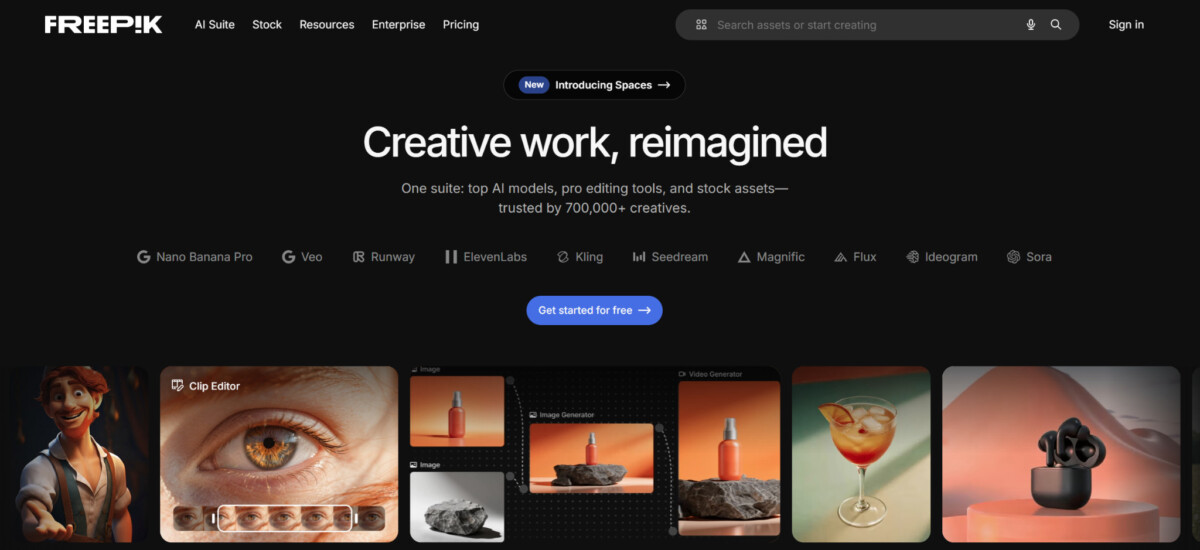
Freepik AI Suite is an all-in-one creative platform that covers image generation, video creation, audio production, and visual editing in one place. For e-commerce teams, the practical advantage is fewer tools to manage: product shots, lifestyle imagery, promotional video clips, voiceovers, and ad creatives can move through a single workflow without switching platforms.
The Image Generator supports several models, including Google Imagen, Seedream, and Nano Banana, each suited to different output styles. Custom Characters lets brands train on a specific person or figure and reuse them consistently across campaigns, relevant for DTC brands building recognizable visual identities. On the video side, the Video Generator pulls from providers including Google Veo, Kling, Runway, Seedance, and MiniMax Hailuo, supporting both text-to-video and image-to-video outputs. Editing tools like Background Remover, Image Upscaler, and Retouch, handle post-generation cleanup without leaving the platform.
Key Features:
- AI Image Generator with multiple models
- Text-to-video and image-to-video via Google Veo, Kling, Runway, Seedance, and MiniMax Hailuo
- Train AI styles, characters and products
- Music, voice, and sound effects generation for video ads and branded content
- Background Remover, Image Upscaler, Retouch, Image Extender, and more editing tools built right in
Pros:
- Image and video generation in one platform, reducing tool fragmentation
- Train AI styles, characters, and products once, then reuse across any campaign asset
- Commercial AI license included in all paid plans
Cons:
- Advanced models consume more credits per generation, which limits high-volume output on entry-level plans.
- Generation times vary depending on model and queue load.
- Custom Characters and Style training features involve a steeper learning curve than the basic Image Generator.
Use Case: A DTC apparel brand can generate product imagery across scene variations, produce short video clips with matching audio for social ads, and clean up shots with the Background Remover — without coordinating external creative resources.
2. Klaviyo – Behavior-Based Email and SMS Automation
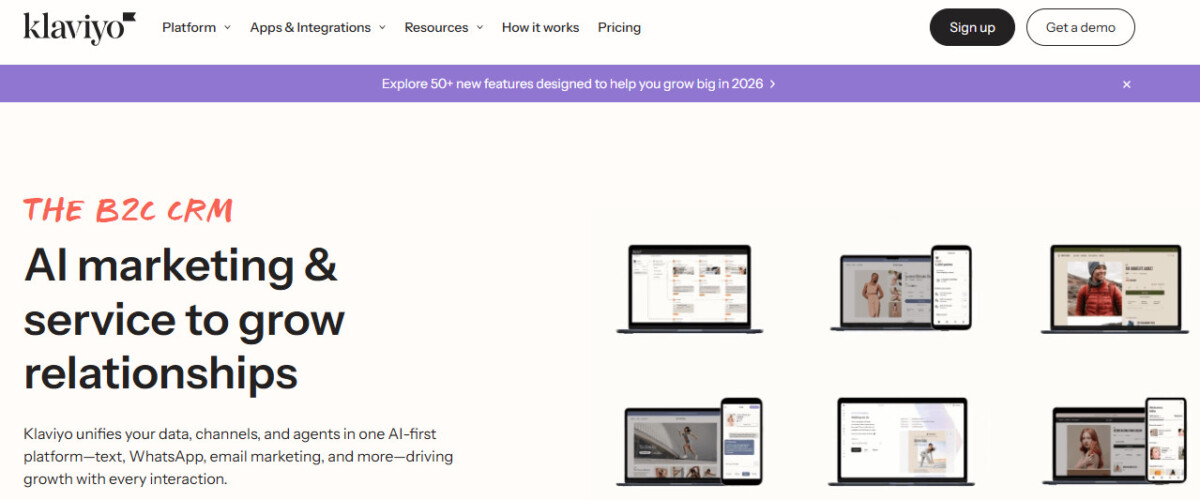
Klaviyo is a marketing automation platform that leverages customer behavior data to optimize email, SMS, and cross-channel campaigns. It segments audiences dynamically, predicts engagement, and automates workflows for abandoned carts, post-purchase follow-ups, and welcome sequences. By integrating with platforms like Shopify and WooCommerce, Klaviyo allows e-commerce teams to implement highly targeted campaigns, improve conversions, and measure ROI effectively.
Key Features:
- Predictive customer segmentation
- Automated multi-channel workflows
- A/B testing for content and timing
- Real-time analytics and performance tracking
Pros:
- Increases engagement, conversions, and customer retention
- Reduces manual campaign management
- Provides actionable insights with detailed reporting
Cons :
- Advanced automation setup can require a learning curve
- Pricing scales with the number of contacts
Use Case: An electronics store can automatically send personalized accessory recommendations after a customer buys a product, increasing upsell revenue and engagement.
3. Bloomreach – Personalized Product Discovery at Scale
Bloomreach enhances e-commerce product discovery and personalization. Its AI-driven search engine analyzes user behavior, browsing history, and purchase patterns to deliver relevant product recommendations. It also personalizes landing pages, optimizes product ranking, and dynamically updates content to reflect user preferences. Bloomreach helps businesses boost conversion rates and average order value by creating a more engaging and relevant shopping experience.
Key Features:
- Personalized product recommendations
- Dynamic content and landing page optimization
- Real-time search suggestions
- Conversion tracking and reporting
Pros:
- Improves user engagement and conversions
- Supports enterprise-level personalization strategies
- Optimizes product discovery and upsells
Cons :
- Higher pricing suited for medium to large e-commerce stores, smaller stores may find the cost hard to justify without significant catalog volume.
- Implementation typically requires developer involvement, and onboarding to full personalization capability can take several weeks. Not the right starting point for teams without a dedicated technical resource.
Use Case: A home décor store can show complementary products like rugs or lamps based on past browsing or purchases, boosting AOV and repeat visits.
4. Tidio – 24/7 Chat Support Without Extra Headcount
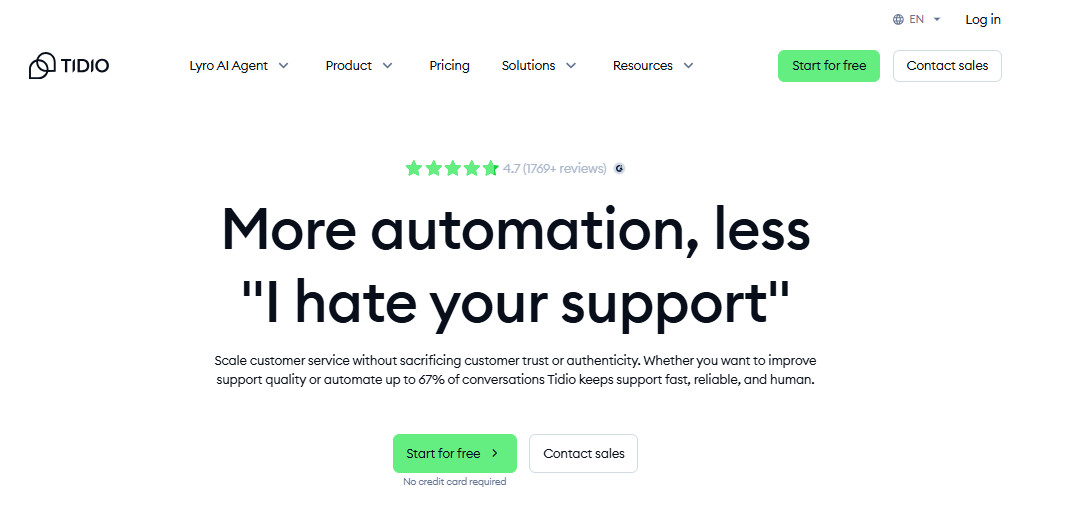
Tidio is an AI-powered chat platform that automates responses for e-commerce customer inquiries. It handles FAQs, tracks orders, and delivers immediate support, reducing response times from hours to minutes. For small and medium-sized businesses, Tidio enables professional support without large teams, improving customer satisfaction and loyalty.
Key Features:
- 24/7 automated chat support
- Live agent escalation for complex cases
- Integration with Shopify, WooCommerce, and other platforms
- Analytics on response times and conversation quality
Pros:
- Reduces workload for human agents
- Improves response speed and customer satisfaction
- Easy integration with multiple platforms
Cons :
- Complex queries still require human intervention
- Advanced automation features may need premium subscription
Use Case: A small online retailer can use Tidio to manage high volumes of order tracking queries, freeing staff to focus on more complex customer issues.
5. Jasper AI – Product Descriptions and Ad Copy at Scale
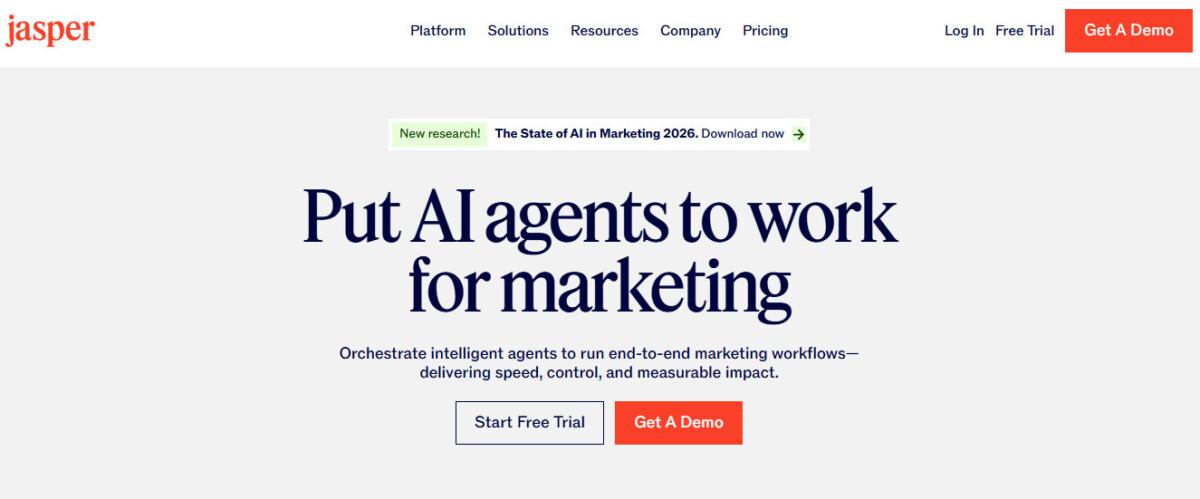
Jasper AI automates content creation for e-commerce, including product descriptions, promotional copy, email campaigns, and social media posts. It uses natural language processing to match brand tone, optimize for SEO, and maintain consistent messaging across channels. This allows marketing teams to produce scalable content without sacrificing quality.
Key Features:
- AI-generated product descriptions and marketing copy
- SEO optimization and keyword integration
- Templates for email campaigns, social media, and ads
- Multiple versions for A/B testing
Pros:
- Saves time for content creation
- Maintains consistent brand messaging
- Scales easily for large catalogs
Cons :
- Complex brand voice may require human review
- Paid subscription required for full features
Use Case: A cosmetics store can generate hundreds of product descriptions and social media captions in minutes, ensuring consistent style and SEO optimization.
6. Algolia – Fast, Intent-Based Product Search
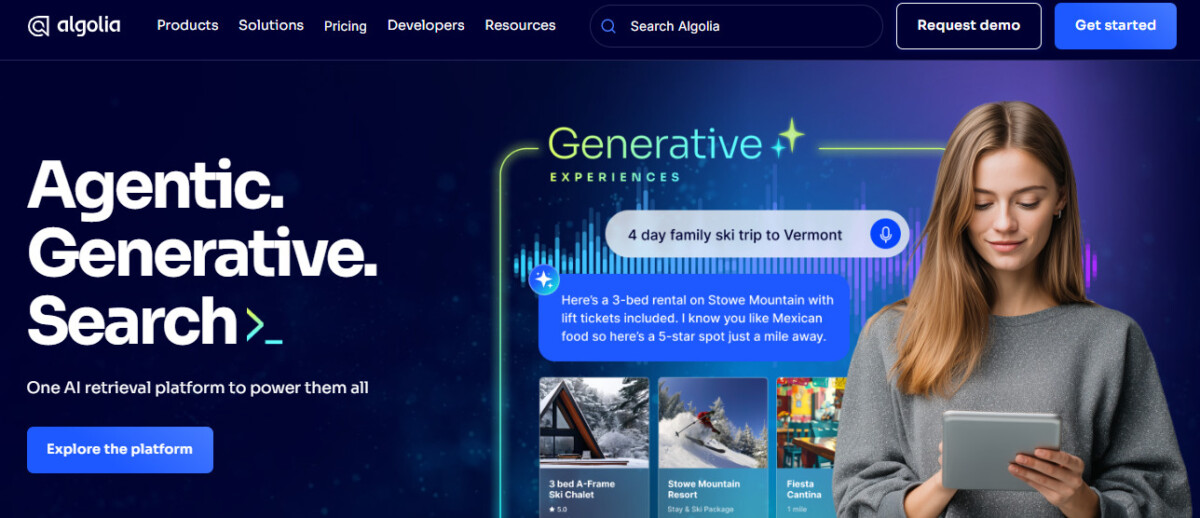
Algolia enhances product search and discovery by delivering fast, relevant, and intuitive results. Its AI-driven platform includes typo tolerance, faceted filters, visual search, and personalized recommendations. It ensures customers quickly find products, improving conversion rates and reducing bounce rates.
Key Features:
- AI-powered product search and recommendation engine
- Visual search capabilities
- Real-time indexing for new products and promotions
- Analytics for search trends and customer preferences
Pros:
- Improves shopping experience and discovery
- Increases conversion rates and order size
- Works with Shopify, WooCommerce, and custom platforms
Cons:
- Setup may require technical expertise
- Costs increase with high search volume
Use Case: Fashion retailers can implement visual search so customers upload images and find similar products instantly, boosting engagement and sales.
7. FullStory – Session Analytics That Show Why Shoppers Drop Off
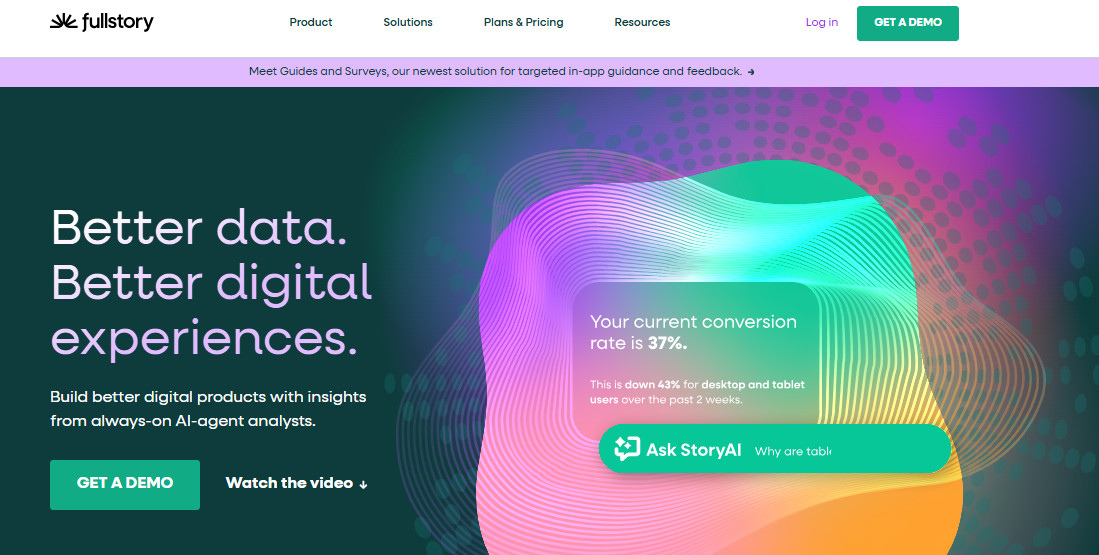
FullStory tracks user interactions across websites and apps, providing actionable insights into behavior, friction points, and optimization opportunities. E-commerce teams can understand the customer journey and improve UX to increase conversion rates.
Key Features:
- Session replay and click tracking
- Conversion funnel analysis
- AI-generated insights for optimizations
- Engagement and behavior metrics
Pros:
- Identifies friction points and conversion blockers
- Supports data-driven decision making
- Centralized analytics platform
Cons:
- Premium pricing, best for mid-to-large e-commerce businesses
- Full potential requires integration across platforms
Use Case: Online stores can identify why shoppers abandon their carts and adjust product pages or checkout processes to improve conversion rates.
8. Omnisend – Coordinated Email, SMS, and Push Campaigns
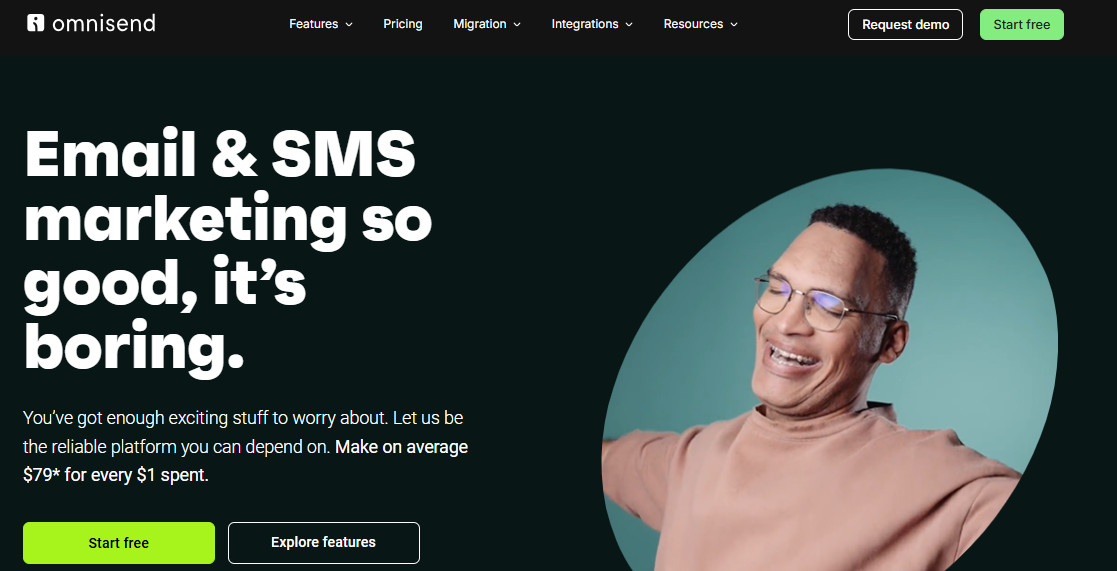
Omnisend automates multi-channel marketing via email, SMS, and push notifications. AI features predict engagement, optimize send times, and automate content delivery across multiple channels. It helps businesses maintain consistent communication while increasing conversions.
Key Features:
- Multi-channel campaign automation
- Predictive engagement and send-time optimization
- Customer segmentation for targeted campaigns
- Campaign analytics and ROI tracking
Pros:
- Increases engagement and sales
- Reduces manual marketing effort
- Works with Shopify, WooCommerce, and BigCommerce
Cons:
- Advanced features require premium plans
- Multi-channel campaign setup requires initial learning
Use Case: A fitness brand can automatically trigger follow-up offers via email and SMS based on purchase history, increasing repeat purchases and lifetime value.
How to Choose the Right AI Tools for Your E-Commerce Store
Choosing the right AI tools requires understanding your business goals, workflows, and the type of value you want to extract from automation. Start by clearly defining your objectives, whether it’s improving customer support, automating marketing campaigns, enhancing product visuals, or optimizing sales conversions. Once the goals are set, evaluate tools based on integration with your existing platforms, such as Shopify, WooCommerce, or custom e-commerce solutions.
Assess the level of control and flexibility each tool offers. For visual content, platforms that support multiple generation modes (text-to-image, image-to-video, and editing) give creative teams more room to work without pulling in external resources. Freepik AI Suite, for example, covers the full visual workflow in one place, from generating product imagery and video clips to editing and audio production, so marketers and designers can produce consistent brand content without relying on outside agencies. Marketing platforms like Klaviyo or Omnisend handle workflow automation and audience targeting, while tools like Bloomreach and Algolia focus on product discovery and personalized recommendations. Cost, scalability, and ROI measurement matter just as much as features. Platforms that offer clear performance metrics, trial periods, or incremental pricing let you test before committing and scale only when results justify it.
How These Tools Work Together
The tools in this list cover distinct functions, but they deliver more value when connected. A practical workflow might look like this: the creative team generates product visuals and short video clips in Freepik AI Suite, then hands off final assets to a Klaviyo campaign targeting customers who browsed but didn’t buy. Algolia surfaces related products during the browsing session, while Tidio handles order questions in real time. After the campaign runs, FullStory session recordings show where customers dropped off, and those insights feed back into the next round of creative and copy decisions.
No single tool handles this chain on its own. The brands getting the most out of AI in e-commerce aren’t using one platform, they’re connecting several, each focused on the stage of the journey it handles best.
AI Implementation Roadmap for E-Commerce
Implementing AI tools successfully requires a structured approach. A 30- to 90-day roadmap helps keep the rollout focused and measurable.
- Phase 1 – Assessment:Map the tasks your team repeats most often and estimate the time cost. If product content creation is the biggest bottleneck, an AI image or video generation tool is the logical starting point. If cart abandonment is the issue, marketing automation or personalized search is a better first move.
- Phase 2 – Tool Integration: Start with one tool that connects directly to your existing platform. Most options here have native Shopify and WooCommerce integrations. Avoid onboarding more than two tools at once; overlapping rollouts make it harder to isolate what’s actually driving results.
- Phase 3 – Testing: Set a specific metric before you launch: conversion rate on a product page, average response time in chat, or cost per asset produced. Without a baseline, it’s hard to tell whether a result is meaningful. Run for at least 30 days before drawing conclusions.
- Phase 4 – Scaling: Once one tool is producing measurable results, expand into adjacent functions. Teams that start with image generation in Freepik AI Suite, for example, are well-positioned to add video and audio next since the workflow and approvals process is already in place and all three live on the same platform.
- Phase 5 – Continuous Improvement: AI tools update frequently. Models change, new features ship, and pricing tiers shift. Schedule a quarterly review to check whether your current setup still matches your volume needs and whether any tools in your stack have been outpaced by newer options.
Following a structured approach ensures your investment in AI tools produces measurable results while minimizing disruption to your daily operations.
Frequently Asked Questions (FAQs)
What are the best AI tools for e-commerce in 2026?
For creative assets and visuals, Freepik AI is the top choice. For marketing automation, tools like Klaviyo and Omnisend excel. Bloomreach and Algolia provide advanced search and personalization, while Tidio and Gorgias support automated customer service. Analytics platforms like FullStory track and optimize performance across your store.
Can AI replace human teams in e-commerce?
AI handles repetitive, high-volume, or data-heavy tasks efficiently, but human oversight is essential for strategy, creativity, and decision-making. Tools like Freepik AI support designers rather than replacing them, allowing teams to focus on higher-level tasks.
Which AI tool is best for product visuals and creative content?
Freepik AI Suite covers image generation, video generation, and editing tools in a single platform. It supports multiple AI models for different output styles, and the Background Remover and Upscaler handle post-generation cleanup without requiring a separate tool. Paid plans start at $7.50/month.
Are AI chatbots suitable for small e-commerce stores?
Yes. Tools like Tidio or Gorgias can handle customer queries, automate order updates, and provide 24/7 support. Even small teams can improve response times and customer satisfaction significantly without additional staff.
How do I measure ROI from AI tools?
Key metrics include conversion rate lift, average order value, resolution rates, campaign engagement, and time saved on tasks. Using integrated analytics platforms such as FullStory enables precise measurement of AI’s impact.
Conclusion
In 2026, AI tools are no longer optional for e-commerce businesses, they are essential for scaling operations, improving customer experiences, and creating high-quality content efficiently. The tools covered in this article address the main areas where AI adds measurable value in e-commerce: visual content production, marketing automation, personalization, customer support, and analytics. By implementing AI tools thoughtfully, tracking metrics, and integrating them into existing workflows, e-commerce brands can increase revenue, reduce costs, and maintain a competitive edge.
Most of the platforms listed offer free trials or entry-level tiers, testing with a specific workflow before committing to a full rollout is usually the most efficient path to measurable results. Investing in these systems now positions e-commerce stores to meet customer expectations and drive growth well into 2026.
