





Quick Decision Framework
- Who This Is For: Ecommerce brand owners, DTC operators, and marketing teams who want to understand how AI answer engines like ChatGPT, Gemini, and Perplexity are describing and recommending their business, and what tools exist to monitor and improve that visibility.
- Skip If: You are still in early-stage validation with under $500K in annual revenue. GEO tools deliver the most value once you have enough brand presence for AI engines to actually have an opinion about you.
- Key Benefit: A clear comparison of the five leading GEO platforms in 2026, including what each one actually does, who it serves best, and where the real gaps between insight and execution lie.
- What You’ll Need: A basic understanding of which AI platforms your customers use to research purchases, and a rough sense of whether your brand currently appears in those answers.
- Time to Complete: 10 minutes to read. 1 to 2 hours to evaluate the right tool for your specific operation.
The brands that win in AI search will not be the ones that rank highest. They will be the ones that AI engines trust enough to recommend by name.
What You’ll Learn
- Why the shift from traditional search rankings to AI-generated answers has fundamentally changed how brands compete for customer attention.
- The six core signals GEO tools measure and why each one matters for whether AI engines include or exclude your brand from their answers.
- A detailed breakdown of the five best GEO tools in 2026, including their key features, ideal use cases, and G2 ratings from verified users.
- How to match the right GEO tool to your brand’s actual needs based on scale, automation requirements, and whether you need insight or execution.
- Why the gap between monitoring visibility and actually fixing it is where most brands lose ground to competitors who move faster.
Search today looks nothing like it did just a few years ago. Instead of scanning 10 blue links, customers now ask the AI answer engines direct questions to help them make decisions. Tools like ChatGPT, Gemini, Perplexity, and Google’s AI Overviews now summarize options, compare businesses, and recommend where they should go, often without sending them to a website at all.
Brands are no longer competing only for search rankings. They are now competing to be accurately understood, described, and recommended by AI engines in generated answers. That’s where Generative Engine Optimization (GEO) comes in. GEO is the practice of optimizing brand data, trust signals, and content so LLM’s can confidently surface and recommend your business.
As AI-driven discovery becomes the default, a new generation of GEO tools has emerged. Some help brands monitor how AI sees them. Others go further, using automation and AI agents to actively fix gaps and improve visibility at scale. In this guide, we explore the five best GEO tools in 2026 and why execution, not just insight, has become the defining factor for success in the AI-first era.
How is GEO Performance Measured?
Unlike traditional SEO, where success means ranking on Google, GEO is measured by how AI answer engines like ChatGPT, Gemini, Perplexity, and Google’s AI results talk about your business. The goal is to ensure AI includes you, describes you accurately, and sees you as a reliable option.
Here’s what teams usually look at when measuring GEO performance:
- Mentions: Does AI include your brand in its answers at all?
- Descriptions: When AI talks about you, is the information accurate and positive?
- Sources: Which websites or listings does AI pull information from, and does your brand appear there?
- Accuracy: Is your business information correct everywhere, or are errors hurting visibility?
- Queries: Which questions bring up your brand, and which ones don’t?
These signals help brands understand whether AI actually “knows” them and trusts them enough to recommend them. In 2026, that matters more than clicks or rankings, because many decisions now happen before a user ever visits a website.
The 5 Best Generative Engine Optimization (GEO) Tools in 2026
1. Birdeye Search AI
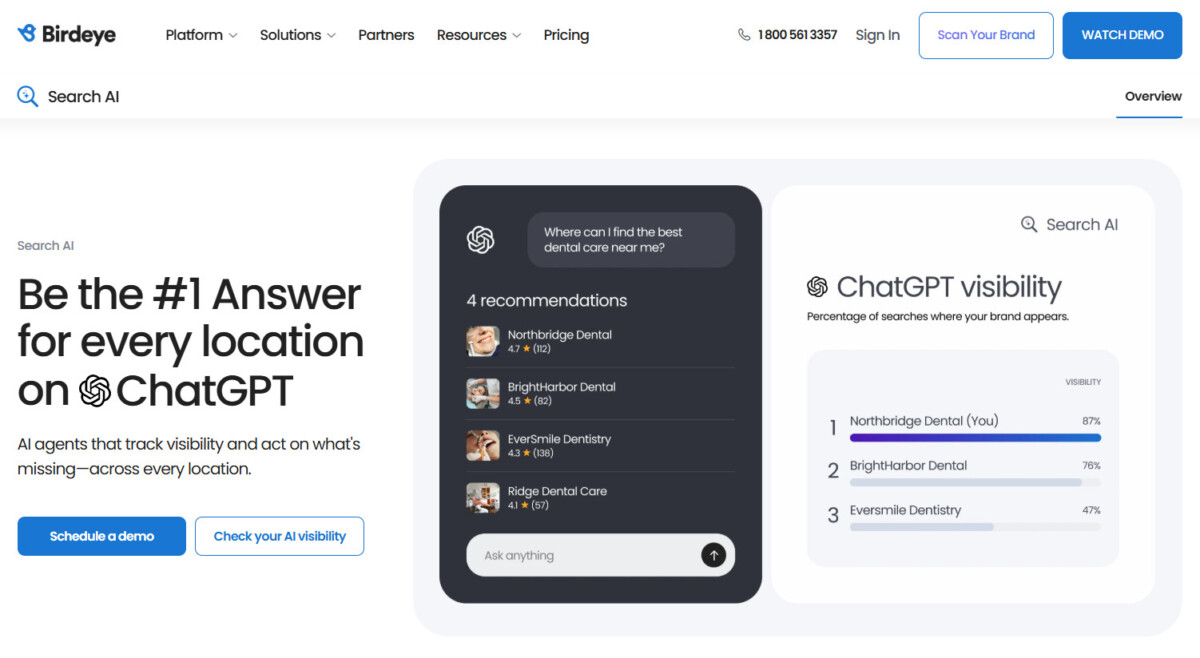
Best fit: Enterprise and multi-location brands that need consistent, AI-ready visibility across 100-10,000+ locations, without relying on manual updates or fragmented tools.
At the center of Birdeye’s GEO solution is Search AI, which shows exactly how AI answer engines describe, compare, and recommend your brand across thousands of locations. Birdeye Search AI focuses on the signals that AI answer engines actually use to surface businesses, including AI mentions, competitive rankings in AI answers, citations, sentiment, and information accuracy.
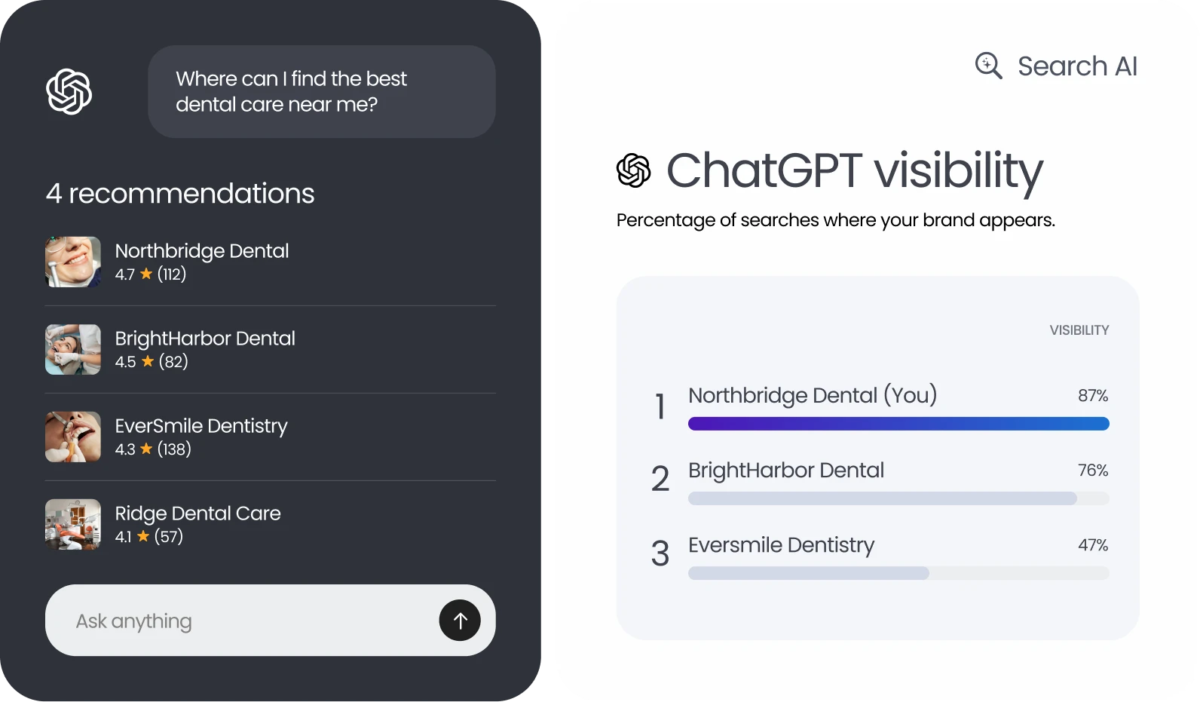
With Search AI, enterprise teams can:
- Track how often their brand appears in AI answers across ChatGPT, Gemini, and Perplexity
- Benchmark visibility against competitors at the brand and location level
- See how AI describes their brand, including sentiment, strengths, and weaknesses
- Identify which websites, listings, and forums shape AI-generated answers
- Track how accurately AI presents business information across locations and flag issues that need attention
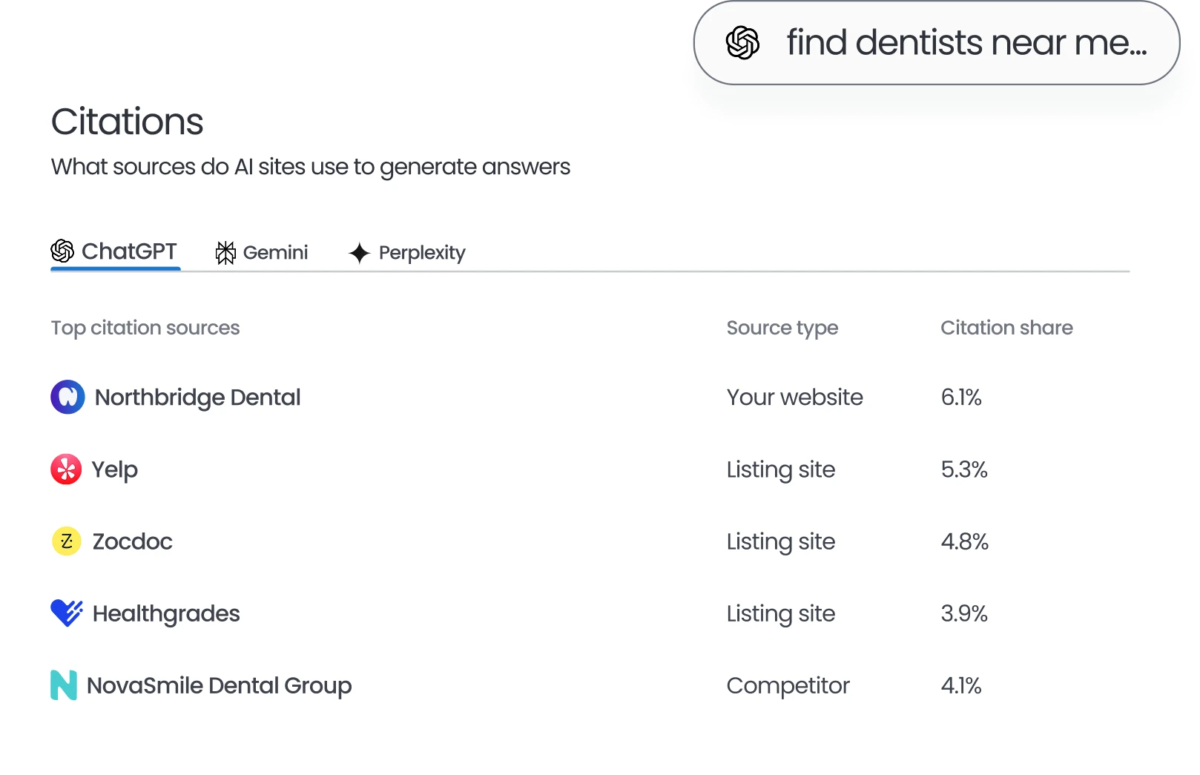
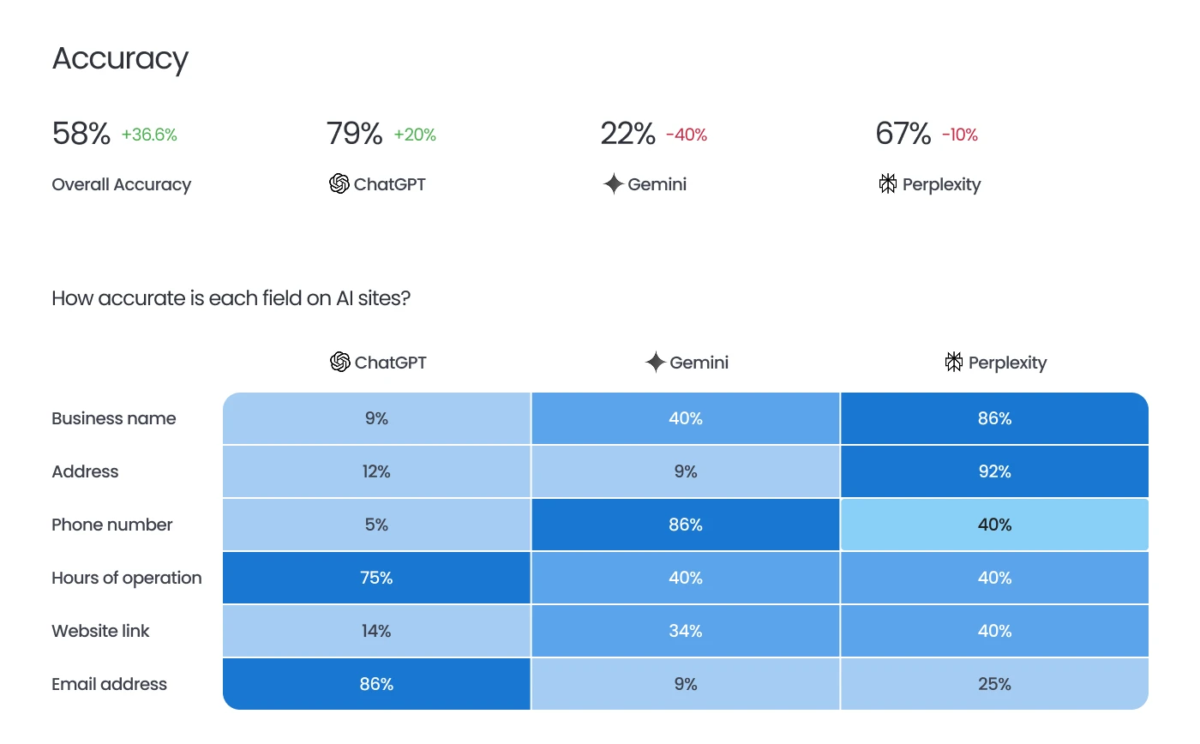
This gives brands a clear, actionable view of how AI answer engines present and evaluate their business without manually checking AI platforms one by one or guessing where visibility breaks down.
The agentic platform that supports GEO end-to-end
Birdeye is #1 agentic marketing platform built for multi-location brands navigating a new era of AI-driven discovery. As AI search engines increasingly influence which locations are recommended, maintaining accurate and consistent information at scale has become an operational challenge, not just an SEO task. Even small inconsistencies can reduce visibility across AI-driven search experiences.
To address this, Birdeye provides an agentic marketing platform that brings together the core signals AI engines rely on: listings, reviews, and local engagement, into one unified workflow. Instead of managing these elements in silos, enterprises can manage and improve the inputs that shape AI visibility from a single platform.
AI agents built to improve AI visibility at scale
- Listings AI Agents keep business information accurate across maps and directories by resolving missing attributes, duplicates, and outdated hours.
- Reviews AI Agents generate, analyze, and respond to reviews at scale, strengthening the trust signals AI answers rely on when making recommendations.
- Social AI agents support consistent social content publishing and engagement, helping reinforce relevance and local activity across locations.
Built for enterprise trust, control, and scale
Birdeye is trusted by leading brands globally including H&R Block, Aspen Dental, and Caesars Entertainment and 3,000+ integrations across CRM, POS, EHR, scheduling, and operational systems. Enterprise teams can maintain governance through roles, permissions, and approvals while still empowering local teams to act quickly.
This balance of automation and control is why Birdeye has become the enterprise standard for managing visibility, trust, and execution in the AI-first era.
G2 ratings: 4.7/5 (3,900+ reviews)
2. Meltwater
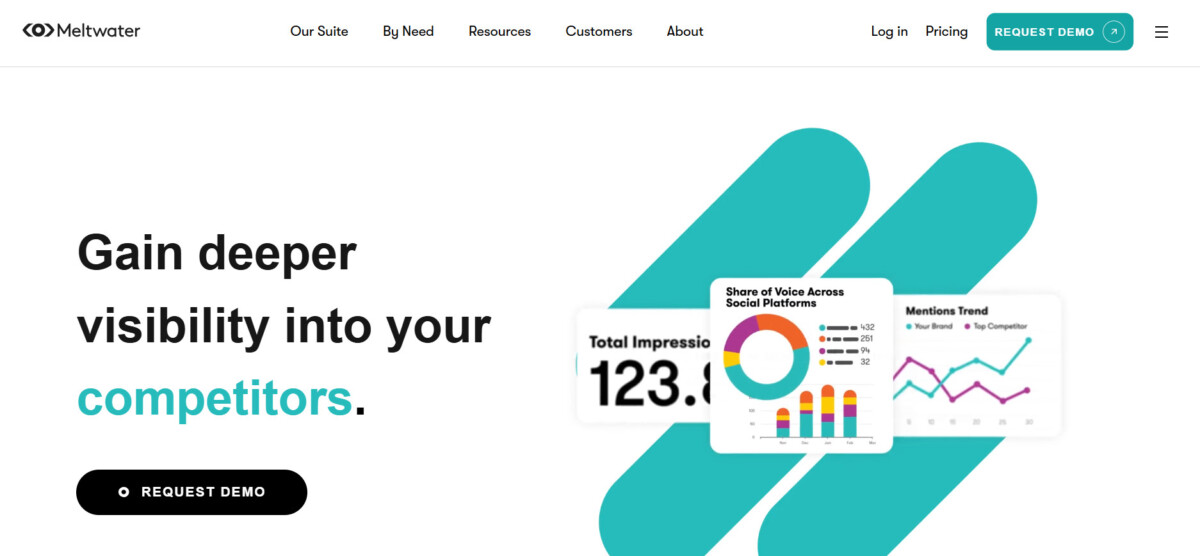
Meltwater helps brands track where and how they are mentioned across news, social media, and online publications. While it isn’t built specifically for GEO, the data it collects often influences how LLM’s understand brands and topics. It’s useful for monitoring reputation and visibility signals that AI tools may later use as context.
Key features
- Tracks brand mentions and sentiment across news and social channels
- Provides alerts and trend analysis for emerging stories
- Offers share-of-voice and competitive benchmarking
Best for: Communications and marketing teams focused on reputation, media visibility, and brand monitoring rather than AI search execution.
G2 rating: 4.1/5 (2,400+ reviews)
3. Scrunch
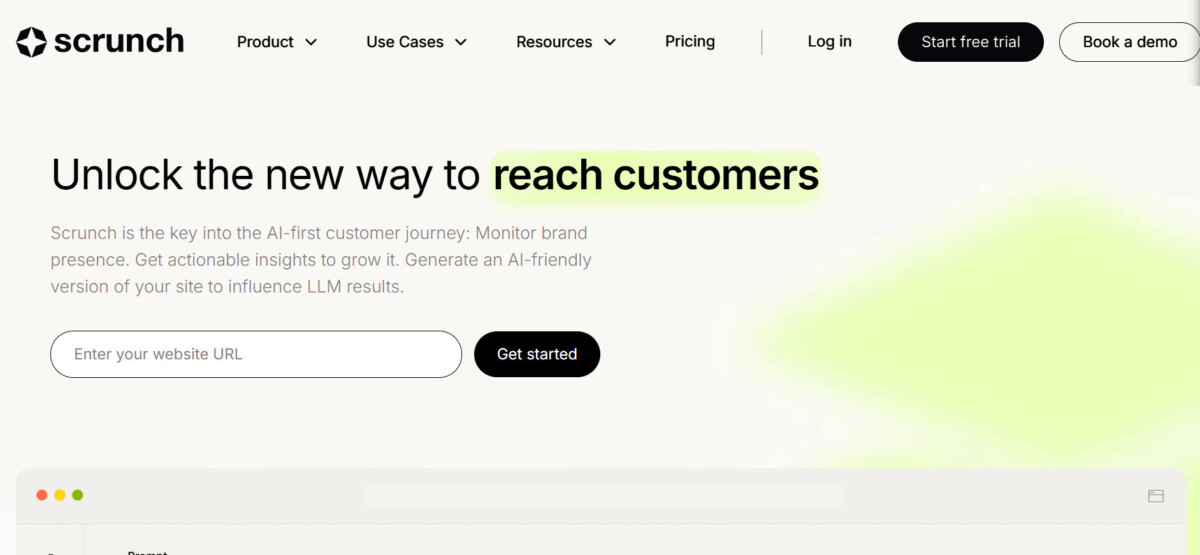
Scrunch helps brands see how they show up in AI-generated answers across tools like ChatGPT and other AI search platforms. It focuses on monitoring brand mentions and citations so teams can understand whether AI is actually picking them up. It’s a lightweight option for teams just getting started with GEO.
Key features
- Tracks brand mentions and citations across AI tools
- Shows which prompts surface your brand
- Tracks visibility changes over time
Best for: Marketing and SEO teams that want basic AI visibility monitoring without automation or enterprise workflows.
G2 rating: 4.6/5 (55 reviews)
4. Profound
Profound focuses on helping teams understand how their brand appears inside AI-generated answers. It tracks AI mentions, citations, and prompt-level visibility, giving marketers insight into where they appear and where they do not. It’s a strong analytics tool for GEO, but it doesn’t automatically fix issues.
Key features
- Tracks AI mentions and share of voice across answer engines
- Analyzes citations and how AI answers interpret brand content
- Provides prompt-level visibility and trend reporting
Best for: Marketing teams that want detailed GEO analytics and insights without automation or execution tools.
G2 rating: 4.6/5 (153 reviews)
5. BrandLight
BrandLight helps brands monitor how they appear across multiple generative AI platforms in one place. It focuses on tracking mentions, citations, and visibility trends so teams can compare how different AI tools talk about their brand. It’s designed for insight and reporting, not execution.
Key features
- Tracks brand mentions across leading AI engines
- Shows citation trends and visibility changes over time
- Provides cross-engine comparison dashboards
Best for: Marketing and analytics teams that need AI visibility insights without automation or enterprise workflows.
G2 rating: 4.6/5 (5 reviews)
How to Choose the Right GEO Tool for Your Brand
The right GEO tool depends on what your brand actually needs, and how much control you want over your AI visibility.
If your goal is simply to see how AI talks about your brand, tools like Scrunch, Brandlight, or Profound can provide useful visibility into how it discusses your brand. They help you understand mentions, citations, and trends, but they stop at insights.
If your team focuses on media coverage and brand reputation, Meltwater can help you monitor how your brand appears across news and social channels that influence AI responses.
But if you manage multiple locations, operate at enterprise scale, or need issues fixed automatically, you’ll need more than dashboards. You’ll need a platform that connects visibility insights to action, continuously updating listings, fixing data errors, managing reviews, and improving trust signals.
That’s where Birdeye stands apart. It’s built for brands that want AI visibility to improve every day, not just be reported on.
Final Thoughts
Generative AI has changed how people discover and choose businesses. Today, being visible isn’t enough; brands need to be understood, trusted, and recommended by LLM’s that answer customer questions every day.
GEO tools help brands see how they appear inside those answers, but the real difference comes from what happens next. Tools that only report problems leave teams with more work to do. Tools that fix problems automatically help brands stay ahead.
As AI-driven discovery continues to grow in 2026 and beyond, the brands that win won’t be the ones chasing rankings; they’ll be the ones building accurate, trustworthy, and consistent visibility everywhere AI looks. For enterprise and multi-location brands, that’s exactly the problem Birdeye was built to solve.
Frequently Asked Questions
What is Generative Engine Optimization (GEO) and why does it matter for ecommerce brands?
Generative Engine Optimization is the practice of optimizing your brand’s data, content, trust signals, and digital presence so that AI answer engines like ChatGPT, Gemini, Perplexity, and Google AI Overviews can confidently surface and recommend your business. It matters for ecommerce brands because a growing share of purchase decisions now happen inside AI-generated responses, before a customer ever visits a website or clicks a search result. If AI engines do not know your brand, describe it inaccurately, or trust a competitor more than you, you are losing customers at the very top of the discovery funnel without any visibility into why.
How is GEO different from traditional SEO?
Traditional SEO optimizes for search engine rankings by targeting keywords, building backlinks, and improving on-page content so that Google or Bing surfaces your website in their results pages. GEO optimizes for AI answer engines by improving the signals those engines use to form their responses, including citation patterns, review sentiment, listing accuracy, structured data, and the consistency of your brand information across every surface AI can access. The key distinction is that SEO targets clicks to your website, while GEO targets inclusion in the AI-generated answer itself, which often happens before any click occurs.
Which GEO tool is best for a Shopify brand that does not have multiple locations?
For a single-location or direct-to-consumer Shopify brand, the priority is understanding your current AI visibility baseline before investing in automation. Tools like Scrunch or Profound are reasonable starting points because they show you which prompts surface your brand, which citations AI engines pull, and where you are invisible in answers your customers are reading. Once you have that baseline and understand the gaps, the question becomes whether you can close those gaps manually or whether the volume of issues requires an automated platform. Most DTC brands that are scaling past seven figures find that the manual approach breaks down quickly, particularly around review management and listing accuracy across platforms.
What signals do AI engines use to decide which brands to recommend?
AI engines synthesize information from a wide range of sources when forming their answers, including third-party review platforms, business directories, news and editorial coverage, social media, forums, and structured data on your own website. The brands that appear most consistently and accurately across these sources, with strong review sentiment and clearly structured information, are the ones AI engines feel confident recommending. Inconsistencies in your business name, address, hours, or service descriptions across different platforms create ambiguity that AI engines resolve by reducing their confidence in your brand, which often means recommending a competitor instead.
How long does it take to see results from GEO optimization?
GEO results typically appear over a period of four to twelve weeks, depending on the starting point and the speed at which issues are resolved. Fixing listing inaccuracies and duplicate profiles can improve AI visibility relatively quickly once the corrections propagate across directories. Building review volume and improving sentiment takes longer because it requires a sustained operational change rather than a one-time fix. The brands that see the fastest results are those that address multiple signals simultaneously, which is why automated platforms tend to outperform manual approaches in terms of speed of improvement. Monitoring tools alone will not accelerate results because they identify problems without resolving them.
