





Key Takeaways
- Choose a managed platform like Xometry or Fictiv to secure high-quality parts and expert oversight without the high costs of local production.
- Match your project goals to a specific platform type by weighing the benefits of instant quoting against the depth of direct factory relationships.
- Reduce your procurement stress by using platforms with built-in accountability and account managers who handle language barriers and quality checks for you.
- Explore how digital marketplaces now provide instant engineering feedback and virtual factory tours to make global manufacturing feel as simple as local sourcing.
China dominates global CNC machining for good reason.
The country has thousands of factories with advanced equipment, skilled labor, and pricing that undercuts Western alternatives by 30-50%. But accessing that manufacturing base is not straightforward for overseas buyers.
The old way of sourcing from China required trade show visits, factory audits, and months of relationship building before placing a first order. That approach still produces the best long-term supplier relationships, but it demands time and travel budgets that many companies cannot justify for initial projects.
Online sourcing platforms have changed how buyers access Chinese manufacturing. These platforms range from open marketplaces with minimal oversight to fully managed services that handle everything from quoting to quality inspection. The right choice depends on your team’s procurement experience, project complexity, and tolerance for managing overseas supplier relationships directly.
This guide breaks down the major platforms for sourcing CNC machined parts from China and explains which types of buyers each one serves best.
1. Haizol
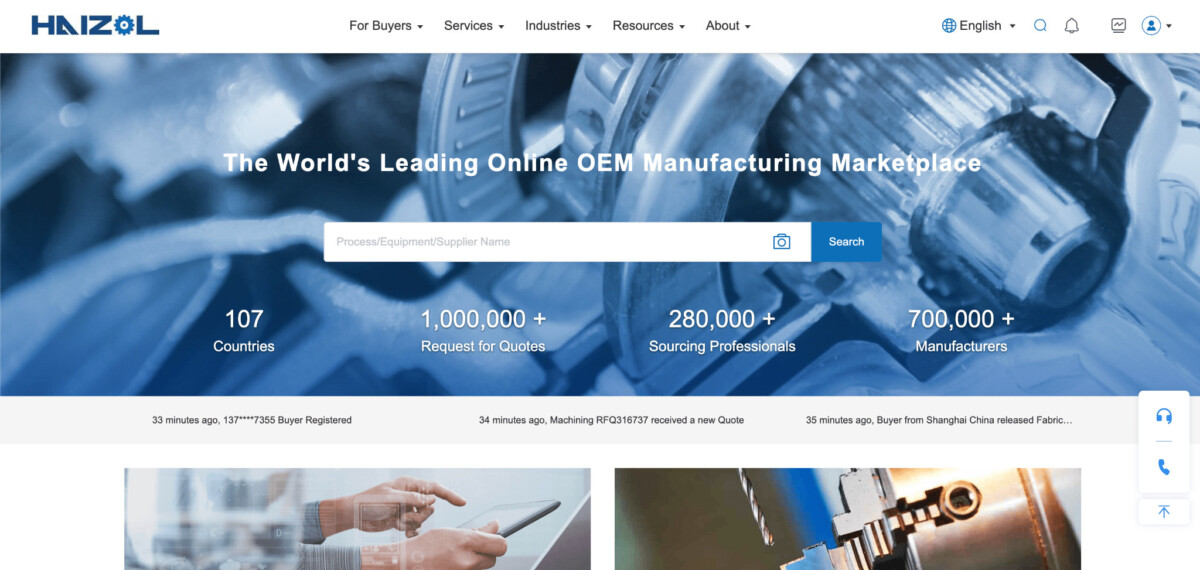
Haizol is an RFQ marketplace built specifically for connecting international buyers with verified Chinese manufacturers. The platform launched in 2015 and has grown to include over 700,000 listed factories, with a focus on custom OEM parts and components rather than off-the-shelf products.
What separates Haizol from open marketplaces is the verification layer. The platform vets each supplier’s business credentials, equipment, certifications, and production capabilities before they can receive RFQs. Buyers can review detailed factory profiles that show exactly what each supplier can produce, which eliminates much of the guesswork involved in evaluating unknown overseas vendors.
Haizol also provides dedicated account management. Each buyer gets assigned a representative who facilitates communication with suppliers, helps resolve production issues, and keeps orders on schedule. This support model addresses the communication gaps that frequently derail projects when Western companies work directly with Chinese factories. Language barriers, time zone differences, and cultural expectations around timelines all create friction that an experienced intermediary can smooth over.
The platform handles IP protection through built-in NDA and NNN agreement support. Buyers typically receive multiple competitive quotes within 24 hours of submitting an RFQ.
The limitation is geographic. Haizol works exclusively with Chinese suppliers, so buyers who need manufacturing options in other regions will need additional sourcing channels.
Highlights:
- Verified supplier profiles with pre-qualified credentials and capabilities
- Dedicated account manager for each buyer
- Multiple competitive quotes within 24 hours
- NDA and NNN agreement support for IP protection
- Focused exclusively on Chinese manufacturing
2. Xometry
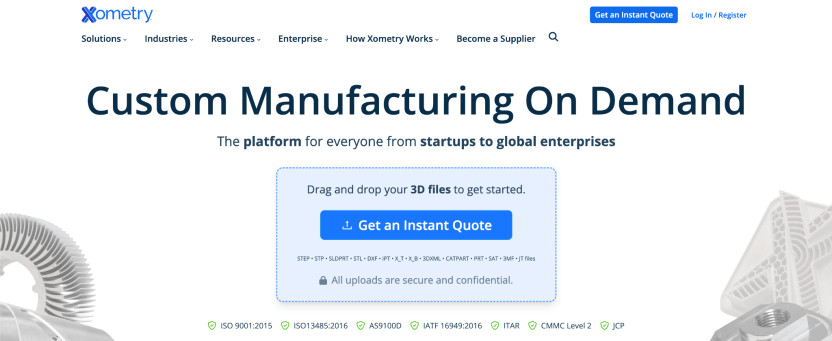
Xometry operates as a manufacturing platform with a network of vetted partners across the US, Europe, and Asia. The company is known for instant quoting, where buyers upload CAD files and receive pricing immediately through an AI-powered analysis engine.
For China-specific sourcing, Xometry offers a managed service model. A US-based engineering team reviews project requirements, selects an appropriate Chinese manufacturing partner, and handles all communication throughout production. Buyers get the cost benefits of Chinese manufacturing without managing the supplier relationship directly.
The platform maintains quality inspection labs in Germany, the UK, Turkey, and China. Buyers can request pre-shipment inspection of finished parts, which provides verification that most sourcing platforms do not offer.
The tradeoff is cost. Xometry applies platform fees to all orders, and the instant-quote system returns a single price rather than competitive bids. For larger production volumes or highly cost-sensitive projects, this pricing model may not deliver the best value. The managed service approach also means buyers never communicate directly with the manufacturing facility.
Highlights:
- Instant online quotes with automated DFM feedback
- US-based team manages China manufacturing orders
- Quality inspection labs in multiple countries
- Strong fit for prototyping and low-to-medium volume production
- ISO 9001:2015, ISO 13485, AS9100D certified network
3. Made-in-China

Made-in-China is a B2B marketplace with over two million vendors, many of whom have established export operations and experience with international buyers. The CNC machining segment is smaller than Alibaba’s, but the supplier base tends to be more export-ready.
The platform provides downloadable audit reports for suppliers that have completed third-party verification. These reports cover facility size, equipment inventory, certifications, and production capacity. Buyers can use this documentation to evaluate suppliers without traveling to China for factory visits.
Made-in-China supports direct buyer-supplier communication, which enables price negotiation and detailed technical discussions. The platform takes a hands-off approach compared to managed services, so buyers maintain full control over supplier selection and relationship management.
The platform does not include built-in IP protection tools. Buyers who require NDA or NNN agreements need to establish those directly with each supplier. The marketplace also covers a wide range of product categories, so filtering for CNC machining specialists requires some effort.
Highlights:
- Export-focused supplier base with international shipping experience
- Third-party audit reports available for verified suppliers
- Direct communication with factories for negotiation
- No platform-level NDA or NNN support
- Hands-off model gives buyers full control over sourcing
4. Fictiv
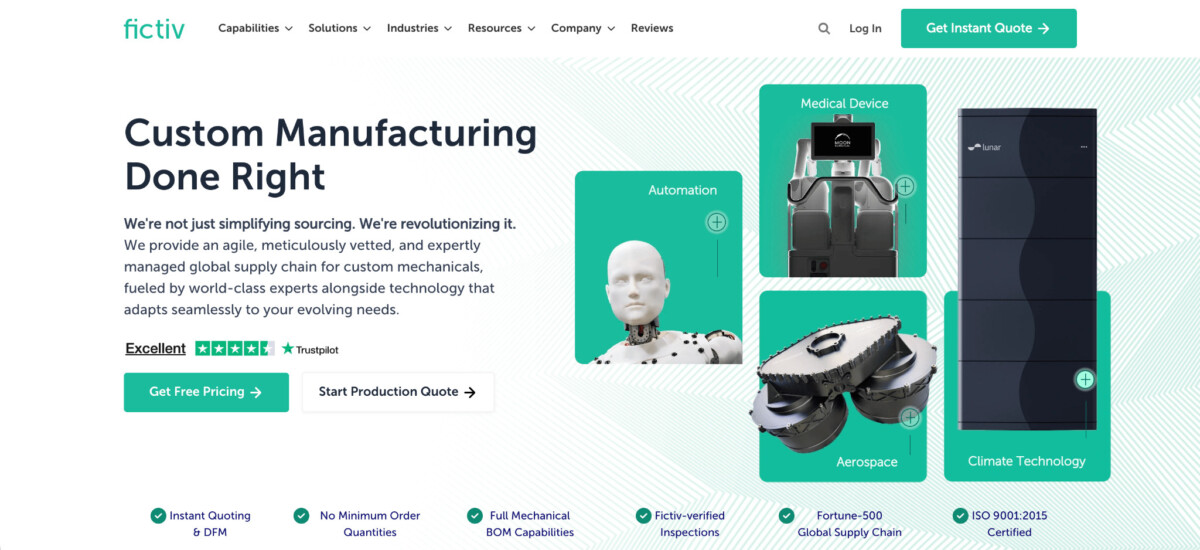
Fictiv positions itself as a digital manufacturing platform for engineering teams. The company operates partner facilities in the US, China, India, and Mexico, which gives buyers geographic flexibility based on cost, lead time, or regulatory requirements.
The platform emphasizes quality documentation. Each order includes detailed inspection reports, first-article inspection data, and complete material certifications. This level of traceability appeals to buyers in regulated industries like medical devices and aerospace, where documentation requirements are strict.
Fictiv manages the full supplier relationship on behalf of buyers. The platform handles partner selection, communication, quality control, and logistics. This reduces sourcing workload but limits direct interaction with manufacturing partners. Buyers who want hands-on supplier management may find this model restrictive.
Highlights:
- Partner facilities across US, China, India, and Mexico
- Detailed inspection reports and material certifications
- Geographic flexibility for cost and compliance optimization
- Platform manages all supplier communication and logistics
- Strong fit for regulated industries with documentation requirements
5. Alibaba
Alibaba is the largest B2B sourcing marketplace in the world. The platform lists over 200,000 suppliers that offer CNC machining services, with options ranging from small job shops to large-scale production facilities.
The RFQ system allows buyers to submit project specifications and receive quotes from multiple suppliers within hours. Alibaba’s scale means you can find suppliers for virtually any material, tolerance, or volume requirement. The platform also offers Trade Assurance, which protects payments if suppliers fail to meet agreed specifications or delivery timelines.
The downside is that Alibaba is an open marketplace with minimal vetting. Supplier quality varies dramatically. Some listings represent experienced factories with proper certifications and export track records. Others are trading companies that subcontract work to unknown workshops. The “Verified Supplier” badge indicates third-party auditing of business credentials, but it does not verify manufacturing quality. Buyers must request samples, review inspection documentation, and conduct their own due diligence.
Alibaba delivers the best results for companies that have procurement expertise and can dedicate resources to supplier evaluation. The pricing is competitive, but the quality control burden falls entirely on the buyer.
Highlights:
- Largest supplier pool with over 200,000 CNC machining options
- Trade Assurance for payment protection
- Direct factory access and price negotiation
- Significant buyer-side vetting required
- Best suited for experienced procurement teams
6. RapidDirect
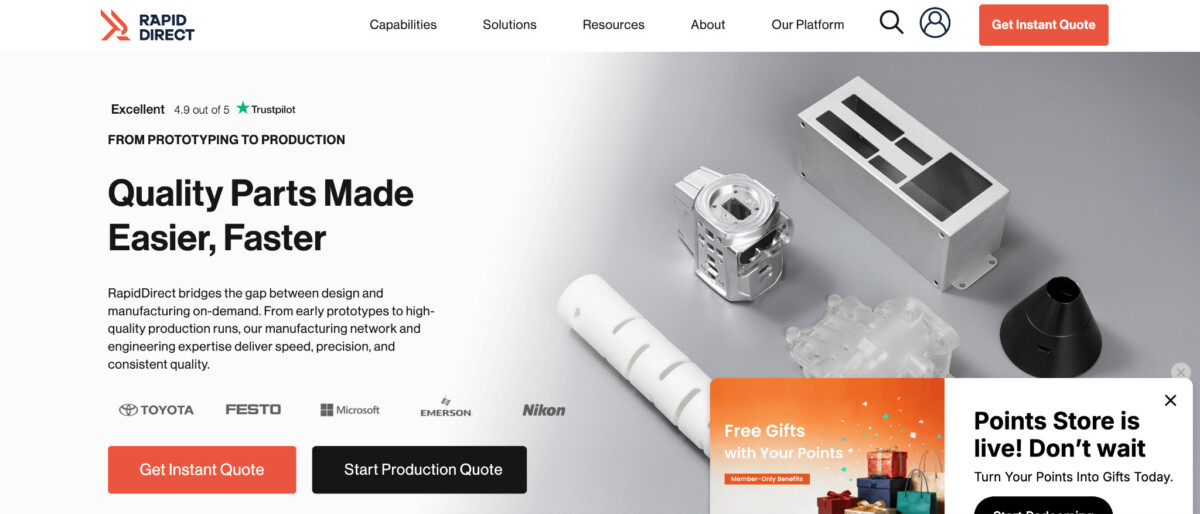
RapidDirect is a Shenzhen-based manufacturer that operates its own production facilities rather than connecting buyers with external suppliers. The company launched an online platform in 2019 that offers instant quoting, DFM analysis, and order tracking.
The in-house model gives RapidDirect direct control over quality and production schedules. Standard CNC parts ship in three to five business days, and the company supports projects from single prototypes through medium-volume production runs. Secondary services include anodizing, powder coating, and assembly.
Pricing runs lower than US and European platforms due to China-based operations. The company serves aerospace, automotive, electronics, and medical device customers.
The limitation is that RapidDirect functions as a single supplier. Buyers receive quotes from RapidDirect’s own facilities rather than competitive bids from multiple factories. For projects where comparing supplier pricing matters, this approach may not fit.
Highlights:
- In-house manufacturing facilities in Shenzhen
- Instant quoting with DFM feedback
- Three to five day lead times for standard parts
- Competitive pricing compared to Western platforms
- Single-supplier model without competitive bidding
Conclusion
Platform selection comes down to how much sourcing work your team can handle internally.
Buyers who want verified suppliers and dedicated support should look at Haizol. The account management model and IP protection features reduce the risks that come with sourcing from unfamiliar overseas factories.
Teams that prioritize speed and minimal sourcing effort will find Xometry and Fictiv useful. Both platforms handle supplier management entirely, though at higher cost than direct factory relationships.
Companies with internal procurement resources can achieve the lowest pricing through Alibaba or Made-in-China, but they need to budget time for supplier vetting and ongoing quality management.
Most companies end up using multiple platforms for different project types. Prototypes and rush orders often route through instant-quote platforms, while production volumes go through verified supplier networks or direct factory relationships. The goal is to match each project to the platform that best fits its requirements rather than forcing all work through a single channel.
