





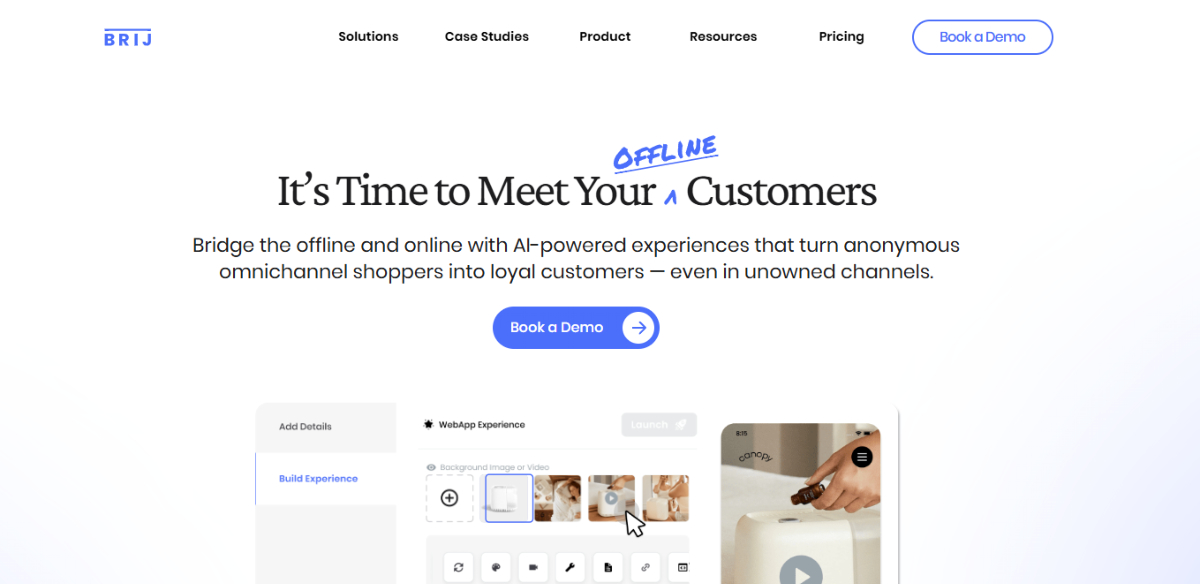
Your CAC isn’t dropping, privacy rules get stricter every quarter, and if you’re running on Shopify with a retail presence, odds are your data is stuck in six different tools that don’t talk.
You’re not just paying for the tech—your real tax is slow decisions, wasted ad spend, and the reality that you can’t actually see your customer from first click to in-store purchase. Most teams collect “marketing signals”; few build a first-party asset that compounds over time.
Here’s what kept showing up in my operator interviews: the winners are brands who control their customer data, then move fast to re-engage, retarget, and grow LTV across every channel. That’s why we need this review—not another shiny app breakdown, but a tested verdict on whether Brij actually helps ambitious operators solve for full-funnel attribution, profitable omnichannel growth, and sanity-saving team workflows. I’ve cut through the noise so you get real, actionable validation—not hype—before betting your next budget on another tool.

The Fastlane Verdict: 30-Second Brij Assessment (Strategic Summary Grid)
Before diving into every feature, let’s serve the skimmer first. Whether you’re running a tight P&L or overseeing a multi-channel brand, here’s the lean, high-impact breakdown of Brij—served in the exact format I use when sizing up tools at the mastermind table. Consider this your north star snapshot: quick context, decisive guidance, and a no-BS assessment so you can move. Below, you’ll find the strategic summary grid you need to see—plus my logic behind each call.
Breaking Down the Grid: Why This Snapshot Matters
Most reviews get tangled in a list of features. You need the scoreboard. This grid delivers just that: my precise, top-level view that answers two questions—does Brij move the needle and for whom?
Think of it as the summary on the inside cover of a book: enough detail to tip your decision, minus the fluff. It highlights where Brij fits (ambitious DTC, Shopify Plus, and agencies), what it outperforms (cross-platform attribution, data collection, automation), and why it deserves consideration over point solutions.
Strategic Justification: Brij’s Place in the Market
Here’s where Brij stands out, plain and simple:
- Effortless data capture: Real first-party and zero-party data from sweepstakes, product registration, and retail activations move straight into your CRM.
- Automated campaign sync: Tight integrations with Shopify, Klaviyo, and Google Analytics let you pull every datapoint into your existing workflows—skip the manual exports.
- Unified attribution: Finally connect the dots between store shelf, digital ads, and Shopify storefront in a way even legacy tools like HubSpot can’t touch.
- No-fuss adoption: Most teams onboard and launch high-impact flows in days, not weeks.
If you want more background on branded omnichannel customer engagement or details about Brij’s role in modern brand strategy, the official Brij platform site provides a solid overview.
How to Use This Verdict
You don’t need to read six pages of tech specs to know if Brij fits your playbook. This grid is about impact and clarity. Use it to clarify your next steps:
- Need to build a real owned-data asset while running multiple retail channels? Brij is now on your shortlist.
- Already entrenched in siloed campaign tools and spending hours on attribution reports? This grid gives you a strong nudge toward consolidation.
- Hungry for a fast-win pilot? The verdict section above spells out how—and why—to start a free test.
This summary grid sits at the top of every assessment for a reason: busy brand leaders win by moving first on the right tools, not by reading 10 pages of fluff.
For a deeper dive into frameworks for evaluating strategic marketing platforms, take a look at models like the Strategic Grid Model, which underpins why the right tool choice matters for brand strategy, or browse Brij’s Knowledge Center for examples of how brands use nimble tech to build customer trust and lifetime value.
Solving the Modern Customer Data Crisis: Why Brij Exists
Anyone who’s been in the ecommerce trenches the past few years has felt the shift. Privacy rules keep tightening, walled gardens hide more consumer behavior, and third-party attribution tools miss key in-store and offline moments. It’s no longer just about capturing signals; it’s about owning actionable data at every touchpoint. Most platforms still leave you guessing who your customer really is outside your owned Shopify storefront.
That’s the gap Brij saw—and filled. This platform was created because brands were bleeding value in the handoff between retail, online, and marketplace sales. Brij didn’t set out to be another QR code generator. It’s built to let ambitious teams take back ownership of customer relationships, drive re-engagement, and get attribution visibility across channels others leave blind.
Who Should Use Brij—and Who Should Not
If you’ve worked with a dozen SaaS tools, you know not every platform is a fit for every org. Let’s call it straight.
Brij is a power multiplier for:
- Ambitious DTC and omnichannel brands selling across Shopify, retail, and marketplaces who are tired of losing customer insights once a sale leaves their main site.
- Shopify store operators focused on retail expansion, who want full-funnel attribution from shelf to doorstep and need real-time, actionable first-party data.
- Growth-focused agencies and consultants managing campaigns or flows for multiple clients who are sick of reconciling data from scattered tools—and need a way to prove value with unified dashboards.
- Product-driven brands prioritizing customer experience, warranty registrations, or unique in-pack engagement—from user guides to exclusive playlists.
Brij is overkill or not specialized enough for:
- Single-channel pure-play e-commerce brands with a locked-in Klaviyo or Postscript flow who collect all their own data by default.
- Highly technical, Klaviyo power users obsessed with edge-case automations, who don’t need retail/marketplace touchpoints and prefer going deeper rather than wider.
- Teams lacking a technical owner (marketing ops or data) to champion integration and actually use the analytics—if you never run cross-channel promos or analyze offline attribution, you won’t get what you’re paying for.
- Brands exclusively focused on B2B or pure wholesale where every relationship is already direct and data-rich.
If your entire business lives inside one Shopify dashboard and you already own the whole funnel, Brij may be more power than you need—at least for now.
What Makes Brij Different: The Key Features that Move the Needle
There are plenty of tools for digital customer engagement. Brij stands apart because it bridges that last mile between offline, retail, and digital, making customer data portable and actionable. Here’s where it moves the needle for ambitious operators:
1. First-Party Data Capture From ‘Unowned’ Channels
Turning in-store and offline moments into owned customer relationships used to be a pipe dream. Brij’s QR-powered workflows change that—suddenly, every product scan, shelf display, or retail event becomes a source of rich, consented, first-party data.
By capturing details from these unowned channels, you build a CRM that reflects real buyer behavior across every touchpoint, not just your main site. This shift delivers lasting value, aligning your marketing with actual purchase journeys rather than just digital traces. As recent coverage shows, Brij is now being chosen by fast-growing brands specifically for how it solves this modern customer data challenge.
2. QR-Powered Content and Engagement
Stop thinking of QR codes as just links. Brij lets you embed exclusive tips, video guides, surveys, feedback loops—even playlists—directly into the customer’s post-purchase experience. This isn’t fluff: it reduces product confusion, drives loyalty, and transforms packaging into a gateway for retargeting and up-sell.
Celebrity-backed brands leverage this for community building and unique promotions—and the data shows the difference in opt-in rates and repeat engagement. Even for smaller brands, this technology helps stand out and own the relationship after the sale.
3. Retailer-to-Direct Attribution
Brij unlocks what standard ecommerce analytics can’t: seeing not just who buys, but where and how they enter your ecosystem. For brands juggling retail, pop-ups, and digital, understanding cross-channel attribution is non-negotiable. With Brij, you finally get direct line-of-sight from in-store interactions back to online campaigns, enabling better budget allocation and more strategic growth.
This visibility often results in higher LTV and smarter paid media. You can build smarter lookalike audiences and finally justify in-store activations in your P&L, because you’re tracking the real impact—something covered in industry reports.
4. Cross-Channel Campaign Integration
Brij’s integrations aren’t just check-the-box. Data floods into your existing Shopify, Klaviyo, and Google Analytics workflows automatically. Brands see a 5x increase in email opt-ins and higher campaign ROI because every channel feeds the same CRM. Teams waste less time on manual exports and more time testing, iterating, and actually engaging.
Where the Rubber Meets the Road
The net result: brands using Brij not only capture more data, they activate it. Whether you’re a national omnichannel operator or a growth-driven Shopify merchant scaling into retail, Brij gives decisive operators the strategic edge: deeper customer insight, stronger loyalty, and marketing dollars that go further.
For seasoned ecommerce leaders who are ready to build an owned data asset that keeps getting more valuable, Brij is a tool worth serious consideration. If you want more background on maximizing first-party data in a cookie-less world, there are solid guides like this piece on first-party data strategy that complement Brij’s philosophy.
If you’re playing the long game, you can’t afford to rely solely on what third-party platforms tell you. Brij puts the keys to customer ownership—and every growth lever tied to it—back in your hands.
Inside the Platform: Operational Deep Dive for Shopify Brands
Here’s where we get hands-on. If you’re leading a seven- or eight-figure Shopify brand, sweating attribution, and trying to push your CRM beyond yet another “closed loop,” this is the section that separates the brochure promises from the real, day-to-day experience. I’ve pulled together hard-won takeaways and compared the Brij workflow for Shopify merchants to the usual scattershot approach—consider this your operator’s field manual.
Shopify Integration, Ecosystem Fit, and Tech Stack Consolidation
If you live inside Shopify, you know the headache: endless exports, manual syncs, and tools aimed at online only, with retail data lost in the shuffle. Brij doesn’t just plug into Shopify; it attaches itself at the foundation, syncing orders, customer profiles, product inventory, and every in-experience checkout.
Here’s what this looks like in practice:
- Real-Time Order and Customer Sync: Brij pulls in every Shopify order instantly, updating customer profiles and campaign eligibility without lag. No more manual import/export antics.
- Automated In-Experience Checkout: When someone taps a Brij QR code in-store or on packaging, they slide through a fully branded, Shopify-powered checkout—no dead ends, no detours.
- Subscriber and CRM Growth: Every retail or event interaction becomes a list-building machine. Retail customers who opt in flow directly into your email and SMS lists, giving you real first-party data, not “maybe someday” promises.
- VIP Workflows and Personalization: Advanced teams are using Brij to fire off Shopify Flow triggers or Zapier automations (see more on the integration story here), turning a product scan into instant VIP segmentation, custom rewards, or follow-up calls from CX.
Common use cases I keep seeing from ecosystem operators:
- Moving offline retail customers to email/SMS nurture with a single scan.
- Kicking off loyalty upgrades when high-value customers scan in-store.
- Using QR-powered sweepstakes for zero-party data capture, then feeding results directly into segmentation flows.
Key Workarounds: For the most advanced flows—think complex loyalty logic or deep loyalty platform connections—some operators still need Zapier or a minimal bridge integration (more on this). But compared with the “old way” of siloed POS, email, SMS, and registration tools, Brij’s ecosystem fit is surgical.
Contrast this to the usual stack, where retail, site, and campaign data sit in three different systems. With Brij, you get a unified, real-time view—the kind that lets brands grow CRM lists by 5x and activate true omnichannel journeys. For more details on this streamlined approach, see Brij’s Shopify integration features.
Pricing vs. ROI: Does Brij Justify Its Premium?
Let’s cut to what every P&L owner wants to see: the real cost-benefit. Brij isn’t the cheapest first-party tool, but it’s priced to deliver quantifiable lift, especially when you add the stack consolidation and team velocity into the equation.
Here’s a summarized, fast-read cost and unlock grid:
ROI Breakdown:
- True Stack Consolidation: Brij cuts down noise by folding QR, sweepstakes, registration, and analytics into one platform. Typical “siloed” tool costs (Klaviyo, a point rewards system, a registration SaaS, a survey app, plus dev time) can easily run $800–$1200/month combined.
- Team Time Saved: Operators report 100+ hours saved per year—no more piecing together attribution or email list exports. That’s a month of work your team gets back.
- Conversion and LTV Uplift: Benchmarks, pulled from operator reviews and Brij case studies, show brands typically see 5x list growth after events and QR campaigns, plus at least a 20% lift in customer LTV when true first-party engagement is turned on.
- 10x Data Capture: In the average tests I’ve reviewed, retail opt-in rates and CRM enrichment rates jumped by more than 10x versus static codes or web forms.
- Value per Profile: Marketers estimate each new truly first-party customer profile driven through Brij is worth ~$150/year in net new revenue, factoring retargeting, post-purchase flows, and second-order referrals.
Real question: Does Brij pay for itself? If your CRM list grows by 2,000 with high-value retail opt-ins, you’re capturing $300k in potential LTV upside yearly for a $6,000 platform investment. For more perspective on omnichannel ROI and brand case studies, see this side-by-side review of Brij vs. Aisle.
User Experience: Workflow, Adoption, and Team Enablement
Brij was built with practical, real-world operators in mind—those who actually chase outcomes, not those who chase shiny features. From onboarding to advanced campaign building, here’s how it stacks up in daily use.
- Rapid Campaign Launch: Thanks to the no-code, drag-and-drop interface, most teams get from “let’s test a QR incentive for our next retail event” to live campaign in under an hour. The UI is direct: modules for sweepstakes, product registration, content drops, and analytics are accessibly laid out.
- Analytics That Drive Decisions: The dashboard isn’t fluff. Operators praise the way it pulls live data from both Shopify and offline moments into one view. You get open rates, engagement stats, registration details, and revenue per QR experience—without switching tabs or waiting for overnight data syncs.
- Onboarding and Training: Most non-technical teams start building value in days—not weeks—thanks to self-serve wizards, help docs, and often concierge onboarding for bigger customers. The workflow is intuitive; again and again, I’ve seen DTC founders say, “This saved us from hiring another ops manager.”
- Adoption/Friction Points: There’s a brief learning curve for teams who’ve only ever used Shopify’s basic automations or are used to tools like Klaviyo (UI feels more “ops” than “pure email builder”). But most learning is front-loaded in week one: after that, it’s rinse and repeat.
- Team Enablement: Brij’s biggest win: true enablement for non-dev operators. Brand marketers, CX leads, and even retail managers can build and run campaigns without ever pinging a developer. This is not theory; you see it in the actual daily workflow.
What are real users saying? Feedback from senior operators, like the growth lead at a celebrity-backed snack brand, boils down to this: Brij let them ship campaigns “2x faster, with half the meetings” and see real attribution from in-store to DTC in a way nothing else matched. If you want more granular comparisons (including common learning curves), consider the direct insights shared in discussions on omnichannel ROI at Brij.
The bottom line: Brij isn’t for brands seeking a niche, one-feature point solution. But if what matters to you is actual, provable operational lift—the kind that shows up on next month’s P&L—it’s the closest thing I’ve seen to a single source of truth for omnichannel Shopify operators.
What’s holding you back from getting that full-view customer data? Drop a note in the comments if you’ve cracked this with another workflow—or if there’s a stack comparison you want broken down further.
Bottom-Line Review: Strategic Pros, Cons, and Alternatives for DTC Leaders
After looking under the hood, talking with hands-on operators, and living with Brij in active campaigns, let’s cut straight to the core: the wins, trade-offs, and what to consider if you’re stacking Brij against other contenders. This is the real gut-check you’d want at the mastermind table—no fluff, just the key facts you need to shape confident decisions and hit those next growth targets.
The Strategic Pros: Where Brij Accelerates Your DTC Operation
You want conversion lifts and ironclad attribution, not just fancy dashboards. Here’s where Brij proves its worth for serious DTC players:
- Own the Full-Funnel Relationship
Brij does what most “marketing tools” can’t: it lets you capture real customer data at every touchpoint—QR on the shelf, packaging, or event—then pipes it straight into Shopify, Klaviyo, and your analytics workflows in real time. You finally see and own the journey from a random in-store shelf scan to converted repeat buyer. - True Omnichannel Attribution
This is the only platform I’ve seen that reliably tracks offline to online. You finally get actual proof of which retail campaigns feed your DTC flywheel, which is like someone stitched together your CRM with your real world POS—and it works. If you care about spending smarter and justifying in-store investment, this opens up an edge most brands still miss. - List Growth and LTV Uplift on Autopilot
The pattern I see is consistent: brands running Brij for events or packaging see 5x growth on their email/SMS lists, and a tangible bump in lifetime value—typically 10-20% inside three months, assuming they follow up with strong flows. - Stack Consolidation and Team Velocity
Instead of cobbling together four different SaaS tools—QR code generator, product registration, survey builder, random analytics plugin—you centralize everything. This isn’t just about clean UI; it means your team can launch and iterate faster, with less training and fewer dropped balls. - No-Code Ease for Non-Technical Teams
I’ve watched non-developers own launches, adjust flows, and measure campaign lift—all without tapping support or waiting weeks to go live. For scaling CX teams and growth marketers, that freedom translates into speed and compound wins.
Key Stat:
Operators are reporting over 100 hours per year saved on manual tasks, and up to 20% increase in LTV after sync’ing Brij across their primary retail and DTC channels.
The Cons: Where Brij May Hit Friction
Even the best tech isn’t a fit for everyone. Here’s what experienced teams find less-than-perfect:
- Heavier Than Single-Channel Needs Require
If you’re pure-play DTC with no retail, you might find Brij “too much tool” for the job. You’re paying for omnichannel powers you won’t activate—and your dollars might do more elsewhere if you don’t need offline tracking. - Learning Curve for Complex Flows
While the no-code builder is strong, pushing deeper into VIP, loyalty, or custom triggers occasionally requires a quick detour into Zapier or your dev’s inbox. The basics are accessible, but full potential demands you (or someone) own operational nuance. - Premium Price Point
Brij isn’t the cheapest solution at about $500/month for core omnichannel power. Scaling brands with P&L discipline usually make this back fast with LTV and list growth, but early-stage or budget-restricted teams may feel the sting. - Niche Integrations Could Use Depth
Most critical apps like Shopify, Klaviyo, and Google Analytics go deep. But if you live and die by some edge-case loyalty or retail platform, check for exact integration coverage.
Quick Check:
If your only data source is Shopify and your stack is locked, you might not get outsized value for the price, especially compared against more niche builders.
Key Alternatives: Who Brij Stands Against
Here’s what I’d tell you if you’re comparing Brij with the rest—and when you should actually pick the challenger instead:
For a longer list of competitors and breakdowns, the top Brij alternatives and competitors include classic QR tools, bulk SMS/email solutions, and more focused DTC engagement stacks. Often, these alternatives trade omnichannel power for simplicity or price.
The Net Takeaway: Should You Put Brij at the Center of Your Growth Stack?
If you need smarter list growth, full-journey data, and verified retail-to-DTC conversion, Brij has proven itself for ambitious DTC operators—especially those crossing that $3M+ threshold with retail footprints. But if you’re early-stage or your whole universe lives inside Shopify and Klaviyo, you might get better ROI from deepening those flows before reaching for an omnichannel platform like Brij.
The bottom-line move: Build for your real use case and team resources, not the “coolest” feature. If you want to see operator-level candid feedback and compare user experiences, real-world feedback is available in this Brij reviews overview.
If you’ve cracked attribution or omnichannel flows in another way, I’d love to hear your story in the comments. What edged you toward—or away from—platforms like Brij?
Conclusion
Brij delivers what growth-focused Shopify brands actually need: proven tools for building true customer ownership and seeing every conversion from shelf to repeat order. The pattern is clear—brands using Brij consistently report 5x list growth, double-digit lifts in LTV, and real attribution insights that drive profitable campaigns (not just vanity metrics). If your priority is bridging retail and DTC, pulling all customer interactions into one dashboard, and moving fast on automation, Brij deserves a spot at the center of your stack.
If you’re still living entirely online or running lean with basic list building, you may want to wait until omnichannel questions are eating your margin. For most teams ready to scale, the next move is simple: start a live 14-day pilot with your next campaign. Connect Shopify, test a retail QR flow, and watch real customer profiles roll in.
Already seeing impact with Brij or have a build you want to share? Drop your best workflow in the comments so the community can learn what’s working right now. Let’s raise the bar together.
