





Key Takeaways
- Prioritize local experts over the lowest bidder to prevent costly permit rejections and keep your brand ahead of the competition.
- Validate all site conditions and engineering requirements before fabrication to ensure your signage meets every safety code the first time.
- Manage your installation as a team-wide process to reduce stress on marketing and facilities staff during busy store rollouts.
- Address local wind load and zoning rules early to transform a boring administrative chore into a fast and exciting launch.
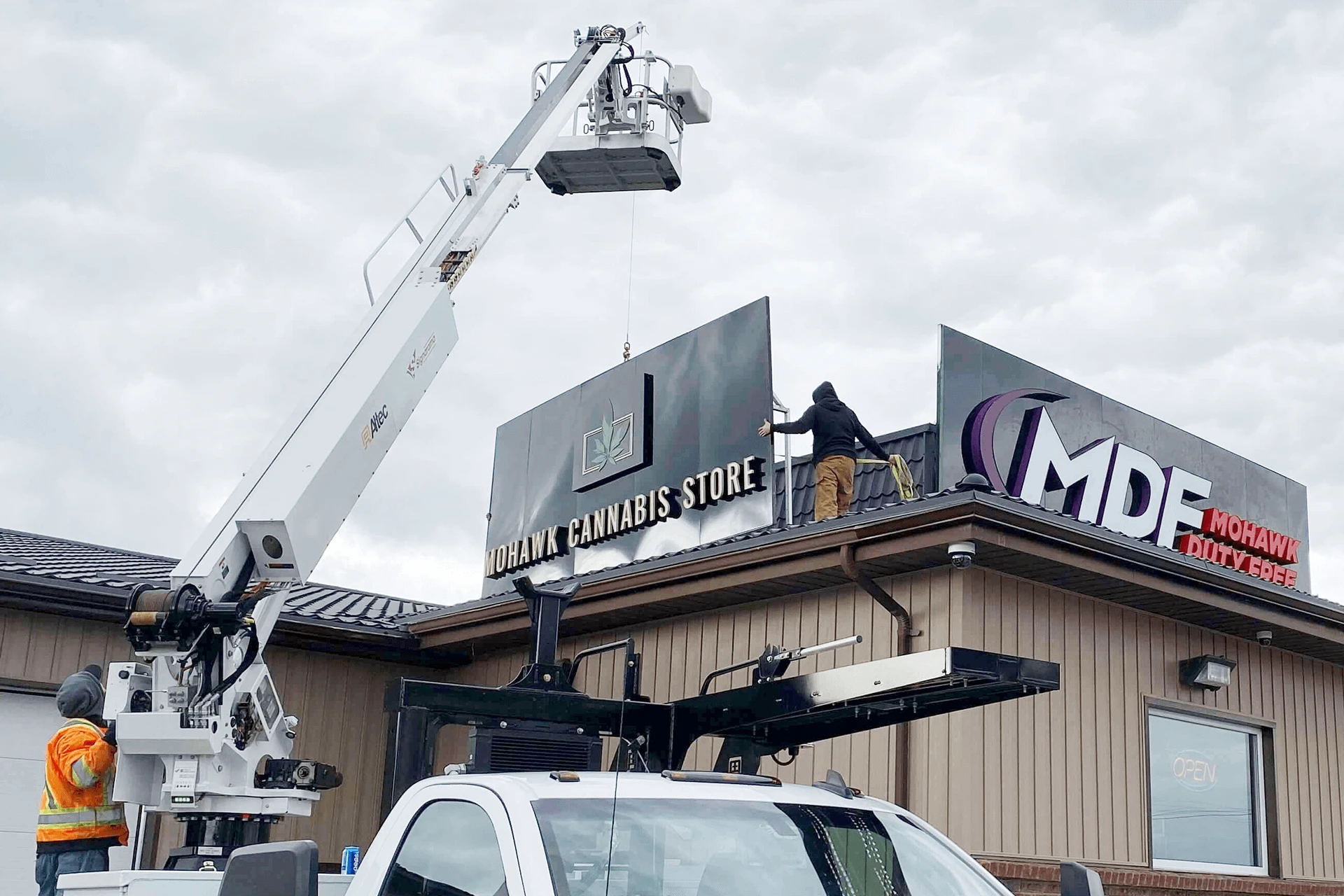
In New York, Illinois, and Texas, commercial sign installation has become a hidden bottleneck for many B2B brands.
Store openings get delayed, inspections fail at the last moment, and marketing teams are left explaining why a finished sign is still sitting in a warehouse. The problem is rarely the sign itself. It’s the installation.
For operations, facilities, and procurement teams, sign installation often looks like a final, mechanical step — hang the sign, power it on, open the doors. In practice, it’s a complex compliance and logistics exercise involving permits, engineering, local codes, union rules, and liability exposure. When that complexity is underestimated, the costs show up quickly.
This article examines the most common commercial sign installation mistakes that cost B2B brands time and money, why they happen, and how experienced sign installation companies prevent them. The focus is practical: rework, delays, failed inspections, missed openings, and avoidable risk.
The Commercial Sign Installation Landscape in NY, IL, and TX
Across NY, IL, and TX, municipalities have tightened enforcement around exterior signage. Cities like New York, Chicago, Dallas, Houston, and Austin apply different combinations of zoning, electrical, structural, and landmark regulations. The same sign package can be approved in one jurisdiction and rejected in another.
For multi-location brands, this creates friction. Procurement teams often source signage centrally, while installation is handled locally by whoever is available. That disconnect is one of the biggest drivers of mistakes. Sign installers who don’t regularly operate in a specific city may miss local requirements around wind load calculations, wall penetrations, or electrical disconnects.
As a result, commercial sign installers are increasingly evaluated not just on labor rates, but on their ability to navigate permitting, inspections, and liability — especially for storefronts, pylons, and illuminated signage.
The Most Expensive Sign Installation Mistakes
Incomplete or Incorrect Permitting
One of the most common failures in business sign installation is assuming that a permit is “standard.” It isn’t. Permit requirements vary not only by state, but by city, zoning district, and even building age.
When a sign installation contractor submits incomplete drawings or outdated specs, permits stall. Worse, some sign hanging companies proceed without final approval, triggering stop-work orders and fines. The cost isn’t just administrative; it’s lost revenue from delayed openings and forced rework.
Failed Inspections Due to Installation Errors
Failed inspections are rarely about aesthetics. They’re about structure and safety. Inspectors look for proper anchoring, correct hardware, electrical grounding, and load compliance.
Common failures include:
- Anchors not rated for the wall substrate
- Incorrect spacing or depth of fasteners
- Electrical connections that don’t meet local code
When inspections fail, the fix often requires uninstalling the sign, repairing the facade, and reinstalling — doubling labor and extending timelines by weeks.
Underestimating Site Conditions
Many billboard installation companies and commercial sign installers rely on outdated site surveys or generic assumptions. Brick isn’t always structural brick. Drywall doesn’t always conceal standard studs. Older buildings in NY and Chicago often hide surprises behind the facade.
When installers arrive without accurate site data, improvisation follows. Improvisation leads to mistakes, delays, and liability exposure if the sign later fails.
Poor Coordination Between Printer and Installer
In B2B environments, signage is often printed by one vendor and installed by another. When communication breaks down, installers receive signs that don’t match site conditions: incorrect raceways, missing mounting points, or incompatible electrical components.
This is one of the most preventable errors, yet it remains common. The result is last-minute field modifications — a red flag for inspectors and a risk for the building owner.
Ignoring Liability and Insurance Requirements
Sign hanging is not low-risk work. Installers operate at height, near traffic, and around live electrical systems. Brands that hire uninsured or underinsured sign installers expose themselves to claims if something goes wrong.
In some jurisdictions, proof of insurance and bonding is required before permits are even issued. Skipping this step can shut down a project before it starts.
The Cost of Getting It Wrong
Below is a realistic snapshot of how mistakes translate into financial impact.
|
Issue |
Typical Impact |
| Permit rejection | 2–6 weeks delay, redesign costs |
| Failed inspection | Reinstall labor + facade repair |
| Site condition surprise | Change orders, schedule slip |
| Non-compliant install | Fines, forced removal |
| Liability incident | Insurance claims, legal exposure |
For multi-location brands, these costs compound. A delayed opening in one city can ripple through marketing campaigns, staffing schedules, and lease obligations.
How B2B Teams Should Think About Sign Installation
For operations and procurement leaders, the key is reframing sign installation as a risk-managed process, not a commodity service.
Prioritize Local Expertise Over Lowest Price
A sign installation company with real experience in NY, IL, or TX brings institutional knowledge that reduces friction. They know which departments review permits, how inspectors interpret code, and where projects typically stall.
Lowest-price bids often exclude this expertise — and the savings disappear the first time a permit is rejected.
Demand Pre-Install Validation
Professional commercial sign installers validate drawings against real site conditions before fabrication is finalized. This includes wall structure, electrical access, and clearance requirements.
This step prevents field improvisation, which is the root cause of many inspection failures.
Evaluate Process, Not Just Credentials
Licenses and insurance matter, but process matters more. How does the sign installation contractor manage permits? How do they document installs? How do they coordinate with printers and landlords?
Strong answers to these questions signal fewer surprises later.
A Realistic Scenario: Multi-State Retail Rollout
Consider a regional retail brand expanding across Texas and Illinois. Marketing locks in a launch date. Signage is printed centrally. Installers are sourced locally, city by city.
In Texas, installations proceed smoothly. In Illinois, two locations fail inspection due to anchoring issues and missing engineering letters. Openings are delayed. Marketing campaigns go live anyway, driving customers to unopened stores.
The fix requires re-engineering the mounts, resubmitting permits, and reinstalling. The brand pays twice — once for speed, again for compliance.
Brands that work with coordinated business sign installation partners avoid this scenario by aligning design, permitting, and installation from day one.
Why These Mistakes Keep Repeating in B2B Projects
Most commercial sign installation failures are not technical. They are organizational.
In B2B environments, signage is usually handled at the intersection of marketing, facilities, procurement, landlords, and external vendors. No single owner controls the full chain. That fragmentation creates blind spots where mistakes hide until they become expensive.
Operations teams assume the sign installers will “handle the details.” Installers assume drawings are approved and accurate. Procurement assumes the lowest compliant bid is good enough. The gaps between those assumptions are where delays and rework originate.
In markets like New York and Chicago, this fragmentation is amplified by regulatory complexity. A sign installation that is technically sound can still fail if paperwork, inspections, or landlord approvals are misaligned. In Texas, scale and distance introduce different risks: missed site nuances, subcontractor inconsistency, and scheduling drift across cities.
The Hidden Risk of “Standardized” Rollouts
Standardization is attractive to B2B brands. One sign package, one vendor list, one rollout playbook. On paper, it looks efficient.
In reality, over-standardization is one of the most expensive sign installation mistakes.
A standardized sign design that ignores local wind-load requirements, historic district rules, or landlord-specific mounting restrictions will be modified in the field. Field modifications are slow, visible to inspectors, and rarely documented cleanly. Each deviation introduces risk.
Experienced commercial sign installers push back early when a “one-size-fits-all” approach clashes with local code. Inexperienced teams discover the problem on a ladder, with an inspector scheduled for the next morning.
Where Professional Installation Changes the Outcome
Experienced providers approach sign installation as a system, not a task. EasyWay Install Sign Installation Company operates across NY, IL, and TX with teams structured around permitting, site validation, and compliant execution.
Rather than reacting to problems in the field, professional sign installers eliminate common failure points before trucks are dispatched. For B2B brands, this means predictable timelines, cleaner inspections, and fewer internal escalations.
Conclusion: Mistakes Are Expensive — Process Is Cheaper
Commercial sign installation failures rarely come from bad intentions. They come from underestimating complexity. In regulated markets like NY, IL, and TX, the cost of mistakes is measured in lost time, lost revenue, and avoidable risk.
B2B brands that treat sign installation as a strategic function — selecting experienced sign installation companies, aligning design with site realities, and prioritizing compliance — protect their launches and their budgets.
Book a consultation to evaluate your current installation process and identify where risk and waste can be eliminated before your next rollout.
Frequently Asked Questions
How much does commercial sign installation cost in NY, IL, and TX?
Costs vary by sign type, height, and permitting complexity. Simple storefront signs may start in the low four figures, while large illuminated or structural signs can reach five figures once permits and equipment are included.
What is the difference between a sign installer and a sign installation contractor?
A sign installer focuses on labor. A sign installation contractor manages permits, inspections, coordination, and liability in addition to installation.
How far in advance should I book commercial sign installers?
In major cities, booking 4–8 weeks ahead is common, especially when permits are involved. Rush jobs often increase cost and risk.
Can failed inspections be avoided?
Yes. Most failures stem from inadequate planning or non-compliant installs. Pre-install validation and experienced installers dramatically reduce this risk.
Do billboard installation companies handle storefront signs?
Some do, but not all. Billboard installation companies often specialize in large-format outdoor structures and may lack experience with retail or mixed-use properties.
Is insurance really necessary for sign hanging?
Yes. Proper insurance protects the brand, the property owner, and the installer. Many jurisdictions require proof before issuing permits.
