




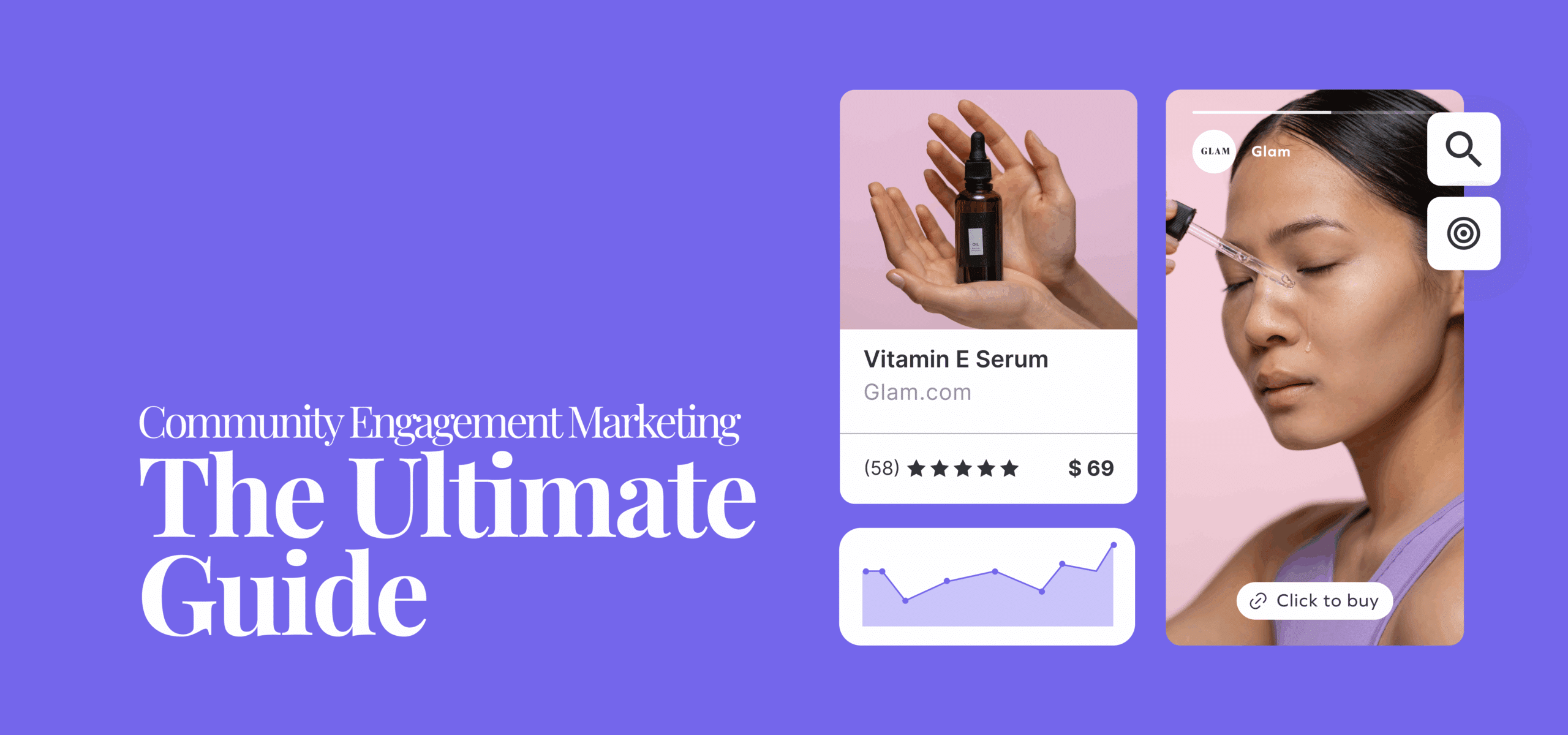
While customer acquisition remains a priority for eCommerce brands, retention has emerged as the primary driver of sustainable growth. Many businesses focus their energy on the next transaction, but the most successful brands focus on the next relationship. They aren’t just building a customer list; they are building a community.
Community engagement marketing is the strategic process of nurturing a group of people around your brand’s shared values, interests, and goals. It moves beyond one-way advertising into two-way conversation. This guide explores exactly how to build, manage, and grow a thriving brand community that drives long-term value.
Key Takeaways: Community Engagement Marketing
- Retention Drives Revenue: Increasing customer retention rates by just 5% can increase profits by 25% to 95%. Community is the engine of retention.
- UGC is Currency: User-Generated Content (UGC) is the lifeblood of engagement. Shoppers who engage with UGC convert at a 161% higher rate.
- Two-Way Value: A community cannot exist solely to serve the brand; it must offer tangible value—education, belonging, or rewards—to its members.
- SEO is Evolving: Fresh community content (reviews and Q&A) is essential for ranking in modern AI Overviews and Generative Engine Optimization (GEO).
- Tools Enable Scale: Leveraging strategic tools for Loyalty and Reviews allows you to systematize engagement, turning casual buyers into vocal advocates.
Why Community Is a Critical Business Asset
For years, “community” was often viewed as a soft metric—valuable, but difficult to quantify. Today, however, a strong community serves as a defensible competitive moat.
Why? Because community directly impacts your unit economics.
- It Increases Customer Lifetime Value (LTV): Community members are emotionally invested. Research shows that emotionally connected customers are 52% more valuable than those who are just highly satisfied.
- It Lowers Acquisition Costs (CAC): A thriving community advocates for you. They create content, answer questions for new shoppers, and refer friends, essentially acting as a volunteer marketing team.
- It Provides Honest Feedback: While surveys are useful, organic community discussions provide raw, unfiltered insights into product performance and customer sentiment.
In essence, building a community transforms a transactional business into a relational one. The rest of this guide details the framework for building it.
The 4 Pillars of a Strong Brand Community
Simply creating a forum or a group is rarely enough to foster a genuine community. Sustainable communities are typically built on four foundational pillars. If one of these is underdeveloped, the community often struggles to gain momentum.
Pillar 1: Shared Identity & Purpose
A community benefits from a clear “why.” Members often need to see a part of themselves reflected in the brand. If you sell outdoor gear, your community isn’t just “people who bought tents”; it is a collective of “adventurers.”
- Shared Identity: The brand becomes a badge. A person wearing a Patagonia vest isn’t just wearing clothes; they are signaling a specific set of values.
- Shared Purpose: The community works toward a common goal, whether that is “getting better at skincare” or “promoting sustainable living.” Your content and messaging must reinforce this identity, giving members a sense of belonging that goes beyond the product itself.
Pillar 2: Authentic Connection
A community functions best as a conversation, not a monologue.
- Brand-to-Member (B2M): This involves showing the humans behind the logo. Hosting AMAs (Ask Me Anything) with founders or designers humanizes the brand.
- Member-to-Member (M2M): The highest form of community occurs when members talk to each other. Brands can facilitate this through discussion threads, Q&A sections, and social sharing. When members start answering each other’s questions, you have built a true community.
Pillar 3: Value Exchange
Members are busy, so participation usually requires consistent value. You must constantly ask: “What are my members getting out of this?”
- Informational Value: Tutorials, how-to guides, and expert tips.
- Emotional Value: Recognition, feeling heard, and a sense of belonging.
- Tangible Value: Exclusive access, early product drops, member-only discounts, or a structured rewards program.
Pillar 4: Active Participation
Passive audiences are distinct from active communities. Successful brands create “ladders of participation” that allow users to move from lurking to leading.
- Low Friction: Liking a post or voting in a poll.
- Medium Friction: Writing a review, leaving a comment, or asking a question.
- High Friction: Submitting a detailed video testimonial, writing a guest post, or referring a friend. Your goal is to guide members up this ladder, rewarding them as they increase their commitment.
Strategies for Building Your Community from Scratch
The “cold start” challenge—launching a community with zero members—is common. It can feel like hosting a party where no one has arrived yet. Here is a strategic approach to gaining your first 100 true fans.
Step 1: Define Your “Why”
Draft a mission statement before inviting a single person. Who is this for? Instead of a broad target like “shoe buyers,” consider a specific niche like “sneakerheads hunting for rare drops.”
- Purpose: What will members do here? (e.g., “Share photos of new sneakers, get legit checks, and get early release info.”)
- Uniqueness: Why join this community instead of a generic forum? (e.g., “Direct access to our designers.”)
Step 2: Choose Your Platform (Owned vs. Rented)
- Rented Platforms (Social Media): Platforms like Facebook Groups or Discord are easy to start because the audience is already there. However, brands are subject to algorithm changes, distractions are high, and you do not own the member data.
- Owned Platforms (Your Site): Integrating community elements directly onto your eCommerce site (via Reviews and Loyalty programs) often yields high ROI because it keeps traffic where the transactions happen. You own the data and control the experience.
- The Hybrid Approach: Many brands start on a rented platform to test the waters, then migrate their most dedicated members to an owned platform (like a VIP Loyalty Tier) as the community matures.
Step 3: Seed the Community (The Founder’s Circle)
Identify your top 2% of customers by order frequency or LTV. You don’t need expensive software for this step—a personal touch works best.
- Identify: Export your top customer list.
- Invite: Send a personal, plain-text email from the founder.
- Subject: “A Personal Invitation”
- Body: “Hi [Name], as one of our most loyal customers, I wanted to personally invite you to be a founding member of our new private community. We’re building a space for [Purpose], and we want your voice to help shape it.”
- Engage: Once they join, treat them like VIPs. Give them a special “Founding Member” badge and ensure you reply to every single one of their initial posts.
Fueling Engagement: Content & Conversation
A community requires fuel. If you don’t add new logs to the fire, it goes out. While brand-led content (tutorials, behind-the-scenes) is important, the most potent fuel is often User-Generated Content (UGC).
Why UGC is the Ultimate Engagement Tool
UGC acts as authentic social proof. It scales better than professional content and builds deep trust among prospective buyers.
- Visuals Matter: Customer photos increase purchase likelihood by 137%.
- Volume Matters: Having just 10 reviews on a product can lead to a 53% uplift in conversion. When a member shares a photo of your product, they feel a deeper connection to it. They stop being just a consumer and become a contributor.
Leveraging Reviews for Community
A 5-star rating is valuable, but it is not a conversation. To build community, brands should look to go deeper into the review experience using best-in-class tools.
- Encourage Detail: Use tools that prompt customers for specifics. Smart Prompts are 4x more likely to capture high-value topics like sizing, fit, or material quality than generic text boxes.
- Community Q&A: Allow customers to ask questions on product pages that past buyers can answer (“Does this run true to size?”). This facilitates Member-to-Member interaction directly on your storefront.
- The SEO Bonus (AI Overviews): Search engines are shifting toward AI Overviews and GEO. These systems crave fresh, human-generated content to answer queries. A steady stream of detailed reviews feeds these engines, helping your brand appear in conversational search results.
Meeting Customers Where They Are
To encourage engagement, friction should be minimized. While email is standard, SMS review requests—powered by integrations with platforms like Klaviyo or Attentive—can drive 66% higher conversion rates than email alone. When it is easy to participate, participation increases.
The Role of Loyalty in Community Building
Loyalty programs were once purely transactional—spend money, get points. Today, a best-in-class loyalty strategy serves as the structural framework of your community. It provides the incentives that turn passive members into active participants.
Reward Engagement, Not Just Spend
If a program only rewards purchases, it only engages buyers when they are spending money. To build a daily habit, consider rewarding community behaviors.
- Incentivize Reviews: Offer points for leaving detailed feedback.
- Reward Visuals: Offer bonus points for attaching a photo or video to a review.
- Encourage Connection: Reward users for following social channels, answering a Q&A, or signing up for SMS updates. This signals to your members: “We value your voice and your time, not just your wallet.”
Create Belonging with VIP Tiers
Gamification creates status. A tiered program (e.g., Bronze, Silver, Gold) gives members a goal.
- Exclusivity: Give top tiers early access to sales or new products.
- Experiential Rewards: Offer invitations to exclusive events, design consultations, or private Zoom calls with the team.
- Status Symbols: Use distinct names for your tiers (e.g., “Insider,” “Advocate,” “Icon”) to reinforce the shared identity.
“A great loyalty program makes your best customers feel like the insiders they are. It’s not about the 5% discount. It’s about the feeling of being part of an exclusive club. That sense of belonging is what separates a good community from a great one.” — Ben Salomon, E-commerce Expert.
Measuring the ROI of Community Engagement
It is important to move beyond “vanity metrics” and track business impact. Your CFO needs to see the connection between community and revenue.
1. Engagement Metrics (Health)
These metrics tell you if the community is alive and active.
- UGC Contribution Rate: What percentage of buyers leave a review or photo?
- Active Members: How many members interact with your loyalty program or Q&A monthly?
- Member-to-Member Ratio: Are members talking to each other, or just to the brand?
2. Business Metrics (Wealth)
These metrics prove the financial value of your community.
- Customer Lifetime Value (LTV): Compare the LTV of community members (loyalty program participants) vs. guest checkouts.
- Retention Rate: Track the repeat purchase rate of customers who engage with UGC or loyalty tiers.
- Google Ads Performance: High volumes of reviews contribute to Google Seller Ratings, which can increase ad CTR by 17%.
Advanced Strategies & Future Trends
Once your foundation is set, you can explore more advanced tactics to keep the experience fresh.
- Gamification: Use badges and leaderboards to highlight top contributors (e.g., “Top Reviewer,” “Style Icon”).
- Hybrid Events: Merge online community with offline meetups for your top VIP tier, such as factory tours or local coffee meetups.
- AI for Insights: Use AI tools to analyze sentiment within reviews to spot product defects or trending topics before they impact the wider business.
How Yotpo Supports Community Growth

Building a community requires more than just good intentions; it often requires the right infrastructure to scale. Yotpo’s platform helps brands turn one-time buyers into lifelong advocates by connecting the dots between engagement and retention.
Yotpo Reviews leverages AI to collect high-quality, conversion-driving content that boosts SEO and social proof. Simultaneously, Yotpo Loyalty allows you to build customized, tiered programs that reward customers not just for spending, but for engaging—creating a self-sustaining cycle of advocacy and growth.
Conclusion
The traditional transactional model is evolving. Today’s consumers often seek a sense of belonging alongside their purchases. By treating your community as a strategic asset—and fueling it with authentic content and meaningful rewards—you build a moat around your brand. Start small, listen to your members, and use the right tools to scale those relationships into revenue.
FAQs: Community Engagement Marketing
1. What is the difference between an audience and a community?
An audience is one-way; the brand speaks, and people listen. A community is multi-directional; the brand speaks to members, members speak to the brand, and most importantly, members speak to each other. Community implies interaction and shared identity.
2. How does UGC impact Generative Engine Optimization (GEO)?
GEO focuses on optimizing content for AI-driven search engines (like Google’s AI Overviews). These AI models prioritize fresh, authoritative, and human experiences. A steady stream of detailed customer reviews provides the exact type of “lived experience” data these engines look for, helping your products rank in conversational search results.
3. What is the “cold start” problem in community building?
The “cold start” problem is the difficulty of stimulating activity in a new community when there is no existing content or conversation. The best solution is to personally invite your top 1% of customers (“evangelists”) to seed the community with initial discussions and reviews before opening it to the wider public.
4. Should I reward customers for leaving reviews?
Yes, but be strategic. Rewarding customers with loyalty points for leaving a review is a standard best practice that increases review volume. However, you should never incentivize positive reviews specifically; the reward must be for the act of leaving feedback, regardless of the sentiment, to maintain authenticity and compliance.
5. How do I handle negative feedback in a public community?
Treat negative feedback as an opportunity. Respond quickly, acknowledge the issue, and take the conversation offline if necessary. A professional, helpful response to a negative review often builds more trust with onlookers than a perfect 5-star rating, as it demonstrates superior customer service.
6. What are “Smart Prompts” in reviews?
Smart Prompts are AI-driven features in review collection forms that suggest specific topics for the customer to write about (e.g., fit, fabric feel, battery life). They replace the dreaded “blank page” syndrome and result in richer, more helpful data that aids future shoppers.
7. How can I use SMS to boost community engagement?
SMS is a high-urgency channel. By integrating SMS providers (like Klaviyo or Attentive) with your review platform, you can send review requests via text. These requests often see significantly higher open and conversion rates compared to email because they reach the customer on their most-used device.
8. What is a “VIP Tier” in a loyalty program?
A VIP Tier is a status level within a loyalty program (e.g., Silver, Gold, Platinum) achieved by earning points or spending a certain amount. It drives community behavior by giving members a goal to strive for. The benefits for higher tiers should be experiential (early access, exclusive events) rather than just transactional (higher discounts).
9. How do I measure the “health” of my community?
Beyond revenue, look at engagement ratios. Track the percentage of active members vs. total members, the number of member-to-member interactions, and the sentiment of the UGC being created. High churn rates (members leaving) or a drop in UGC submission rates are early warning signs of a declining community.
10. Why is “shared identity” important for a brand community?
Shared identity turns a product into a lifestyle. When members feel that the brand represents their values or aspirations (e.g., “we are eco-conscious warriors” or “we are serious athletes”), they are more likely to defend the brand, advocate for it, and remain loyal even when competitors offer lower prices.
