





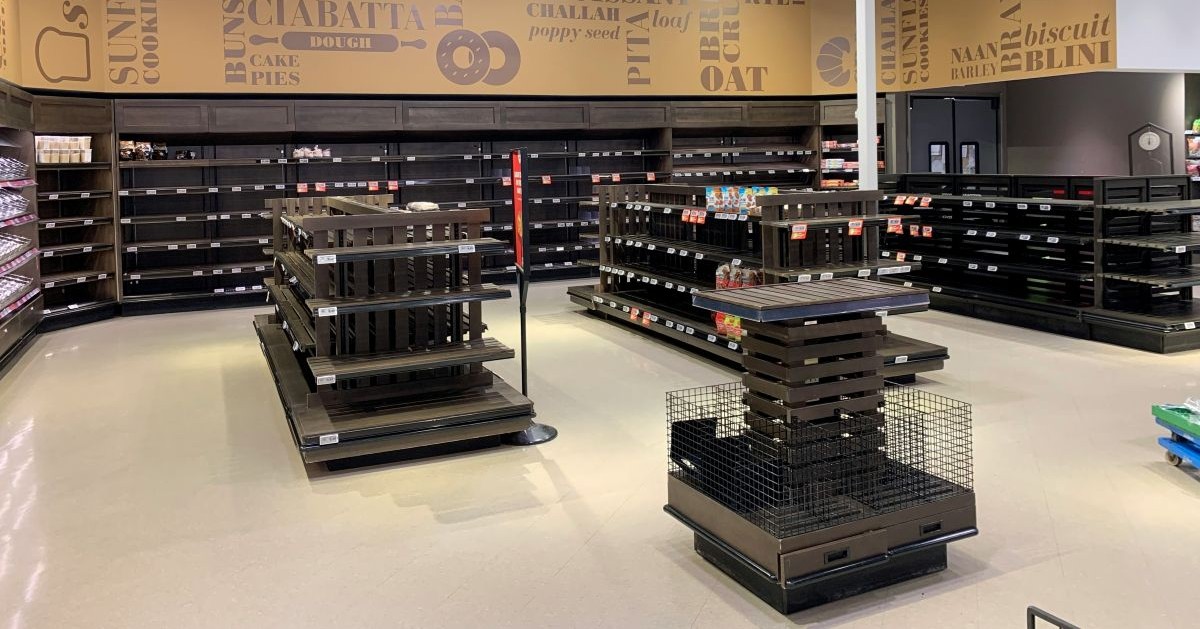
Most retail stores don’t suddenly stop performing. Over time, they begin to drift.
What once felt clear and easy to shop slowly becomes harder to navigate. Product sections grow more crowded. Displays lose their impact. Small inconsistencies begin to appear across shelves and fixtures. None of it feels serious on its own, but over time, it adds up.
Sales flatten. Certain categories underperform. Some locations begin to fall behind others.
At that point, many teams focus on quick fixes—adjusting displays, moving a few products, refreshing signage. Sometimes it helps, but the results rarely last.
Because the issue usually isn’t isolated. It’s structural.
And that’s where a store reset comes in.
A reset isn’t about starting from scratch. It’s about realigning the store with how customers actually shop today—and restoring the clarity and flow that drive performance.
The Signs Your Store May Need a Reset
Most stores don’t reach a breaking point—they gradually move away from what once worked. The challenge is that these changes often go unnoticed until performance is already affected. The following signs tend to show up early, and when they start to appear together, it’s usually a clear signal that the store may need more than small adjustments.
Sales Have Plateaued or Become Inconsistent
One of the earliest signs is a plateau in performance. Sales may not be declining sharply, but they’re no longer improving. In multi-location environments, the gap between high-performing and underperforming stores often widens.
In many stores, this is the first clear signal that something has shifted. Demand hasn’t changed—but results have. That usually points to how the store is functioning, not just what it’s selling.
The Store Feels Harder to Shop
Customer behaviour is often the clearest indicator. When shoppers hesitate, double back, or spend more time searching than expected, something in the layout isn’t working.
Stores should feel intuitive. When they don’t, it’s rarely a product issue—it’s a structure issue, especially in a large retail store where small layout inefficiencies are amplified.
Product Assortment Has Outgrown the Layout
As new products are introduced, they’re often placed wherever space is available. Over time, categories become crowded and harder to navigate.
Even strong product mixes can become difficult to shop when the structure hasn’t evolved alongside the assortment. What was once clear and organized starts to feel fragmented—and customers notice that friction immediately.
Execution Has Drifted from the Original Plan
Even the best layouts don’t stay intact forever. Planograms begin to vary. Displays are set up differently from store to store. Shelves lose consistency. This kind of drift happens gradually, which makes it easy to miss—but it directly impacts how products are presented.
At scale, this becomes a pattern. And patterns affect performance.
Your Team Is Constantly Fixing the Same Issues
If your team is regularly adjusting shelves, reworking displays, and solving the same problems over and over, it’s usually a sign of something deeper.
In most cases, this isn’t a maintenance issue—it’s a structural one. Small fixes can only go so far before the layout itself needs to be reset.
Not All Resets Are the Same
A common misconception is that a reset always means a full overhaul.
In reality, resets exist on a spectrum—and the details behind what happens during a retail store reset can vary significantly depending on the scope, store condition, and execution approach.
Light Reset (Merchandising Refresh)
A light reset focuses on restoring order and consistency without changing the overall layout. Shelves are reorganized, planograms are re-established, and displays are cleaned up and properly faced.
This approach works best when the store is fundamentally sound but has lost clarity over time. It’s often the fastest way to improve visibility and bring the space back to standard.
Mid-Level Reset (Section or Category Rework)
A mid-level reset targets specific areas of the store that are underperforming. This may involve adjusting product placement within a category, refining assortment, or improving how a section flows.
These resets are ideal when certain parts of the store are no longer aligned with how customers shop, even if the rest of the layout is still effective.
Full Reset (Layout Overhaul)
A full reset involves rethinking the store layout entirely. Fixtures may be moved, traffic flow is reconsidered, and product placement is rebuilt from the ground up.
This level of reset is typically needed when performance has declined more significantly, or when the existing layout no longer supports the way customers move through the space.
The Benefits of a Well-Executed Store Reset
A well-executed reset does more than improve how a store looks—it changes how it performs.
The most immediate impact is clarity. Products become easier to find, categories feel more organized, and customers can move through the space without hesitation. When shoppers don’t have to search, they make decisions faster.
Visibility improves as well. Products that were previously overlooked on crowded or disorganized shelves are brought forward and positioned more effectively. In high-traffic environments, even small improvements in visibility can lead to noticeable gains.
Flow is another key factor. When layout and merchandising align with how customers naturally move through the store, the experience feels intuitive. Shoppers engage more, spend more time browsing, and are more likely to purchase.
Consistency also returns. Over time, stores naturally drift from their original setup. A reset restores structure and ensures a more uniform experience across locations.
And ultimately, this all leads to performance.
Industry research suggests that up to 70% of purchase decisions are made in-store, often in the moment at the shelf. When a store is clear, organized, and easy to shop, it removes friction from that decision-making process.
And when friction is reduced, conversion improves.
Resetting Internally vs Bringing in a Professional Team
How a reset is executed matters just as much as deciding to do one in the first place. The approach that works for a small, contained update isn’t always the right fit for a larger, more complex reset. Understanding when internal teams are enough—and when additional support is needed—can make the difference between a reset that improves performance and one that falls short.
Internal Teams
Handling store resets internally can work well—especially when the scope is limited.
For seasonal updates, promotional displays, or light merchandising refreshes, internal teams are often the right fit. They understand the brand, the product mix, and how the store is intended to function. When the work is contained and time-sensitive, that familiarity allows for quick adjustments and efficient execution.
In these cases, the goal isn’t to rebuild the store—it’s to maintain it.
But as soon as resets become more complex, the equation changes.
Larger resets—whether they involve reworking entire sections, updating multiple categories, or rolling out changes across several locations—require a different level of coordination. The work becomes more detailed, more time-intensive, and far less forgiving when it comes to inconsistencies.
This is where internal execution often starts to break down.
Teams are balancing multiple responsibilities. Store coverage becomes limited. Timelines stretch. And small variations begin to appear from location to location. A reset that looks right in one store may be only partially completed in another.
At that point, the challenge isn’t effort—it’s scale.
And this is where a dedicated retail reset partner becomes a significant advantage.
Professional Store Reset Teams
Professional reset teams are built specifically for in-store execution. They bring structured processes, trained teams, and the ability to deliver consistent results across multiple locations. Instead of relying on internal availability, resets are carried out with clear standards and focused attention to detail.
The difference isn’t just speed—it’s consistency.
Layouts are implemented the way they were designed. Displays are installed correctly. Shelves are merchandised with precision. And most importantly, this level of execution is repeated across every store.
For multi-location resets, that consistency is critical. Without it, performance becomes uneven and difficult to manage.
A strong reset partner also brings scalability. Whether it’s a regional rollout or a national reset, they have the capacity to execute without compromising quality. This allows retailers to move faster and maintain momentum, rather than stretching internal teams too thin.
There’s also a visibility advantage. With structured reporting and clear communication, retailers gain insight into what’s happening on the floor—what’s been completed, where, and how well. That level of visibility makes it easier to track progress, identify issues, and make informed decisions.
Ultimately, internal teams play an important role in guiding strategy and maintaining day-to-day standards. But when resets become larger, more complex, or spread across multiple locations, bringing in a professional team ensures the execution matches the intent—consistently, and at scale.
Final Thought: Small Fixes Can Only Go So Far
Most stores don’t need constant fixing—they need periodic rethinking.
Over time, even well-designed layouts lose alignment with how customers shop. Product mixes evolve. Store conditions change. What once worked gradually becomes less effective.
Small adjustments can help in the short term. But when the underlying structure is the issue, they rarely solve the problem completely.
A reset creates the opportunity to step back, reassess, and realign the store.
Because in retail, performance isn’t just built on what you sell—it’s built on how clearly and consistently you present it.
Author Bio: The Reset Team is a retail merchandising partner specializing in store resets, new store setups, and large-scale retail rollouts. Working with brands across Canada, they focus on delivering consistent, high-quality in-store execution that improves performance and customer experience.
Social Links:
https://www.facebook.com/theresetteam/
https://www.linkedin.com/company/the-reset-team-corporation/
Youtube Video:

