





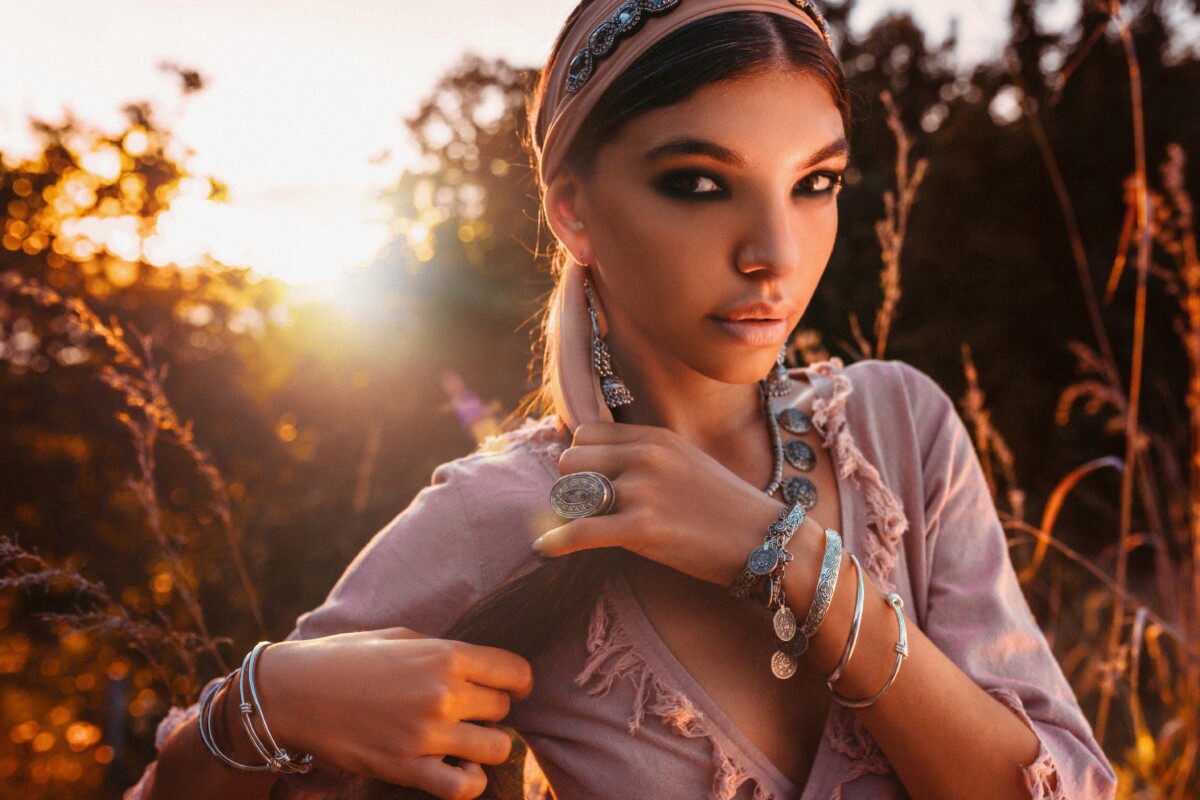
If you run a fashion or apparel store on Shopify, the dress accessories category is one of the highest-margin, lowest-risk product verticals you can add to your catalog.
Jewelry, belts, scarves, hair clips, and bags are small, lightweight, easy to photograph, and carry average order values that make your unit economics work harder. More importantly, they give your customers a reason to come back – and give you a natural upsell opportunity on nearly every transaction.
This guide breaks down how Shopify founders and marketers can use dress accessories to drive profitability, increase average order value, and build a brand customers genuinely love.
What You’ll Learn Today
- Why dress accessories are one of the highest-margin product categories available to Shopify fashion brands
- Which accessory subcategories perform best in DTC ecommerce and why
- How to use accessories to increase AOV through bundles, post-purchase upsells, and checkout add-ons
- What to look for when sourcing accessories at scale without sacrificing quality
- How to merchandise and market accessories across email, paid social, and your product pages
- How to manage accessory inventory to protect margins and avoid dead stock
Why Dress Accessories Belong in Your Shopify Store
Accessories are not just add-ons. For apparel brands, they are margin drivers. While a dress might carry a 50-60% gross margin after fabric and production costs, accessories – especially jewelry, scarves, and hair accessories – routinely hit 70-85% margins when sourced strategically. That gap is significant at scale.
The market opportunity is real and growing. The e-commerce fashion accessories market is projected to grow from $274 billion to $793 billion by 2033, a 14.2% compound annual growth rate that reflects sustained consumer demand across every major category.
Beyond the margin story, accessories solve a real customer problem: they help shoppers complete a look. A customer who buys a dress and leaves without accessories has an incomplete outfit. That is a missed revenue opportunity for your store and an unfinished experience for them. The brands that close that gap consistently – through smart merchandising, well-timed upsells, and curated pairings – are the ones building durable, profitable businesses.
If you are already working on proven tactics to increase your Shopify AOV, adding accessories to your catalog is one of the fastest ways to move that number without increasing ad spend or traffic.
The Most Profitable Dress Accessory Categories for Shopify Stores
Not all accessories perform equally in DTC ecommerce. The categories that win combine high perceived value, low shipping weight, strong photography potential, and natural cross-sell logic with your existing apparel catalog.
The categories that tend to underperform are those with high return rates, complex sizing, or low photography potential. If an accessory is hard to show in a single image, it is hard to sell online.
How to Use Accessories to Increase Average Order Value
This is where the real growth lever sits. Accessories are the easiest and most natural upsell in fashion ecommerce because the customer is already in a buying mindset and the add-on feels like a logical completion of their purchase rather than an unrelated pitch.
Bundle accessories with hero products
Create “Complete the Look” bundles that pair a dress with two or three accessories at a slight discount. This increases AOV without cannibalizing margin, because accessories carry higher margins than the anchor product. Apps like Rebuy make it straightforward to surface these bundles dynamically based on what is already in the cart, personalizing the recommendation based on purchase history rather than manual curation.
Use post-purchase upsells
After a customer completes a dress purchase, a one-click post-purchase offer for a matching accessory at 15-20% off is one of the highest-converting upsell formats in Shopify. The customer has already entered their payment information and completed the primary transaction. Friction is at its lowest point. Studies show post-purchase upsell strategies can convert up to 15% of purchases into a second transaction – accessories are the ideal product for that moment.
Add accessories to your checkout flow
Shopify’s native checkout customization (available on Shopify Plus) and third-party apps let you surface low-cost accessories directly in the checkout. Hair clips, small jewelry pieces, and scarves priced under $20 convert well here because the decision feels low-stakes relative to the primary purchase already in the cart.
Create a “Frequently Bought Together” section on product pages
Data from your own store is your best merchandising tool. If customers who buy your bestselling wrap dress frequently add a specific belt or earring set, surface that pairing prominently on the product page. This is basic product intelligence that most Shopify stores underutilize. Your own order data will outperform any generic recommendation algorithm every time.
Sourcing Dress Accessories: What Shopify Founders Need to Know
Sourcing is where many fashion founders leave money on the table. The goal is not just finding the cheapest supplier – it is finding reliable partners who can support your growth, meet your quality bar, and keep pace with trend cycles that move faster than most apparel categories.
Understand your minimum order quantities
For accessories, MOQs are typically much lower than for apparel. This makes testing new styles and colorways faster and cheaper. You can validate demand with a small initial run before committing to deeper inventory – a critical advantage in a category where trend windows can close in a single season.
Prioritize suppliers with trend responsiveness
A belt silhouette or earring style that is strong in Q1 may be oversaturated by Q3. Work with suppliers who can turn around new designs quickly and who actively monitor what is selling across global markets. Platforms like DHgate give you access to a wide range of wholesale suppliers with competitive pricing and international shipping, making them a practical starting point for testing new accessory categories without heavy upfront inventory commitment.
Request samples before placing bulk orders
Photography, customer reviews, and return rates are all directly tied to product quality. A $3 earring that photographs beautifully but breaks within a week will cost you far more in customer service, negative reviews, and return processing than the margin you saved on sourcing. Build sample review into every new supplier relationship as a non-negotiable step.
Build supplier redundancy for your top sellers
If a specific accessory becomes a top seller, do not rely on a single supplier. Build a backup relationship so that a stockout does not kill your momentum or force you to pause ad campaigns mid-flight. The cost of a stockout on a winning product almost always exceeds the cost of maintaining a second supplier relationship.
Merchandising and Marketing Accessories on Shopify
Great products do not sell themselves. The Shopify brands that win with accessories invest as much in how they present and promote their catalog as they do in sourcing it.
Invest in lifestyle photography
Accessories are tactile, detail-oriented products. Flat lays work for catalog purposes, but lifestyle photography – showing accessories worn with outfits in real contexts – drives significantly higher conversion rates. If budget is a constraint, user-generated content from customers is often more authentic and equally effective. A single strong UGC image of a customer wearing your earrings with a dress can outperform a polished studio shot.
Use email segmentation to drive accessory sales
Customers who have purchased dresses but never bought accessories from you are a high-value segment. A targeted email campaign featuring “Complete Your Look” messaging, anchored to their previous purchase, consistently outperforms generic promotional emails in both open rate and conversion. Getting started with email segmentation for your Shopify store does not need to be complex – even a simple three-segment approach based on purchase history can unlock meaningful revenue from your existing list.
Lean into seasonal and occasion-based campaigns
Accessories are deeply tied to occasions – weddings, graduations, holiday parties, summer events. Build your email and paid social calendar around these moments. A campaign timed to prom season, wedding guest season, or holiday parties will find an audience already primed to complete a look. These campaigns require minimal creative lift because the context does the heavy lifting.
Test accessories in your paid social creative
Accessories photograph well and often perform strongly in Meta and TikTok ad creative because they are visually interesting at small sizes and feel accessible price-point-wise. Test accessory-led creative against your apparel-led creative to understand which drives better ROAS for your brand. Many fashion brands are surprised to find that a $28 earring ad outperforms a $120 dress ad in return on ad spend.
Inventory Management for Accessories
Accessories carry unique inventory challenges. They come in multiple variants (color, size, material), have shorter trend cycles than core apparel, and can accumulate dead stock quickly if you are not managing turns carefully. A disciplined approach to inventory is what separates brands that scale profitably from those that fund growth with margin erosion.
- Track sell-through rate by SKU weekly: Set a target sell-through rate (typically 80%+ within a season) and flag SKUs that are falling behind early enough to discount them strategically rather than being forced into deep clearance at the end of a season.
- Use bundles to clear slow-moving inventory: Bundle a slower-moving accessory with a top-selling dress at a modest discount. This moves inventory without training customers to expect sales pricing. If you need to move excess stock quickly, the guide on how to liquidate slow-moving ecommerce inventory covers practical approaches that protect your brand positioning.
- Limit initial buys on trend-driven styles: For anything that feels fashion-forward or seasonal, buy conservatively the first time. You can always reorder a winner faster than you can liquidate a loser. The asymmetry here always favors restraint on the first buy.
- Set safety stock buffers by component, not by bundle: If you are selling accessories as part of bundles, track inventory at the individual SKU level, not the bundle level. Running out of one component kills the entire bundle’s availability.
Frequently Asked Questions
What dress accessories sell best on Shopify?
Jewelry (especially earrings and necklaces), hair accessories, and belts consistently perform well across Shopify fashion stores. They combine high perceived value, low shipping costs, and strong photography potential – three qualities that translate directly into better conversion rates and lower return rates. Hair accessories have seen particularly strong growth in DTC fashion over the last two years, driven by social commerce and low price points that make them easy impulse adds at checkout. Bags and clutches carry higher AOV but move more slowly, so they work best as a curated selection rather than a deep catalog.
How do I increase AOV with accessories on Shopify?
The most effective tactics are post-purchase upsells, “Complete the Look” bundles on product pages, and checkout add-ons. Post-purchase upsells work particularly well because the customer has already committed to a purchase and re-entering payment details is not required – studies show these can convert up to 15% of purchases into a second transaction. Apps like Rebuy make it straightforward to surface dynamic product recommendations based on cart contents and purchase history. On the product page, a “Frequently Bought Together” section built from your own order data will outperform any generic recommendation engine.
Where do Shopify stores source dress accessories?
Common sourcing channels include wholesale marketplaces like DHgate for international suppliers with competitive pricing and low minimum order quantities, domestic trade shows for higher-end or artisan pieces, and print-on-demand platforms for customized accessories. DHgate is a practical starting point for testing new categories because MOQs are low enough to validate demand before committing to bulk inventory. Regardless of channel, always request samples before placing bulk orders – product quality directly affects photography, customer reviews, and return rates, all of which compound over time.
How do I avoid dead stock with fashion accessories?
Buy conservatively on trend-driven styles, track sell-through rate by SKU on a weekly basis, and use bundles or targeted email promotions to move slow inventory before it becomes a write-off. Setting a clear sell-through target (80%+ per season is a reasonable benchmark) and reviewing it weekly gives you enough lead time to take corrective action through discounting or bundling rather than being forced into deep clearance at the end of the season. The most common mistake is waiting too long to act on a slow-moving SKU.
Are dress accessories worth adding to a Shopify apparel store?
Yes – accessories typically carry 70-85% gross margins, which are significantly higher than most apparel categories. They also increase cart size, improve customer lifetime value, and give you more creative flexibility in your marketing and merchandising. The strongest case for accessories is not just the margin contribution in isolation – it is the way they activate upsell mechanics that would otherwise go unused. A customer who buys a dress and an earring set in the same transaction is more likely to return than one who only bought the dress, because they have experienced your store as a complete style destination rather than a single-product shop.
