





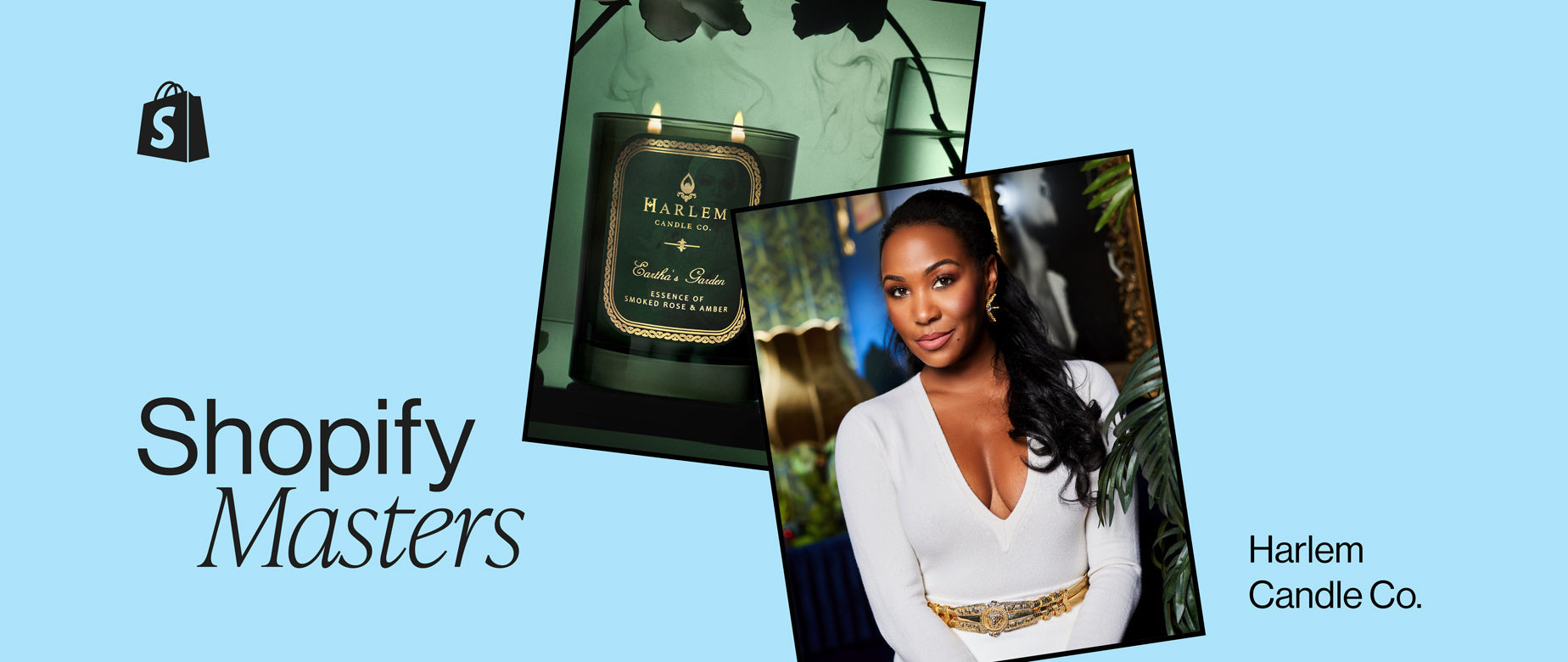
When Teri Johnson first poured candles in her Harlem kitchen, she wasn’t planning to start a company—she just wanted to give thoughtful holiday gifts she could afford. A decade later, Harlem Candle Company is a multimillion-dollar brand with national retail partners, an Oprah’s Favorite Things nod, and an award-winning spinoff fragrance line. But it wasn’t one big break that got her there. It was a series of small, intentional moves—and a clear-eyed focus on brand, storytelling, and profitability.
Teri shares how she tested product demand long before scaling up, built an unmistakable brand voice, reinvested every dollar, and learned the value of saying no, even to major retailers. Her story is full of takeaways for founders looking to grow deliberately while staying true to their mission.


Watching for early demand signals before scaling up
Teri’s first customers were friends and family, each was given a hand-poured, customized candle over the holidays. They weren’t professionally finished, but the scents were thoughtfully chosen, and each candle came with a personal story attached. Those details prompted loved ones to urge her to try selling at artisan markets, where they quickly began selling out.
“I realized that if I’m going to do this, I need to be all in,” she says. “I can’t kind of dibble dabble.” Even without premium packaging or branding, repeat demand gave her confidence that people wanted the product. The steady sell-through at pop-ups became her version of a pre-seed round—and instead of raising capital, she bootstrapped, reinvesting every dollar to upgrade materials and presentation.
Teri’s early success at markets didn’t just validate the product—it shaped her approach to product development. Candles led to perfume, because her customers kept asking for it. “We would not have the Harlem Perfume Company if it wasn’t for our customers telling us what they wanted,” she says. Selling out with minimal resources, listening to direct feedback, and reacting to demand helped her establish product-market fit before committing to scale.

Using storytelling and scent to stand out in a crowded category
In a crowded candle market, Harlem Candle Company carved out a distinct identity rooted in Black culture and the Harlem Renaissance. Teri, who studied abroad in Paris and admired how France honored prominent Black Americans like Josephine Baker and James Baldwin, drew a throughline from that reverence to her home in Harlem.
“I wanted to create products that I want to buy. I want to buy a candle inspired by Josephine Baker’s boudoir,” she says. That perspective led to scents named after cultural icons and original artwork—like a nightclub map of 1930s Harlem—printed inside every candle box.
Storytelling extended to product descriptions, which had to communicate fragrance in a digital-first business. To achieve the right tone, Teri hired elite fragrance copywriters. “I can tell you, yep, this is the perfect scent—but I don’t know how to necessarily describe it in words that are so evocative.” She also slid into the DMs of a luxury photographer she admired, who agreed to shoot her products.

Every touchpoint, from packaging to naming, was designed with intention. Even the boxes feature spot gloss, interior artwork, and custom inserts. “People need to be excited when they open the package,” Teri says. For brands selling online, creating an immersive experience through language, imagery, and design can be as essential as the product itself.
Staying scrappy while building toward luxury
Teri built Harlem Candle Company with no outside funding, using early revenue to fund the next round of inventory. She even rented her spare bedroom on Airbnb to cover her expenses, often recruiting guests to help with candle making and pop-ups. “Airbnb was it for me. I didn’t have to worry about my mortgage. It was covered,” she says.
Instead of hiring a team early, she leaned into automation and community. She personally wrote thank you notes to her first online customers and used tools like Shopify and email segmentation to scale. “We started building a community very early because our customers became evangelists for us,” she explains.
Even as the brand grew, she stayed frugal in ways that didn’t compromise quality. Her first professionally printed candle boxes cost $6.31 apiece—an expensive unit cost—but she ordered only 1,000, to avoid overcommitting. “You lose money when you don’t think long term,” she says, though she also learned to bet on herself earlier.
Her approach shows that bootstrapping a luxury brand doesn’t mean cutting corners—it means making smart, incremental bets and knowing where quality matters most. Staying lean while investing in the customer experience kept the business profitable and agile.

Protecting your peace by walking away from misaligned opportunities
For years, Harlem Candle Company sold through Bloomingdale’s and Nordstrom—marquee partners by any standard. But over time, the partnership terms shifted. “They wanted to change our margins and make us participate in all of these programs that really eat away at our profitability,” Teri says.
Instead of chasing volume, she chose to exit the partnership. “It didn’t feel friendly anymore,” she says. “We’re in the business of making candles. We want to feel peaceful, happy and calm.”
That philosophy now guides everything from team culture to partnership decisions. “We don’t deal with people who stress us out,” she says. Being self-funded gives her the freedom to prioritize well-being over aggressive growth targets. “If we make a little less this year than last year, but we’ve let stress go, it’s fine.”
Teri’s clarity about values allowed her to build a brand on her terms. Growth only works when it aligns with your values, margins, and capacity. Knowing when to say no can be what ultimately protects your longevity.

Teri grew Harlem Candle Company into a nationally recognized luxury brand by moving carefully, listening closely, and staying true to her mission. She didn’t rush into manufacturing, skip brand-building, or chase every retail deal. Instead, she tested demand early, invested in meaningful design and storytelling, bootstrapped through each stage of growth, and knew when to walk away.
For entrepreneurs in any industry, her story is a reminder that scaling isn’t just about saying yes—it’s also about recognizing when, and to whom, you should say no.
To hear more details on finding balance while scaling a business, be sure to check out Teri’s full interview on Shopify Masters.
