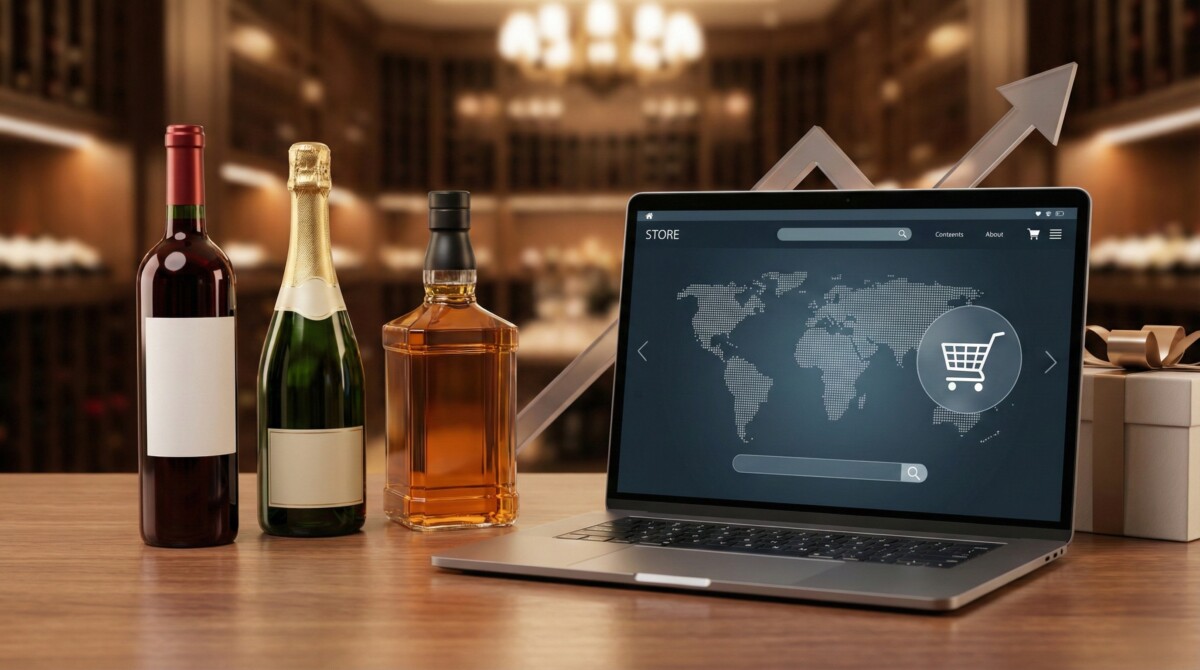
Global demand for high-quality alcoholic drinks continues to grow, and e-commerce has become one of the strongest platforms for wine, champagne, and whiskey retailers to expand their businesses.
Customers now demand convenience, authenticity, and seamless digital purchasing process, particularly when they are buying curated or high-value bottles.
Nonetheless, there are special challenges to selling alcohol online, including compliance requirements as well as trust-building and logistics. Retailers must have intelligent, flexible ecommerce development plans that discourage branding, performance, and experience in order to compete effectively in this field.
The seven effective ecommerce development strategies presented below were specifically developed to help online wine, champagne, and whiskey sellers achieve sustainable momentum.
1. Build a Trust-First Product Experience
It is critical to trust when selling high-end drinks on the Internet. Customers would desire to understand the source of the bottle, how it was stored, and why it would cost as much. The comprehensive product descriptions, tasting notes, brand background, food pairing, and occasion of use make the difference between the in-store knowledge and the online shopping.
Credibility is guaranteed by having high-quality imagery, age verification that is clear, transparent pricing, and visible policies. Store owners who identify themselves as experts in the art of collection and not merely merchants were more likely to experience increased conversion and repeat business.
2. Optimize for Search With Buyer Intent in Mind
Organic search is one of the most economical acquisition mediums of alcohol ecommerce. To be successful in retailing, the retailers will focus not only on the general keywords but also high-intent phrases, including gift-centric queries, occasion-specific searches, and brand-centric searches.
Retailers can provide customers with content, including buying guides, seasonal gifts, and educational materials, at an earlier stage in the decision-making process. Very old websites such as dc wine and spirits show how the depth of the products and informative information can be used to enhance search visibility and user confidence.
3. Leverage Gifting as a Growth Engine
One of the most powerful demand drivers in the wine and spirits category is gifting. Recurring ecommerce growth opportunities are offered by holidays, corporate events, celebrations, and personal milestones.
Gifting can be optimized through bundles of product, high-quality packaging, personalized messages, and the date of delivery being offered by retailers. Specific landing pages of holidays and occasions also simplify the purchase process and increase the conversion rates in the high seasons.
4. Invest in Customer Retention, Not Just Acquisition
It is very costly to acquire a new customer as compared to retaining an existing one. Smart ecommerce brands are concerned with long-term relationships, which can be achieved as a result of emailing, loyalty programs, and after sales communication.
Repeat business is promoted through educational newsletters, reminder of order re-orders, limited release privileges, and member-only privileges. The wine clubs, whiskey collectors and those who do annual purchases of gifts are the kind of customers that retention strategies are particularly efficient in influencing.
5. Simplify Compliance and Checkout Experience
Compliance is of critical concern in alcohol ecommerce, yet nothing should be so complex to leak into the customer experience. Age check, shipping regulations by region, and transparent tax management are mandatory, however, they ought to seem natural.
The absence of friction on the checkout process, including a variety of payment methods, mobile capabilities, and explicit expectations of delivery minimizes cart abandons. The more convenient it is to make a purchase, the more secure the customer becomes to buy high-quality products online.
6. Use Data to Personalize the Shopping Journey
Contemporary online shopping systems can give an insight into buyer behavior. This data will enable retailers to make personalized recommendations based on browsing and previous purchases and preferences.
Personalization may achieve as low a level as identifying like varieties or as high as the use of dynamic product recommendations depending on gifting occasions. Personalization can be used effectively to improve the customer experience without making it feel invasive and, in many cases, increases the average order values.
7. Diversify Product Categories Without Losing Focus
Most of the succeeding retailers build on their relative categories without losing a brand name. Retailers of wine can also offer champagne to celebrate, whilst whiskey sites launch limited issues or collections.
Niche growth enables the retailers to cater to an increased number of applications without diffusing expertise. Examples of category specialization and considerate merchandising are the spirits platforms like bourbon and whiskey, which demonstrate that specialization can draw very engaged audiences.
Final Thoughts
Growing ecommerce in the wine, champagne, and whiskey space is not about following all trends but doing the fundamentals very well. Retailers that commit to trust, education, personalization and customer experience are better placed in order to scale in a sustainable way.
With the shift to highly-edited, experience-oriented systems as the primary buyers of premium beverages, a greater number of online shoppers will be inclined to choose brands that put in long-term value. Be it in gifting, collection or simple enjoyment, robust ecommerce foundations are the primary ingredient to steady expansion in this dynamic market.
To the consumers who expect professionally edited collections and high-quality gifting services, wine and champagne gifts -oriented online platforms remain crucial in defining how a customer finds and orders unique bottles through the internet.