





Quick Decision Framework
- Who This Is For: Founders and operators of heritage or premium DTC brands doing $100K to $5M in annual revenue who are getting traffic but watching margins erode because their product pages are not doing the work of making value legible.
- Skip If: You sell commodity products at impulse price points or your brand has no meaningful differentiation in materials, craft, or product history to communicate.
- Key Benefit: A clear framework for translating heritage and material quality into visible product evidence that protects premium pricing without relying on discounting or urgency tactics.
- What You’ll Need: Honest audit of your current product pages, access to your product photography and copy, and clarity on what your product’s physical logic actually communicates to a first-time buyer.
- Time to Complete: 12 minutes to read. 1 to 2 weeks to apply the framework to your top three product pages and measure the impact on add-to-cart rates.
The customer is not hesitating because of the price. They are hesitating because the page has not yet made the price feel inevitable.
What You’ll Learn
- Why heritage brand underperformance in ecommerce is almost never a pricing problem and what the actual gap is between interest and conviction on a premium product page.
- How THORENS translates 140 years of Swiss craft heritage into observable product evidence that customers can read without being told what to think.
- What “mechanical honesty” means as a conversion principle and why visible function outperforms elevated language at the moment of purchase.
- Why the ownership narrative matters more than urgency in premium categories and how the best product pages reduce uncertainty before they try to accelerate conversion.
- How to reframe heritage as a structure for understanding your product rather than a story you tell about your brand, and why that distinction determines whether it protects or undermines your margin.
For many heritage brands, weak ecommerce performance is often misread as a pricing problem. In premium categories, hesitation usually begins earlier, at the point where a customer is asked to pay for quality that has not yet become fully legible online. A product may be well made, historically grounded, and visually refined. But if the page cannot make value readable with enough speed and precision, price starts to feel less like a reflection of substance and more like an invitation to doubt.
That distinction helps explain why some heritage brands preserve both image and margin online while others drift toward discounting. THORENS is a useful case here. As a Swiss heritage name with roots going back to 1883, it carries the attributes many premium brands want associated with them: continuity, recognizability, material seriousness, and a product culture shaped by mechanics rather than disposability. What makes the brand commercially instructive, however, is not heritage alone. It is the way that heritage can be translated into visible product evidence: refillable function, metal mass, mechanical clarity, and an ownership model that suggests duration rather than short-term convenience.
When Heritage Becomes Product Evidence
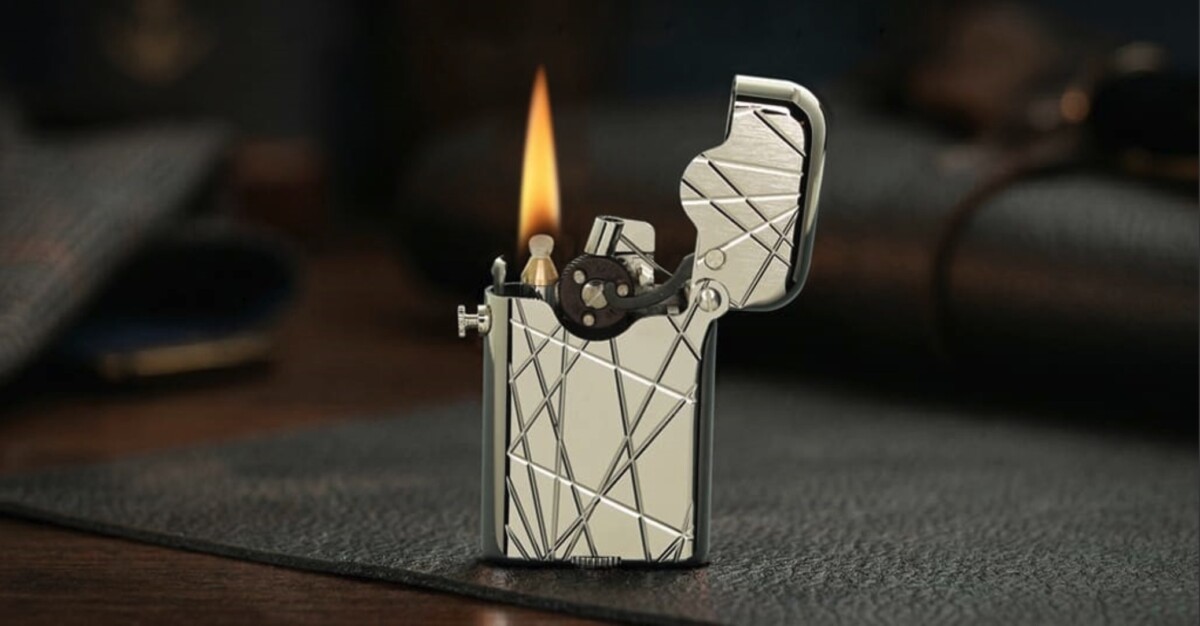
That is especially clear in the Single Claw series. More than a distinctive product line, it represents the foundational automatic ignition mechanism behind the THORENS fluid lighter language. Its defining action is precise and easy to understand: a mechanically driven single claw engages the flint wheel and ignites the flame automatically when the lid opens. That matters in ecommerce because it turns a brand claim into an observable sequence. The customer is not merely told that the object is mechanical; the mechanism itself becomes legible.
The Single Claw is persuasive for another reason: its exposed movement is functional, not decorative. Crafted from solid brass and engineered with tight tolerances, it reveals the interaction between components as ignition occurs. That visibility gives the product more than character. It provides mechanical honesty. Form follows function in a way the customer can actually read, which is far more valuable than surrounding a product with elevated language.
Why Atmosphere Alone Does Not Convert
This is where many premium ecommerce teams still struggle. They know how to build atmosphere, commission polished photography, and maintain the right emotional tone. But premium conversion rarely depends on atmosphere alone. At some point, the customer needs to understand why this object, at this price, deserves a place in life. What is it made from? What about its construction is meaningfully different? How does it function? What kind of ownership does it imply? Why is it more likely to be kept than replaced? These are the questions that keep premium positioning from becoming decorative.
A heritage brand can have a legitimate past and still underperform online if that past is presented mainly as mood. History can establish seriousness, but it does not close the gap between interest and conviction on its own. In ecommerce, proof still has to sit close to the purchase decision. In premium categories, that proof is often strongest when it remains restrained. Visible mechanics are proof. Material density is proof. Refillability is proof. Tactile resistance is proof. Clarity around long-term use is proof.
Ownership Is Part of the Premium Argument
That is one reason THORENS feels worth discussing beyond its own category. The brand does not need to rely entirely on abstract luxury language to support its positioning. It has the advantage of products whose physical logic can carry a meaningful share of the argument. The Single Claw, in particular, helps explain not only what the product is, but what kind of ownership it proposes: repeat use, mechanical feedback, familiarity in the hand, and the quiet satisfaction of an object that becomes more intelligible over time.
For premium ecommerce teams, the broader lesson is clear. Customers are not only deciding whether they like an object. They are deciding whether the purchase will continue to feel intelligent after payment has been made. That is why ownership often matters more than urgency in heritage categories. The best premium product pages reduce uncertainty before they try to accelerate conversion. They make the object easier to read, clarify why the price exists, and show the customer what kind of relationship the product invites.
Heritage Works Best When It Explains the Product
This is why THORENS is worth discussing beyond the lighter category itself. The lesson is not simply that a premium lighter can be sold online. The lesson is that heritage, when translated properly, becomes a commercial asset rather than a ceremonial one. It stops functioning as background prestige and starts working as a structure for understanding the product itself. For premium ecommerce, that is one of the clearest ways a heritage brand protects both its image and its margin.
Frequently Asked Questions
Why do heritage brands often underperform in ecommerce despite having genuinely superior products?
The most common reason is that heritage gets presented as mood rather than evidence. A brand’s history can establish seriousness and signal quality, but it does not automatically answer the questions a first-time online buyer is asking: what is this made from, how does it actually work, and why is it worth the price? When those questions go unanswered on the product page, hesitation fills the gap. The fix is not a lower price. It is making the product’s physical logic observable enough that the price feels inevitable rather than arbitrary.
What does “making value legible” actually mean for a product page?
It means translating quality into something a customer can read without being told what to think. Material specificity is legible. Visible mechanics are legible. An ownership model that shows the customer what long-term use looks like is legible. Phrases like “premium craftsmanship” or “built to last” are not legible because they require the customer to accept a claim rather than observe evidence. The goal is to move from assertion to demonstration at every point on the page where hesitation is most likely to occur.
When should a premium brand use urgency tactics and when should it avoid them?
Urgency tactics work when the buyer’s decision window is short and the purchase is low-consideration. In premium heritage categories, the decision window is often measured in days or weeks, and the buyer is doing research rather than acting on impulse. Introducing urgency into that process signals that the brand does not trust its product to close the sale on its own merits, which undermines the positioning. The better investment is in clarity: reduce uncertainty, answer objections, and make the object easier to understand. Conviction converts more reliably than pressure in high-consideration categories.
How does an ownership narrative differ from a standard product description?
A product description lists what something is. An ownership narrative shows what having it will be like over time. For a premium object, that distinction matters because the buyer is not just evaluating the product at the point of purchase. They are evaluating whether the purchase will feel intelligent six months from now. An ownership narrative answers that question directly. It describes the mechanical feedback, the familiarity that builds with use, the durability that makes the object worth keeping. That kind of specificity reduces post-purchase anxiety before it forms, which is one of the most underrated conversion levers in premium ecommerce.
Can a brand with a shorter history apply the same principles as a heritage brand?
Yes, because the core principle is not about age. It is about making product quality observable rather than claimed. A brand founded five years ago can apply the same framework if it has genuine material differentiation, visible construction quality, or a product logic that customers can follow and understand. Heritage accelerates trust because it signals continuity and proven durability. But the underlying mechanism, turning quality into legible evidence, is available to any brand willing to be specific enough about what makes its product worth the price.
