





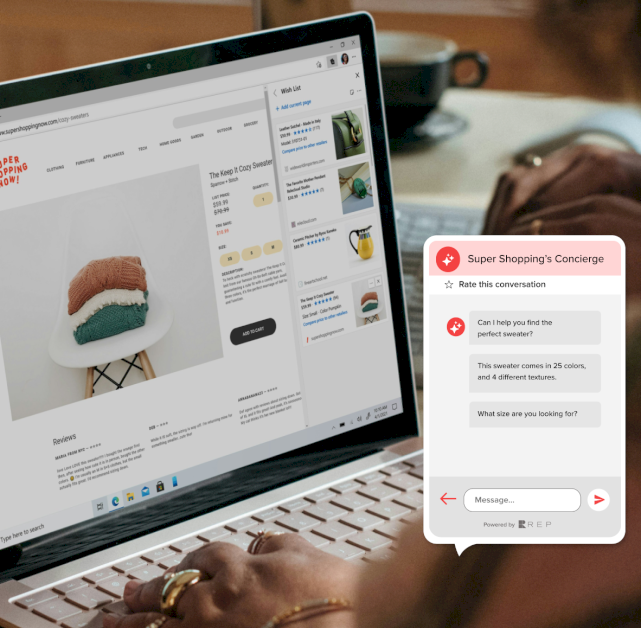
Many ecommerce sellers still assume the customer journey starts at checkout. But in reality, shoppers begin making decisions long before they ever discover your brand, see your ads, or land on your site.
By the time someone reaches your product page, they’ve already identified a need, researched solutions, compared alternatives, and formed early opinions.
This entire phase is the pre-purchase experience – and it quietly shapes trust, confidence, and ultimately, conversions.
For ecommerce sellers, understanding this stage can be the difference between becoming the brand shoppers trust… and the one they scroll past.
In this post, we’ll break down what pre-purchase CX really means, why it matters, and how AI agents like Rep AI are helping sellers engage, support, and convert customers long before checkout.
What Is Pre-Purchase Customer Experience?
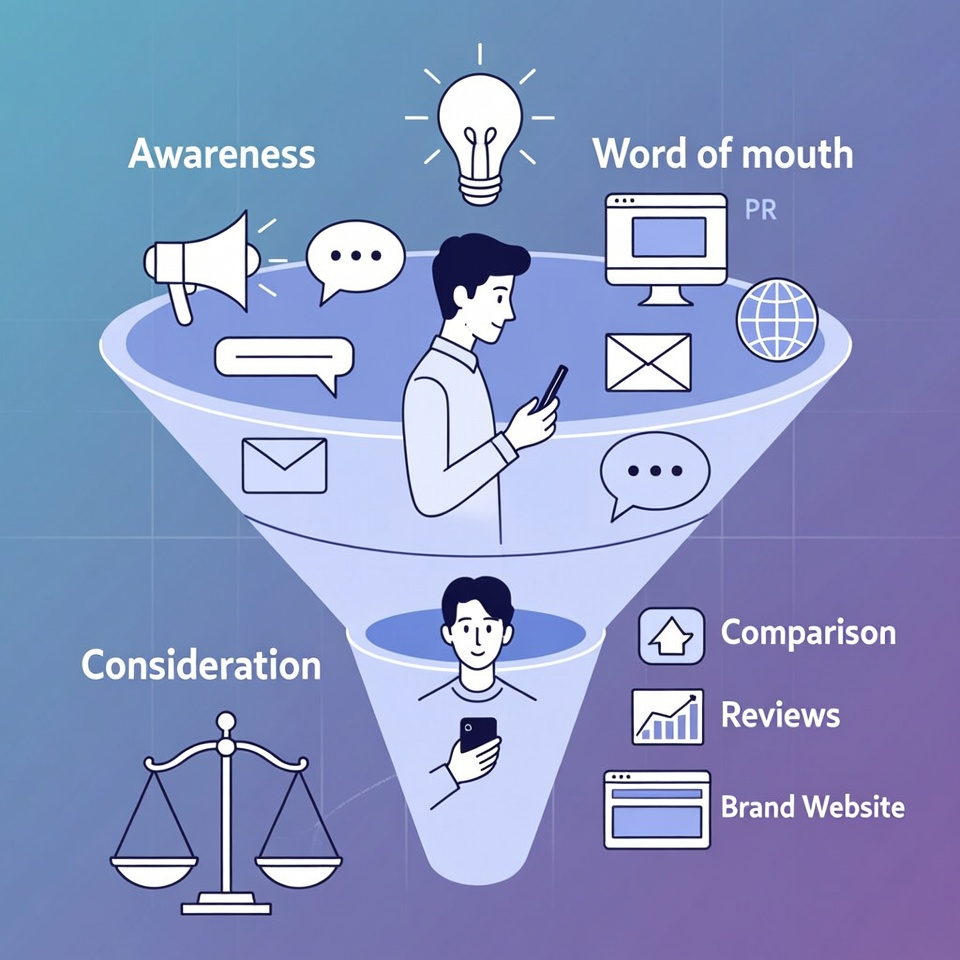
The pre-purchase customer experience is the first phase of the customer buying experience. It encompasses all facets of a customer’s interaction with a brand before a final purchase decision is made.
Starting with when a potential customer learns about a product or brand (the awareness stage) and ending with them comparing your brand’s products to competitors’ products and weighing the pros and cons of all the options (the consideration phase).
Typical touchpoints customers have at this stage include marketing and advertising campaigns, word of mouth, product pages, email, social media, PR, brand website, etc.
Importance of Pre-Purchase Customer Experience
From the moment a customer becomes aware of your brand, they begin to form a subconscious perception of your company.
This early stage is where customer expectations are set, confidence is built, and loyalty begins, long before revenue enters the picture.
If you can make this early phase feel precise, personalized, and effortless, you already have a competitive edge over your competitors.
Nevertheless, many companies fail here, and the following are why they are important and why you shouldn’t.
Builds Trust
The fact is: there must be some level of trust established between your brand and a prospect before they ever become a customer.
During the consideration phase, maybe consumers read reviews before making a purchase. And where do these reviews come from?
They come from satisfied customers, maybe even prospects, and users of your product, services, and platforms, and also from those disappointed with their experience with your brand.
The more reviews you have, the more likely they are to be positive, and the higher your rating, the more customers tend to trust your company.
That said, whatever the review states, it helps shape the overall tone of what your next customer can expect. This makes the systems you put in place to help ensure a positive experience very important.
Clear product information, fast answers to questions, and tailored guidance build immediate confidence. When customers feel valued and understood, they’re far more willing to move forward.
Leads to Customer Loyalty
Gaining customer loyalty is vital for customer retention, driving repeat business, and ensuring profitability.
While brand loyalty is good for business, loyalty is won in the early stages of their relationship with a company, with a quarter of customers deciding before even purchasing a product.
These revelations make it all the more critical for you to be intentional about your pre-purchase customer online and offline touchpoints experience.
A new customer who feels supported before they buy is more likely to trust your brand afterward.
Increases Conversions
Customer acquisition costs are gradually rising, and companies that ensure the pre-purchase stage is seamless and, as mentioned in the previous section, provide support throughout the buyer cycle are more likely to boost conversion rates.
Conversely, companies with a poor customer buying journey roadmap, touchpoints, and pre-purchase experience system will cause friction and typically push shoppers away, leading to lost revenue.
Steps to Create a Successful Pre-Purchase Customer Experience Strategy
Creating an exceptional pre-purchase experience isn’t about adding more touchpoints; it’s about making the entire interaction fast, helpful, and personalized. Here are the foundational steps:
Step 1: Map the Pre-Purchase Customer Journey Clearly
Touchpoints are the first step in making your customer experience workable. To effectively create a positive customer experience, start by identifying the various touchpoints a shopper encounters with your brand before checkout.
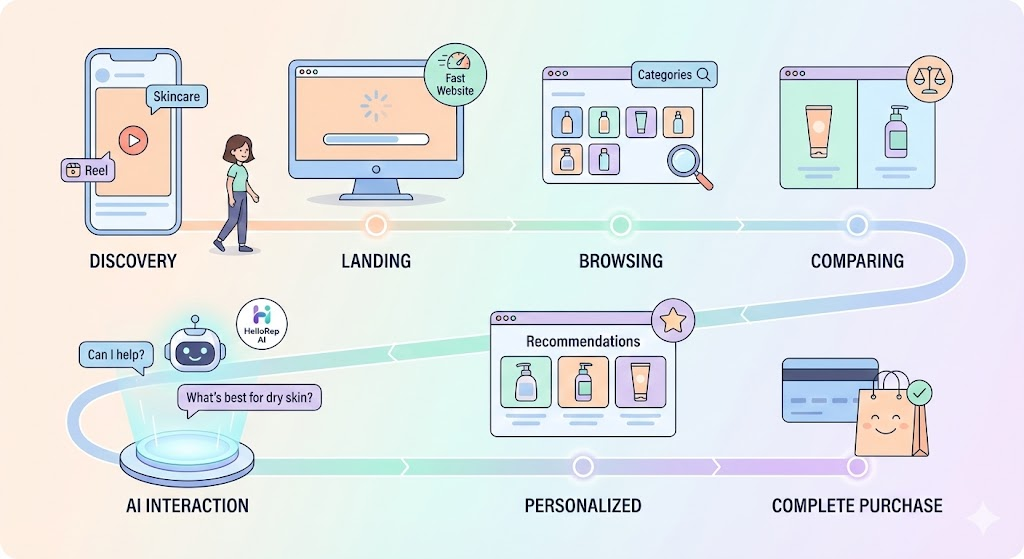
One customer journey pre-purchase map, for example, might start with the shopper (female) looking for a high-quality skincare set online. The shopper, let’s name her Serena, discovers the brand through several touchpoints, including an Instagram Reel, an influencer mention, and a brand tag.
While on one of these touch points, she taps the product tag and lands on the brand’s website. If the company has done a good job, its website will load fast, will be user-friendly, and will have systems in place that help guide Serena to the right product and eventually make a purchase.
By mapping every moment a shopper encounters your brand before checkout, you can pinpoint friction points, fix them, and thereby improve CX during the decision-making phase.
Step 2: Remove Information Gaps
Still on the Serena analogy, on the website, she scans the homepage and clicks into the skincare sets category. Potential friction at this stage includes too many product options, unclear product descriptions, unclear differences between similar sets, and a lack of personalized guidance.
By providing clear and complete information on product price, size, materials, style, shipping, and return policies, and by addressing real customer concerns through FAQs, you can build confidence and reduce reliance on support teams.
Step 3: Personalize the Discovery Experience
A 2021 McKinsey report found that 71% of consumers expect tailored interactions from companies, and 76% get frustrated when this doesn’t happen.
What does this mean?
Modern shoppers, including Serena, expect tailored guidance, not generic browsing. As a company, find ways to deliver personalization through:
- Product recommendations
- Guided product quizzes
- A dynamic AI chatbot
- Personalized landing pages
- Dynamic content based on shopper intent
By providing systems that facilitate personalization during the discovery process, you increase consumers’ likelihood of purchasing the right product sooner.
Step 4: Offer Instant, Intelligent Pre-Sales Support
This is where brands win or lose. Customers deciding between products need immediate answers. Those that integrate smart pre-sales AI support solutions make this step possible. With an AI support rep, you can scale by:
- Providing 24/7 intelligent conversational support
- Understanding product catalogs deeply
- Guiding customers to the right size, fit, bundle, or variant
- Resolving concerns before they derail the purchase
- Predict conversion
Step 5: Reduce Effort Across All Channels
If shoppers have to go through a lot of hassle to make a purchase, you risk losing them. They should never struggle to get help or take action.
Improve this stage of the CX by:
- Streamlining navigation
- Making support accessible everywhere (chat, product pages, mobile)
- Eliminating unnecessary steps before purchase
- Offering fast, intuitive interfaces
The less effort required, the more it is for a customer to commit.
Step 6: Support Decision-Making with AI Agents
Traditional CX teams can’t be everywhere at once, especially during peak periods like Black Fridays, Cyber Mondays, and holiday seasons.
On the other hand, what limits human agents does not restrict AI agents.
With AI-driven pre-purchase agents like Rep AI, which understand context, interpret questions, and adapt responses based on customer intent and catalog knowledge, you can turn passive shopping into guided shopping, boosting conversions, reducing cart abandonment, and strengthening customer confidence.
The New Era Of AI Agents
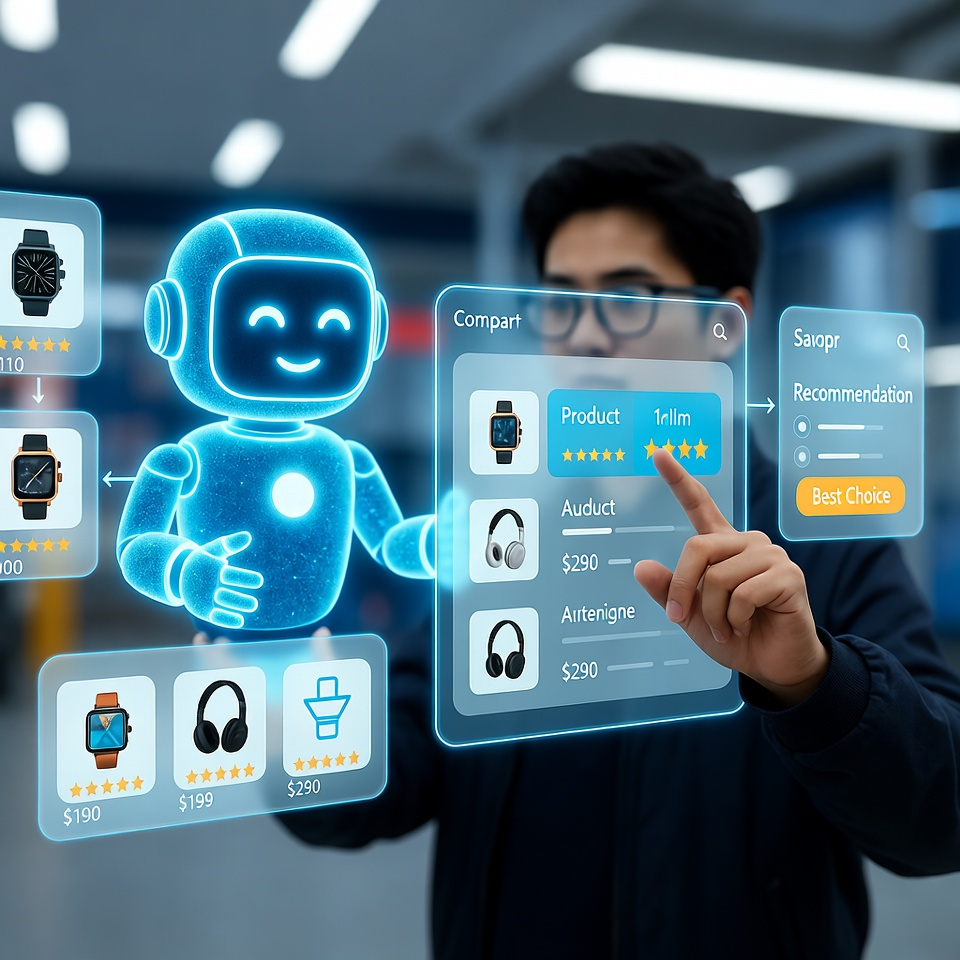
The signs are clear: the Customer experience (CX) is undergoing a significant turning point. Interactions are no longer static or linear. They are dynamic, conversational, and AI-led.
To be clear, AI-led does not necessarily mean AI first or that the customer is second. However, we have entered into a phase where Artificial intelligence technology merges with customer experience to enable businesses to deliver fast, efficient, personalized service that ensures customer satisfaction.
Let’s discuss in more detail how agentic commerce works and how AI agents are transforming pre-purchase customer interactions.
How Agentic Commerce Works
Agentic commerce is a new approach to shopping, powered by AI agents that act on a user’s behalf.
Unlike traditional chatbots, AI agents don’t just respond to prompts. They can understand a shopper’s intent and needs, and take action.
They can browse, compare, and guide shoppers through complex decisions, and even initiate purchases based on the user’s goals, preferences, and constraints.
How AI Agents Are Transforming Pre-Purchase Customer Interactions
AI is already redefining what “good CX” means in the pre-purchase stage.
Let’s explore some of the transformations:
Instant Decision Support
During the pre-purchase stage, potential or existing customers are “basically overloaded with a lot of product options, unstructured or incomplete information, and poor access to quality information and an assistant that can help them navigate this process seamlessly leads to decision paralysis and the dreaded drop off.
But not anymore. AI agents today help businesses and customers decipher these steps, provide quick personalized answers to questions like “What’s the best option for me?”, “How does this compare?”, “Is this in stock?“
How does this affect this early stage of the journey?
Customers are more likely to find what they’re looking for. Lead qualification and generation are improved for businesses.
Human-level Understanding at Scale
Unlike static chatbots, AI agents can understand intent, context, and nuance, offering responses that genuinely move a shopper closer to purchase.
It can identify when a customer is upset about an order and suggest effective responses. The technology can also handle high-volume, routine tickets, such as order cancellations, allowing your team to focus on more critical tasks.
Proactive Guidance
As the customer journey moves into the purchase phase, AI agents can read behavioral signals, stepping in before a shopper gets stuck or changes their mind about a purchase.
In such cases, AI agents can proactively help customers discover products they might have missed or offer incentives based on the customer’s behavior.
For example, let’s assume our hypothetical shopper, “Serena,” is having second thoughts about the shipping cost. Before she abandons the cart, your AI agent steps in, saying: “I see you’re hesitating on the shipping cost. I can waive that if you add one more small item to your cart.”
This can positively impact conversion. Sales opportunities don’t stall or get abandoned.
Always-On Expertise
Unlike human sales reps or agents, AI agents are always available 24/7, across any time zone, ready to provide support to shoppers.
They don’t need sleep or food. With an advanced AI agent sitting on your business, you can deliver nonstop service with agents that can resolve a wide range of customer requests independently and quickly, even at 3 AM, resulting in a better customer experience.
How REP AI Improves the Customer Experience
Customer expectations evolve faster than most businesses can react, especially in complex, multi-region, multi-product enterprises.
Rep AI helps ecommerce businesses across industries successfully enhance their customer pre-purchase experience by transforming how they engage and support customers, thereby boosting conversions. Here are some of the ways it can help you:
Instant, Personalized Answers
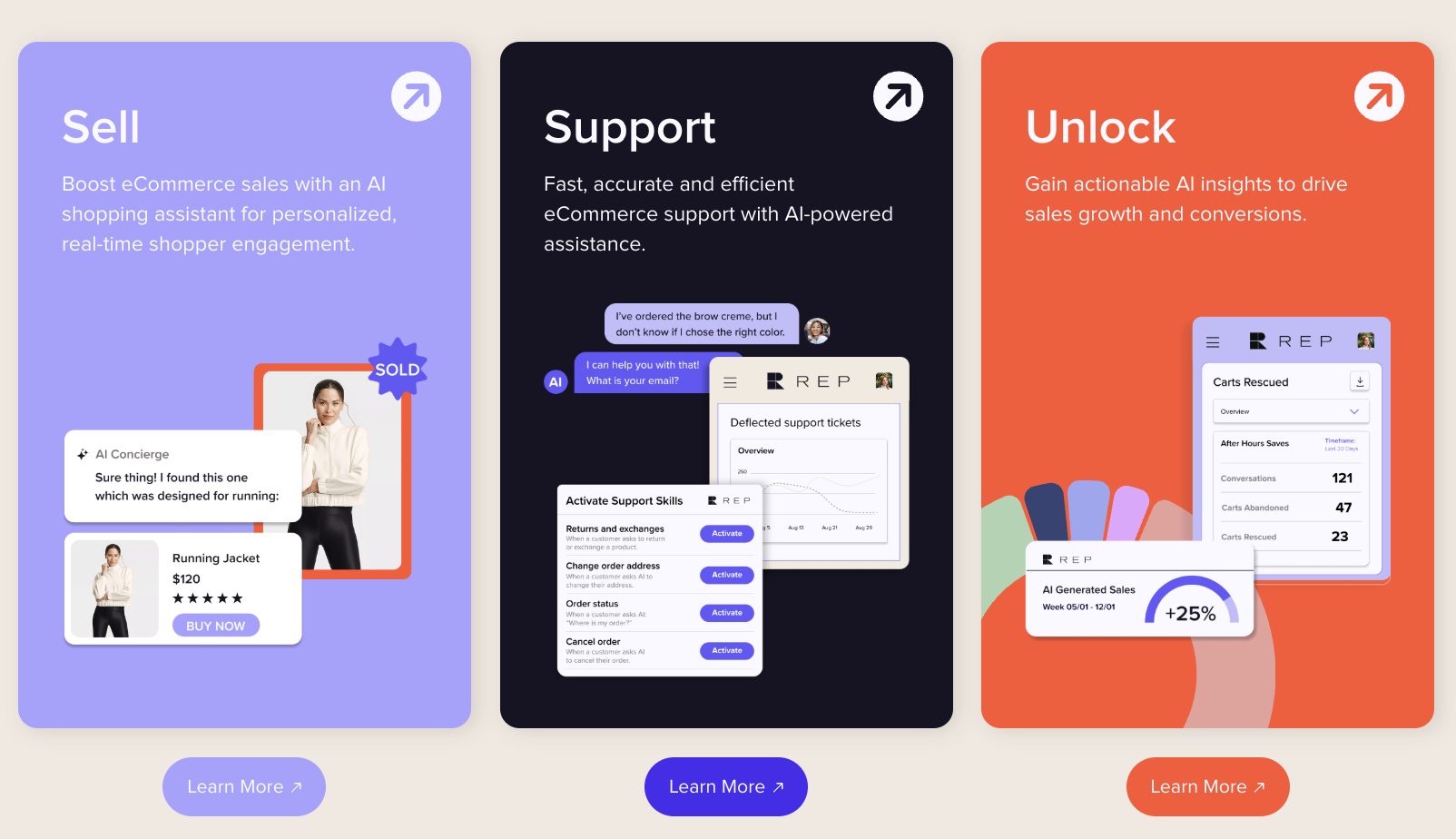
When shoppers land on your online store, Rep AI springs into action like a concierge on your sales floor, ready to communicate with customers in real time and optimize every step of their journey.
Shoppers get real, conversational responses, not canned scripts.
Rep AI understands context, interprets customers’ inquiries, and adapts responses based on customer intent and catalog knowledge.
For context, here’s what that looks like in action using our hypothetical shopper “Serena”:
From one of many touchpoints, Serena lands on your brand’s online store. Then she asks, “I need a skin care set that works for dry skin.”
Immediately, she asks the question; Rep AI instantly analyzes her query, intent, and browsing behavior, then recommends the most relevant products, simplifying her decision-making process.
Rep AI doesn’t stop at product recommendation. It also provides answers to all of the questions Serena may have, including “Is this product fragrance-free or hypoallergenic?, Are there any soothing ingredients, such as aloe or glycerin? And how often should I apply it?”
The conversation continues seamlessly through Serena’s checkout, post-purchase support, or return requests, all within the same chat.
Intelligent Product Discovery
Using the example above, you can see how Rep AI helped improve Serena’s experience with the store from the get-go.
Another ecommerce platform lacking a smart, always-on artificial sales representative would have lost Serena during this product discovery phase of the pre-buying experience due to confusing product details, multiple product options, an incorrect product catalog, and slow response times to queries.
But on our hypothetical ecommerce platform equipped with Rep AI, even without knowing the exact product that best suited her when she landed on the website, Serena was able to find the product that genuinely fit her needs, eliminating decision paralysis and pre-purchase drop-offs through smart, personalized recommendations.
Gain Actionable AI Insights
By understanding shoppers and what drives them to buy or abandon their carts, Rep AI helps businesses with actionable insights to identify trends in drop-off, track conversation performance to see what’s converting and what’s not, and recommend fixes.
Through these insights, businesses can improve their pre-purchase customer experience, drive sales growth, and increase conversions.
Higher Customer Engagement and Conversion Rates
By guiding shoppers like Serena, with clarity and personalization from browse to buy, Rep AI helps remove potential friction and uncertainty that would have led to a poor pre-sale experience and the dreaded abandoned cart.
Brands using Rep AI often see measurable increases in:
- Add-to-cart rates
- Time on site
- Conversion rates
- Average order value (AOV)
24/7 Customer Support at Scale
During high-demand periods like Black Friday and Cyber Monday, a physical support team might get overwhelmed, and an inefficient chatbot won’t be much help either, resulting in a poor presales experience.
You might pause and say, Oh my God! I need more human support teams. No, you don’t!
Scaling support is where Rep AI really shines. With Rep AI, you can handle the increased demand all day, year-round.
Rep AI handles repetitive, high-volume pre-purchase questions and uses its product finder to guide shoppers through personalized discovery, so your human team can focus on high-value tasks.
Seamless Brand Alignment
One feature you will also love about Rep AI is its ability to be trained on your products, brand guidelines, and to communicate in your brand’s tone of voice so interactions feel consistent and polished across every touchpoint.
Want it to sound friendly, warm, and knowledgeable? Or do you want it to sound formal yet approachable? Whatever your brand’s tone, Rep AI can be your customers’ shopping buddy, ready to educate, guide, and offer recommendations.
Want to see real-life examples of how Rep AI is helping businesses just like yours transform the customer experience and improve conversion? Read our case studies.
Additional Strategies to Enhance Pre-Purchase CX
Beyond AI, there are fundamental strategies that shore up the pre-purchase phase, including:
Omnichannel engagement
Shoppers of today are not static; they hop between platforms, and your customer experience needs to flow with this movement. By creating a seamless omnichannel strategy, you ensure your customers and prospects receive consistent information and support wherever they encounter your brand:
The most successful brands ensure every channel or platform, mobile apps, website, desktop, social media, email, or live chat feels connected and not disjointed, and this is where Rep AI fits in.
Social Proof and Reviews
It’s no longer news that shoppers trust what other shoppers say about a brand more than what the brand says. The modern customer journey occurs both online and offline.
With this in mind, it is smart to integrate social proof (customer reviews and testimonials) early in the journey to reduce uncertainty and build confidence.
At Rep AI, many of our clients do this successfully with the help of our AI agent. All you need to do is give it access to your review data, and our AI agent will surface the most relevant testimonials automatically (e.g., “Here’s what customers with sensitive skin said about this product…”), making social proof personalized, not generic.
How to Measure the Effectiveness of Pre-Purchase CX
Remember the popular nugget “You can’t improve what you don’t measure”? That’s true for pre-purchase CX also.
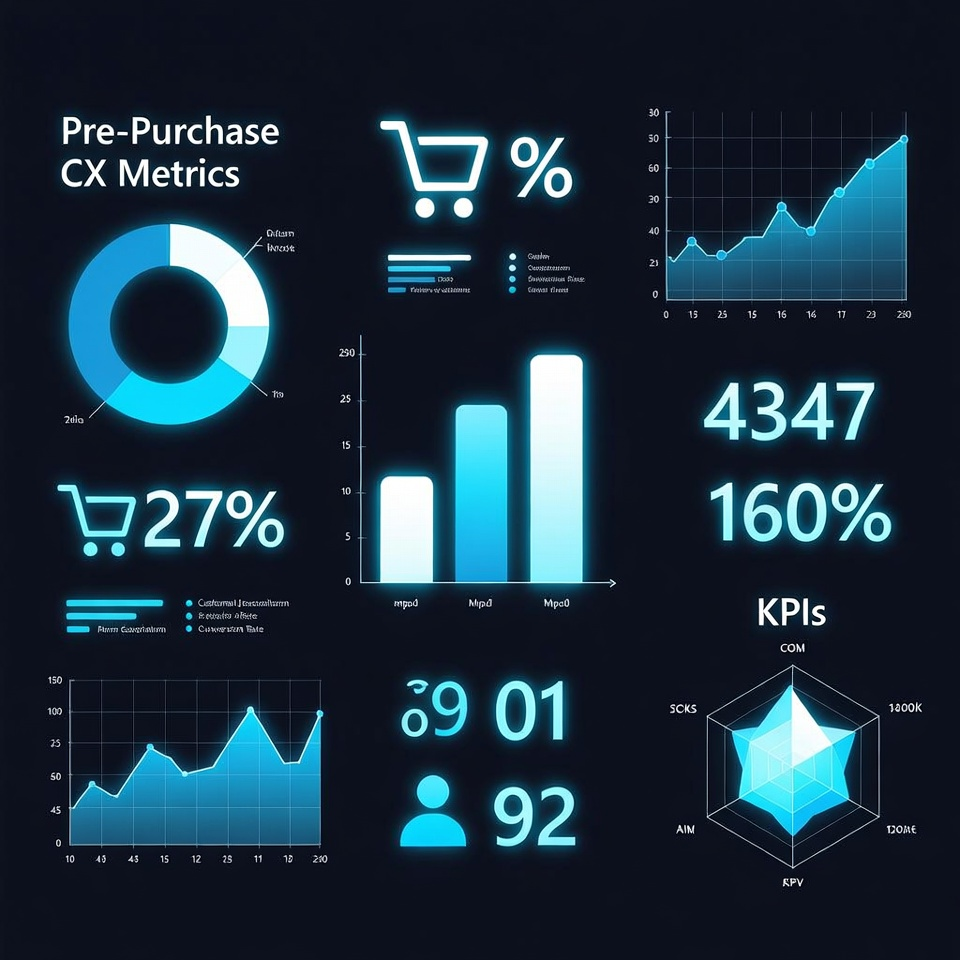
Traditional metrics like “Conversion Rate” are too broad. Zoom in on these specific pre-purchase KPIs to start optimizing pre-purchase CX.
Search Exit Rate
This measures the percentage of people who search for a product and then immediately leave the site. It is a critical metric to measure because a high rate means your discovery experience is broken, customers are asking for things you have, but can’t find.
Add-to-Cart Rate
This measures the percentage of shoppers who place at least one item in their cart. This is the purest metric of pre-purchase success. It means you successfully guided them from “curious” to “interested.”
Time to Product Discovery
This measures how many seconds (or clicks) it takes for a user to land on the product they eventually buy. With AI solutions like Rep AI, your business can experience a downward trend. For example, if it used to take 15 clicks for your customers to find a product, Rep AI’s goal is to reduce that to 5 clicks, thereby lowering friction.
Pre-Purchase Inquiry Resolution
This measures the conversion rate of shoppers who interact with your chat/AI agent before making a purchase. This is critical because it determines the ROI of your “Concierge” strategy. (e.g., “Shoppers who chatted with Rep AI converted at 15%, vs. 3% for those who didn’t.”)
Common Mistakes to Avoid in Pre-Purchase CX
Even well-intentioned brands stumble in their pre-purchase CX. The following are some of the common mistakes to avoid:
- Ignoring Mobile Optimization: With so many shoppers browsing via mobile, a non-optimized mobile site can severely damage CX.
- Lack of Personalization: Failing to use customer data to personalize the experience can result in lost opportunities.
- Poor Communication: Slow or unhelpful responses to customer feedback and queries can cause frustration and push potential buyers away.
- Gating shipping info: Forcing a user to initiate a checkout just to see shipping costs is a cardinal sin of pre-purchase CX. It destroys trust instantly.
- Aggressive data collection too early: Asking for an email address the second a user lands on the homepage is like proposing marriage on the first date. Let them browse. Let them discover. Ask for the email when you have offered value (e.g., a discount or a saved cart), not before.
- “Dead End” Search Results: If a user searches for a product you don’t have, a standard “0 Results Found” page is a bounce guarantee. In such a case, use Rep AI to offer alternatives. “We don’t have ‘Red Sneakers,’ but here are our top-rated ‘Maroon Trainers’.”
Takeaway: Boost Your Pre-Purchase Customer Experience CX with Rep AI
To win, be intentional and have a system in place to help create a successful pre-purchase customer experience.
To achieve this, start by auditing your pre-purchase journey today.
Understand your customers’ needs, map their journey, and identify every touchpoint where you can create relevance, connection, and trust before the transaction.
Use AI-driven agents like Rep AI, which are redefining what’s possible by making pre-purchase CX instant, personalized, and deeply helpful at scale.
Are you ready to turn browsers into buyers and buyers into loyal customers? Start your free trial today!
