Key Takeaways
- Gain a competitive edge by using AI to prototype unique audio ideas and test creative concepts faster than traditional methods allow.
- Adopt an iterative process by using clear, natural language prompts to refine your initial AI-generated audio until it perfectly matches your desired creative mood.
- Free your team from confusing abstract descriptions by using a concrete, AI-generated audio “mood board” to ensure everyone shares the same creative vision.
- Become a “Genre Alchemist” by using audio generation tools to quickly blend wildly different musical styles and discover fresh, exciting creative directions.
As a creative, there is nothing worse than having a vision that you can’t quite explain.
I was working on a storyboard for a client video last week. I had the visuals mapped out. I had the script written. But the vibe was missing. I tried to explain it to the team: “It needs to feel like… you know, like a futuristic city at midnight, but also kind of lonely, but with a driving beat?”
They stared at me blankly.
Words often fail us when we try to describe sound. I could hear it in my head, but I couldn’t hum it, and I certainly couldn’t play it. I spent hours digging through Spotify and YouTube, trying to find a reference track. I found things that were close, but nothing that was right.
I was stuck. The idea was trapped in my brain, unable to get out.
Turning Words into Waveforms
That’s when I decided to stop searching and start building. I’d heard about generative audio, but I always assumed it was for tech geeks or people who wanted robotic beeps and boops.
I was wrong.
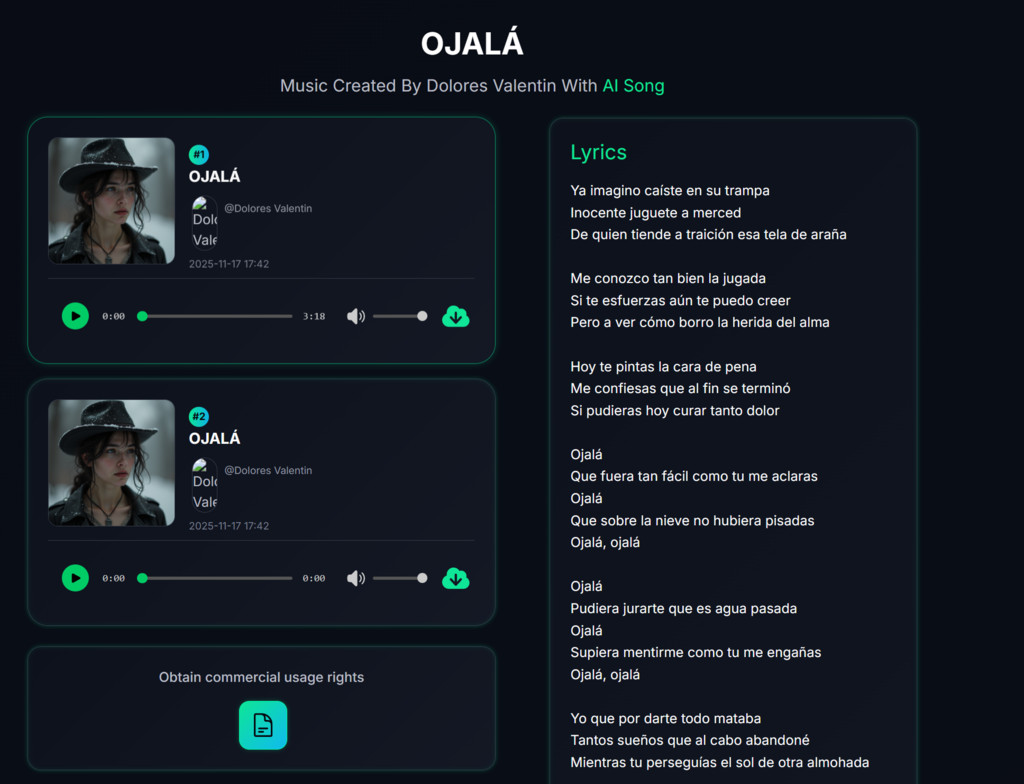
I opened an AI Song generator. I treated it like a conversation. I didn’t worry about musical terms like “tempo” or “key signature.” I just typed what I was feeling.
“Cyberpunk city atmosphere, neon lights, driving synth bass, lonely saxophone melody, rain sounds, cinematic and moody.”
I hit enter.
The “Lightbulb” Moment
What came back wasn’t just a sound file; it was a breakthrough. The AI had taken my abstract adjectives and translated them into audio. It wasn’t perfect instantly—the drums were a bit too aggressive—but it was a prototype.
I tweaked the prompt: “Softer drums, more reverb on the saxophone.”
Boom. There it was. The exact sound I had been trying to describe for three hours, generated in 45 seconds. I played it for my team, and immediately, everyone nodded. “Oh, that’s the vibe. I get it now.”
Rapid Prototyping for Your Ears
We are used to sketching visual ideas on napkins. We draft rough emails. Why shouldn’t we be able to “sketch” music?
This tool isn’t just for making final products; it’s the ultimate brainstorming partner. It allows you to test ideas faster than humanly possible.
The Speed of Creativity: A Comparison
| The Process | The Old Way (Manual Search) | The New Way (AI Prototyping) |
| Finding a Vibe | Hours of listening to playlists | Seconds of typing |
| Flexibility | You settle for “close enough” | You iterate until it’s perfect |
| Cost of Experimentation | High (buying tracks to test) | Zero (test freely) |
| Genre Blending | Hard to find specific mixes | Easy (e.g., “Jazz + Metal”) |
| Creative Momentum | Often stalls due to fatigue | Accelerates with instant feedback |
Becoming a “Genre Alchemist”
One of the most fun aspects of using this technology is that it lets you break the rules.
In the traditional music industry, genres are rigid. You have Rock bands, and you have EDM producers. But with AI, you can be a mad scientist. You can combine things that shouldn’t work together, just to see what happens.
I’ve started using it to break out of my creative ruts:
- The Experiment: “Bluegrass banjo mixed with heavy trap beats.”
- The Result: A weirdly catchy, high-energy track that inspired a whole new marketing campaign for a client.
- The Experiment: “1920s swing music but with 8-bit video game sounds.”
- The Result: A fun, nostalgic, yet modern background track for a tech review video.
You are no longer limited by what exists. You are creating what could exist.
How to Unblock Your Creativity Today
If you are a writer, a video editor, a marketer, or just someone who likes to dream, here is how you can use this to your advantage.
1. The “Soundtrack First” Approach
Usually, we add music at the end of a project. Try doing it first.
Before you write that blog post or edit that video, generate a track that captures the mood you want. Put it on loop. Let the music dictate the pacing of your work. It’s a powerful psychological trick to keep you in the “zone.”
2. The Lyric Lab
Maybe you are a poet or a rapper, but you don’t have a producer.
Use the tool to generate a backing track. Or better yet, use the lyrics feature to hear how your words might sound with a melody. It might not be the final radio cut, but it helps you hear the rhythm of your own writing.
3. The Mood Board
If you are pitching an idea to a client or a boss, don’t just show them pictures. Play them a sound.
“Here is the visual mood board, and here is the audio mood board.”
It makes your presentation multisensory and infinitely more memorable.
The Future is Collaborative
There is a fear that AI will replace creativity. My experience has been the exact opposite. It hasn’t replaced my creativity; it has unlocked it.
It removed the technical barrier that stood between my brain and the speakers. It turned me from a passive listener into an active director.
So, the next time you are stuck, staring at a blank page or an empty timeline, don’t force it. Open the generator. Type in a wild idea. And let the machine surprise you.