





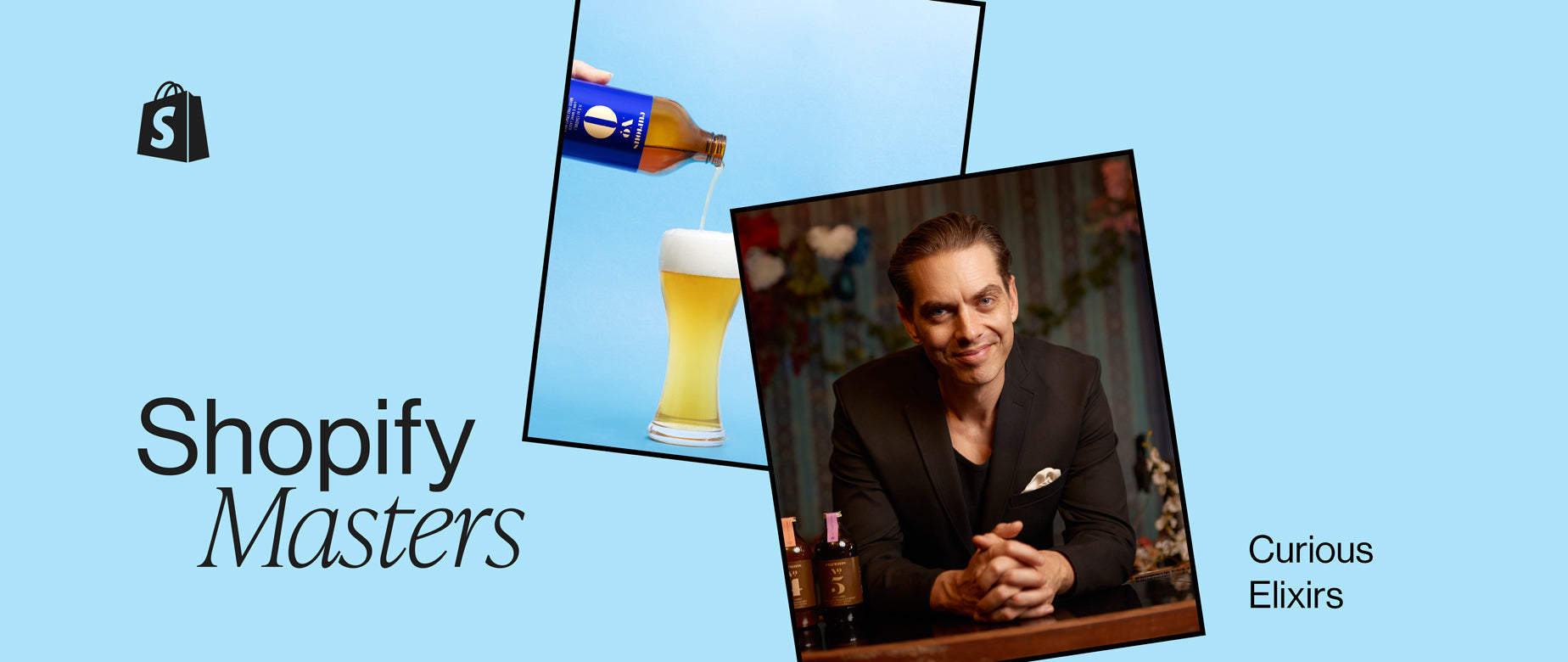
JW Wiseman launched Curious Elixirs in 2015 without a defined category to enter. No non-alcoholic cocktail aisle existed. No established playbook guided the path forward.
The idea came after having “20 drinks in one night” forced JW to confront his own habits.
Today, Curious is an eight-figure bootstrapped brand sold in more than 2,000 retail locations and poured at restaurants like The French Laundry. Its growth story centers on building infrastructure for a nonexistent category, choosing intentional bootstrapping over outside capital, and building community instead of chasing shortcuts.


Building in a category that didn’t exist yet
Curious grew out of personal friction. After testing his limits, JW realized, “I should drink less, but I still want to go out and party.”
At the time, cutting back meant choosing between water or something overly sweet and uninspired. Sophisticated, non-alcoholic options weren’t widely available in restaurants or bars, leaving a clear gap for adults who still wanted depth, bitterness, and complexity in their drinks.
The opportunity was obvious. The infrastructure was not.
Non-alcoholic spirits were unavailable at the time. Many essential ingredients existed only as alcohol-based extracts. JW partnered with food scientists to create alcohol-free bitter extracts that could replicate the depth and mouthfeel of classic cocktails. Product development required building pieces of the supply chain from scratch.
Market education became part of the job. Fine dining establishments quickly understood the value proposition. Others needed more convincing.
Data reinforced the bet. An IWSR report showed 75 million adult Americans did not drink alcohol, and another 90 million consumed two or fewer drinks per week. “That’s 165 million adult Americans who don’t drink or are drinking less,” JW says.
Founders operating in emerging categories should expect to spend as much time explaining the problem as selling the solution. Early traction often depends on clarity, proof, and persistence.

Growing roots instead of chasing capital
Curious has operated without outside equity since day one. That choice was deliberate.
JW viewed the non-alcoholic cocktail space as young and believed it required patience. Pressure for rapid returns could distort priorities. “You can’t really be loyal to two missions. Is it the mission or is it the money?” he says.
Growth at times felt constrained. Large distribution deals and aggressive expansion require significant capital. Curious adopted a simple rule: Every partnership had to generate at least a small profit.
During the first five years, JW supported himself through consulting work while building the brand nights and weekends. Full-time focus began in January 2020. “The power of focus is immense,” he says.
That shift coincided with rising consumer interest in drinking less, accelerating the business.
Alternative financing helped fill gaps without diluting ownership. Production runs were funded through non-equity partners, including Shopify Capital. The strategy preserved flexibility while maintaining control.
Entrepreneurs weighing capital options can learn from this approach. Speed is valuable, but alignment matters more. Capital that conflicts with long-term vision may cost more than it provides.

Designing community into the brand
Inclusion sits at the core of Curious. JW envisions a future in which non-alcoholic options feel seamless at celebrations. “Everybody there is raising a glass of Curious right next to the Dom Perignon, and it’s no different,” he says.
Product design supports that vision. Adaptogens and layered flavors aim to preserve the sensory and social experience of cocktails. Ritual plays an essential role. “You’re able to clink a fancy glass … It kind of settles your body into that space even without the alcohol,” JW says.
Community-building extends beyond the bottle. Curious launched on Kickstarter and attracted its first 700 customers, many of whom remain loyal today. The brand hosts bartender brunches with “no sales pitch, no nothing,” offering hospitality partners a space to connect before busy weekends.
The Great Curious Cocktail Party demonstrates this philosophy at scale. In one year, 173 parties took place across different cities on the same night. JW calls it “the biggest decentralized party possible.”
Curious provides the product. Hosts shape the experience. The brand becomes part of meaningful moments.
Loyalty deepens when customers feel like participants rather than targets. Shared rituals and real-world gatherings create emotional equity that advertising alone cannot.

Scrappy storytelling as a growth engine
Early growth came from relationships and disciplined outreach, not paid media.
JW’s experience at Thrillist influenced his strategy. He leveraged personal contacts to secure early press, which led to broader coverage. “You can get to anyone in the world if you follow up with gentle persistence and you offer them something that they don’t have,” he says.
Consistent outreach became routine. Blocking time each week to pitch the story ensured momentum. A differentiated narrative opened doors that a small budget couldn’t.
The broader lesson remains relevant across industries. Distribution often follows credibility. A clear mission and persistent communication can unlock early partnerships and media attention.
Curious Elixirs did not expand by copying a formula. The brand created its own lane, aligned growth with mission, and invested in connection.
For founders tackling entrenched habits or underserved markets, JW’s experience offers a blueprint: Validate the white space with data, choose capital that supports your long-term goals, and design the community into the product itself. Sustainable growth may take patience, but it can build a foundation that lasts.
For more tips and advice from JW, check out his full interview on Shopify Masters.
