






Running an online store that ships worldwide can feel like fishing in every ocean with the same lure. I learned this the hard way when I saw traffic pouring in from Germany, Japan, and Brazil, but sales stalling at the checkout page.
Most buying objections are emotional, and nothing makes a shopper freeze faster than uncertainty about what they are reading. If sizing charts, shipping terms, or promo codes look foreign, their confidence vanishes, and your perfectly tuned funnel springs a leak.
Language plays a critical role in building trust. That’s why investing in e-commerce translations is no longer optional; it’s as essential as offering free shipping. Even a small misstep can make customers hesitate or abandon their carts.
Yet translation done poorly can backfire. Machine-generated copy that reads like a literal puzzle erodes credibility faster than untranslated text. What we need is cultural fluency, a consistent tone, and the speed that modern merchandisers expect.
From String Files to Storytelling: My Translation Playbook
When I plan an international rollout, I break the content into three layers. First come the functional strings – navigation, buttons, error messages – because friction here kills conversion instantly. Next are persuasive assets like product descriptions and category intros that must sell benefits, not just list specs. Finally, I localize marketing stories, banners, and email flows so the brand’s emotion survives the hop across borders.
For each layer, I work with native linguists who shop online in their own market. We hold quick video calls where I screen-share the live site, let them add items to the cart, and ask what sounds odd or confusing. This user-testing mindset turns translation from a backstage chore into a revenue lever.
Practical Tip: Give translators a private, password-free preview link so they can see the copy in its actual layout. A phrase that fits neatly in English may wrap awkwardly in German or Finnish. Catching truncation errors here avoids angry tweets later.
Product Pages That Speak Like Locals
A literal swap of adjectives rarely converts. In Germany, for instance, technical specifications carry more weight than lifestyle imagery, so I move sizing tables higher and add DIN compliance references. In Brazil, conversational tone wins, so I open with a benefit-led headline and save dense specs for later. The same SKU, two entirely different storytelling arcs.
Small phrasing tweaks also affect perceived risk. For an American outdoor-gear site, we translated “water-resistant” as “resistente a chuva” for Brazil. Sales were fine until customer reviews revealed that hikers expected full waterproofing. We updated to “impermeável – proteção total,” clarified hydrostatic head figures, and refund requests dropped the following month.
Visual Inputs Matter. Send translators your hero images or lifestyle videos. A portable speaker might be shown at a beach, so the Spanish copy can reference “fiestas en la arena,” while the French may nod to “pique-niques au bord du lac.” Context fuels resonance.
Search Visibility in a Second Language
Google now prioritizes intent over exact keywords, but intent is still expressed with words local shoppers actually type. My Spanish description may use “chaqueta impermeable,” yet Mexican customers search “rompevientos.” I run each translated page through local keyword tools and update meta tags, alt text, and even URL slugs. The result is organic traffic that would never reach an English slug.
Remember that shoppers will also search in mixed languages: “zapatillas running mujer.” Map these hybrid phrases to collection pages, and you’ll win incremental clicks at almost zero cost.
Don’t Forget On-Site Search. Your internal search bar speaks volumes about lost revenue. Pull the top 100 untranslated queries every quarter, hand them to your linguists, and add synonyms so “gorra” finds “cap.”

The Rapid Translate Difference
At this point, you might wonder how to juggle linguists, QA, and publishing while still planning next week’s promo. That’s where Rapid Translate quietly changed my workflow. Their platform pulls product data through a simple API, assigns it to vetted in-market translators, and returns both the copy and localized SEO metadata in the same JSON file I exported.
Because the translators see the original design context, button labels stay short, and line breaks never split words in half. More importantly, they flag cultural red lines – colors, icons, or colloquialisms that might offend – before the campaign goes live. What used to take two weeks in email threads now fits inside a forty-eight-hour sprint.
During last year’s Black Friday push, we localized two hundred SKUs into Italian using the platform. The project cost roughly twelve hundred dollars and generated an incremental twenty-five thousand in net revenue over the weekend – an ROI any CFO can live with. The secret was speed: translations landed in the CMS Thursday morning, email blasts went out by noon, and paid ads mirrored the same phrasing.
If you want to dig into the tactical steps I follow, bookmark this article for a play-by-play checklist covering content audit, CMS integration, and post-launch testing.
Getting Started Without Derailing Your Roadmap
My advice is to pilot with one high-potential market instead of flipping every language switch at once. Pick a locale where you already ship a fair number of parcels, translate the top twenty products and the full checkout flow, and track three metrics: add-to-cart rate, checkout completion, and support tickets. Within a month, you’ll know whether the uplift justifies scaling.
Budget-wise, I treat translation as a cost of goods sold, not a marketing line item. For every SKU I add, I bake in a small margin to cover future language updates – size expansions, material changes, new compliance labels – so the catalog stays synchronized without emergency spend.
Finally, remember that language is never “done.” Seasonal campaigns, product refreshes, and even customer reviews evolve weekly. Keep the translation workflow integrated with your content calendar, and allocate a Monday morning slot to push new strings through before the week heats up. Little rituals like this maintain quality without hogging attention.
Choosing Your First Market
The choice should be based on data, not gut feeling. I open Google Analytics and filter sessions by country. Then I look at the differences in conversion rates. If Germany sends 7% of traffic but only 1% of revenue, that difference is a clear sign of a language barrier. I also look at the average order value. Markets with higher AOV pay for localization costs faster.
Don’t forget about regulatory copy. For example, the EU says that return policies and privacy notices must be in the language of the shopper. Penalties may not happen very often, but customers are quick to notice when a legal clause is missing an accent mark. I keep a spreadsheet that everyone can see, where our legal team writes the base text and translators change it to make sure that compliance keeps up with sales.
Common Pitfalls and How to Dodge Them
Even seasoned teams misstep. Here are three traps I’ve fallen into, and the fixes that saved the day.
- Copy-Paste Chaos. Exporting CSVs, sending them to freelancers, and then pasting translations back in can lead to quotes that don’t match and HTML that doesn’t work. From the start, use a translation management system (TMS) or Rapid Translate’s API. Automating this pipeline not only lowers the chance of human error, but it also keeps the formatting, version control, and consistency of updates, especially when there are many people working on it.
- Ignoring Regional Variants. People who don’t speak Spanish don’t realize how different it is between Spain, Mexico, and Argentina. If you put them all together, you’ll get polite Castilian pronouns on a Mexican site, which will hurt your credibility right away. In your CMS, tag places exactly. Also, think about cultural differences, idioms, and tone preferences to make sure your messages really connect with each group of people you’re trying to reach.
- Static Visual Text. Translators and screen readers can’t see infographics or banners that are part of JPEGs. Put text in layers or use SVGs that a TMS can read, and then automatically re-export assets. Your design team will be grateful. This also makes it easier to follow accessibility rules and speeds up the process of making changes to content.
What Is EcomBalance?
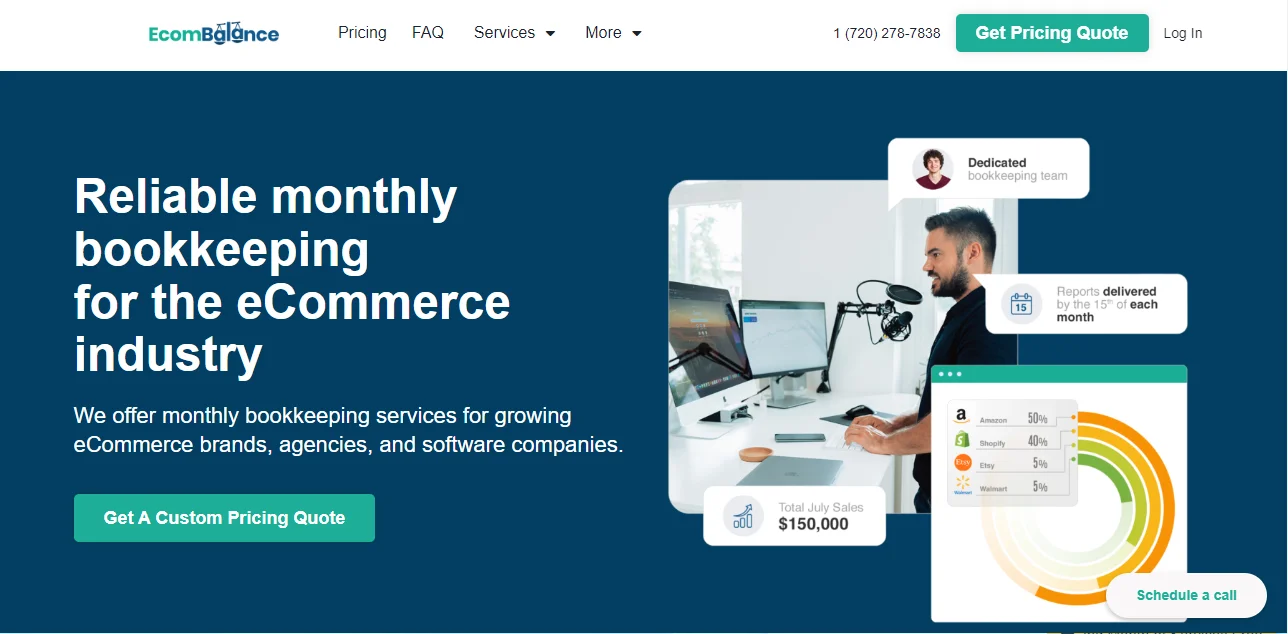
EcomBalance is a monthly bookkeeping service specialized for eCommerce companies selling on Amazon, Shopify, eBay, Etsy, WooCommerce, & other eCommerce channels.
We take monthly bookkeeping off your plate and deliver you your financial statements by the 15th or 20th of each month.
You’ll have your Profit and Loss Statement, Balance Sheet, and Cash Flow Statement ready for analysis each month so you and your business partners can make better business decisions.
Interested in learning more? Schedule a call with our CEO, Nathan Hirsch.
And here’s some free resources:
- Monthly Finance Meeting Agenda
- 9 Steps to Master Your Ecommerce Bookkeeping Checklist
- The Ultimate Guide on Finding an Ecommerce Virtual Bookkeeping Service
- What Is a Profit and Loss Statement?
- How to Read & Interpret a Cash Flow Statement
- How to Read a Balance Sheet & Truly Understand It
Conclusion: Translation as a Growth Flywheel
E-commerce translation is not a growth flywheel that compounds; it is a side project. Every localized page introduces new visitors, their conversion statistics educate smarter advertisements, and their reviews establish confidence in the following group of customers. Rapid Translate eliminates the workload to concentrate on the product and storytelling.
Pick one market to start with, make everything work together, and think of language updates as a regular sprint instead of a one-time heroic effort. When you get that rhythm down, you’ll wake up to Slack pings about orders from other countries while your local team sleeps. This is a clear sign that fluent copy never stops working.
You will not only reach more carts but also more hearts if you think of translation as both a science (metrics, tools) and an art (cultural nuance, empathy). And in 2026, when things are very competitive, hearts are the most valuable thing.
