





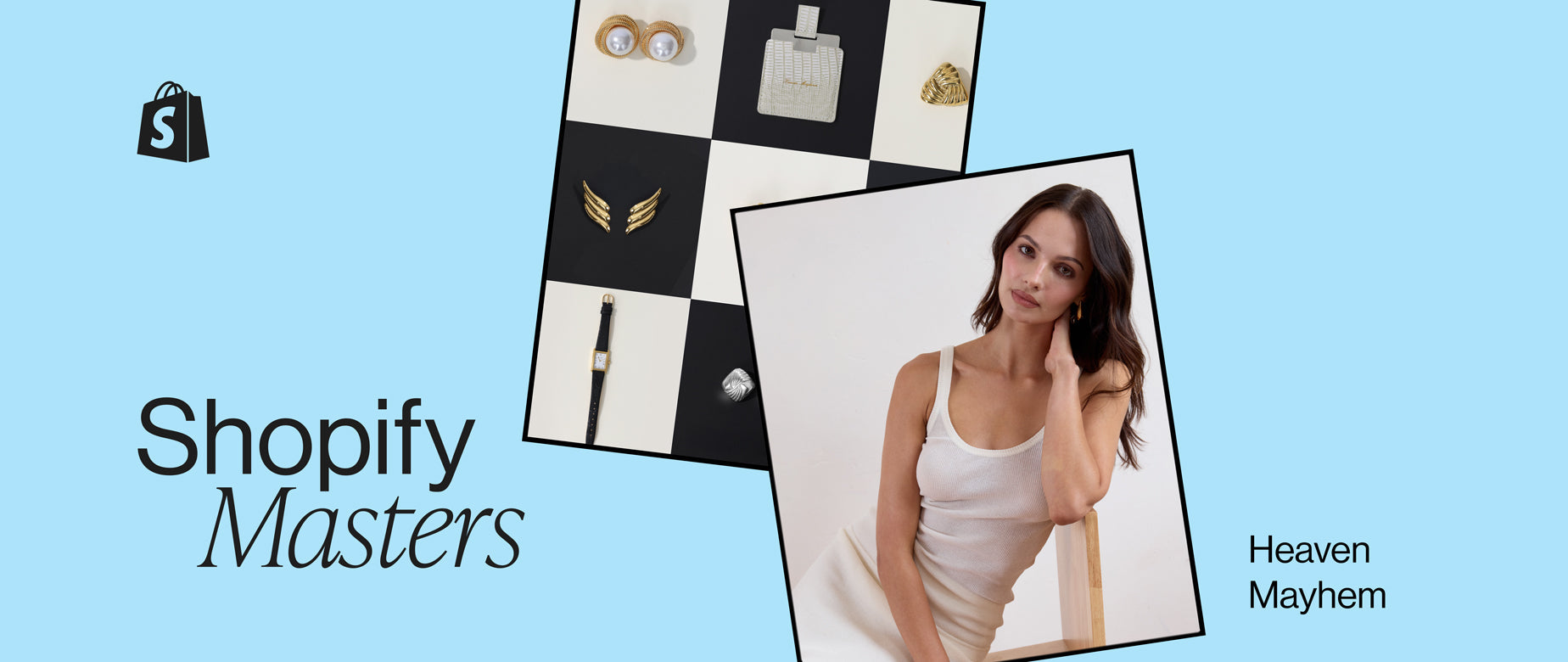
Most founders know they should build community. Few can describe what that actually looks like. Pia Mance can. In three years, she grew Heaven Mayhem from a few hand-tied vintage necklaces to a $10 million accessories brand worn by Hailey Bieber and Sydney Sweeney. The engine behind that growth isn’t celebrity placements or paid ads. It’s a structured feedback loop where customers help choose what gets designed, which influencers get seeded, and how long a launch runway should be. Pia runs monthly Zoom calls, hosts girls’ nights for 150 community members, and invites customers to her office for matcha and product try-ons. Here’s the specific playbook she’s built to make community an operating system, not a sentiment.

On launching with 20 one-of-a-kind necklaces and DMing every person who liked a post:
I went all across LA and on eBay to find these vintage pendants. I hand-tied suede cord. I packed every order myself. Drops one through three, maybe even drop four, were 20 unique pendants that were all one-offs.
When I started, I made a Heaven Mayhem brand account, but I didn’t even follow myself. I didn’t want anyone to know it was my brand. I think that’s a good lesson for people starting out: You don’t necessarily need to have a following. As soon as someone clicked on a post and liked it, I would DM them straight away. “Hey, so you liked it? Are you interested in purchasing?” I was after every single sale, and really wanted to connect with every person. And that’s how it slowly grew.
On asking the right questions to get honest feedback:
We do a monthly concept called Conversations in Heaven. We always like to relate things to heaven, so we’ll say “angels” or use angel numbers. Everything, even the mugs in our office, is branded in a way where you’re stepping into this world.
Once a month, customers sign up for a Zoom call, and we go through our recent launches, or what’s coming up, and show them special information. Then we ask for feedback. I always ask, “What can I do better?” rather than “What did you think?” If you say, “What did you think?” people aren’t willing to offer up constructive feedback. But if you say, “What can I do better?” they open up. And we always acknowledge that we can improve.

On hosting a girls’ night for 150 people where nothing is for sale:
We invite our community to our office to try on product. We do coffee and matcha catch-ups so they can meet me as a founder, meet other girls on the team, and feel closer to the brand.
We’ve done girls’ nights, where we invited 150 community members. We had some influencers, some customers, and we just had a huge night out. Drinks were on us. We had pizzas, fries, loads of content opportunities, and a photographer to capture them. It was such a cute vibe, but that’s purely just to give love to our community. We don’t ever sell a product. In turn, they then want to buy our products, but they also help us choose what to release next. We ask their opinions on which sunglass shape they prefer, or which earrings they want more of. We’re designing for the people buying the brand, so why not listen to them?
On her rule for product expansion:
Every product we have is an accessory. A book box is an accessory for your home and a place to keep your jewelry. A laptop case is an accessory for your laptop and your work life. So before metrics, the number one thing I think about when deciding whether to expand our product line is: Is this an accessory? If yes, it fits into Heaven Mayhem and we would do it in our own cute, gorgeous, on-brand way.

When it comes to actual metrics, we play around a little. Laptop cases are flying off the shelves and bringing in a ton of new customer acquisition, but the price point is lower, so our average order value (AOV) dropped. Then eyewear is a great product for someone who’s already bought earrings, so you’re increasing lifetime value (LTV), but the price point is higher, which creates a barrier to entry. It’s kind of like the chicken or the egg. Which problem do you want to have? I weigh it from a decision in my heart first. Do I like it? Will it look good? Does it go with the product offering? And then, when we’re introducing something, we think about price point, how many SKUs we have at that price, and what our customers are typically shopping for.
On deliberately slowing down:
I always say done is better than perfect. Get it out there in the world, listen to the feedback, and refine it later. Moving quickly and taking loads of opportunities has helped us so much.
But right now, I’m looking to slow down my decision-making. I want to be very, very considered, especially when it comes to expanding our product line or hiring. For example, I messed up something with our sunglasses packaging. All the units arrived for our Black Friday sale to Atlanta, and our bestselling eyewear, I think 2,500 units, arrived all packaged wrong. Someone from our team had to fly there, take her sister, and they sat there for three days unpacking and repacking 2,500 units. That was my mistake, and I learned from it.
I’ve built this amazing business and I want to keep growing it to infinity and beyond, but it’s not that deep. We’re not saving lives. If I’m tearing my hair out all night over a shipment that hasn’t arrived, I actually can’t do anything about that. Six months from now, I’ll look back at the hardest weeks and think, That was fine. I got through it, just like I always have.
Hear more from Pia on Shopify Masters, including why celebrity placements didn’t sell a single extra unit, how she ran $3 customer acquisition costs doing her own ad buying, and the scalable event blueprint that now runs without her.
