






When you run an eCommerce business, your numbers tell a story. Every sale, refund, customer complaint, and advertising result reflects how buyers feel about your brand.
That is why reputation is not just a marketing concern in eCommerce; it is a financial one.
If a negative news article starts ranking on Google when someone searches your store name, the effect may not stay limited to brand image. It can quietly reduce your revenue, increase your costs, and create long-term pressure on cash flow.
Even if the situation mentioned in the article is old or already resolved, many business owners immediately begin exploring ways to remove news article from the internet when they appear prominently in search results.
However, before taking action, it is important to understand how reputation issues affect your financial reports and business stability.
For eCommerce businesses, reputation is not separate from accounting. It directly influences profitability.
Why Online Reputation Directly Affects Your Revenue
Unlike physical retail stores, eCommerce brands operate almost entirely on digital trust.
Customers cannot walk into your store, meet your team, or see your operations in person. Instead, they judge your business based on what they find online.
Before purchasing, many customers search your brand name on Google, read reviews, check social media, and look for third-party mentions such as blog posts or news coverage.
If a customer sees a negative headline, even if it is outdated, it creates hesitation. That hesitation often leads to a delayed purchase decision or no purchase at all.
In eCommerce, this matters because even a small reduction in conversion rate can create a large revenue loss over time.
A 1–2% drop may not seem dramatic, but across thousands of visitors, it can mean tens of thousands of dollars lost in monthly sales.
How Negative Press Shows Up In Your Financial Reports
Reputation issues do not appear as a line item in QuickBooks or Xero. Your accounting software will not label something as “bad press.” Instead, the impact shows up through patterns.
These patterns can appear in revenue trends, advertising performance, refund behavior, and even inventory movement.
Revenue Changes
One of the most common signals is a decline in sales while traffic stays stable. This can happen when people still visit your store but do not feel confident enough to purchase.
You may also notice repeat purchases declining because previous customers may hesitate to reorder if they see negative news during a quick search.
In some cases, average order value drops because buyers choose cheaper products first instead of making higher-ticket purchases.
These signals often indicate trust issues rather than a marketing problem. Many sellers assume their ads are failing when the real issue is that customers are losing confidence after researching the brand.
Advertising Metrics
Negative news can also affect paid advertising performance. Your ads may still generate clicks, but your cost per acquisition may increase because fewer customers convert after visiting your website.
Return on ad spend may drop because your advertising costs remain the same while revenue declines. You may also see branded search traffic fall, especially if people start avoiding your business name after seeing negative results.
This is one of the most financially damaging effects of reputation issues because it causes businesses to spend more money to earn the same level of sales. Over time, this reduces profit margins and makes scaling more difficult.
Refunds And Chargebacks
Another area where reputation issues appear is in refunds and chargebacks. Customers who feel uncertain are more likely to request refunds quickly, cancel subscriptions, file chargebacks, or leave negative feedback.
Even if the product quality is fine, the emotional confidence in the brand becomes weaker.
From an accounting perspective, this increases operational complexity. Chargebacks require reconciliation, refunds create revenue reversals, and higher customer service volume increases labor and support costs.

Financial Areas Most Affected By Reputation Issues
Negative press influences multiple financial categories, and the effects often overlap. Here is a simplified breakdown of what may happen:
| Financial Category | Possible Impact | Financial Consequence |
| Revenue | Lower conversion rates | Reduced monthly income |
| Marketing | Increased CPA | Lower profit margins |
| Refunds | Higher refund ratio | Revenue reversal |
| Cash Flow | Slower inflows | Liquidity pressure |
| Inventory | Slower turnover | Overstock risk |
Monitoring these categories weekly during a reputation challenge provides clarity. It helps you identify whether the issue is temporary or becoming a long-term financial risk.
Should You Try To Remove a News Article From The Internet?
It is completely understandable to want to remove a news article from the internet if it negatively represents your brand.
For many eCommerce businesses, online perception is directly tied to sales, so a visible negative headline can feel like an emergency.
However, from a financial perspective, decisions should be based on measurable impact. Before pursuing removal, it helps to ask whether the article is factually incorrect or simply outdated.
If the article is outdated but technically accurate, removal may be difficult. If it contains factual errors, corrections may be possible.
You should also ask whether revenue has declined since the article started ranking, and whether the financial impact appears temporary or ongoing.
Sometimes, the most effective strategy is not immediate removal. In many cases, content updates and improved brand visibility can reduce the article’s influence without full deletion.
The goal is often to reduce the article’s prominence in search results rather than eliminate it.
Practical Steps To Protect Your Financial Stability
While addressing reputation concerns, financial discipline becomes even more important. Even if your brand is stable, reputation issues can create unexpected pressure, and your business needs a financial buffer to handle it.
Strengthen Cash Flow Management
The first priority should be protecting liquidity. You can do this by building a temporary reserve buffer, reviewing subscription and software expenses, delaying non-essential spending, and monitoring daily cash position more closely. These steps ensure your business can continue operating smoothly even if short-term revenue slows.
Improve Reporting Frequency
During reputation challenges, monthly reporting may not be enough. Weekly tracking provides faster insight. Reviewing weekly revenue trends, weekly ad performance, and bi-weekly refund analysis helps you respond quickly.
Faster reporting also prevents panic-based decision-making, such as cutting ads too early or over-discounting products.
Focus On Trust-Building Assets
Instead of focusing only on how to remove news articles from the internet, it is often smarter to strengthen your digital footprint at the same time.
Updating your About Us page, publishing clear shipping and refund policies, sharing operational improvements, and highlighting verified customer testimonials all improve buyer confidence.
Search engines also tend to reward updated and helpful content, which can naturally push negative results lower over time.
How Bookkeeping Helps You Stay Objective
Reputation issues can feel emotional, especially in eCommerce where your brand identity is closely tied to customer trust and online perception.
When a negative article or review appears, many sellers react based on stress, fear, or uncertainty.
But your financial data brings objectivity. It shows what is actually happening inside your business, beyond opinions and headlines.
Accurate eCommerce bookkeeping helps you separate normal seasonal slowdowns from reputation-driven decline by tracking real sales patterns across Shopify, Amazon, Etsy, Walmart, and other marketplaces. It also helps you identify which channels are being hit the hardest, measure recovery speed, and forecast realistic revenue expectations based on actual performance. Without organized financial records, decisions are often based on assumptions rather than numbers, and that usually leads to either overreacting or delaying action too long.
Why eCommerce Sellers Need Data During Reputation Problems
eCommerce moves fast, and customer trust can shift quickly. That is why clean bookkeeping becomes especially important during reputation challenges.
It allows you to confirm whether negative press is truly affecting your business or whether sales changes are coming from other causes such as seasonality, inventory issues, pricing changes, or ad fatigue.
What Accurate eCommerce Bookkeeping Helps You Track
With clean and up-to-date records, you can track important business signals such as:
- Sales trends by channel (Shopify, Amazon, Etsy, eBay, Walmart)
- Refund and return percentages by week
- Chargeback frequency and dispute volume
- Advertising spend versus revenue performance
- Profit margin changes after increased marketing costs
- Inventory turnover and slow-moving stock
How This Helps You Make Better Decisions
When your bookkeeping is accurate, you can make decisions based on clarity, not stress. For example, you can:
- Identify whether conversion drops are brand-related or traffic-related
- See if customers are hesitating after clicking ads
- Measure whether refund spikes are increasing after negative press exposure
- Forecast cash flow more accurately so operations remain stable
- Adjust budgets without cutting growth too aggressively
In short, bookkeeping helps eCommerce business owners stay calm and strategic. Instead of guessing what is happening, you can see it clearly in your numbers and respond with confidence.
Long-Term Strategy For eCommerce Brands
A balanced strategy includes professional communication with publishers, legal review if necessary, strategic brand updates, careful financial monitoring, and clean bookkeeping.
Trying to remove news articles from the internet may be part of your plan, but protecting profit margins and cash flow must remain central.
The brands that recover fastest are usually the ones that manage both reputation and financial clarity at the same time.
Key Takeaways For eCommerce Owners
- Reputation issues often appear first in your financial reports rather than your marketing dashboards.
- Even small conversion drops can create large revenue gaps.
- Refund and chargeback tracking becomes critical during trust challenges.
- Cash flow planning reduces stress and protects operations.
- Accurate bookkeeping supports confident decision-making.
When your numbers are organized and clear, you respond strategically instead of reacting emotionally.
What Is EcomBalance?
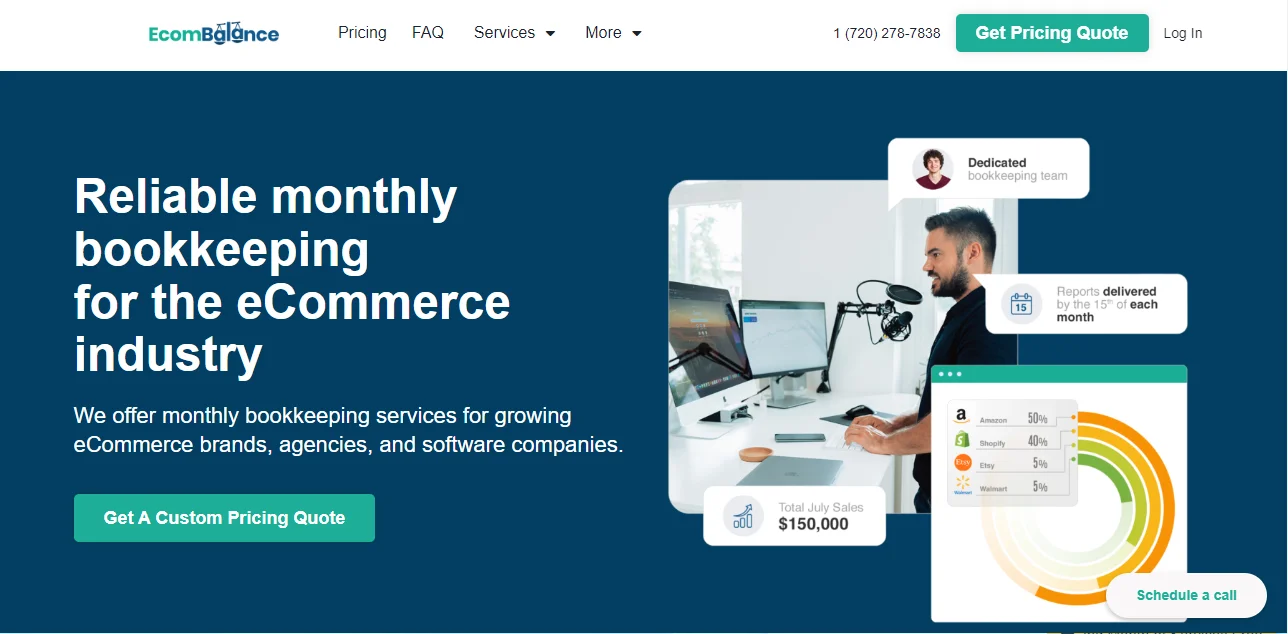
EcomBalance is a monthly bookkeeping service specialized for eCommerce companies selling on Amazon, Shopify, eBay, Etsy, WooCommerce, & other eCommerce channels.
We take monthly bookkeeping off your plate and deliver you your financial statements by the 15th or 20th of each month.
You’ll have your Profit and Loss Statement, Balance Sheet, and Cash Flow Statement ready for analysis each month so you and your business partners can make better business decisions.
Interested in learning more? Schedule a call with our CEO, Nathan Hirsch.
And here’s some free resources:
- Monthly Finance Meeting Agenda
- 9 Steps to Master Your Ecommerce Bookkeeping Checklist
- The Ultimate Guide on Finding an Ecommerce Virtual Bookkeeping Service
- What Is a Profit and Loss Statement?
- How to Read & Interpret a Cash Flow Statement
- How to Read a Balance Sheet & Truly Understand It
Final Thoughts
Negative press can feel overwhelming, especially when it appears prominently in search results. While you may explore options to remove news articles from the internet, the most sustainable response is financial clarity.
By monitoring revenue trends, advertising performance, refunds, and cash flow carefully, you gain control over your business direction. Strong bookkeeping transforms uncertainty into measurable insight, allowing your eCommerce brand to move forward with confidence and stability.
Huge thanks to Erase.com for collaborating on this post!
