





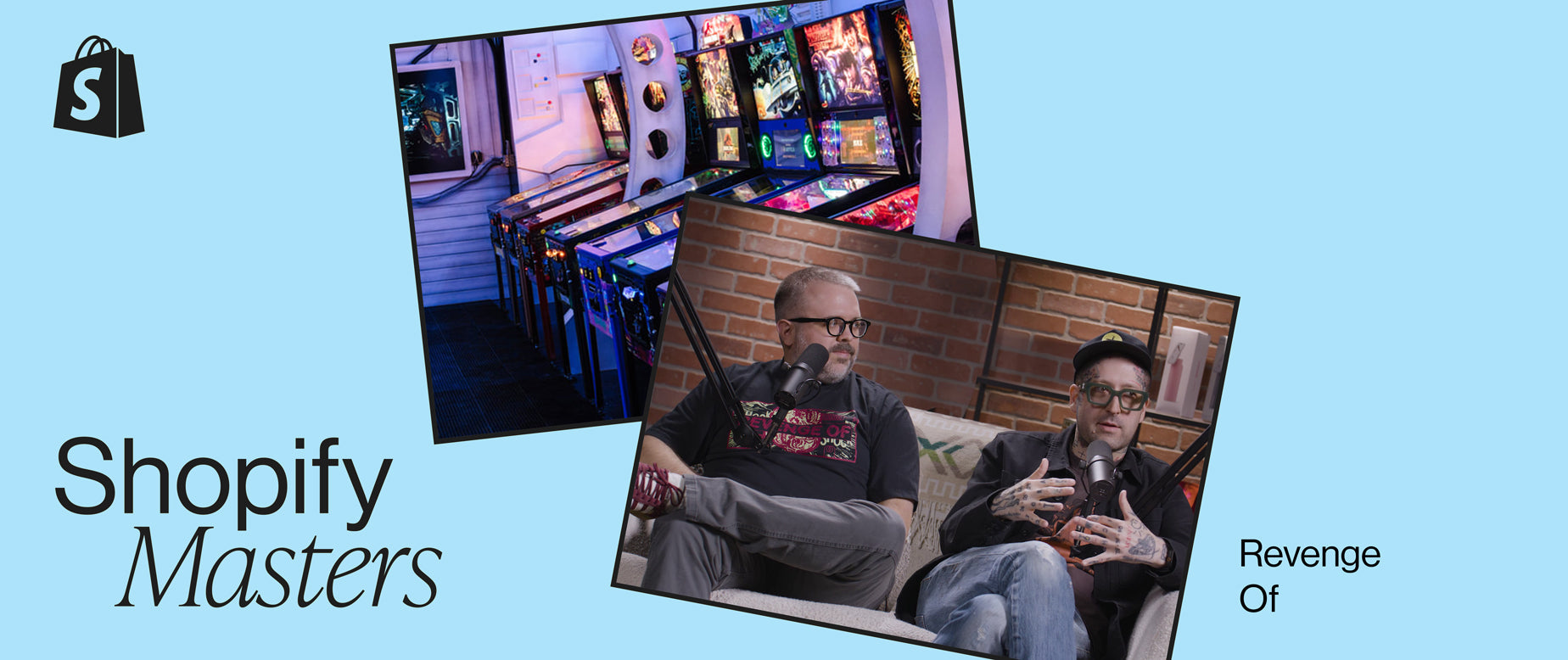
People travel from all over the world to visit Revenge Of, a comic shop and pinball arcade in Los Angeles. The store has become a destination for fans worldwide, but founders Jeff Eyser, Joe Myers, and Joe Kuntz didn’t find success by choosing between physical retail and ecommerce. They built both simultaneously, growing to 80 to 90 online sales daily while creating a space where families return week after week.


Four years ago, three co-owners started doing something that seemed financially reckless: Revenge Of made all 27 of its pinball machines free for the entire day on Black Friday. No sales. No discounts. Just free pinball. Every machine stayed packed, lines stretched out the door, customers spent hours in the space, and it became the company’s highest-grossing day of the year.

In 2024, the retail industry saw its highest level of store closures since 2020, while Revenge Of opened another location, And Destroy,a coffee shop, in 2025.
The counterintuitive lesson these founders learned goes against everything traditional retail preaches: Give first. Create memorable experiences, and customers will want to spend money with you. Not because you’ve discounted things, but because you’ve built something worth supporting. Ahead, they share how to structure your business around community experiences that drive organic sales without eroding your margins.

Building bridges between physical and digital spaces
The business started during the COVID-19 pandemic, when Jeff and Joe began collecting pinball machines. The initial vision was to create a small pinball arcade to offset costs and share their collection with friends. That evolved into Revenge Of, a now full-retail concept with comics, collectibles, and one of LA’s best pinball collections.
The key to their omnichannel success isn’t just running both a store and a website, it’s creating specific touchpoints that connect the two worlds. The primary bridge is their Tuesday live stream. “Comics come out every week on Wednesday, and so we run down some of our favorites in a livestream in which we’re interacting directly with customers who are both ecomm as well as in-store,” Jeff says. The stream has developed what Joe Myers calls “its own kind of lore for people at this point.”
The partners built their own Discord community as a digital lounge, with dedicated spaces for book club members, pinball fans, and different segments of their community. Their social media presence also creates a feedback loop. “We do enough events in the store that we are very in touch with our community and kind of what they’re into and what they’re reading,” Joe Myers says. “It’s a very direct conversation even on that point. And we take that and apply it then to our ecomm, we’ve seen a lot of great results.”
What sets Joe apart in running the online business isn’t just technical skill, it’s his understanding of the fandoms. “He is dialed into what he wants out of an ecommerce site, and that’s how he kind of approaches how he develops our ecommerce,” says Jeff.
That understanding shows up in specific features. “We took a huge step forward, actually, when we jumped into Shopify,” says Joe Myers. The site includes custom code that lets customers click on their favorite creator and see a dedicated page of all their work, matching the creator-forward events they host in-store. They also deployed a FOMO app on their website to extend the community feeling digitally. “It not only reminds a customer what’s in their cart, but it tells you like, ‘Oh, so and so customer in Sacramento bought this comic,’ or ‘There’s only four of this item left,” Jeff says.
Going against the culture
Revenge Of is admittedly counterculture in how it operates. While other retailers slash prices and train customers to wait for discounts, it does the opposite. Its D*mn the Man Black Friday promotion—now in its fourth year—makes every pinball machine free for the entire day, bringing a ton of people to the store.
The store loses pinball revenue for that day, but ends up with crazy-high sales because every machine is occupied, creating a festival-like atmosphere. Identify the “establishment approach” in your industry—and then consider alternatives that align with your values and give customers experiences they can’t get anywhere else.
Building multiple touchpoints in a single visit
Since opening Revenge Of, the question has been how to keep people in the store. The partners added drinks, then sandwiches from a local shop, then seating.
Last year, Revenge Of expanded its footprint into the Base Station. They bought the warehouse behind the store, moved their design business, FTB.DESIGN, and offices there, built a podcast studio, and opened And Destroy, on the same block.

The key is designing your operations so customers naturally encounter multiple ways to spend time and money without feeling pressured. With the expanded space, people now come and pick up their comic books on Wednesday, then go read them while having a coffee and a pastry next door. Magic: The Gathering players pick up a booster pack from Revenge Of, then play with their friends for an hour or two at the store before walking to the café for a draft event.
Today, Revenge Of works with Netflix and Disney, and the partners’ design company, had three installations at San Diego Comic-Con. The shop has also grown from 10 to 15 pull box subscribers—customers who subscribe to weekly comic deliveries—to more than 500.

The first D*mn the Man Black Friday felt like a gamble. However, watching every machine packed all day, seeing customers discover new comics while waiting their turn, and hearing the conversations that turned strangers into community members—the math clicked. The value wasn’t in the three dollars per game. It came from creating an experience so distinctive people wanted to support it.
Creating moments worth experiencing builds a community that wants to see you succeed—and the sales follow. Catch the full interview on Shopify Masters to hear more about the nontraditional levers Revenge Of uses to grow its customer base.
