





Key Takeaways
- Choose a manufacturer for reliability and consistency, because stable quality and on-time runs let you launch faster and outperform brands chasing the lowest price.
- Build a repeatable workflow that locks in clear tech packs, fast sample feedback, and simple quality checks before you scale order sizes.
- Protect your team and customers by picking a partner who communicates clearly, flags problems early, and keeps timelines realistic so launches do not turn into fire drills.
- Treat your manufacturer like a growth partner, because one strong relationship can turn messy revisions and surprise fabric swaps into smooth drops you can scale with confidence.
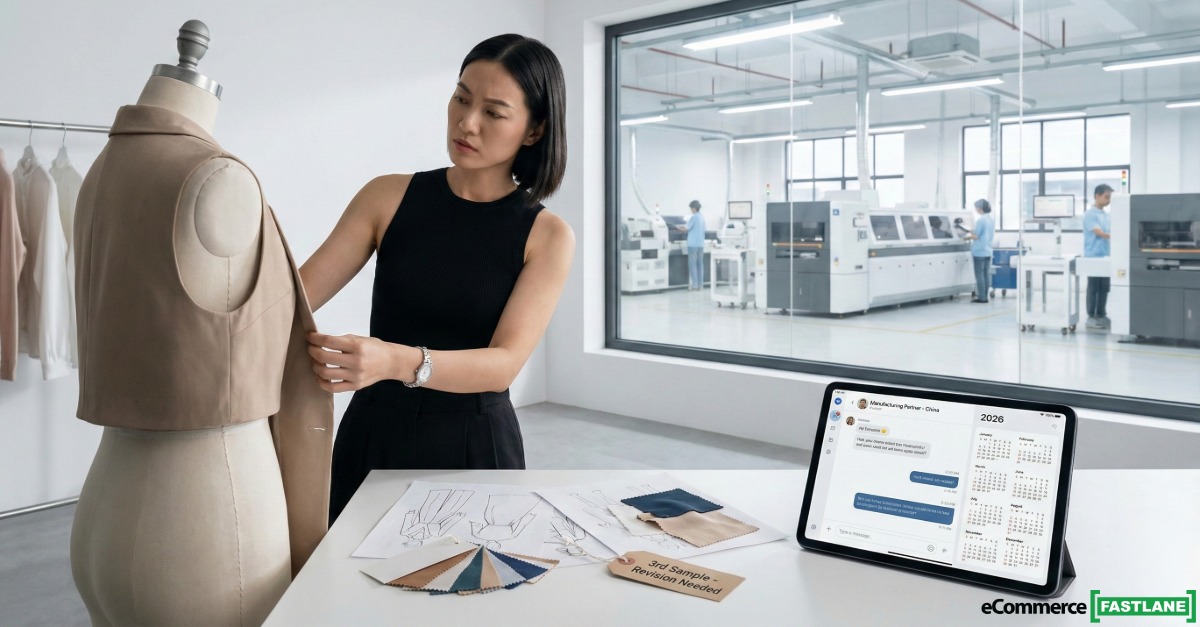
I talked to a brand founder last month who’d just received her third production sample from a manufacturer she found online.
Third attempt. The neckline was still sitting wrong, the fabric weight felt off, and she was already eight weeks behind her launch timeline. She asked me: “How do I know if this is normal friction or if I’m working with the wrong partner?”
That question hits at something every clothing brand deals with, whether you’re printing your first 50 units or coordinating production runs of 10,000 pieces. The design work is yours—the creative vision, the brand story, the fit you’re trying to nail. But everything that happens between “this is what I want” and “this is ready to sell” depends on your manufacturing partner getting it right.
Here’s what’s shifted in 2026: brands used to think about manufacturers purely in terms of cost per unit and turnaround time. Now? The conversation has moved to reliability, communication, how they handle quality issues, and whether they can actually scale when you need them to. Because when you’re six weeks from a product drop and your samples arrive with the wrong fabric blend, price doesn’t matter much anymore.
Most clothing production still happens in the Asia-Pacific region—over 70% globally—and China remains one of the largest manufacturing bases in the world. For context, that’s not just fast fashion or budget brands. I’ve worked with founders running seven-figure Shopify stores who source everything from China, and I’ve talked with early-stage brands testing their first minimum orders with overseas partners. The geography matters less than the relationship you build and how well you manage it.
So when brands start looking at manufacturing options in China, they’re not just comparing quotes. They’re trying to figure out: Can this partner actually deliver what they promise? Will they scale with me? How do I navigate samples, revisions, quality control, and shipping without everything falling apart?
Let’s walk through why that choice matters more than ever—and what actually makes a manufacturing relationship work.
1. Why Manufacturing Matters More Than Ever
Choosing a manufacturer isn’t just about making clothes. It affects almost every part of a brand’s ecosystem. For example:
- Product Quality – Higher manufacturing standards result in better fit, durability, and customer satisfaction.
- Speed to Market – Efficient production shortens lead times and allows brands to capitalize on trends.
- Cost Efficiency – Competitive pricing helps brands set sustainable retail pricing without sacrificing margins.
- Brand Reputation – Ethical and transparent manufacturing protects brand image in an age of conscious consumers.
- Scalability – A reliable manufacturing partner supports growth, from small drops to large seasonal collections.
In other words, the decision about who makes your products directly impacts what your customers experience.
2. What the Right Manufacturer Brings to the Table
In 2026, the role of a clothing manufacturer goes far beyond simply producing garments. The right manufacturer becomes a behind-the-scenes force that shapes how smoothly a brand operates and how confidently it grows. From production planning to consistency and scalability, manufacturing support directly influences brand stability.
This is why many growing brands actively seek partnerships with the trusted custom clothing manufacturers in China, where advanced infrastructure, skilled labor, and scalable production capabilities come together. Reliable companies like Topfit Clothing operate within this ecosystem, supporting brands not only with production scale but also with custom manufacturing and private labeling services. This allows brands to maintain control over design, branding, and packaging while relying on a manufacturer that can execute at scale.
All in all, instead of reacting to demand, brands with the right manufacturing support can plan collections, manage costs, and expand with far greater control. Once this foundation is in place, the value of a strong manufacturing partner becomes clear across several key areas.
Below are the prominent features of the right manufacturers. Have a look!
A. Consistent Quality and Product Reliability
One of the most important contributions a manufacturer brings is consistency. Customers expect the same fit, fabric feel, and durability every time they order. A reliable manufacturer maintains standardized processes that ensure each production run meets the same quality benchmarks.
This consistency helps brands:
- Reduce product returns.
- Build trust with repeat customers.
- Maintain a professional brand image.
Over time, dependable quality becomes a competitive advantage rather than a constant concern.
B. Supply Chain Stability and Scalability
As brands grow, production needs change. A strong manufacturing partner offers stability during both slow periods and peak demand. With scalable capacity and clear communication, brands can increase output without sacrificing timelines or quality.
This stability helps prevent:
- Stock shortages.
- Missed launches.
- Operational stress during growth phases.
Reliable scalability ensures brands are prepared for expansion rather than overwhelmed by it.
C. Ethical Compliance and Brand Protection
Modern consumers pay close attention to how their clothing is made. Manufacturers that follow labor standards, safety regulations, and compliance requirements help protect brands from reputational risks.
Ethical manufacturing support allows brands to:
- Meet consumer expectations.
- Align with sustainability goals.
- Communicate transparency with confidence.
This builds long-term credibility in a values-driven market.
D. Flexibility for Changing Brand Needs
Trends evolve quickly, and brands need manufacturing partners who can adapt. Whether it’s adjusting designs, testing new fabrics, or managing different order volumes, flexibility is essential.
Manufacturers that offer adaptable production processes help brands:
- Experiment with new collections.
- Respond to market feedback.
- Innovate without excessive risk.
This flexibility keeps brands agile in a fast-moving industry.
Building a clothing brand in 2026 is not just about good design. It is about execution. And your manufacturer is the partner that turns your idea into something customers can buy, wear, and trust. The best brands no longer pick factories only by the lowest cost per unit. They pick for reliability, clear communication, steady quality, and the ability to scale without chaos.
That matters because apparel is a high-pressure category. Returns can reach 50% in some fashion segments, and customer acquisition costs have been climbing. When margins get tighter, a bad production run hurts twice: you lose money on the product, then you pay again in refunds, support time, and lost trust. Since over 70% of global clothing production still runs through the Asia-Pacific region (with China as a major base), many brands will keep sourcing overseas. The winners are not the brands that “find a factory,” they are the brands that build a process and a relationship that protects quality and timelines.
The Most Important Insights To Act On
- Quality consistency is a growth lever, not a nice-to-have. If fit and fabric change from run to run, repeat purchases drop and returns rise. Consistency protects your reviews, your email list, and your launch results.
- Speed to market depends on systems, not luck. Sampling delays, unclear feedback, and weak quality checks are what push launches back by weeks. A manufacturer with strong communication and predictable timelines helps you hit drops and seasonal windows.
- Scalability is about repeatability. A partner who can handle your first 50 units but cannot handle 5,000 units will break your momentum right when demand finally shows up.
Practical advice ecommerce founders can use this week
- Write a one-page “non-negotiables” list before you request quotes: fabric standards, sizing tolerances, labeling, packaging, target ship date, and how defects are handled. This prevents confusion later.
- Treat samples like a checklist, not a vibe test: fit, stitching, fabric weight, shrink, color match, wash test, and measurement table. Approve only when each item passes.
- Set communication rules early: one point of contact, agreed response times, and a simple weekly update rhythm (even a short message). Problems get expensive when they show up late.
- Add a basic quality gate before goods leave the factory: photos, measurements, and random checks on key seams and prints. If you can, use a third-party inspection for bigger runs.
- Plan scaling in stages: small run to confirm quality, second run to confirm repeatability, then scale volume. This protects cash flow and reduces launch risk.
Next steps to keep improving
If you are hiring or switching manufacturers, turn this post into a scorecard and rate each factory on quality consistency, clarity, speed, and scale readiness. Then document your sampling and QC process so it can be repeated by your team, your freelancer, or your operations lead. You can also pair this with broader planning: fashion brands are facing higher costs, so reducing returns and rework is one of the fastest ways to improve profit without raising prices.
Summary
The right clothing manufacturer shapes brand growth in 2026 by protecting the things customers feel first: fit, fabric, consistency, and delivery timing. In a market where returns are high and costs are rising, your manufacturing partner is not just a vendor, they are part of your growth strategy. Use clear standards, a tight sampling process, steady communication, and simple quality gates to prevent delays and protect your reputation as you scale. If you want a practical next step, build a manufacturer scorecard and run your top two options through it, then lock in a repeatable sample-to-production workflow you can use for every new drop.
