




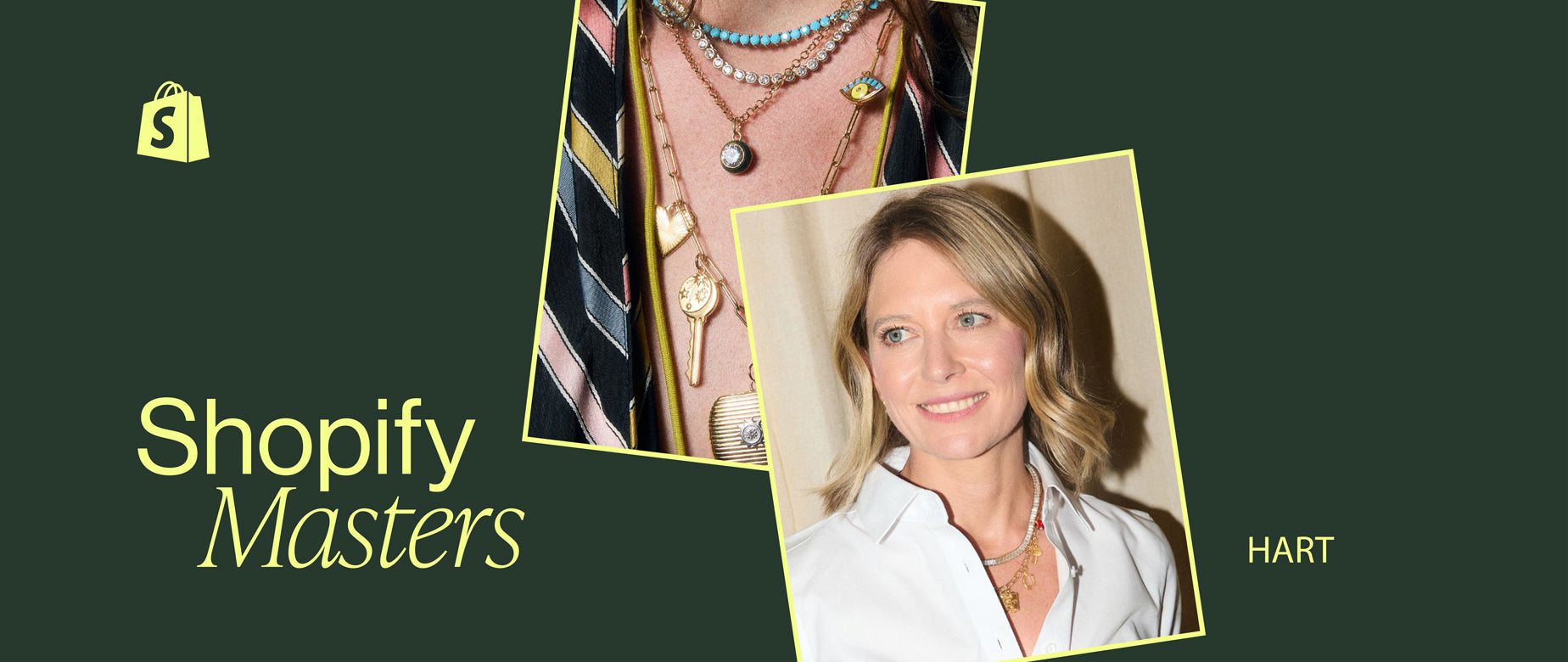
Most founders try to do everything themselves. Hart Hagerty did the opposite. After launching Hart Jewelry in 2016 and building a following with custom charm jewelry she positioned as modern heirlooms, she brought in her sister Curry as an operational partner in 2020. Their division was deliberate: Hart as founder and chief creative officer, Curry as CEO. One sources inspiration in Marrakesh; the other scopes out construction sites in Texas. One builds worlds on Instagram; the other posts white papers on LinkedIn. That contrast is the point. Since formalizing the partnership, Hart Jewelry has grown from $100,000 in annual revenue to a projected $20 million, with more than 100 employees. Curry shares the framework behind that growth.


Hart
On how they arrive at the same answer through completely different processes:
We’re really complementary partners. Here’s an example: We’ll be launching a new charm, and we’re deciding between charm A and charm B. My instincts, my marketing background, having this Rolodex of data and knowing our customers—I know what they’re going to want. I can decide immediately. Hart has to go around for two weeks. She goes to the store, asks the customers, asks her friends. She loves to crowdsource; she loves to chat.
And then we come back to the table and most often arrive at the same conclusion. We just operate differently. Part of being successful as business partners is knowing each other’s operating manuals. There’s a podcast I listened to about writing your own operating manual—how it’s best to work with me versus how it’s best to work with Hart. I know how she’s going to come to a conclusion, so I give her that space.
You can see it in how we use social media, too. Hart is the founder and creative director. She’s on Instagram building this incredible world through her ideas, her creativity, her writing, and her aesthetic. She also has a wonderful Substack. I’m the dorky sister on LinkedIn, sharing white papers and job listings.
On the moment they realized they were the bottleneck:
Hart and I had almost a crisis in the business in 2024. We were both wearing way too many hats. We were the bottleneck that was preventing us from scaling. We had to physically get out of the way.
Up until last year, I was doing the graphic design, the copy, and sending out all of our Klaviyo emails. I’m a true marketer at heart and I really love that work, but it wasn’t giving me time to lead. So we made a really conscious decision to take a step back, evaluate all of the different seats in the organization, and figure out where we needed to bring in more senior leadership.
I don’t bring my laptop to meetings anymore. I used to be the person who would come in firing off a Slack response and downloading a report. Now my job is to listen and support. We run our business like an inverted pyramid, where all of our employees are at the top and our managers and directors are at the bottom. Our job is not to tell them what to do—it’s to help them find ways to get their jobs done in more effective and, frankly, fun and creative ways.

Hart
On earning the CEO title:
I feel like I had to earn the CEO title. We all have a little bit of imposter syndrome, but it’s something I take really seriously and I’m really proud of. It didn’t make sense to have that title until we had a big enough team across different departments.
Even to this day, I feel like I’m still proving my value as CEO because it is such a big responsibility. But it felt right as soon as we signed a 5,000-square-foot lease for our headquarters and fulfillment center. That was the moment I put on my CEO hat.
Working on the business now means thinking about the future. I’m looking at our three-to-five-year plan, including our systems and processes—even things as small as how we can duplicate our marketing campaigns down the road. The Vision/Traction Organizer from the Entrepreneurial Operating System has been really integral in helping Hart and me map out where we see ourselves in three to 10 years. We have an annual leadership meeting where we write down all of our goals—usually about 10 objectives for the year, from fine-tuning supply chain to signing new leases.
On the hiring mistake that comes with being small:
The biggest mistake—and it was probably more of something that small businesses have to do to evolve—was having a lot of multihyphen positions. Sales and retail manager. Inventory and fulfillment manager. We were asking people to do so many different jobs that it didn’t allow us to hyper-focus on the candidate. We needed a one-size-fits-most applicant.
As we’ve grown, the job descriptions themselves have become a lot tighter. We have more clarity on our needs and more clarity on what skills we need to support each role. And one thing I learned from working in hospitality is that to scale, you have to have really strong standard operating procedures. Scaling creativity is really challenging. The way we do it is through hiring smart—our main values are being curious, having integrity, having respect, and being proactive. You can train everybody on systems and how to check out an order. But you can’t teach emotional intelligence.

Hart
On not knowing the end—and keeping it that way:
I have a sticky note on my computer that says “Begin with the end in mind.” Every agenda opens with the objective, how we’re going to measure success. When we come together in our marketing and operations meetings with that mindset, we’re so much more efficient and everybody is aligned.
The irony is that for the business itself, Hart and I don’t really have an end in mind. We know what we’re good at right now: creating best-in-class jewelry with incredible storytelling and meaning and this really fun modular system. If we were to have some goal that was a line on the profit and loss statement or felt transactional, it would take away the soul and the purpose. So we don’t know what our exit strategy is. We’re open to ideas. But we know that regardless of where we end up, we can’t do it without building great teams and staying really true to the integrity and quality of the product.
Be sure to catch Curry’s full interview on Shopify Masters to hear more about her leadership approach, the three-phase retail strategy that helped Hart Jewelry test brick-and-mortar retail space without a long-term lease, and what she’s learned about customers in Charleston, New York, and Nashville.
