





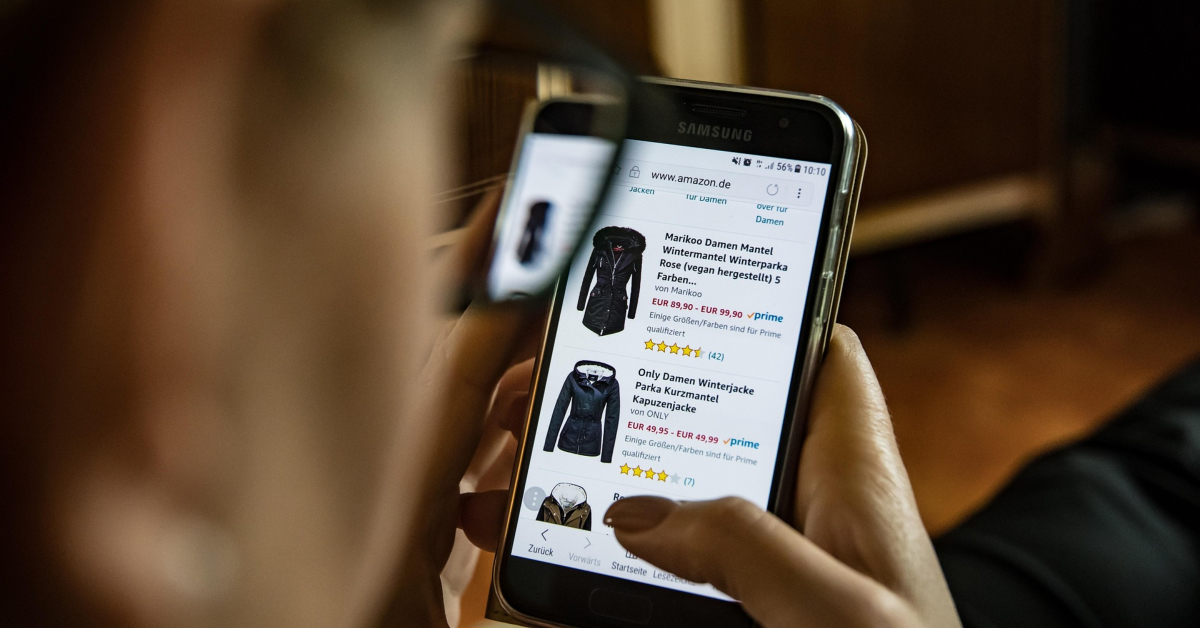
Imagine this: You are browsing for a product online. You find the perfect fit, but something stops you from hitting “Buy Now.” Just scrolling down, you see a blog post packed with glowing reviews—showing the real-world impact of the products (by real users). Suddenly, trust replaces doubt, and you seal the deal.
That’s social proof in action!
Social proof is more than just a marketing strategy. It caters to our deep-rooted human need to fit in–thus affecting everything from the way we spend our time to what we buy.
In marketing, you use social proof as an example to influence your leads. And an ideal way to leverage this power tool is by integrating social proof into your content. Let’s delve deeper into how you can capitalize on this to increase customer trust and sales for your E-commerce.
What is Social Proof?
Social proof is a social and psychological concept coined by Rober Cialdini in 1984. It states that people (aka consumers) always look to others when gathering evidence to make a decision (purchase). The idea is–if many people are doing something, it must be desirable or correct.
As an E-commerce brand, you don’t just need to show prospects why your product is the best. You must also showcase that other customers think that your product is ‘the best,’ too. That’s why social proof–from their peers or unbiased third parties–is more trustworthy and persuasive than branded promotions.
Take this example:
You are searching for headphones online. You shortlist the search to two products. Both products are almost similar in terms of pricing, product description, quality, and specs. The only difference is that one has no reviews. The other is filled with customer testimonials, photos, and badges saying, “Rated best sound quality by 1000 users.”
Which one will you choose? The second one, of course. That’s how social proof impacts 93% of shoppers’ buying decisions. Moreover, banking on social proof can help you:
- Establish credibility
- Increase conversion rates
- Improve customer engagement
- Gain an SEO advantage with a higher ranking
Types of Social Proof
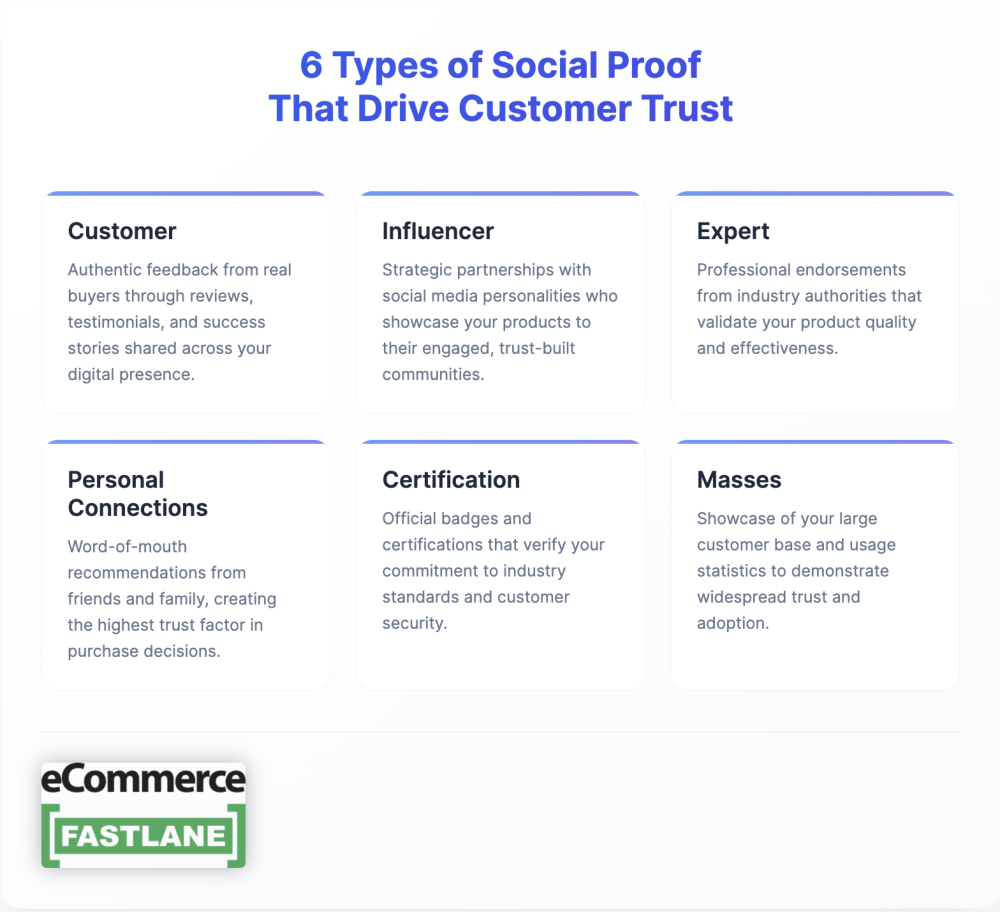
While there are dozens of social proof media, all can be classified into six major groups:
Customer
Who better to vouch for your products than the paying clients? These include all the customer testimonials, reviews, and stories shared on different media–your E-store, Amazon, website, and social media.
Brownie Tip: Customer social proof is also a solid ground for you to get genuine feedback on the product and improve as the buyer demands.
Influencers
Influencers are perfect brand ambassadors–since they already have an engaged online community. This makes any genuine brand or product mention great motivation for your website visits, instilling trust and closing sales.
You can leverage the power of influencer marketing to boost your Amazon sales. Partner with influencers who will post Instagram stories about product availability on Amazon with dedicated links. Post engaging reviews, tutorials, and unboxing videos. This will boost trust in your brand and will increase conversions.
Experts
These include endorsements and shout-outs from established experts in the field. For example, if a dermatologist recommends your skincare brand, people will likely pick you as a credible choice.
Personal Connections
When people in your vicinity share a positive experience of a product, the chances of your conversion increase multiplefolds.
Certification
While social proof is mostly social (coming from other people), certification and badges from third-party entities are also trusted reference sources. For example, “PCI DSS certified” ensures your E-commerce prospects that your payment process is secure.
Masses
The sheer volume of customers is another terrific way to boost trust. A large number of users will fuel the feeling of crowd wisdom in prospects–deeming your brand and products worthy.
5 Strategies for Incorporating Social Proof in Your Content
Online research is the first stop of 87% of purchase decision-makers. So, now that we are clear on the importance of social proof for conversion, it makes sense to incorporate it throughout your content–website, E-commerce platforms (Amazon), and social channels.
Here are five ways to add these:
Highlights Customer Reviews on Your Blog
Blogs are one of the most common entry points of prospects into conversion funnels. Make sure you impress them from the get-go by highlighting the social proof on your blog. Flaunt the number of social shares and comments of your best sellers.
Here’s an example of the flow:
Let’s go back to the example of headphones. Since you sell them, you decide to write a blog post about “Top 10 headphone brands in 2025”. You optimize it well, and the blog post starts ranking. The prospects land on your blog and go through the list–with your headphones ranks the best (#1), obviously.
They are impressed already. But they see the impressive customer reviews on the sidebar. These are verified customer reviews praising your headphones along with the content. Comments like “best sound” and “Great value for the price” reinforce the trust.
Publish Testimonials on Your Landing Pages
Landing pages often list features, benefits, and results. However, they rarely capture the emotional connection that good testimonials create.
With testimonials and case studies listed here, you’ll put customers into the shoes of your users. They can visualize themselves in a similar scenario–thus linking that personal chord. It can be everything from funny anecdotes, heartwarming success stories, or even quirky complaints that vent viral (sugar-free Haribo Gummy Bears, anyone?).
Therefore, add authentic voices to your landing page to make you relatable and memorable. Use multimedia testimonials–written reviews, videos, short clips of happy customers, photos, etc.
Showcase Key User Stats and Volume Data to Reinforce Trust
Customer reviews are great catalysts for moving your products into the consideration stage of the customer journey. However, moving from there to the conversion will require hard data and stats–especially in complex purchases. That’s where user stats and volume data can be the final nudge for hitting “Buy Now.”
Moreover, displaying the purchase or usage volume won’t just show credibility but also signal product popularity. Therefore, add stats like:
- Over 50,000 happy customers and counting
- 1000+ units sold this week
How do you give strength and solidity to these stats? While social proof is essential for building trust, it’s equally important to ensure the credibility of the proof you present. Gathering data with the correct attribution models can be really helpful here. If your social proof includes a claim like “95% of customers rated us 5 stars,” causal attribution can validate such metrics by using geo-based experiments to calculate incrementality factors. This ensures that your testimonials and stats are not only persuasive but also reliable, reinforcing trust in your brand.
Badges like “#1 Rated in Electronics” and customer satisfaction rates, such as “we have a 97% satisfaction rate”, are inclusions worth trying. The numbers and badges will create a sense of security and confidence for shoppers.
Add these social proof stats to your:
- Product page
- Homepage
- Checkout pages
- Email marketing campaign
- Social media posts
- And more…
Social Proof Side Bar
Most websites use sideboards for ads. But you are ready to ditch the small revenue for bigger gains–leverage this prime real estate on your website to highlight social proof.
You can use the sidebar to showcase your impressive number–Facebook likes and Twitter followers–as social proof. The key to success here is highlighting relevant testimonials, customer reviews, and experts’ quotes or certifications.
You can also make it fun by adding interactive elements. The direct links will help you display social proof on different pages, thus building trust and encouraging participation. Even better, align the sidebar with the customer journey as they navigate through different pages.
Encourage User Generated Content
User Generated Content (UGC) taps into authentic experiences–allowing customers to become the storytellers of your brand. Integrating them into your content will help you foster a deeper connection with prospects.
The biggest challenge, however, is often collecting the UGC. Social media campaigns are the ideal way to encourage this content collection. For example, host the #MyProductJourney campaign on TikTok and Instagram, where users can share photos, videos, and reviews. Take inspiration from Starbucks’ #WhiteCupContest to curate custom competitions.
Once you have a good influx of UGC, incorporate them into your content, including:
- Blog posts
- Social media posts and stories
- Email marketing campaigns
- Landing pages
- Paid ads
- And other customer journey touchpoints
Measuring the Impact of Social Proof
You have successfully collected social proof and integrated it into your website, social channels, emails, and ads. Great job! But your job is not done yet.
You need to measure the impact of your social proof constantly. The data you get from measuring will help you iterate your strategy and optimize for maximum conversions. Here are three steps to effectively achieve this:
Define Key Performance Indicators (KPIs)
For social proof, the KPIs should be aligned with your overall business goals. The major ones include:
- Conversion Rates: Track sales before and after integrating social proof into your content
- Engagement Levels: Assess social media interactions and testimonial responses.
- Customer Acquisition Cost: Evaluate how social proof impacts acquisition costs.
Leverage sales coaching software for your team to empower them to leverage the metrics and strategies during customer interactions. The personalized tools will further help the team craft a guided social proof strategy, enhance communication, and optimize performance tracking.
Leverage Analytical Tools
With the KPIs defined, use the following analytics tools to track the metrics:
- Google Analytics
- Social media analytics
- Heat mapping tools
Compare and Improve
By comparing KPI data over time, you will find areas that perform great while some do not. Rework on these areas of improvement.
Experiment with different social proof formats. A/B tests different social proof elements–user reviews, testimonials, and UGC–to see what the audience resonates with the most. All these together will enhance your trust, engagement, and, ultimately, sales.
Boost Trust and Sales With Social Proof
Social Proof is the way to gain skyrocketing sales numbers in 2025 and beyond. Taking the above-shared strategy as a stepping stone, integrate this valuable marketing element into your content to build trust, validate buying decisions, and increase conversions.
However, do know that, like most marketing efforts, success depends on consistency. Continuously monitor, optimize, and improve–soon, you’ll join ranks with the best in the industry!
