





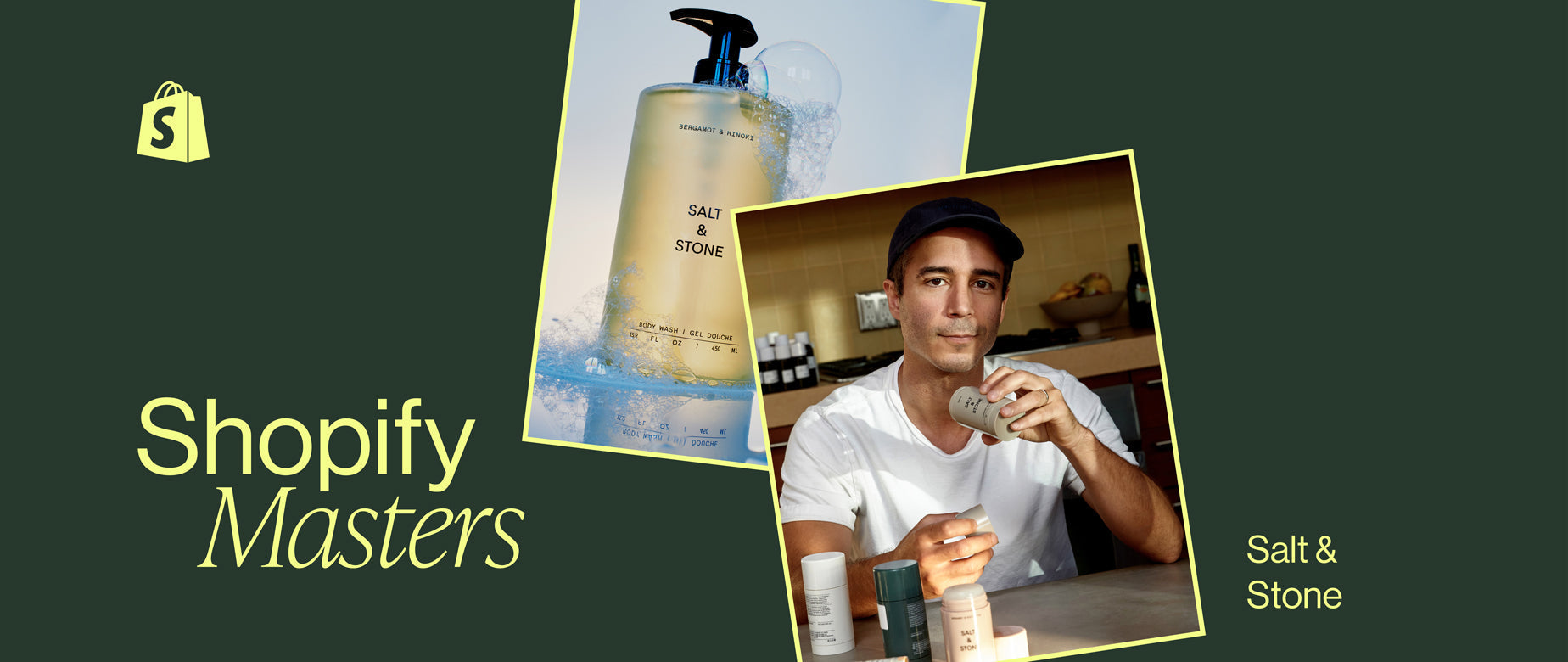
Salt & Stone will surpass $140 million in revenue this year, an impressive milestone for any consumer brand. What’s more remarkable is how the company landed its retail partnership with Sephora.
When you’re bootstrapping your business out of a studio apartment, shipping deodorants yourself, the advice is usually the same: Get into stores. Send pitch decks. Chase buyers. Founder Nima Jalali chose a different path.
“A lot of opportunities have come to us, and I think that’s just the result of showing up big and showing up strong,” Nima says. This wasn’t luck or coincidence, it was a deliberate strategy Nima employed from the beginning. His strategy is rooted in a simple but contrarian belief: Build a brand so compelling that major retailers have no choice but to pursue you.

Instead of approaching Sephora, he poured everything into digital first: website, ads, email—every customer touchpoint. The goal was to become a brand that Sephora would need to have, which was a risk at the time. But when Sephora reached out without a single pitch from Nima, it validated the approach.


Today, Salt & Stone is the No. 1 deodorant at Amazon, Sephora, and Erewhon, in addition to being the No. 1 body brand at Erewhon and No. 1 body wash at Sephora. Ahead, learn how to create that kind of magnetic momentum for your own brand.
1. Build first rather than pitch
Eight years ago, when Nima was launching Salt & Stone from his studio apartment, he faced a choice most bootstrapped founders encounter. Either try to get into retail immediately, or focus on building digital excellence first. He chose the latter, not as a temporary strategy, but as a permanent approach.
“The whole thought was, let’s become a brand that Sephora has to have, right?” says Nima. “And then they’ll come to us.” The reasoning was partly strategic and partly protective. Nima understood the risk of approaching retailers too early. “If it’s a no, it’s tough to go back to them,” he explains. By waiting until Salt & Stone had undeniable momentum, he could ensure the conversation would happen on stronger terms.
This approach shaped every early decision. Despite being a one-man operation, Nima focused obsessively on making everything appear established and premium from day one. “My goal was always for everything to feel big,” Nima says. The brand positioning took inspiration from heritage brands outside the beauty industry that were built to last a hundred years, not trendy startups chasing quick wins.

2. Master every digital touchpoint before you think about retail
So how exactly do you build a brand that makes Sephora come to you? Nima’s answer is straightforward: “Get focused on digital, all of it. So website, ads, email—make sure you’re just showing up best in class.” Every digital touchpoint had to be as strong or stronger than category leaders. The website needed to look like an established brand rather than a startup. Email had to reflect a clear brand voice. And ads had to be genuinely attention-grabbing.
Buyers at major retailers see the same digital touchpoints as consumers. “Those ads also get served to the Sephora merchants, the Erewhon buyer,” Nima explains, which is why he focused on “making sure that the ad is great, attention-grabbing, and something different than what’s out there,” he says.

When Nima studied other brands in the space eight years ago, he noticed most were following the same beauty industry playbook. Instead, he took inspiration from fashion, lifestyle, and streetwear brands to create a different visual and strategic approach that made Salt & Stone stand out.
On ad strategy specifically, Nima found that influencer content consistently outperformed branded assets, but the approach mattered. “A lot of times we’re letting influencers sort of freestyle it and talk about why they love the brand,” he says. “And that ends up working pretty well.”
And to ensure digital strategy has a solid foundation beneath it, the product has to genuinely be superior. Nima went through dozens of iterations of his deodorant formula, creating hundreds of samples and obsessing over smoothness, longevity, and ingredient quality. “Deep down, when you know you have something that’s truly better than anything on the market, that’s the time to go, right?” he says.
3. Build a brand for the long term
Nima’s background as a professional snowboarder gave him a unique perspective on the industry, but he didn’t want to lead with these credentials. “I don’t believe in making a celebrity out of a non-celebrity,” he says. “I want to create a brand that’s a legacy brand, and that’s not going to come and go because of one person.”
Today, Salt & Stone is the bestselling deodorant in both Sephora and Amazon, an unusual achievement that demonstrates the brand’s cross-market appeal to both prestige and mass consumers. “If you look at the top 20 bestselling deodorants on Amazon, you know, nothing is even close to $20, which is how much our stick is,” Nima points out. The data shows consumers are trading up from drugstore brands, willing to pay premium prices for a genuinely better product.

The work of building digital excellence is harder upfront than sending pitch emails to buyers. But when retailers reach out to you instead of sending rejection emails, it’s all worth it. Salt & Stone expanded into the UK based on customer demand, will launch in Sephora Europe next year, and continues to have retailers come to it. To hear more from Nima about building Salt & Stone’s team, his product development process, and what’s next for the brand’s international expansion, watch the full interview on Shopify Masters.
