







Running an e-commerce business is fast by nature. Campaigns launch and die in days. New platforms demand attention. Customer expectations keep moving.
That pace is good for growth, but it can leave your team operating in reactive mode for months at a stretch – heads down, working in silos, with no time to step back and look at the bigger picture.
A company offsite is one of the most effective ways to interrupt that cycle. Done well, it gives your team dedicated time to align on strategy, rebuild working relationships, and return to their roles with clarity and momentum.
Done poorly, it’s an expensive few days of awkward icebreakers and recycled slides.
This guide covers how to plan an e-commerce team offsite that actually delivers.
Why Offsites Matter More for E-Commerce Teams
E-commerce teams tend to be lean, distributed, and cross-functional.
You might have a paid media manager in one timezone, a warehouse ops lead in another, and a content team scattered across multiple cities.
Remote-first setups solve a lot of problems, but they also create friction that’s hard to diagnose – misalignment on priorities, gaps in communication between departments, and a gradual erosion of team culture that shows up slowly and then all at once.
The data backs these findings up. McKinsey research on team health found that teams displaying strong collaboration behaviors are up to 25% more productive than less cohesive counterparts – a gap that compounds when distributed e-commerce teams are working across multiple channels, time zones, and platforms simultaneously.
For e-commerce specifically, these gains compound. Truly aligning your operations, marketing, and finance teams speeds up decision-making and reduces the likelihood of missed opportunities.
That’s difficult to replicate through Slack threads alone.
That said, an offsite only works when it’s planned with intent. The mistake most teams make is treating it as a reward or a social event rather than a business investment.

Building an Agenda That Balances Work and Energy
The agenda is where most offsites either succeed or fall apart. Overschedule the day with back-to-back presentations, and people start checking phones by noon.
If you under-schedule it, you end up wasting valuable time without any tangible results.
A useful framework is to structure each day in three distinct blocks:
- Morning – High-focus strategic work. This is when people are freshest. Use this block for the sessions that require real thinking – roadmap planning, problem-solving, and debate-heavy discussions.
- Afternoon – Workshops and cross-functional sessions. More collaborative, less mentally taxing. Good for process documentation, feedback sessions, and department-specific deep dives.
- Evening – Social and informal time. Shared dinners, light activities, unstructured conversations. Don’t underestimate this block. This period is where we build trust and relationships.
One programming decision that’s worth serious consideration: opening or closing the event with a keynote speaker.
A well-chosen speaker can shift the energy of the entire day – reframing how the team thinks about growth, pressure, or possibility before the working sessions even begin.
Rather than a standard talk, look for someone who turns the audience into participants rather than passive listeners. Mentalist and corporate keynote speaker Christophe Fox, for example, builds sessions around themes like performing under pressure and achieving the impossible – using interactive mentalism to make those ideas visceral rather than abstract.
That kind of opening session gets talked about well after the event ends, which is exactly the kind of shared reference point a team carries back into their day-to-day work.
Leave buffer time in the schedule. An overpacked agenda creates stress. Build in at least 30 minutes between major sessions for informal conversation and transitions.
Send pre-reads in advance. Any data, reports, or context materials that inform working sessions should be distributed at least three days before the offsite. Time on-site is too valuable to spend reviewing slides that could have been read beforehand.
Start With Goals, Not Venues
The temptation is to book a location first and figure out the rest later. Resist it.
Before you do anything logistical, define what success looks like for this offsite. Be specific. “Better communication” is not a goal – “agree on a single cross-channel campaign reporting format before Q3 kicks off” is.
Common goals for e-commerce team offsites include:
- Finalizing the annual or quarterly roadmap with department leads in the room together
- Resolving a long-running operational bottleneck that’s hard to fix asynchronously
- Rebuilding team cohesion after a period of rapid hiring or restructuring
- Strategic planning for a new channel, market, or product category
- Leadership development for mid-level managers preparing for greater responsibility.
The same logic applies here. Offsite planning with vague intentions produces vague results.
When goals are written down, shared in advance, and specific enough to be measured, the event has a much better chance of producing decisions that stick beyond the final dinner.
Once you have your goals documented, everything else – venue, format, duration, guest speakers, and team activities – can be evaluated against them. If an activity doesn’t serve at least one of your stated goals, it probably doesn’t belong on the agenda.
If your team is dealing with structural issues around growth and communication, it’s also worth reviewing common e-commerce team management and marketing strategy challenges before the event so that conversations can be grounded in a shared understanding of the business.
Choosing the Right Location
Location has a bigger impact on the quality of an offsite than most people realize.
The goal is a setting that helps people think differently – removed enough from the daily routine to shift into a more strategic headspace, but practical enough to actually get work done.
A few things to consider:
Distance from the office. Close enough that travel does not consume the entire first day, but far enough that people remain focused on their work. A two-to-three-hour travel radius works well for most teams.
Working infrastructure. Reliable wifi, breakout rooms, A/V setup, and natural light. Beautiful venues with bad internet are a bad trade.
Size and privacy. You want your team to be able to have candid, unguarded conversations. A dedicated conference wing at a hotel or a rented property with common areas for both group sessions and informal downtime tends to work better than booking out a public event space.
Accommodation on-site (or nearby). Multi-day offsites benefit from everyone staying in the same place. The hallway conversations and shared dinners are often where the most valuable alignment happens.
Budget. Off-peak travel windows (mid-week, shoulder seasons) can significantly reduce costs. September, October, and May are the most popular months for corporate retreats according to surveys from RetreatsAndVenues, which means pricing on popular venues peaks during those periods. If budget is a constraint, January through March tends to offer better rates.

Managing the Budget Without Losing the Value
Running an offsite costs money – accommodation, travel, catering, venue hire, and any external facilitators or speakers. Bootstrapped or lean e-commerce businesses must carefully plan for this real line item.
The key is to treat the offsite like any other business investment: define what return you expect, and structure the spend accordingly.
Rough cost categories to budget for:
| Line Item | Notes |
| Venue and accommodation | Often the biggest single expense; negotiate group rates |
| Travel | Reimburse through your expense guidelines; book early |
| Catering | Per-day rates vary widely; prioritize quality over quantity |
| Facilitators/speakers | Optional but high-leverage; can be sourced at varying price points |
| Materials and supplies | Whiteboards, printed docs, notepads, etc. |
| Team activities | Keep these purposeful rather than expensive |
Many e-commerce businesses run into cash flow challenges during growth phases – when revenue is strong, but expenses scale alongside it.
Keeping clean financial records helps you see exactly what an offsite actually required in resources versus the value it provided and whether to repeat or adjust the format next year.
The investment case is stronger than it might look on a spreadsheet. Gallup’s State of the Global Workplace research found that highly engaged teams see a 51% drop in turnover – and for lean e-commerce businesses where losing one person in ops or growth can set a whole quarter back, that’s a material return on culture spend.
If managing that kind of operational finance clarity is something your business is still working on, it’s worth understanding how to fix the most common remote work pitfalls for e-commerce teams that tend to get worse when teams scale without the right infrastructure.
What to Do After the Offsite
The energy of a well-run offsite fades quickly if nothing concrete comes out of it. The week after the event is critical.
Within 48 hours of returning, send a recap document that covers:
- Key decisions made and who owns them
- Action items with names and deadlines attached
- Open questions that still need resolution
- Any commitments made between departments
This document serves as the accountability layer for all the discussions. Without it, the offsite becomes a collection of memories rather than a turning point.
Build in a 30-day check-in where team leads report back on whether their action items are on track.
This creates a feedback loop that also informs how you plan the next offsite – what format worked, what didn’t, and what goals still need attention. MIT Sloan Management Review research on goal-setting shows that goals reviewed and tracked regularly produce significantly better outcomes than those set once and revisited only at year-end – which maps directly to how post-offsite accountability should be structured.
Metrics worth tracking post-offsite include team collaboration scores (if you run regular pulse surveys), project delivery speed, and any qualitative feedback from one-on-ones in the weeks following the event.
Keeping It Simple on the First One
If your team has never done a formal offsite before, start small.
A one-night, one-day format with a tight agenda and a clear output – one quarterly roadmap, one process decision, and one documented alignment on strategy – is more valuable than an ambitious three-day retreat that tries to solve everything at once.
The first offsite sets expectations and builds the organizational muscle for doing them well. Once your team knows what to expect and how to prepare, you can scale the format in future iterations.
E-commerce moves fast. Taking one day out of the quarter to make sure your team is genuinely aligned is one of the highest-leverage uses of that time – not a distraction from the work, but a direct investment in your ability to do it better.
What Is EcomBalance?
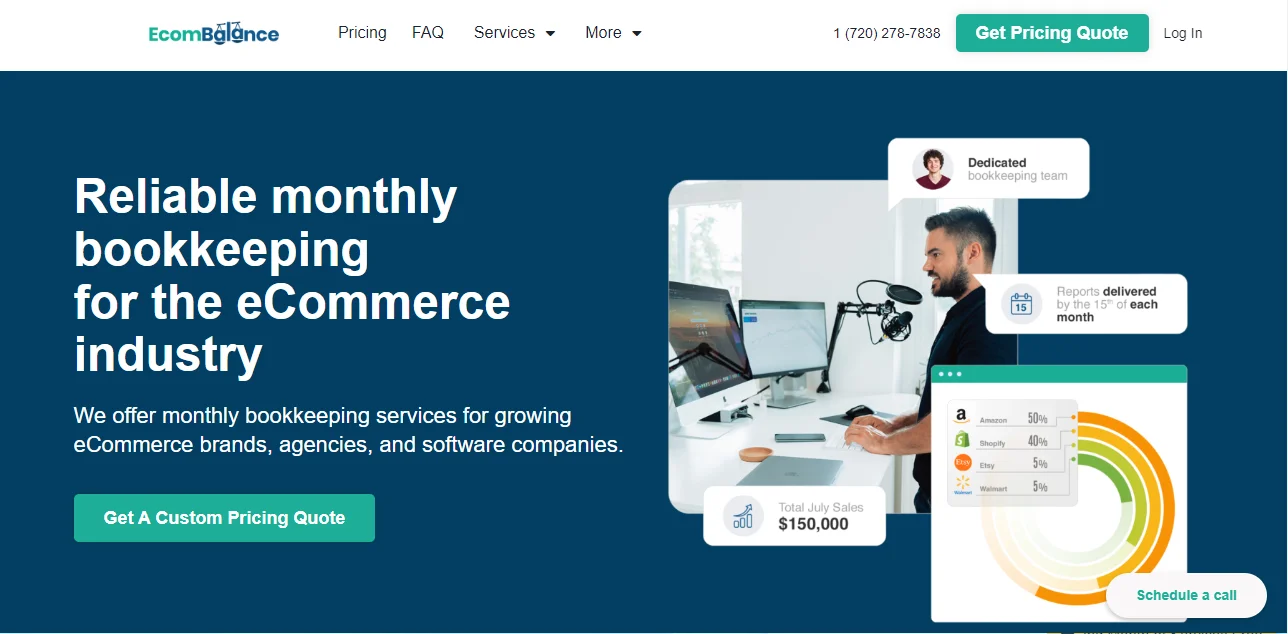
EcomBalance is a monthly bookkeeping service specialized for eCommerce companies selling on Amazon, Shopify, eBay, Etsy, WooCommerce, & other eCommerce channels.
We take monthly bookkeeping off your plate and deliver you your financial statements by the 15th or 20th of each month.
You’ll have your Profit and Loss Statement, Balance Sheet, and Cash Flow Statement ready for analysis each month so you and your business partners can make better business decisions.
Interested in learning more? Schedule a call with our CEO, Nathan Hirsch.
And here’s some free resources:
- Monthly Finance Meeting Agenda
- 9 Steps to Master Your Ecommerce Bookkeeping Checklist
- The Ultimate Guide on Finding an Ecommerce Virtual Bookkeeping Service
- What Is a Profit and Loss Statement?
- How to Read & Interpret a Cash Flow Statement
- How to Read a Balance Sheet & Truly Understand It
Huge thanks to Christophe Fox for collaborating on this post!
