






Create custom designs that sell
One of the easiest ways to monetize your art or photos is by selling them as prints on Etsy. You don’t need a large budget, inventory, or even experience. With the right approach, you can reach global buyers and build an Etsy art business at your own pace.
This guide breaks down how to sell prints on Etsy, from setting up your shop to choosing what to sell and getting your first sales. You’ll learn which prints perform best, how to handle SEO and basic legal requirements, and how Printify helps you start with minimal risk.
Disclaimer
This post may contain affiliate links, which means we may earn a commission if you make a purchase through those links. This comes at no additional cost to you.
What exactly is a print?
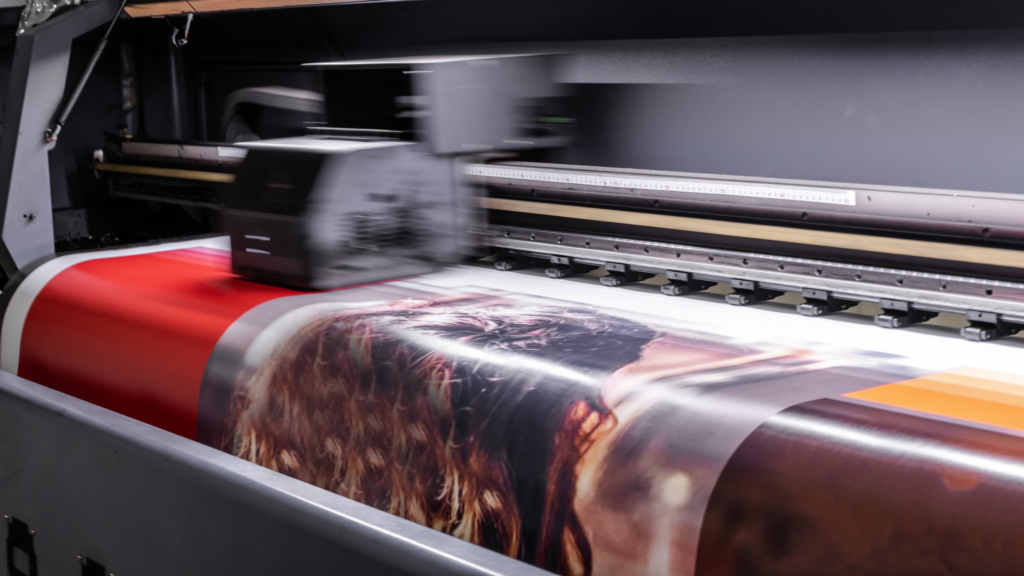
On Etsy, a print is a reproduced piece of art or photography sold as a physical product or printable digital file. Prints allow you to scale your work without selling originals.
Etsy’s main print categories are:
- Art prints. Printed copies of original art, like drawings or digital paintings, often used for wall art.
- Poster prints. Large-format designs made for framing or hanging, usually featuring typography, graphics, or minimalist styles.
- Photography prints. Printed versions of original photos, including landscapes, portraits, and lifestyle images.
- Canvas prints. Photos or artwork printed on stretched canvas for a premium look.
- Printable art. Digital files customers download and print themselves, with no shipping necessary.
- Custom prints. Personalized designs such as pet portraits, family illustrations, or name-based artwork.
- Fine art prints. High-quality reproductions printed with archival inks on premium paper, focused on long-term durability and detail.
How to sell prints on Etsy: 5 Steps to success
To sell prints on Etsy, follow these five simple steps: set up your store, create designs, choose and prep your products, price them correctly, and market your listings effectively.
Let’s break down each step so you can start with confidence.
Step 1: Set up an Etsy store
Etsy’s setup process is beginner-friendly and only takes a few minutes to complete. If you’re new to Etsy, our guide on how to sell on Etsy walks through the full process in more detail.
Head to Etsy.com/sell and click Get started. Create an Etsy account and follow the onboarding steps.
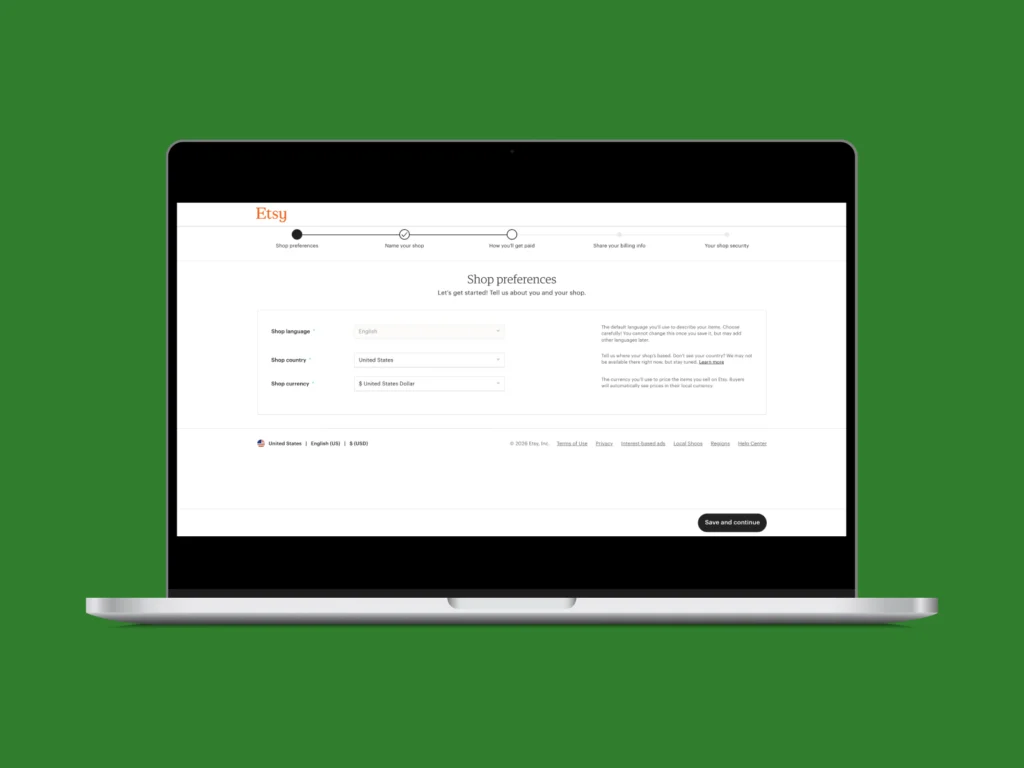
You’ll be asked to provide the following information:
- Shop preferences. Select your shop language, country, and currency.
- Shop name. Choose a unique name that reflects your brand and artistic style. See our article for tips on naming your Etsy shop.
- Payment methods. Add how you want to receive payouts from Etsy.
- Billing information. Enter your billing details and pay the one-time, non-refundable $15 shop setup fee. Etsy will also verify your identity.
- Shop security. Enable two-factor authentication to secure your account.
After completing these steps, your Etsy shop will be live and ready for product listings.
Pro tip
Your niche can shape how strong you start on Etsy. Picking a unique style helps attract the right potential customers and improve your shop’s visibility. Review the top-selling Etsy niches for inspiration and use tools like eRank to explore demand, keywords, and trends.
Step 2: Pick and price your products
Decide whether you want to sell digital prints, physical art prints, or both. Make sure to be clear about this in your product listing so customers know what they’re getting.
Streamline product setup with Printify
Want to sell physical prints but don’t want to do the heavy lifting? Starting a print-on-demand business on Etsy is much simpler with Printify.
Instead of managing inventory or production yourself, you can choose from our large Catalog of custom products and focus on creating designs and listings.


Sign up for free, add Printify as a production partner, and connect Etsy to Printify. Once integrated, you can create products and publish listings to your Etsy shop easily. When a customer orders your prints, we automatically handle fulfillment.
Read also
Printify merchants like Brett and Daisy, as well as Gina Van De Voorde, have found success selling through Etsy Print on Demand. Read their inspiring stories on our blog.
Price your prints for profit
Pricing your prints depends on quality, demand, and market conditions. You can check similar prints on the platform to set a competitive and profitable price.
When setting your prices, consider these key factors:
- Production costs. Include printing, shipping, and material costs for physical products.
- Market competition. Compare prices from other sellers offering similar styles or formats.
- Time and labor. Factor in the time spent creating and preparing your designs.
- Profit margin. Many Etsy sellers aim for around a 45% margin to cover costs and grow sustainably.
- Etsy fees. This is how much Etsy takes per sale:
- Listing fee:$0.20 per item, renewed every four months.
- Transaction fee:6.5% of the total sale price, including shipping.
- Payment processing fee: Varies by country. In the US, it’s 3% + $0.25 per order.
Pro tip
Need help deciding a price point? Use our Etsy calculator to review expenses and see your potential profit margin.
Create a listing
When creating a product listing, Etsy will ask you to complete these sections:
- About. Add your title, photos, and videos, then write product descriptions that clearly explain what the buyer receives and whether personalization is available.
- Price and inventory. Set your price, quantity, and SKU.
- Variations. Offer size or color options so buyers can choose what works best for them.
- Details. Select the right category and add attributes, materials, and tags. This section is key for Etsy SEO and visibility in search results.
- Processing and shipping. Set realistic processing times and clear shipping options if you’re selling physical art prints.
- Settings. Decide how your listing appears and how you’ll handle returns.
These factors help potential buyers understand your product and support better visibility on Etsy search.
Step 3: Create a design
A strong design is key to a successful Etsy shop, so take the time to get it right. Popular design tools like Adobe Photoshop, Procreate, or Canva can help you create artwork from scratch or polish photography prints before selling.
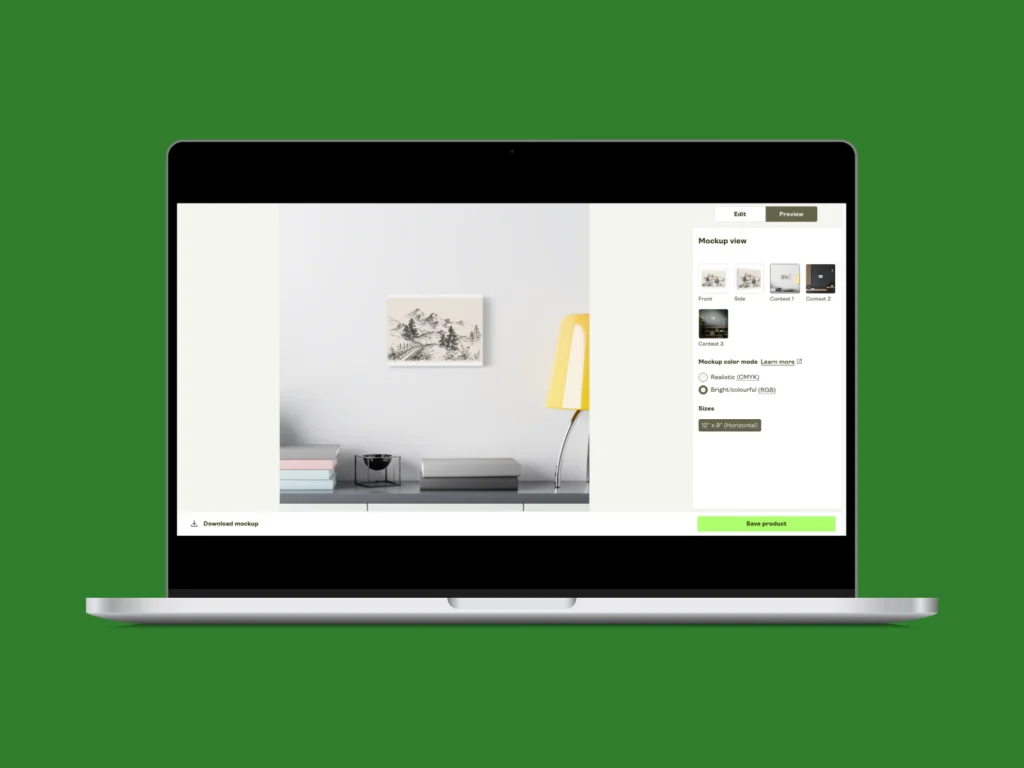
If you use Printify, you can use the free Product Creator to design or import artwork and apply it to printable items. The tool lets you preview your design on the final product, making sure everything looks right before you publish.
Follow these tips to create designs that look professional:
- Design with the final product in mind. Make sure your digital art fits the size, format, and orientation of the print you’re selling. Refer to our design guide for optimal results.
- Use high-resolution files. They ensure your print quality looks clear, especially for large formats.
- Keep it simple and readable. Clean designs perform better, particularly in Etsy search thumbnails.
- Match the style to your target market. This helps you attract the right buyers and build a strong brand.
- Test before listing. Preview your design on mockups or samples to check colors, spacing, and overall balance.
Read more
Step 4: Market your prints
Marketing art prints on Etsy helps your shop get discovered and grow sales. This is especially important for new Etsy shops still building an audience.
Here’s what you can do:
- Watch trends and demand. Look at bestselling art prints on Etsy and similar marketplaces to see what buyers are searching for. Use search engine optimization (SEO) tools like Semrush to find the right keywords and improve search rankings.
- Check other Etsy sellers. Review similar Etsy print shops’ listings, pricing, photos, and reviews to understand what works and what doesn’t.
- Know your target audience. Understand who your buyers are, what styles they like, and why they purchase. Connect with them through social media channels or forums to help you shape your designs and product descriptions.
- Use Etsy Ads. The platform’s built-in ad system can help you increase visibility for selected listings. Start with a small budget and test what works.
- Drive sales from other channels. If you have your own website, use it to share your brand story, link products, and send visitors to your Etsy shop.
Read our article on Etsy marketing for more tips and best practices.
Step 5: Learn and adjust

Selling printable art on Etsy is just the beginning. To grow your shop, you need to track results and adjust based on real data. Etsy Stats, the platform’s built-in analytics, can give you insights into how your store is performing and how shoppers interact with your prints.
In your Shop Manager, click Stats to access key insights, including:
- Metrics overview. Review visits, orders, conversion rate, and revenue for any time period to understand your overall performance.
- How shoppers found you. See where traffic comes from, whether Etsy ads, social media, or other marketing channels.
- Listings data. Check views, favorites, orders, and sales for each listing to see which prints perform best.
Use this information to spot patterns and improve your Etsy listings. Small adjustments to pricing, product descriptions, photos, or keywords can lead to higher customer satisfaction and more repeat business over time.
What are the bestselling prints on Etsy?

Knowing how to sell photo prints on Etsy is a great starting point, but choosing the right products matters just as much. Certain types of prints consistently sell well on Etsy because they match buyer interests and trends while offering strong visual appeal.
Here are some of the best prints to sell on Etsy, with store examples for ideas:
- Original artwork. DeanCrouserArt highlights wildlife through original watercolor paintings, offering buyers artwork with a unique artistic identity.
- Vintage posters. AtlastVintagePrints combines modern design with a vintage aesthetic, creating eye-catching art prints that stand out.
- Custom holiday prints. MusingsOfMeiMei sells hand-drawn designs that mix playful illustrations with text, adding a personal touch that buyers value.
- Large gallery art. FineArtBloc offers large-format art pieces for home decor, appealing to customers looking for bold digital prints.
- Abstract and unique patterns. Catherinemarionart features colorful fine art inspired by flora and fauna, attracting buyers who love expressive and artistic designs.
Use these customer favorites as inspiration, but focus on developing your own style. Original ideas paired with consistent quality are key to building a profitable Etsy print business.
Pro tip
Don’t limit yourself to canvas prints and digital downloads alone. Increase sales by placing your designs on other best-selling products on Etsy, such as wall art, journals, and apparel.
Sell prints on Etsy with Printify
Printify helps you start selling art prints on Etsy without upfront costs or complicated setup. You can create and sell high-quality prints using Print on Demand. Products are made only after a customer places an order – just design and publish, while we handle fulfillment.
Here’s why many sellers choose Printify for selling custom art prints on Etsy:
- No upfront costs. Launch your business without investing in inventory, equipment, or bulk orders.
- Easy Etsy integration. Connect your Etsy shop to Printify to automate orders and save time.
- Beginner-friendly tools. Use the Product Creator to design and customize a wide range of custom products, from custom canvases and posters to tapestries.
- Hands-off fulfillment. Printify’s global network of Print Providers handles printing, packaging, and shipping, allowing you to focus on growing your business.
This setup makes it easier to sell art online, test new ideas, and scale your Etsy shop at your own pace.
5 Etsy shop scaling strategies
To stand out on Etsy, your shop needs to attract the right customers, look professional, and build trust from the first visit.
1. Brand your Etsy shop clearly
Strong branding helps buyers recognize your work, understand your style, and remember your shop. A clear brand also increases trust, which is a big deal when customers are choosing between similar artistic prints from many artists on the platform.
Focus on these core branding elements:
- Shop visuals. Use a clean shop icon and a professional banner that reflects your artistic style. High-quality photos help you establish trust as a professional designer.
- Compelling bio and store info. Add a shop owner photo and write a compelling bio that explains who you are, what you create, and why your art is unique.
- Clear policies. Outline shipping times, returns, and custom requests clearly. Transparency supports excellent customer service and reduces confusion.
- Helpful FAQs. Answer common questions about materials, sizing, and care to build customer trust and deliver a positive buying experience.
2. Optimize your Etsy listings for search

Most buyers discover new shops through Etsy search. With strong Etsy listing optimization for prints, your products can reach more buyers who are already searching for what you sell.
Implement these best practices when adding listings to your Etsy store:
- Write clear product titles. Place the main keyword first and describe exactly what you’re selling, whether it’s wall art, artistic prints, posters, or photography prints.
- Use relevant keywords thoughtfully. Add relevant phrases in titles, tags, and product descriptions based on how buyers search. Advanced Etsy keyword research helps you refine listings as your shop grows.
- Add detailed descriptions. Explain sizing, materials, and use cases. This improves clarity, reduces buyer friction, and supports Etsy SEO.
- Upload high-quality photos. Display bright, sharp images that show the full print, close-up details, and scale. Photos strongly influence perceived value, just make sure they follow Etsy’s image guidelines.
- Follow Etsy search best practices. Simple Etsy search algorithm tips include using relevant tags, choosing the right category, and keeping listings updated to improve long-term visibility.
- Add videos to listings. This is especially important for sellers offering physical prints. Videos show how the product looks in real life, helping justify higher price points.
3. Price your prints realistically
Pricing is an important part of learning how to sell art prints on Etsy. The right pricing strategy helps cover your costs, influences buying decisions, and supports your long-term business goals.
Clear pricing also reduces confusion, helps avoid negative feedback, and makes it easier to sustainably grow your Etsy print business.
Keep these basics in mind:
- Account for all costs. Include production and shipping costs, Etsy fees for print sellers, and other variable costs like packaging.
- Price based on value. Strong branding and clear listings increase perceived value, allowing you to avoid underpricing.
- Plan for profit. Many sellers price consistently to build a steady income instead of chasing quick wins.
- Adjust by product type. Pricing for posters, photo prints, and standard art prints should vary based on size and format.
- Reduce risk with Print on Demand. Using a print-on-demand service helps you test a few options without upfront inventory or large investments.
4. Turn first-time buyers into a loyal customer base

Your first sales matter, but growing an Etsy print business requires building a loyal customer base. Most successful shops focus on repeat buyers, not just new traffic.
Encourage customers to come back with these approaches:
- Offer excellent customer service. Reply to messages quickly, be professional, and help customers feel confident before and after their purchase. Small interactions can make a big difference.
- Set clear expectations. Be upfront about processing times, shipping costs, and what the buyer will receive. Clear communication minimizes negative feedback.
- Handle issues professionally. Mistakes can happen, but strong Etsy customer complaint management and handling Etsy returns effectively help protect your shop’s reputation.
- Add personal touches. Thank-you messages, thoughtful packaging for physical prints, or clear download instructions for digital files can increase satisfaction and trust.
- Think long term. Happy buyers are more likely to leave positive reviews, recommend your shop, and support your business goals through repeat purchases.
5. Expand product formats strategically
Once your shop is up and running, adding new product formats is the next step to grow an Etsy print business. Offering the same artwork in a few options can help you reach more buyers and increase sales – without needing to create new designs.
Here’s how to scale without overcomplicating things:
- Reuse existing designs. Turn one artwork into multiple formats, such as wall art, tote bags, and greeting cards.
- Test formats that match demand. Some buyers prefer digital files, others want physical prints or premium formats. Trying a few options helps you see what performs best.
- Use POD to scale safely. No extra costs needed – add new products from Printify’s Catalog and adjust based on what sells.
- Align expansion with your goals. Choose formats that support your business goals, whether that’s higher margins or broader appeal.
One of the biggest Etsy seller success tips for scaling is to align with your overall brand and target audience. This makes it easier to keep things manageable while avoiding a messy shop with an unclear identity.
Navigating legalities and taxes for your Etsy print shop
Before scaling your shop, make sure you follow Etsy’s seller policies and basic legal requirements. Always sell artwork you own or have permission to use, and respect Etsy intellectual property rights.
Avoid copyrighted images, logos, or characters unless properly licensed.
If you work with a production partner, disclose it in your shop and use your own photos or videos to accurately represent your prints.
And don’t forget to review tax guidance for Etsy sellers. The platform may collect certain taxes automatically, but reporting income is still your responsibility.
Violating Etsy’s rules could result in your listings being taken down, your shop being temporarily suspended, or your account being permanently shut down.
Disclaimer
This content does not constitute legal advice. We strongly recommend doing your own research and consulting a qualified tax professional to ensure your business complies with local laws and regulations.
Advanced Etsy SEO for selling prints
Advanced Etsy SEO helps your prints reach more buyers. It improves how your listings appear in search results for relevant queries, putting your work in front of people most likely to buy them.
Etsy’s search algorithm looks at relevance, performance, and buyer behavior, so optimization is an ongoing process, not a one-time task.
Start by optimizing for buyer behavior, not just keywords. Test different main images to see which ones get more clicks, refine pricing or formats to improve conversion rates, and watch how often listings are favorited. These engagement signals tell Etsy that your prints are relevant and worth showing to more shoppers.
Use Etsy analytics to compare your top-performing and underperforming listings. Look for patterns in format, size, pricing, or presentation, then apply those insights across similar products. Gradually refreshing strong listings and retiring weak ones helps improve visibility without overhauling your entire Etsy store.
Frequently asked questions
Prints sell well on Etsy because home decor is one of the platform’s most popular categories, and wall art is a key part of it. Buyers regularly look for art prints, posters, and canvas prints to decorate their homes or give as gifts.
Both digital downloads and physical prints are popular on Etsy. Results depend on choosing the right niche, using Etsy SEO effectively, pricing your prints smartly, and showcasing them with high-quality photos.
Yes, it’s possible to make $10,000 a month on Etsy, but it takes time. Earnings vary widely based on niche, product quality, pricing, SEO, and how actively you manage your shop. Top-performing sellers reach five figures in monthly revenue by building strong demand, consistent traffic, and a base of repeat customers over time.
For a $1,000 sale, Etsy fees for US sellers usually total about $95 to $100, depending on the listing. Etsy charges a 6.5% transaction fee on the total sale price, which comes to $65. The payment processing fee in the US is 3% plus $0.25 per order, adding $30.25. There’s also a $0.20 listing fee for each item.
Combined, Etsy takes around $95.45 from a $1,000 sale.
The best way to sell prints on Etsy is to use a print-on-demand partner like Printify to reduce upfront risk. Simply choose from our vast Catalog and apply your artwork to products like posters, canvas prints, and more.
Annual revenue figures for Etsy sellers average around $35,000 per year, or about $2,900 per month, though actual earnings depend on your niche demand, pricing, fees, and marketing efforts.
Many shops earn a few hundred dollars to a couple of thousand dollars monthly when starting out or selling part-time. Established sellers in strong niches with consistent traffic generally make a few thousand dollars or more monthly, with some scaling to full-time incomes well above that.
Yes, selling prints on Etsy can be worth it if you choose the right niche and present your work well. Etsy has a large audience looking for art prints and home decor, and both digital and physical prints can perform well.
With strong listings, good photos, and consistent effort, selling prints can grow into a reliable side income or long-term business. Using a print-on-demand platform like Printify can also help you get started with lower risk and no upfront inventory.
Yes, you can sell prints on Etsy. The platform allows artists, designers, and photographers to sell both digital downloads and physical prints, including posters and canvas art. Just make sure to follow Etsy’s policies and be careful of copyright infringement.
To sell prints on Etsy, you need an Etsy account and high-quality artwork or photos. You’ll also need strong product listings with clear titles, descriptions, and images. For physical prints, you must arrange printing and shipping, or use a print-on-demand service like Printify to handle fulfillment.
Starting an art business on Etsy is easy, but getting consistent sales requires time. Since Etsy is popular for art, good marketing helps you get noticed and build a loyal customer base. With effort and patience, many artists build a solid income through the marketplace.
Turn your art into income on Etsy
Selling prints on Etsy is one of the most accessible ways to turn your art into income. A well-defined niche, clear listings, smart pricing, and consistent effort are key to building a successful shop that grows over time.
Whether you sell digital downloads, posters, or canvas prints, start simple and improve as you go. Printify simplifies selling physical prints by handling fulfillment without upfront costs, letting you focus on creation and growth.
Start your own Print on Demand business today
The post How to sell prints on Etsy: Complete guide (2026) appeared first on Printify.
