






Key Takeaways
- Lower your overhead costs and reinvest that capital into inventory or marketing to gain a competitive edge over retail businesses locked into expensive, long-term leases.
- Compare the total cost of monthly shared workspace rates against traditional Miami lease expenses to calculate the true financial benefits of flexible office models.
- Reduce the isolation of digital entrepreneurship by joining a shared workspace to build social boundaries between your home life and your business operations.
- Swap out the dining room table for a professional suite where you can film high-quality product content and meet suppliers in a space that matches your brand’s energy.
Something’s shifting in Miami’s business landscape.
Walk through Brickell or Wynwood these days, and you’ll notice a new kind of office dweller: online retail entrepreneurs who’ve traded traditional lease agreements for flexible, shared workspace solutions. It’s a trend that’s reshaping how e-commerce businesses operate in South Florida.
Image courtesy of: Mindspace Miami, Office Spaces
The E-Commerce Office Paradox
Here’s the thing about running an online retail business: you don’t need a storefront, but you still need somewhere to work. For years, Miami-based e-commerce entrepreneurs faced an awkward choice. Either work from home (hello, dining table turned shipping station) or commit to a traditional office lease that felt like overkill for a business that exists primarily in the digital realm.
Traditional office leases in Miami come with their own challenges. You’re looking at multi-year commitments, often three to five years minimum. Upfront costs can be brutal—first month, last month, security deposit, plus whatever you need to spend making the space actually functional. And let’s not forget that Miami’s commercial real estate isn’t exactly cheap, especially in desirable areas like Brickell, Coral Gables, or the Design District.
For an online retailer who might need space for a small team, storage for inventory samples, and occasional meeting rooms for vendor calls or content shoots, signing a five-year lease for 1,500 square feet always felt like bringing a sledgehammer to hang a picture frame.
Why Shared Offices Make Sense for E-Commerce
The shift to shared office spaces isn’t just about saving money—though that’s certainly part of it. It’s about matching your workspace to how online retail actually works.
Scale up or down without drama: Holiday season coming? Hire seasonal staff and grab a few more desks for a couple months. Slow period? Scale back. Traditional leases don’t work that way, but flexible office solutions do.
Separate work from home life: Anyone who’s tried running a Shopify store from their living room knows the struggle. There’s no off switch when your office is also where you watch Netflix. Having a dedicated workspace helps create actual boundaries, which turns out to be pretty important for mental health.
Professional space for the things that matter: You might not need an office every day, but when you’re shooting product photos, meeting with suppliers, or hosting a strategy session with your team, you want a space that looks legitimate. Shared offices provide that without the commitment.
Infrastructure without the headache: Fast internet isn’t optional in e-commerce—it’s the foundation of everything. Shared workspaces come with reliable connectivity, plus meeting rooms, printers, mail handling, and all the other stuff you’d otherwise need to figure out yourself.
Community and connections: One underrated benefit of shared workspaces is who else is there. Miami’s entrepreneurial community is surprisingly interconnected. That person working across from you might run a fulfillment company, know a great Facebook ads consultant, or be dealing with the exact same supplier headaches you are.
The Miami Advantage
Miami has always been a natural hub for online retail, especially for businesses that deal with Latin American markets. The time zone works, the cultural connections are strong, and the city has solid logistics infrastructure with the port and airport.
But Miami also has a reputation for being expensive. Housing costs have skyrocketed, and commercial real estate has followed suit. For online retailers, especially those in growth mode or bootstrapping their way up, traditional office costs can eat up cash flow that could be going toward inventory, marketing, or hiring.
Shared office spaces offer a way to maintain a Miami presence without the traditional Miami price tag. You get the address, the workspace, and the flexibility—without betting your next three years of revenue on a lease agreement.
What Flexible Office Solutions Actually Look Like
If you’re picturing those cramped, generic coworking spaces from the early 2010s, think again. Modern shared office solutions have evolved considerably, especially in a design-conscious city like Miami.
Take a place like Mindspace Miami, which offers office spaces to rent in Miami that are actually designed with some thought. Their Downtown Miami location puts you in the middle of everything—close to Brickell’s financial district, with easy access to highways and public transit.
The setup includes private offices for teams that need dedicated space, plus shared areas for collaboration or those days when you just need a change of scenery. Meeting rooms are equipped for video calls (crucial when your suppliers are in China or Brazil), and the design feels more boutique hotel than corporate office park.
Different locations cater to different vibes, too. Some lean into Miami’s art and design culture with bold aesthetics and creative energy. Others are more buttoned-up and professional, which works better if you’re running a serious operation and need to project that in client meetings.
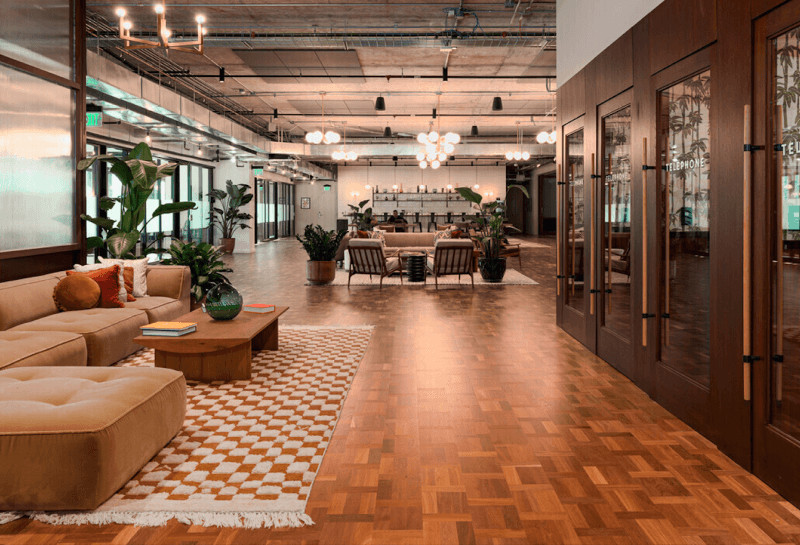
Image courtesy of Mindspace Miami, meeting rooms, Wynwood
The Real-World Math
Let’s talk numbers for a second, because this decision ultimately comes down to what makes financial sense.
A traditional office lease in a decent Miami location might run you $35-50 per square foot annually. For a modest 1,000-square-foot space, you’re looking at $3,000-4,000 per month before utilities, internet, furniture, or any buildout costs. If you need to create a conference room, install better lighting for product photography, or build storage, add thousands more to your upfront costs.
With a shared office space, you’re typically looking at a per-desk or per-office monthly rate that includes everything. For a small online retail team of three to five people, the monthly cost might land between $2,000-4,000 depending on the setup you choose, but with zero upfront buildout costs and no long-term commitment hanging over your head.
The difference isn’t just in the monthly burn rate—it’s in the flexibility. When you’re not locked into a multi-year lease, you can redirect capital toward the parts of your business that actually generate revenue. More inventory, better marketing, hiring that operations person you really need.
It’s Not Just Startups
Here’s what’s interesting: it’s not only new e-commerce ventures making this shift. Established online retailers that have been around for five or ten years are reassessing their office situations, too.
Some have been in traditional offices since their early days and are realizing they don’t actually use half the space they’re paying for. Others expanded during the pandemic boom and now need to rightsize. And plenty are simply tired of dealing with landlord issues, lease renewals, and the general overhead of maintaining a traditional office.
The flexibility appeals to businesses at every stage. Startups can launch without massive upfront costs. Growing companies can scale their space as they hire. And established businesses can optimize their real estate costs without sacrificing professionalism.
The Work Culture Element
There’s also something to be said for the work culture aspect of shared offices. Running an online retail business can be isolating, especially in the early stages when it’s just you and maybe one other person grinding it out.
Being in a shared workspace puts you around other people who are also building things. Not in a forced, “let’s all do trust falls” way, but in the organic way that happens when you’re getting coffee in the same kitchen or taking calls in adjacent phone booths.
You overhear conversations about logistics providers, compare notes on payment processors, or discover that someone three desks over has experience with the exact problem you’ve been stuck on. That kind of casual knowledge sharing doesn’t happen when you’re working from home or isolated in your own private office.
What This Means for Miami’s Business Scene
This shift toward flexible office solutions is part of a broader transformation in how Miami’s business community operates. The city has been diversifying beyond tourism and real estate, with tech, finance, and e-commerce playing bigger roles in the local economy.
Flexible workspaces support that diversification by lowering the barriers to entry for entrepreneurs and companies that want to establish a Miami presence without making massive real estate commitments. It’s easier to test whether Miami works for your business when you’re not signing a five-year lease on day one.
For online retailers specifically, Miami’s advantages—the Latin American connections, the logistics infrastructure, the growing tech ecosystem—become more accessible when office space isn’t such a heavy lift.
The Bottom Line
The move from traditional leasing to shared office spaces isn’t a temporary trend or a hack for cash-strapped startups. It’s a fundamental rethinking of what office space should be for businesses that operate primarily online.
For Miami’s online retail community, flexible workspaces solve real problems: they reduce fixed costs, provide professional environments when you need them, offer the infrastructure that e-commerce requires, and create opportunities for connection in what can otherwise be a pretty solitary industry.
Traditional office leases still make sense for some businesses—particularly larger companies with stable headcounts and specific spatial requirements. But for the growing number of Miami-based online retailers, the flexibility, cost savings, and community of shared workspaces are proving hard to beat.
The workspace landscape is changing because the way we do business is changing. And in Miami, where entrepreneurship and innovation have always been part of the city’s DNA, that evolution feels like a natural fit.
Frequently Asked Questions
Why are Miami e-commerce businesses moving away from traditional office leases?
Traditional leases often require a three to five-year commitment and high upfront costs that drain a startup’s cash flow. Shared workspaces allow online retailers to avoid these long-term risks while gaining a professional environment in prime locations like Brickell or Wynwood. This shift lets business owners spend their money on inventory and growth rather than empty square footage.
Are shared office spaces cheaper than renting a private commercial building in Miami?
While a monthly desk rate might seem high, it usually includes utilities, high-speed internet, furniture, and maintenance. When you add up the costs of a traditional 1,000-square-foot office in Miami, including the buildout and monthly bills, shared spaces often save small teams thousands of dollars. The real value is in the flexibility to scale your space up or down without paying for unused rooms.
Do coworking spaces provide enough privacy for established retail brands?
Many people think shared offices are just open rooms with loud talking, but modern solutions offer private, secure offices for growing teams. These setups give you a locked door for your staff while still allowing you to access communal amenities like high-end meeting rooms and kitchens. It is a hybrid model that provides the quiet of a traditional office with the networking perks of a community.
How do flexible workspaces help manage seasonal retail spikes during the holidays?
Online retailers often need extra hands during the busy holiday season but don’t want to pay for a giant office all year. Flexible workspace providers allow you to add desks for temporary staff for just a few months and then remove them when the rush ends. This agile approach to real estate ensures your workplace grows and shrinks in sync with your actual sales volume.
Can I handle physical product inventory in a shared Miami office space?
While these offices are not large-scale warehouses, they are excellent for managing inventory samples, prototypes, and small-batch shipping. Most locations offer mail handling services and secure areas for deliveries, making it easy to receive vendor samples without using your home address. This professionalizes your logistics chain and keeps your living space free from cardboard boxes.
What technical infrastructure should an e-commerce brand look for in a workspace?
Reliable, high-speed internet is the most critical foundation for any online business to prevent downtime during big launches or sales. You should also look for spaces that offer soundproof phone booths for vendor calls and modern conference rooms equipped for international video meetings. Having onsite printing and tech support can also save you hours of troubleshooting on your own.
Does a shared office help with networking in the South Florida market?
Miami is a major hub for international trade, and shared offices put you in the same room as logistics experts, marketing consultants, and other successful founders. These organic connections can lead to new supplier introductions or advice on navigating the local business scene. You get the benefit of a professional community that functions like a built-in brain trust for your retail brand.
How does moving to an office improve the mental health of solo entrepreneurs?
Working from home often blurs the line between personal time and business hours, leading to burnout for many Shopify or Amazon sellers. Having a physical destination for work helps you “switch off” when you return home, which is vital for long-term productivity and focus. A dedicated workspace also provides a sense of routine that many people find boosts their daily motivation.
What is the best way to choose between different Miami workspace locations?
You should choose a location based on the “vibe” that matches your brand energy and your daily commute. Areas like Downtown Miami offer a more corporate and financial feel, while Wynwood is better suited for creative brands focused on design and fashion. Visiting a few spots for a day pass is an actionable way to see if the environment inspires your team before signing a monthly agreement.
What happens if my e-commerce business outgrows a shared office?
One of the best follow-up options for a growing brand is to move from a few dedicated desks to a full private suite within the same building. This allows you to maintain your business address and professional network while gaining more square footage for a larger staff. Because there are no multi-year contracts, you can transition to a traditional warehouse or headquarters only when your revenue truly supports it.
