





Key Takeaways
- Differentiate your feet content with a recognizable style and reliable posting themes so buyers see you as “hard to replace” and you can charge more than generic sellers.
- Build pricing power by repeating this simple rule: create real demand, add clear scarcity through consistency, and reduce buyer risk with strong proof and safe payments.
- Protect your peace by using clear boundaries and a trust-forward selling setup (like verified profiles and secure payments) so you can create without feeling exposed or stressed.
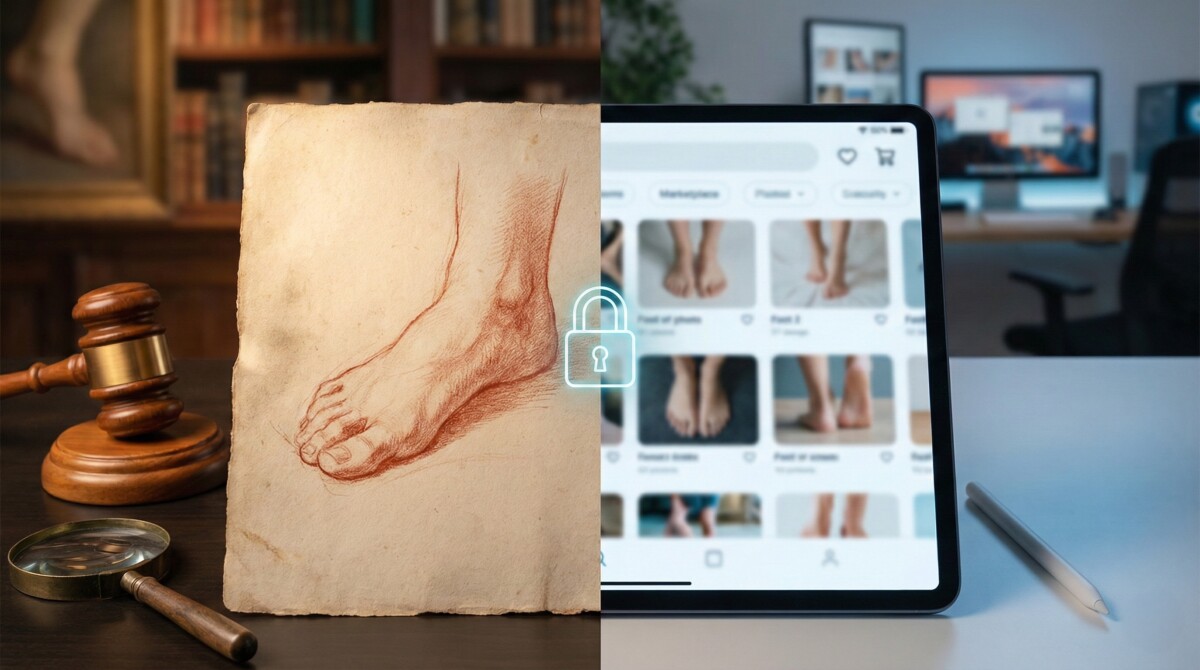
- Use the Michelangelo $27.2M foot-sketch story as a creative trigger to treat “foot photos” like a collectible catalog, where quality, proof, and a signature look matter more than volume.
A single foot, drawn in red chalk more than 500 years ago, just pulled $27.2 million at Christie’s in New York in early February 2026.
The bidding dragged on for about 45 minutes, with offers coming in from the room, phones, and online. That’s not just an art headline, it’s a clean business lesson: people pay for foot-focused imagery when it feels rare, high-quality, and safe to buy.
This matters if you’re a creator thinking about selling feet pictures, especially if your first goal is a practical one like reaching your first $500. The fine-art market and the creator market are different worlds, but they run on the same fuel: demand, scarcity, and trust.
That trust piece is where platforms matter. FeetFinder positions itself as a security-forward marketplace, with seller ID verification and protections like encrypted data handling, PCI-compliant payments, and firewall defenses. In the art world, authentication and provenance reduce risk. In creator commerce, platform trust does the same job.
What The Michelangelo Sale Reveals About Demand, Scarcity, And Trust
Buyers pay more when three things line up: real demand, real scarcity, and strong proof it’s legitimate. Christie’s sale is a perfect snapshot. A newly identified Michelangelo foot study, drawn in red chalk around 1511 to 1512, sold for $27.2M on February 5, 2026. It reportedly beat the artist’s prior auction record (set in 2022) and landed far above the pre-sale estimate.
The subject was a right foot study connected to the Sistine Chapel ceiling, tied to the Libyan Sibyl figure. What made it explode in value was not “it’s a foot.” It was the combination of rarity (few comparable works exist in private hands), quality (the drawing shows careful revisions and life-study precision), and confidence (expert validation and documented history).
That’s the business parallel: creators earn more when buyers feel they’re purchasing something distinctive, well-made, and low-risk to buy.
For anyone building a feet picture business, the takeaway is simple. Pricing power isn’t just about content. It’s about certainty. In art, that certainty comes from authentication. In creator marketplaces, it comes from verification, policies, and safe payments.
Scarcity isn’t always “rare,” it can be “hard to replace”
Creator scarcity is usually built, not discovered. You don’t need to hide content or act exclusive. You need to make your work less interchangeable.
In practice, “hard to replace” looks like consistency that buyers can recognize in one second:
- A signature nail look: The same polish style (glossy neutrals, bold reds, minimalist art) becomes your visual stamp.
- A weekly theme: “Socks Sunday” or “Pedicure Fridays” trains repeat buyers to check back.
- A recognizable setup that protects privacy: A clean backdrop, a specific chair, a soft rug, a lighting style, all recognizable without revealing identity.
This is the quiet difference between content that sells once and a catalog that sells for months. Scarcity comes from owning a lane, not from posting less.
If you want a broader, step-by-step foundation for 2026, start with this guide.
Trust is the hidden price multiplier
Trust reduces friction. Friction kills sales.
In the art world, provenance lowers the fear of a fake. In online creator commerce, the same fear shows up as: “Will I get what I paid for?” and “Is this transaction safe?”
FeetFinder’s trust signals are designed to answer those questions. Commonly cited protections include seller ID checks, encrypted data handling, and PCI-compliant payment processing (so card data is handled through compliant processors rather than informal transfers). The platform also emphasizes security infrastructure like firewalls and keeps transactions on-platform to reduce scam attempts.
For creators, trust is not a vague “brand” concept. It becomes daily operational choices:
Clear boundaries, on-platform payment, clean listings, reliable delivery times, and consistent communication. When buyers feel safe, they buy faster, and they return more often.
For more on safety operations and privacy habits, this is a strong companion read: https://ecommercefastlane.com/is-selling-feet-pics-dangerous
The Market Opportunity in Feet Pictures in 2026
The feet picture market in 2026 is not just internet noise. Platform data points to steady buyer demand and repeat purchasing. FeetFinder reports 8 million verified users, 12.5 million photos sold, and $100M+ in total buyer spend as of 2026. Third-party measurements also show substantial attention, with 3.43 million visits in December 2025 and long average time on site (over 8 minutes), a sign that buyers aren’t bouncing instantly.
Those numbers don’t guarantee your income, but they do confirm something important: buyers are already here, already spending, already purchasing at scale.
Earnings vary widely. New sellers often start with a few hundred dollars, then grow with better content, tighter niches, and stronger customer service. Established creators can earn thousands, and top performers can push well beyond that. The opportunity is real, but it rewards routine more than luck.
Pricing ranges shift by niche and quality. Across the market, single-photo listings often sit in the low-to-mid price range, while bundles and short clips sell higher. Custom work typically commands the best revenue per order, because it’s tailored and time-bound.
A helpful market-wide overview of buyer behavior and category demand lives here: https://ecommercefastlane.com/why-feet-pics-are-selling-like-hotcakes-now/
Why foot-only platforms can outperform general creator platforms
Foot-only marketplaces concentrate intent. That matters because “attention” isn’t the same as “buyers.” On broad creator platforms, most of your work is marketing, not fulfillment. You spend time pulling people from social media, warming them up, and pushing them toward a purchase.
On a niche platform, discovery is built in. Buyers arrive already looking for a specific product: foot-focused photos and videos. That’s closer to selling inside a specialty store than shouting on a street corner.
The trade-off is that niche platforms reward clear positioning. If your profile looks unfocused, buyers keep scrolling. If it looks like a clean storefront with a theme, a menu, and strong previews, you convert more of your traffic without paying for ads.
What buyers are really paying for: clarity, quality, and reliability
The Michelangelo sale wasn’t about a foot alone. It was about a subject presented with clarity, quality, and proof. Buyers in the feet picture market pay for the same ingredients, just at a different price scale.
Clarity is the promise you make and keep. Your titles, categories, and preview images should match what you sell.
Quality is lighting, sharpness, and composition. A phone camera can do it, but the setup must be clean and consistent.
Reliability is delivery time, messaging, and how you handle custom requests.
A buyer who trusts your process isn’t just buying one photo. They’re buying the confidence that the next order will be smooth too.
How To Apply The “Fine Art” Lesson To Your Feet Pic Business
You don’t need to be rare in the world. You need to be the clear first choice inside a small niche. That’s how creators hit $500, then $1,500, then beyond, without turning their lives into nonstop promotion.
Think in stages.
If you’re exploring, your goal is a safe setup and your first listings.
If you’re in the first 30 days, your goal is consistency and fast learning loops.
If you’re scaling, your goal is systems: batching, series, and price testing.
Here’s a simple “do this, not that” guide that keeps expectations realistic:
- Do pick one primary theme, not twelve random styles at once.
- Do keep payments on secure rails, not in DMs with off-platform links.
- Do post on a schedule, not in bursts followed by silence.
- Do raise prices when reviews and repeat buyers appear, not because you feel bored.
For a deeper overview of how buying and selling works end-to-end, use: https://ecommercefastlane.com/the-ultimate-guide-to-buying-and-selling-feet-pics-online/
Build your own “provenance,” a profile that proves you’re real and safe to buy from
Provenance, in creator terms, is a profile that removes doubt.
A credibility setup that protects identity can be simple:
- A consistent username and visual style across your listings
- A short “menu” (what you sell, what you don’t, typical delivery times)
- Watermarked previews (light watermark, not a giant one across everything)
- Clean backgrounds with no location clues (mail, reflections, family photos, street views)
- Platform verification where available (FeetFinder’s seller ID verification is designed to reduce fake accounts)
If privacy is your top concern, treat backgrounds like a mirror. If it can reveal a name, a city, a workplace, or a routine, remove it.
Price like a market, not a guess: a simple ladder from starter sets to premium customs
Pricing works best as a ladder, because buyers have different budgets and different urgency. You want an entry option, a value option, and a premium option.
Here’s a simple ladder many creators use as a starting structure (adjust to your niche and effort):
| Offer type | What it includes | Why it sells |
|---|---|---|
| Starter singles | 1 to 3 strong photos | Low-risk first purchase |
| Bundles | 10 to 25 photos in a theme | Higher cart total, better value |
| Short clips | 10 to 30 seconds | More “real,” higher perceived value |
| Premium customs | Specific theme and delivery window | Highest revenue per order |
Raise prices using proof, not vibes: stronger reviews, repeat buyers, faster turnaround, better series concepts.
Testing stays simple: change one variable per week (cover image, theme, bundle size, or price), then track what moved.
Create scarcity the ethical way: limited drops, themed series, and seasonal offers
Ethical scarcity isn’t about tricks. It’s about packaging.
Limited drops work because they create a clean decision window. The key is to stay reliable, even while running “limited” offers.
Three scarcity tactics that don’t damage trust:
- Themed series: “High heels week,” “socks week,” “fresh pedicure set.” (Common categories on FeetFinder include heels, soles, nail polish, socks, lotion looks, pedicure styles, and nylons.)
- Limited-time bundles: A weekend bundle that expires Sunday night.
- Seasonal sets: Holiday colors, summer sandals, winter cozy socks.
A beginner content calendar can be just 3 posts per week. Business builders often batch once, then post daily. The difference is not talent, it’s inventory management.

Common Mistakes That Cap Earnings
Most income stalls come from three causes: weak positioning, inconsistent posting, and avoidable safety mistakes. Fixing those doesn’t require a new personality or a bigger audience. It requires tighter operations.
The safest growth path also protects your future income. One rushed sale isn’t worth a privacy slip-up or a chargeback headache. Platforms that emphasize encrypted handling, PCI-compliant payments, and on-platform messaging make it easier to stay disciplined, because the process is built for secure transactions.
Mixing niches and confusing buyers
A buyer should understand your “thing” in five seconds. When a profile swings from high heels to dirty-feet themes to random outdoors shots with no pattern, it reads like a thrift store bin. People keep walking.
A simple niche-picking method:
Choose 1 main theme, 2 supporting themes, and a short boundary list.
Example: Main theme: nail polish. Supporting: socks and heels. Boundaries: no face, no location clues, no off-platform payments. This keeps your catalog coherent and makes you easier to buy from.
Trading privacy for speed
Speed is tempting when money’s tight. It’s also where new sellers get hurt.
Common risky moves include sharing personal details, accepting payments outside secure systems, and shooting with identifying backgrounds. Safer alternatives are boring, and that’s why they work:
Keep messaging on-platform, use neutral backdrops, strip photo metadata when possible, watermark previews, and keep financial transactions inside PCI-compliant flows. Trust is worth more than one fast sale, because trust is what creates repeat customers.
FAQs creators ask about selling feet pictures in 2026
Can you really make money selling feet pictures?
Yes. Large sales volume on niche platforms shows real buyer demand, but income depends on consistency, content quality, niche fit, and reliability.
What does the Michelangelo foot sketch sale have to do with creator pricing?
It shows the same pricing engine: scarcity, quality, and proof. Buyers pay more when the product feels distinct and safe to purchase.
Is FeetFinder legit for sellers?
FeetFinder reports millions of verified users and large sales volume. It also emphasizes seller ID checks and secure, PCI-compliant payments.
Do you have to show your face to sell feet content?
No. Many creators build strong brands with foot-only framing, consistent sets, and clean backgrounds that don’t reveal identity.
What’s a realistic first goal for beginners?
A practical target is a first $100 to $500 from starter listings and bundles, while learning what themes attract repeat buyers.
Should you accept off-platform payments?
Avoid it. Off-platform payments increase scam risk and remove protections. Staying on secure payment rails protects both sides.
What kinds of feet pictures sell best?
Themes tend to outperform random posts. Common categories include heels, soles, nail polish, socks, pedicure looks, and nylons.
How often should you post in month one?
Aim for 3 posts per week if you’re starting. If you can batch content, daily posting can help testing and visibility.
Conclusion
The Michelangelo sale is a loud reminder that price comes from demand plus scarcity plus proof. In 2026, the modern feet picture market shows real buyer activity, and a focused marketplace can reward creators who treat trust and consistency like part of the product. If you’re exploring, pick a niche and build a trust-first profile. If you’re in your first 30 days, post on a schedule and test pricing one change at a time. If you’re scaling, build series, raise rates with reviews, and protect your operation like it’s a real business, because it is.
