






Key Takeaways
- Consolidate your production with a multi-material partner to launch products faster and gain a significant edge over competitors using fragmented suppliers.
- Follow a structured transition plan by starting with a small pilot project to test a new manufacturer before moving your entire product line.
- Reduce your daily stress and coordination workload by managing one reliable manufacturing relationship instead of juggling dozens of different global vendors.
- Combine different sustainable materials like bamboo and glass into a single product to create unique designs that single-material factories simply cannot build.
The ecommerce landscape for sustainable products has reached a critical inflection point.
Consumer demand for environmentally responsible products continues to grow, with 74% of consumers now saying environmental concerns influence their purchasing decisions. Yet many brands struggle to scale their sustainable product lines efficiently. The bottleneck often isn’t demand or design capabilities. It’s manufacturing strategy.
For brands building sustainable product lines, the choice of manufacturing partner fundamentally shapes what’s possible. Working with single-material specialists might seem logical initially, but this approach creates hidden constraints that become increasingly expensive as your product catalog expands. Sustainable product manufacturers with multi-material capabilities offer a different path that enables faster innovation, stronger brand coherence, and more favorable economics.
The Hidden Costs of Fragmented Manufacturing
Many ecommerce brands piece together their sustainable product lines by working with multiple single-material manufacturers. One factory for bamboo products, another for glass, a third for stainless steel. This fragmented approach creates compounding problems.
Brand Inconsistency Across Materials
When your wooden components come from Vietnam, your glass from China, and your silicone from Taiwan, maintaining consistent quality standards becomes difficult. Each manufacturer operates with different interpretations of sustainability, different quality control protocols, and different aesthetic sensibilities.
Common disconnects include:
- Material quality variations: FSC-certified bamboo from different suppliers can have completely different grain patterns and finishes, making products look mismatched
- Color inconsistency: Natural wooden lids shift between honey and walnut tones depending on batch, while neutral silicone components vary from cream to grey
- Fit and finish problems: Tolerances that work individually create frustrating experiences when components need to work together
- Certification confusion: Some suppliers have genuine third-party verification of sustainability claims, others rely on self-certification
These inconsistencies directly impact customer perception and erode trust in your brand’s attention to detail.
MOQ Nightmares and Cash Flow Pressure
Single-material manufacturers typically require higher minimum order quantities to justify production runs. When working with four different suppliers, you’re meeting four separate MOQ thresholds, not placing one consolidated order.
For example, to launch one product combining bamboo, glass, silicone, and stainless steel with typical MOQs of 500-1,500 units per material, you might need 3,500 units of inventory before validating customer demand. That’s substantial capital tied up in untested products.
Coordination Overhead That Scales Poorly
Managing multiple manufacturing relationships consumes significant time and creates constant friction:
- Different time zones and language barriers mean simple questions take days to resolve
- Each supplier requires separate quality inspection protocols
- Timeline coordination becomes a nightmare when glass arrives in Week 2, bamboo lids ship in Week 7, and silicone rings are delayed in customs
- When components don’t work together, you’re mediating between suppliers who each insist their piece is correct
- Documentation multiplies across suppliers with separate purchase orders, invoices, shipping documents, and compliance certificates
This coordination overhead scales exponentially, not linearly, as you add suppliers.
What Multi-Material Manufacturing Actually Delivers
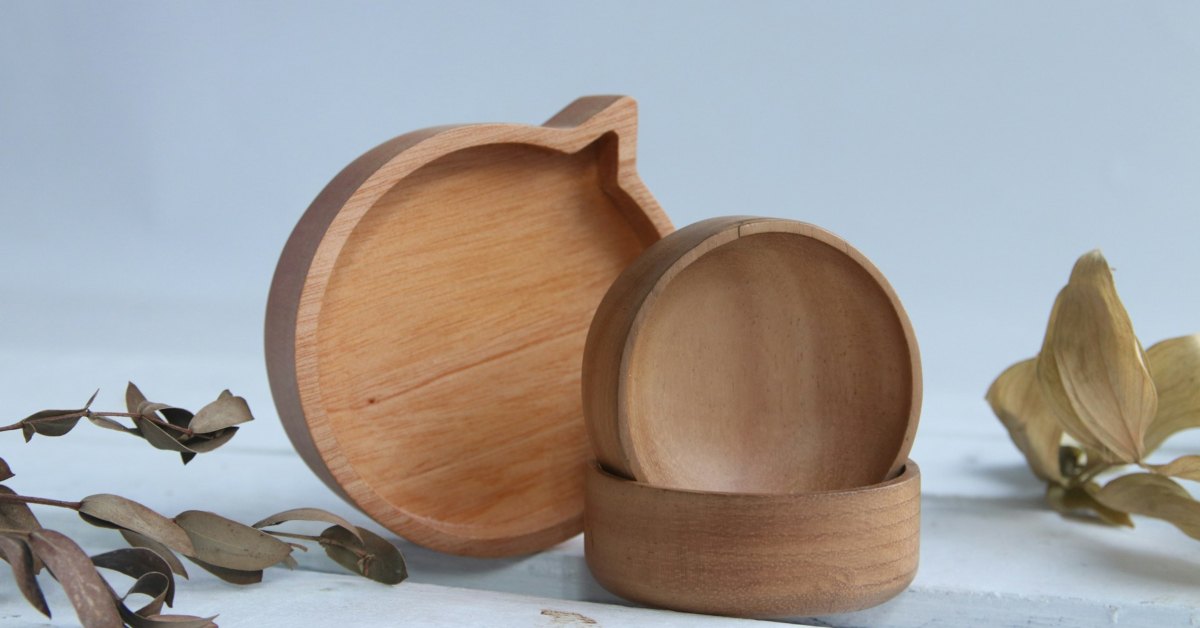
Multi-material manufacturing refers to production facilities capable of working with diverse materials like wood, glass, bioplastic, silicone, and stainless steel within coordinated operations. This goes beyond having different departments under one roof. It requires unified design systems, synchronized production planning, and comprehensive quality standards that span material types.
The most capable operations can design a product combining FSC-certified wood, borosilicate glass, and food-grade silicone, then produce all components on aligned timelines with matching aesthetic standards.
Systems-Level Engineering Expertise
Manufacturers who regularly work across materials develop deep knowledge of how different materials interact and perform together. They understand:
- Which adhesives bond bamboo to silicone effectively at different temperatures
- How to design wooden lids that maintain airtight seals with glass containers despite thermal expansion differences
- How to create stainless steel elements that don’t scratch softer materials
- Which material combinations meet food-contact regulations across different jurisdictions
This systems-level thinking matters enormously for product quality. A wood-only manufacturer might create a beautiful bamboo lid, but they won’t necessarily understand borosilicate glass’s thermal properties or food-safety requirements for silicone gaskets.
Strategic Material Selection for Each Component
Multi-material capabilities enable more thoughtful product design. Instead of forcing a single material into every application, you can choose the most appropriate sustainable material for each component based on functionality and lifecycle impact.
A travel coffee mug might optimize each element:
- Outer body: Bamboo or recycled stainless steel for durability and insulation
- Interior lining: Food-grade glass for taste neutrality and cleaning ease
- Lid structure: Bioplastic with silicone seal for rigidity and flexibility
- Base: Stainless steel for stability and durability
Each component uses the most appropriate sustainable material while all materials meet aligned environmental standards and work together seamlessly.
Business Benefits of Manufacturing Consolidation
Consolidating production with a multi-material manufacturing partner creates strategic advantages beyond operational efficiencies.
Enhanced Negotiating Position
When you consolidate production volume with one manufacturing partner, your total order value becomes much more significant. Instead of being a small client ordering 500 bamboo items, you become a strategic partner ordering across multiple product categories.
This relationship depth translates into:
- Better pricing through volume discounts across your entire product range
- More flexible MOQs with reduced minimums or mixed SKUs within production runs
- Priority treatment with faster response times and preferential production scheduling
- Improved payment terms that help cash flow
- Reduced shipping costs through consolidated shipments
Consolidation often generates cost savings through operational efficiencies, reduced logistics complexity, and relationship-based pricing.
Accelerated Product Development
Speed to market provides significant competitive advantage in sustainable products, where trends evolve quickly. Multi-material manufacturers dramatically accelerate development timelines through:
- Rapid prototyping across different material combinations
- Design feedback on manufacturability and cost implications from teams who understand all materials
- Parallel development of multiple products without fragmenting attention
- Reduced approval cycles with one technical review instead of separate reviews from multiple manufacturers
- Faster sampling with complete products rather than assembled components from different sources
What might take six months when coordinating multiple manufacturers can often be accomplished in weeks with an integrated partner.
Scalability Without Proportional Complexity
As successful brands grow, product catalogs typically expand rapidly. A brand launching with five SKUs often has 30-50 SKUs within three years. Multi-material capabilities mean scaling your catalog without proportionally scaling your supplier base.
This matters tremendously for lean operations. Managing 50 products across two manufacturers versus 50 products across 15 manufacturers represents entirely different operational models and staffing requirements.
Building Cohesive Product Collections
Successful sustainable brands use multi-material capabilities to create product families with unified stories. Instead of isolated items, they develop collections where materials complement each other functionally and aesthetically.
A kitchen storage collection might include:
- Glass containers with bamboo lids and silicone sealing rings
- Consistent FSC-certified bamboo across all wooden components with identical finishing
- Same high-grade borosilicate glass throughout the line
- Silicone components in a coordinated color palette
- Standardized lid sizes that work across different container volumes
This cohesion creates practical customer benefits. When containers share compatible lid designs, customers can mix and match. When all pieces meet identical temperature tolerances, customers know they can safely move any container from freezer to microwave.
Evaluating Multi-Material Manufacturing Partners
Not all manufacturers claiming multi-material capabilities deliver equivalent value. Understanding the difference is essential for making informed partnership decisions.
Critical Questions to Ask
Certifications and Compliance
- What third-party certifications do they hold for each material type?
- Can they provide FSC certification for wood, FDA food-contact approval for plastics and silicone?
- What documentation exists for sustainability claims?
Production Integration
- Which materials do they manufacture in-house versus source from partners?
- How do they coordinate production timelines across different materials?
- Can they deliver complete, ready-to-ship products?
Design Support
- Do they provide material selection guidance based on application requirements?
- Can they supply material samples before committing to full production?
- Will they help optimize designs for manufacturability and cost?
Sustainability Practices
- What waste management programs are in place?
- Do they use renewable energy?
- How do they measure and reduce carbon footprint?
- Are they transparent about environmental impact?
Red Flags to Watch
Certain responses should raise concerns:
- Vague answers about certifications or inability to provide documentation quickly
- Reluctance to discuss specific production processes
- Dismissive responses to sustainability questions beyond basic material sourcing
- Lack of references from similar brands
- Communication inconsistencies or difficulty getting timely responses
The best manufacturing partners are transparent about capabilities and limitations. They’ll tell you honestly when something isn’t feasible rather than overpromising.
Making the Transition Successfully
If you’re currently working with single-material manufacturers, a structured approach minimizes disruption while maximizing benefits.
Start with Assessment
Before approaching new manufacturing partners, thoroughly understand your current situation:
- Map every material used across your product line
- Document all current manufacturer relationships
- Calculate true total costs including shipping, coordination overhead, and inventory carrying costs
- Identify which products could be improved with multi-material optimization
- Define your product vision for the next 2-3 years
Execute a Pilot Project
You don’t need to switch all production immediately. Many brands begin by developing one new product with a kitchenware products manufacturer offering multi-material capabilities while maintaining existing relationships for current products.
Choose a pilot project that genuinely benefits from multi-material capabilities. Set clear success metrics beyond cost, including timeline, quality, and communication. Use the pilot to establish working rhythms with minimal business risk.
Plan Gradual Transition
Once a pilot validates the partnership, plan a measured transition:
- Prioritize transitioning products where multi-material capabilities provide the most benefit
- Maintain buffer inventory during transitions to avoid stockouts
- Communicate timeline expectations clearly
- Document learnings to streamline subsequent transitions
- Build in flexibility for unexpected challenges
Gradual transitions maintain business continuity while capturing benefits incrementally.
The Strategic Imperative
As consumer expectations evolve and competitive pressure intensifies in sustainable products, manufacturing capabilities increasingly determine what brands can achieve. The flexibility to innovate across materials, develop products rapidly, and scale efficiently becomes competitive infrastructure.
Brands excelling in sustainable products aren’t just selling eco-friendly items. They’re building comprehensive systems that deliver environmental benefits, superior functionality, and cohesive brand experiences. Multi-material manufacturing capabilities increasingly represent essential foundation for this holistic approach.
For ecommerce brands serious about building sustainable product lines capable of growth and adaptation, manufacturing partnerships shape strategic possibilities. Choosing partners with multi-material capabilities isn’t merely a logistics decision. It’s foundational infrastructure that influences product development velocity, brand cohesion, profit margins, and competitive positioning.
Whether you’re developing innovative products using sustainable plastic manufacturing with corn-based bioplastics or creating collections that span multiple sustainable materials, the right manufacturing partner becomes a strategic collaborator. They don’t just execute your designs. They help you develop products that resonate with conscious consumers while establishing foundations for sustainable growth.
