





The right packaging supplies can make or break a 3PL’s ability to deliver for clients.
When eCommerce brands evaluate potential fulfilment partners, they’re not just looking at warehouse space and shipping rates—they’re assessing whether a 3PL has the packaging infrastructure to protect their products, represent their brand, and adapt to different order types. For 3PLs, maintaining relationships with a reliable wholesale packaging supplier and stocking the right range of materials isn’t optional—it’s crucial for competitive service delivery and client retention in today’s demanding eCommerce environment.
Building a Strong Foundation: The Outer Shell
Outer packaging forms the backbone of any professional fulfilment operation. A capable 3PL offers a structured range of carton sizes so orders can be right-sized, rather than forcing products into oversized boxes.
- Single-wall cartons are suitable for lighter goods, while double-wall and heavy-duty cartons are designed for bulky, fragile, or higher-value items.
- Mailer boxes play an important role for small eCommerce orders where both protection and presentation matter.
- Satchels support soft goods and help keep freight costs down.
- Heavy-duty cartons should always be available for awkward, dense, or mixed orders.
For eCommerce brands, this signals care and consistency. For 3PLs, it improves packing speed, reduces void fill, lowers freight charges, and limits damage-related rework.
It’s What’s Inside That Counts: Protection and Fill
Protective and inner materials are where packaging decisions most clearly affect customer experience. A professional 3PL stocks a balanced mix, including bubble wrap, kraft paper, honeycomb protection, padded mailers, and several void fill options such as paper, air pillows, or peanuts.
Dividers are critical for multi-item orders, particularly when products vary in size or fragility. Transparent poly bags protect garments and small items from dust, moisture, and handling marks.
The aim is flexibility, enabling packers to tailor protection to the product instead of relying on a single material.
For eCommerce brands, this reduces breakages, returns, and poor reviews. For 3PLs, it cuts claims, rework, and ongoing friction with clients.
The Unsung Heroes: Daily Packing Bench Essentials
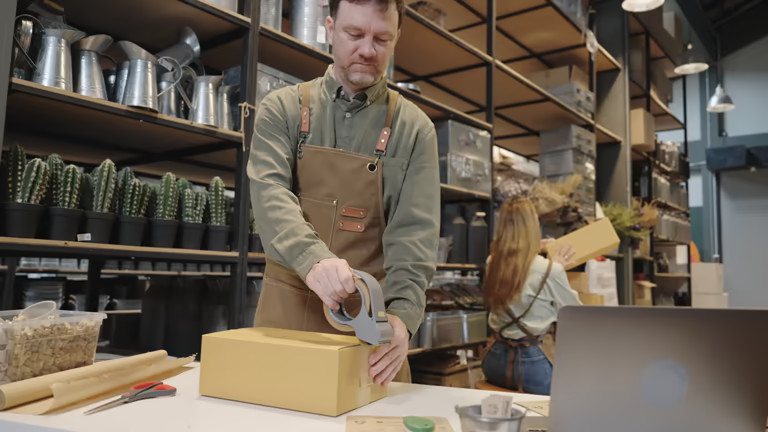
Every packing bench relies on simple supplies that are reliable, consistent, and easy to use. Quality packing tape with predictable adhesion saves time and prevents cartons from opening in transit.
Well-designed tape dispensers reduce strain and speed up repetitive tasks. Fragile labels, shipping labels, and thermal label rolls must be compatible with warehouse systems and carrier requirements.
Pallet wrap, stretch film, and strapping are essential for wholesale orders, oversized shipments, and B2B freight. When these basics run low or vary in quality, productivity drops immediately. A strong 3PL standardises these essentials across all workstations.
For brands, this results in secure, tidy shipments. For operators, it supports safety, steady throughput, and smoother performance during peak periods.
Fit for Purpose: Packaging That Matches the Product
Different products demand different packaging approaches, and experienced 3PLs plan for this during onboarding, not after problems appear.
- Fashion brands typically rely on poly bags, satchels, and lightweight cartons to manage costs while maintaining presentation.
- Homewares and decor require double wall cartons, extra cushioning, and careful weight distribution to prevent breakage.
- Beauty products and liquids need sealed inner packaging, leak protection, and absorbent materials to contain spills.
- Bulk B2B freight introduces pallets, corner boards, strapping, and load stability concerns.
Treating all products the same leads to damage and inefficiency. For brands, tailored packaging shows category understanding. For 3PLs, it reduces errors, returns, and avoidable operational disruption.
From Functional to Branded: Adding Value Where It Counts
While plain, unbranded packaging works well for keeping costs down, many modern brands want their personality to shine through. A flexible 3PL offers a balance between standard brown boxes and opportunities for customisation. This can include applying branded tape or distinct stickers to the outside of a neutral carton.
Inside, the addition of custom tissue paper or marketing inserts helps create a premium unboxing moment. Some clients may even supply fully printed cartons for a complete brand takeover.
Providing these value-added services enables a logistics partner to support a client’s marketing initiatives while maintaining the operational efficiency of a typical pick-and-pack environment.
Supply Control and Consistency Behind the Scenes
Effective packaging programs rely on well-managed supplies behind the scenes. Professional 3PLs uphold consistent quality standards, maintain dependable supplier relationships, and keep buffer stock to manage seasonal fluctuations.
Packaging range reviews should be carried out regularly to ensure they match client volumes and product updates. Establishing clear substitution rules helps prevent surprises and protects brand standards.
Cost transparency is important because it helps clients understand packaging charges and the trade-offs involved.
For eCommerce brands, it builds predictability and trust. For 3PLs, maintaining disciplined supply control decreases downtime, prevents rushed purchases, and safeguards margins that can quickly diminish if packaging isn’t well managed.
In conclusion, packaging and shipping supplies reveal how a 3PL truly operates. A strong, flexible range — from mailers and boxes to 4×6 thermal labels — supports efficiency, protects products, and adapts to different client needs. For 3PLs, it provides a clear benchmark for identifying gaps and raising service standards. For eCommerce brands, it offers a practical checklist when choosing a fulfillment partner. When packaging is treated as a capability rather than a commodity, partnerships run more smoothly, costs stay under control, and long-term growth becomes far more achievable.
