




Here’s the scenario every retail merchant knows too well: It’s Saturday afternoon, your store is packed with holiday shoppers, the line is eight people deep, and your Bluetooth barcode scanner just…stops working.
You’re frantically trying to reconnect it while customers shift impatiently, checking their watches. Or worse—your receipt printer ghosts you right when you need it most. These unglamorous but critical failures occur at the worst possible times and have accounted for a staggering 40% of Shopify’s POS support tickets for years.
Ray Reddy, VP of Retail at Shopify, is back on the show for his second appearance this year—right on schedule, six months after discussing Summer Editions—to unpack Winter Editions 2026 and reveal the hardware breakthrough his team built to end the Bluetooth nightmare once and for all. This isn’t just another software update (though there are massive additions: global expansion to Luxembourg, Switzerland, and the Czech Republic, in-store subscriptions, native stock counts, and powerful retail markets management). This is about solving the problem that’s plagued retailers since iPads became POS devices: wireless peripherals that mysteriously fail when you’re busiest.
What makes this episode essential is Ray’s breakdown of why this issue has been so persistent—Apple’s iOS security restrictions that locked out most peripheral manufacturers—and how the new $69 POS Hub obliterates the wireless chaos. This mini computer acts as a universal translator between your iPad and any peripheral, wired or wireless, delivering “it just works” reliability. Plus, Shopify just launched their Uber Direct integration for one-hour local delivery from retail stores, dropping at the perfect moment: BFCM was just the warmup, and more than 50% of holiday spending still lies ahead.
Let’s dive in.
What You’ll Learn
✅ Why Bluetooth peripherals fail at the worst possible times — Apple’s iOS security restrictions locked out most hardware manufacturers, forcing retailers to choose between expensive MFI-certified devices or unreliable wireless connections that drop during your busiest moments.
✅ The $69 POS Hub that ends the wireless nightmare — Shopify’s mini computer connects any barcode scanner, receipt printer, cash drawer, or weighing scale via reliable wired or point-to-point wireless connections, acting as a universal translator between your iPad and peripherals that previously wouldn’t play nice together.
✅ One-hour local delivery with Uber Direct — The native integration lets customers choose same-day or scheduled delivery at checkout, with orders flowing directly into your POS fulfillment workflow instead of requiring messy middleware solutions.
✅ Global retail expansion across EU and APAC — New in-person payments for Luxembourg, Switzerland, and Czech Republic, expanded tap-to-pay on iPhone for Germany, Ireland, New Zealand, and Spain, plus local payment methods making it easier to open retail locations across 175 countries.
✅ Retail markets for smarter catalog management — Use markets to organize outlet versus flagship stores, manage pricing and inventory separately by location or store type, and run multi-location retail operations with the same sophistication as your online store.
✅ Why December 20th crushes Black Friday for retail — While BFCM dominates online, the last week before Christmas consistently delivers the biggest retail selling period of the year, making your late-December operational readiness more critical than November prep.

Episode Sponsor: Littledata

The Data Layer for Shopify.
Powering acquisition, retention and analytics with conversion tracking you can trust.
Littledata gives you a reliable data infrastructure that connects your Shopify store with the marketing tools you already use, including:
- Google and Meta Ads for a stronger signal and attribution
- Klaviyo and Attentive for enriched customer flows
- Google Analytics for accurate revenue and event tracking
- Recharge for complete customer lifecycle visibility
Fast to set up. Effortless to maintain. Built to scale with your brand.
Join 2,000+ Shopify brands using Littledata as their foundation for growth.
Episode Summary
Steve welcomes back Ray Reddy, VP of Retail at Shopify, for a timely breakdown of Winter Editions 2026—the twice-yearly product release arriving with a “Renaissance” theme that puts AI at the center of modern commerce. But instead of staying theoretical, this conversation zeroes in on something every retailer feels immediately: fixing the hardware reliability issues that have haunted iPad-based POS setups for years.
Ray starts with the software wins: Shopify POS is expanding in-person payments to new markets, adding tap-to-pay support in more countries, and doubling down on retail markets so merchants can manage pricing and inventory across groups of stores—whether that’s by geography, outlet vs. flagship, or any custom setup. The team also shipped native stock counts directly in POS and finally unlocked in-store subscription enrollment, closing the gap between what merchants can offer online and what they can do at the counter.
Then the conversation moves to hardware, where things really heat up. Ray breaks down why wireless peripherals like barcode scanners and receipt printers have driven so many support tickets: Apple’s locked-down iOS architecture, while great for security and battery life, made it hard for most hardware manufacturers to “just work” with iPads. Many devices only function over USB, others require expensive certification, and Bluetooth connections have a bad habit of dropping right when the line is out the door.
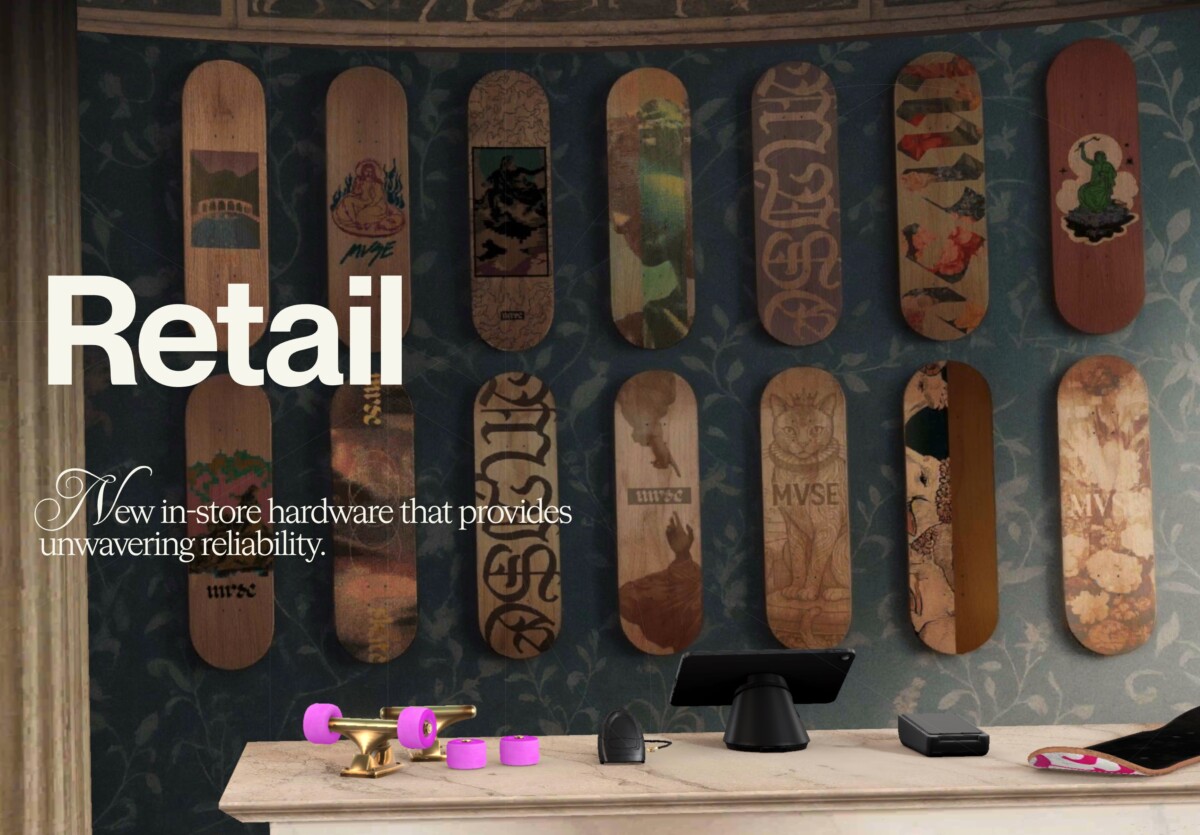
Shopify’s answer is the POS Hub, a small but mighty device that connects your peripherals over reliable wired and point-to-point wireless connections, adds Ethernet for network stability, and gives staff a clear, real-time view into what’s actually connected and working. For larger retailers sitting on major investments in existing hardware, this finally removes a key barrier to moving onto modern Shopify POS—without ripping and replacing everything they already own.
The episode wraps with a look at Shopify’s new Uber Direct integration, which brings one-hour local delivery to life directly from retail stores. Shoppers can choose same-day or scheduled delivery at checkout, and those orders flow straight into POS so store staff can fulfill them without messy middleware or manual hacks. It lands at the perfect time: while Black Friday–Cyber Monday is huge for online, the last week before Christmas is when in-store sales truly explode, and now merchants can serve last-minute buyers without forcing them into crowded malls.
This isn’t a hypey product pitch—it’s a practical conversation about the infrastructure that determines whether your busiest retail days feel smooth and scalable or like nonstop firefighting.
Strategic Takeaways
👉 Stop treating Bluetooth failures as an inevitable cost of doing business. Your barcode scanner doesn’t drop connection because of bad luck—it’s fundamental wireless instability meeting iOS restrictions. The POS Hub’s wired approach eliminates the problem entirely. If you’ve been burning staff time troubleshooting connections during rushes, you’re solving the wrong problem. Swap the infrastructure, not the scanner.
👉 Organize retail markets by business model, not just geography. The smartest merchants use markets to separate outlet stores from flagship locations, seasonal pop-ups from permanent retail, or high-touch boutiques from high-volume stores. This unlocks separate pricing strategies, inventory allocation rules, and product assortments tailored to each store type—instead of forcing one-size-fits-all operations across locations that serve completely different customer needs.
👉 Plan retail investments around December 20th, not Black Friday. While e-commerce obsesses over BFCM, in-store revenue peaks the week before Christmas—consistently. If you’re rolling out new hardware, training staff on delivery fulfillment, or launching operational upgrades, have everything tested and running smoothly by mid-December. That’s when retail makes or breaks the year, not Thanksgiving weekend.
👉 Capture recurring revenue at the counter, not just online. Every customer you can’t enroll in a subscription in-store is recurring revenue walking out the door. Shopify POS now handles subscription signups natively within transactions—no separate systems, no “go online later” friction that kills conversion. If your product model supports subscriptions, this closes a revenue leak you’ve likely been ignoring.
👉 Launch local delivery when urgency peaks, not when customers plan ahead. The Uber Direct integration shines during panic moments—December 23rd, Valentine’s morning, Mother’s Day afternoon—when customers need gifts immediately and price sensitivity evaporates. Orders flow into POS without middleware chaos, staff can fulfill seamlessly, and you capture premium-margin sales from buyers who’d otherwise head to Amazon or drive to a competitor.
👉 Build peripheral infrastructure that scales before you’re stuck. Early-stage retailers might see the Hub as unnecessary, but larger operators sitting on major investments in specialized hardware (weighing scales, industrial printers, custom devices) face real adoption barriers when switching POS systems. Choosing wired USB-C infrastructure now future-proofs your setup for multi-location expansion, franchising, or enterprise partnerships where hardware compatibility becomes a dealbreaker, not a nice-to-have.
Guest Spotlight
Ray Reddy
VP of Retail, Shopify
Ray Reddy leads retail innovation at Shopify, overseeing the POS platform that powers brick-and-mortar stores, pop-ups, and omnichannel operations for brands worldwide. This is his second appearance on eCommerce Fastlane in 2025, following his June conversation about Summer Editions and the POS 10 overhaul—a twice-yearly rhythm that mirrors Shopify’s seasonal release schedule.
Before Shopify, Ray built his career solving operational challenges at the intersection of hardware, software, and user experience. That background in both consumer technology and enterprise systems gives him a uniquely practical perspective: he knows the difference between what looks good in a demo and what actually works when your store is slammed on a Saturday afternoon.
What sets Ray apart is his team’s focus on unglamorous infrastructure problems that competitors avoid. Bluetooth reliability doesn’t generate marketing buzz, but it drives support tickets and blocks enterprise adoption. The POS Hub represents this philosophy perfectly—instead of chasing flashy features, his team invested serious engineering resources into eliminating the hardware flakiness that’s frustrated merchants for years. That commitment to operational fundamentals over feature counts explains why Shopify POS now operates across 175 countries while maintaining the reliability retailers need when December revenue is on the line.
Previous episode: Summer Editions 2025 & POS 10 Deep Dive
Links & Resources
Connect with Ray & Shopify:
Featured in This Episode:
- Shopify Winter Editions 2026 — Full details on the “RenAIssance Edition”
- Shopify POS — Point of sale system for retail stores
- POS Hub Hardware — Pre-order information for the new $69 connectivity device
- Uber Direct Integration — One-hour local delivery setup guide
Features & Tools Mentioned:
- Shopify Markets — Manage catalogs, pricing, and inventory across store collections
- In-Store Subscription Enrollment — Native POS capability for recurring revenue
- Stock Counts in POS — Native inventory management
- Tap to Pay on iPhone — Expanded to Germany, Ireland, New Zealand, Spain
- Shopify Payments — In-person payments now in Luxembourg, Switzerland, Czech Republic with Carte Bancaire support
Shopify POS Hub
Thanks for Supporting the Pod!
Over the past eight seasons, I’ve been incredibly lucky to chat with some of the brightest founders in ecommerce building remarkable Shopify brands and partners shaping the app and marketing ecosystem. Honestly, every conversation has taught me something new, and I’m grateful for the chance to learn alongside you.
What matters most is that this podcast helps you solve real challenges and unlock new growth for your business. Your support, feedback, and stories have made this journey truly special. Thanks for tuning in, sharing your wins and losses, and being part of the eCommerce Fastlane community.
- Leave an Honest Rating/Review: Share your thoughts on Apple Podcasts or Spotify.
- Follow & Subscribe on YouTube: Get notified about new episodes on YouTube.
Contact Steve
Like Reading? Here’s the Full Episode Transcript
Steve Hutt:
Hi there. Welcome back to eCommerce Fastlane. I am your host, Steve Hutt. Ray Reddy is on the show again. He’s been a regular. He was on the show back in June to talk about Shopify Summer Editions 2025 that came out. There was a complete revamp of the Shopify POS system. They called it. POS 10. It was a full overhaul on that and now he’s here again today, right on schedule, I might add, six months later. But Shopify just released their winter editions 2026. So this is kind of a twice yearly kind of a thing with a summer and a Winter editions. There’ll be links in the show notes for Winter Editions. It’s really amazing and it’s nice to be able to catch up with Ray right now every six months to talk about what he and his team are building for retail. It’s quite interesting. Ray is the VP of retail for Shopify and he’s been part of helping brands run their brick and mortar stores or their pop up stores. And today you’re going to learn a lot about this new thing.
Steve Hutt:
Well, number one software update that happens with pos but more importantly, some of the things that have happened with a new device called the POS Hub and I think it’s going to tackle. We kind of chatted offline before recording, but there’s a lot of unglamorous, critical, flaky problems that can happen with Bluetooth hardware and ironically it always dies in the worst times when you’re being busy. And so I think that’s what some of the things and challenges that Ray has been working on and that’s what the broader updates overall with POS and his hardware device is going to be really exciting to unpack today. So. All right, Ray, welcome back to the show.
Ray Reddy:
Hey Steve, thanks for having me on again.
Steve Hutt:
My pleasure. So Winter Editions is exciting. It’s out into the wild now. I said, link in the show notes. So can you talk a little about maybe, just maybe the highlight reel a bit about what sort of a POS updates have happened, at least from a software perspective that you want to highlight today.
Ray Reddy:
One of the things that Shopify loves to do is kind of just pick a theme for each one of these releases that I think just resonates with the moment in time that we’re in right now in the world and what we think is top of mind for merchants. And this winter edition’s theme is Renaissance with a play on AI being at the center, the word and our world. And I think there’s this transformative moment right now where we really feel it’s Shopify’s responsibility to help businesses find their place in this new AI landscape and figure out how to just take this from a buzzword to something that translates into better results and ultimately something that helps them run their businesses a bit better. So I think that’s been the overarching theme and maybe two part update on what we’ve been up to in the world of retail and PLs. One is you mentioned what’s happening on the software side. It’s a whole lot. I think for us one of the big things is online store runs in 175 countries. Many of the brands we have operate across these countries and many of these online brands are now starting to open more and more retail stores.
Ray Reddy:
And so expanding our global footprint I think has been a very big theme for us. We now have expanded in person payments to Luxembourg, Switzerland, the Czech Republic. We’re starting to go deep into EU and apac. Many more countries to come. We’ve expanded tap to pay support on iPhone and we’ve added Germany, Ireland, New Zealand, Spain. We’re also doing a lot with local payment methods. And so we’re now supporting carte, bank air and then back to just helping merchants run their businesses better and just make it easier to be smarter. We’re investing a lot in retail markets.
Ray Reddy:
So it’s just helping merchants manage their catalogs across various countries. And actually markets are very powerful. It doesn’t have to represent a geography, it’s just a way of representing a collection of your stores. You can think of that as my outlet stores versus my retail stores or divided by country, however you want to do it. It just makes pricing, managing inventory, all of that stuff much, much, much easier. It’s a super powerful tool. It’s something we’ve continued to invest in. And then the last one is we’re probably doing much more in inventory.
Ray Reddy:
There’s still a ways to go, but we just launched the ability to do stock counts right on POS natively. So that’s something we’re excited about. The team has actually quite a long list of launches go through in detail. But maybe the last one worth mentioning is subscription. This was something that many merchants have products that they sell subscriptions to online. This was always a big gap that they couldn’t enroll someone in a subscription in store. And so we’re really excited to have that kind of parody now where you can have someone come into your store and enroll them into an ongoing subscription just seamlessly as part of the same transaction.
Steve Hutt:
Lovely. So now we can get into the hardware. I think I always get excited about, hardware parts fixed. I think that’s one of the problems that I see. This is what caught my eye in the additions, at least from a retail side of it, is that I think many merchants do struggle a bit about, kind of Bluetooth scanners and printers, unfortunately failing at the worst possible time. So can you talk a bit about this and then kind of what the POS hub is physically, and then why did you decide maybe to tackle hardware reliability things?
Ray Reddy:
wireless technology is probably the most mysterious, confusing topic in the hardware industry. You can’t touch it, you can’t see it. Sometimes it works, sometimes it doesn’t. When it works, it’s magical. And when it doesn’t, you just want to throw it out the window. And just to ground us in where we are today. Wireless peripherals have been almost the default way that most merchants attach Bluetooth scanners and, their barcode scanners to their POS systems. And it has represented the majority of our support tickets over the year, over many years, in fact.
Ray Reddy:
And I think so much of it is, this, this familiar story of, you have your iPad ready to go, you think your barcode scanner is ready to go, you’re about to check someone out, and all of a sudden you realize the barcode scanner has lost its connection or the receipt printer has lost its connection. And it really affects merchants at peak selling times, busy holiday weekends. it almost feels when it’s most important that things work, they seem to let you down. And so, just to frame the problem, that’s the problem that we’re looking to solve. And it’s been a one, because, just maybe a little bit of background here on why, how we sort of got here in the Windows world, which is where most peripherals were built for, most manufacturers would write what we would call a driver. It’s basically software that teaches the computer how to talk to the device. The problem was it was a bit of the wild west. Anyone could do anything and it was a way to sort of inject code into Windows and many viruses and hijacks came as a result of it.
Ray Reddy:
So Apple looked at all that chaos and said we’re not going to do that. And so on iOS and on iPad, Apple is the only one that can write these drivers. And there were three reasons for that. One was this wasn’t random, it was security. So they wanted this to not be subject to all the vulnerabilities of Windows. The second was stability. And the last is battery life. They wanted to make sure that the iPad was super efficient and it’s sip power, not gulp.
Ray Reddy:
That all was great for consumers. But what it meant was, you buy this multi thousand dollar iPad to run your business POS on it and then you have these types of challenges with many of these peripherals actually only work via usb. A good example would be a specialized weighing scale at certain grocery stores. Some of the high end ones are only wired. And then when you use wireless, it’s a lot of the things we talked about beyond the reliability issues. Apple tried to offer something called MFI made for iPhone and what it. It’s a special certification process. But again, the challenge there is that it tends to double the price of things because certification is expensive, it takes years to develop.
Ray Reddy:
And so many peripherals never got MFI certified. Most peripherals that most retailers that are using, I would say a legacy PLS and they’ve invested tens of thousands, maybe millions of dollars on some of these peripheral hardware, they can’t use it. And this has been one of actually the biggest adoption challenges for larger brands and enterprises to move over to modern POS systems. That’s kind of framing the problem.
Steve Hutt:
I’m totally with you on that because it just happened even recently where I actually went into a retailer, I could see the hardware with Shopify and I kind of, I used to work for Shopify, so I kind of understand what’s going on here. But she says, yeah, it’s just not working right now. And, and then having these sorts of connection problems. And she, trying to reboot her computer and trying to reboot her iPad and trying to figure things all out. And she was having challenges. And I think here it is that just me walking into a random store in my city and seeing that happening. Clearly this was a massive problem that’s happening for lots of people.
Ray Reddy:
As I said, it represented something like 40% of our overall support tickets were related to hardware disconnection. So this was just one of those things where it’s a tough problem and we just knew we had to solve it. it just was unacceptable that merchants were dealing with this level of frustration around hardware and peripherals. And so the solution is this product we’ve been working on for quite a while now that we’re really excited to launch at Editions. It’s called POS Hub. And to explain it very simply, it presents itself to the iPad as a single simple device using a standard protocol that Apple already supports. And it is MFI certified. We’ve done that certification once.
Ray Reddy:
But on the other side, it’s running a full Linux stack that can talk to anything. It’s basically a universal translator. Your iPad speaks its simple secure language, your peripherals speak their complex proprietary language, and the hub just translates it all in real time. So what that means is you just plug in your receipt printer into the hub, your barcode scanner and your crash drawer, and that’s it. They all just instantly work. It’s magical to see the setup process. And where it gets really interesting is because it’s a mini computer, it does a better job of managing those connections, being able to detect when something drops and reconnect it. The even cooler part about this is, for a retailer saying, well, okay, that’s great, but I have wireless.
Ray Reddy:
I care about the aesthetic. I don’t necessarily want all these wires on my countertop. It actually even solves that problem in an interesting way. I’m not sure if you’re familiar with Logitech keyboards and mice, but they have something called logibolt. And what that is is a little USB dongle that you just plug into your computer or USB hub. Essentially what it is is it’s still Bluetooth. All of the challenges in Bluetooth don’t come from Bluetooth being the problem. It comes from a device needing to search for multiple hosts and the iPad going to sleep and dropping the connection.
Ray Reddy:
That is often how this happens. The nice thing about what is called point to point Bluetooth and where you have the peripheral and a dongle on the other end that you can plug into a USB port is it’s a direct connection, never drops. So what’s interesting about the hub is many wireless devices support this type of thing. Many Bluetooth scanners come with a dongle just Logitech devices do. So by just plugging the other end of the receiver into the hub, you now have wireless peripherals too, that are significantly more reliable and don’t have the drop connection problem. So that’s what’s really cool about the hub is that it kind of gives you wired reliability, but also wireless reliability in the same way. So we just think it’s really, really cool. It’s trying to create this just it just works moment.
Ray Reddy:
And it’s one of the most boring, reliable piece of tech that you’ll never think about. And that’s exactly the point of how we want hardware to be.
Steve Hutt:
It’s interesting, it seems there’s quite a bit of intelligence behind it, because I think it’s interesting that there are these physical connections. I think that’s great. But I also the idea of it maybe surfacing kind of alerts and stuff, maybe firmware updates or receipt printer stops working, does it alert the staff that it’s out of paper or a connection error, things that. It sounds a lot of this stuff is kind of physically being handled already by the hardware.
Ray Reddy:
Totally. So this is exactly the way we see the future of this going, which is, today it solves the connectivity and reliability problem, but it is basically a computer that can update itself, get over the, upgrades over the Internet, constantly updating the firmware and the operating system. So we’re really excited about essentially the thing that can manage all your hardware and peripherals so you don’t have to. We just think this is going to be such a powerful part of the ecosystem. And what it means for Mertense is, for so many is if you’ve invested in these wired peripherals, you can bring them over and don’t have to rebuy hardware. We think that’s really important.
Steve Hutt:
I love that because I think having hardware flexibility is, I think great. You can get the hub and we’ll talk about how to get one and the pricing stuff that in a bit. But it’s interesting because I think a lot of people want to bring over their own off the shelf scanners and printers that they already currently have. And they’re not necessarily locked into what Shopify offers. But I know Shopify is a full system of ready to go, you can buy as a package. But some people have systems or hardware they’re already happy with. And so you’re suggesting they can just bang the flexibility of hardware, just boom and just work works.
Ray Reddy:
That’s our goal.
Steve Hutt:
Yeah, that’s lovely. So let’s talk about the different types of merchants because there’s going to be a lot of people listening today that are in different kind of entrepreneurial states in their business Currently, there’s some early stage small merchants that are listening. Maybe they do weekend popups, let’s say, or farmers markets or whatever. And I think they’re, maybe five or ten grand a month. They’re kind of doing their thing and it’s a great side hustle. But they’ve been currently maybe using the POS app and potentially the card reader. Does it make sense for someone in their early days that’s just a weekend kind of hustle to get the POS hub, Or do you believe it’s made for more mid sized or a little bit bigger operations?
Ray Reddy:
I think it was primarily designed for a brick and mortar store, but I think that actually there’s some interesting use cases even for casual sellers. If you occasionally sell and you do tap to pay on your phone, you don’t need that. It’s all happening on one device and it’s great. The whole point is you’ve gotten reliability by minimizing your hardware footprint, which is wonderful. Where the hub really comes into play is if you start to connect multiple peripherals. So think about the typical brick and mortar store. You probably have a barcode scanner, you have a payment terminal, you have maybe a receipt printer. So now you’re starting to get into, there’s a setup here.
Ray Reddy:
So that’s where we think the more peripherals you have, it’s almost the more failure points you have. all it takes is one of your three devices to go down and you have a problem completing a sale. So that’s, I’d say who we, we built it for. I’ll give you a really great example of how we’re using it. Often Shopify, we have our POS set up at certain retail conferences. You can almost think of it as the equivalent of a pop up. we’re doing a pop up for a few days and this was a notorious problem that even we would deal with, which was when we were trying to do demos at popups. The amount of Bluetooth noise because you have so many other vendors there, it would sometimes make our peripherals, even.
Ray Reddy:
And you can imagine how brutal that is if you’re at a retail shop and that happens. And so the thing that we’ve been almost were able to prove this to ourselves in the first use case was let’s put the hub in and it’s magic. You just get rid of all of that and you have perfectly reliable connections in a busy conference. I don’t know how many farmers markets would have something that. But I can just think of a very busy space where you’ve got a lot of vendors and a lot of different wireless devices creating a lot of noise. And this is a great way if you’re trying, you got a critical weekend at a popup and you plan on cranking through a lot of volume. I think the hub would be very beneficial.
Steve Hutt:
What about people that are running multi location? Because I think there’s lots of people listening more in the mid market to enterprise people. They got 20 or 50 locations or more probably. And if they get this hub, what happens when they connect it? Because this is at scale at 50 or more locations, do they configure it more centrally or do each one of them do it individually on their own per location? Or is there more of a global connection? Because that’s kind of how POS kind of works. There’s still a roll up to understand revenue for the whole org, not just. And then by individual store. You can actually kind of see the results of individual stores. I’m just curious in kind of how the hub would work in this sort of environment today.
Ray Reddy:
Because all these peripherals are connected via Bluetooth. If you’re a mid market brand with 20 stores and you had a question of okay, Maybe I have 40 registers across 20 stores, what is the state of my hardware across them? Unless you’re using an mdm, it’s actually very, very difficult to get this kind of data today. And this is also what we plan on fixing with the hub right now. There’s not central management of the hub in the sense that you don’t really need the hub is a connector. So rather than plugging or connecting your devices directly to the tablet, you just plug them into the hub and they seamlessly connect to the tablet. And it’s meant to really solve a reliability problem in general. You should not really have any disconnected devices going forward. So I think that’s the problem number one to solve.
Ray Reddy:
But as I mentioned, because there’s a computer running inside it, one of the goals we have here is to give that kind of visibility to brands. Brands should know at any point in time, If I have 20 stores and I have 40 registers, they should know what is the hardware state in every store, in every register. And this is actually the kind of reporting and visibility and dashboards that the hub will be able to provide. there are still reports that we need to be able to publish and distribute to brands. But what you’re describing is the state of the world of hardware that we want to deliver for merchants.
Steve Hutt:
I see. Now what about the aesthetics of it now with this hub now, because I’m thinking some merchants, they have pretty strong opinions about what their counter actually physically looks like. how much flexibility do merchants actually have with this hub and what their counter looks like. Obviously we talked about maybe existing peripherals is a no brainer and the answer is yes to that and or Shopify’s hardware. But what about existing stands and different things they may already have?
Ray Reddy:
The first is the flexibility of Hub. So it is a beautiful device. It is made of polished aluminum. It can definitely sit on top of a counter. It’s not much bigger than a large phone. So it actually just looks a very small USB hub, even though it is a mini computer. But it’s designed to be mounted under the counter. We’ve thought through many different configurations of how merchants might want to use it near the stand, under the counter in a different spot.
Ray Reddy:
So it’s super flexible to match any aesthetic. And then in terms of what it means for upgrading hardware, one thing that was important to us was making sure it worked with all generations of iPad because yes, new iPads are USB C, but there’s still a lot of lightning iPads out there. So one of the most important things was the hub is actually compatible with both new iPads and lightning iPads from before. So that tends to be the big hardware investment we wanted to make sure merchants could retain. When it comes to the stand, the hub does require a change in stand because the old stands have integrated power and the Hub essentially needs to plug right into the iPad. So that’s why we have a selection of stands now. In fact, for the last few months, we have stands on the hardware store that any stand that probably was purchased in the last six, nine months is compatible with Hub. But the old sort of POS from last year, the old POS 10 won’t be.
Ray Reddy:
And then in terms of peripherals, most printers, any of the receipt printers we sell tend to connect either over WI fi or via usb. All of those continue to work well. The only thing that we recommend against is you can continue using standard Bluetooth barcode scanners. But this is exactly the problem that we’re trying to solve. So they will still work. But we recommend merchants move to either a wired Bluetooth scanner or a wireless scanner that supports the point to point dongle that we discussed earlier. And that’s just for merchants who really want that reliability.
Steve Hutt:
Very cool. And so let’s talk about pricing, just so people are clear. We don’t see it listed here in Editions, but what’s the investment of a device this?
Ray Reddy:
The Hub is going on pre sale at Editions. It is going on sale for $69, which is, we think, incredible value for what is a mini computer. We have a few hundred merchants that are using it already today that have been testing and giving us early feedback. Feedback’s been amazing. And any merchant that’s had one or two quickly, if they operate multiple stores, it’s how quickly can they get one in every store they have? So we anticipate demand for this will be high. We’re really excited to get it out there.
Steve Hutt:
What’s interesting is that I also, I know we talked offline and I’m excited to share this out now, but the last mile delivery and the fulfillment, the speed of delivery, I’d even argue things Amazon prime has kind of set the stage a bit about how quickly things can be delivered. And I think Shopify is finally coming to the plate now and showing that they have the technology and the ability now to be able to get a product from store to the customer’s location. And I’m going to give you the opportunity now to share this new partnership.
Ray Reddy:
Thanks, Steve. We’re really excited about this partnership with Uber. I think we’ve all observed that many of the delivery apps have slowly been sort of inching into more and more retail and products being delivered. And it was sort of a no brainer to say, wait a second, why don’t we give our merchants this capability to do one hour delivery to people’s homes? And so I’m really excited to share that Shopify now offers fast, reliable local delivery from retail stores with Uber Direct. That leverages Uber’s entire delivery network. What this means is that merchants can just easily connect Uber Direct to their Shopify online store and pos so that when customers make a purchase, they’ll have the option to choose one hour same day or scheduled delivery right at checkout when placing an online order.
Steve Hutt:
That’s insane, to be honest with you, because I just think from a retail perspective, it’s just now all of a sudden there’s intelligence in there to know that, well, the customer lives, let’s say, in my city, I’m in Langley, British Columbia and it’s just well, and there’s a retail loc in my city and there’s visibility of the online store to know that it’s in stock and me as the customer can select that option upon checkout and know it can be picked up by Uber Direct and delivered over to me within the hour. that’s just pretty wild.
Ray Reddy:
Yeah. And I think the important thing to say here is many retailers have done a version of this integration and so offering the capability is one thing, but what we found is that it can create a better a bit of a mess with their in store operations. And it’s always important to Shopify as part of doing these kinds of partnerships is that we’re really making sure that in store operations are seamless and so these orders are injected right into the pos. So it just makes it really intuitive and simple for staff to be able to accept these orders in POS and be able to fulfill them. So I think that’s the really important part here is that it’s this integration is done in a way that makes it really, really easy for in store stuff.
Steve Hutt:
What’s interesting too is remember in the past Covid times and stuff where I think there was kind of buy online pickup in store there and I think there was a lot of different tools zap yet or C or something that it was a retail kind of connection to Uber Direct. But it was kind of unfortunately a middleware to pick up in store or ship to customer and all these flows and stuff. And it was just pretty kind of a crazy kind of a duct tape kind of system that worked, but it was crazy and duct taped. And now it’s nice that you’ve kind of solved this directly now with Uber Direct and direct with Shopify and your integration. So that’s kudos to the team and.
Ray Reddy:
The timing couldn’t be better because one interesting thing we always observe at Shopify is for online, bf’s Black Friday Cyber Monday tends to be biggest week of the year, but with retail it’s always the last week before Christmas. It’s always that December 20th tends to be the biggest weekend. So I think this is a wonderful opportunity for merchants. You can set this up in minutes and just manage it from the Shopify admin and imagine giving your customers the ability to get all of their holiday shopping delivered in one hour so they don’t have to fight the crowded malls. I think it’s a great timing for this.
Steve Hutt:
Yeah, it’s really cool. I just actually wrote something about this exact thing kind of the. I think BFCM to me was more of a warmup. And Shopify and the merchants did incredible numbers and I think are up almost 30% over the previous year and it was pretty amazing. I think you did I don’t know, 14 or over $14 billion. I think over that period. Up 27% if my memory certainly correct. But it’s interesting now that when they talk about the warm up that just kind of adding to what you’re saying here.
Steve Hutt:
It’s say more than 50% of the holiday spend is still available. it’s not all of a sudden with, with the four day weekend you think that all people have spent if they have $800 to spend. Well, they spent 400 of it. They still have 400 more to spend if their budget’s 800 for the holidays. And so knowing that that’s the feedback I’ve been giving to merchants and through this article I wrote recently saying, hey, this is just the warmup now. The other half starts now. What are you doing about it from this point onward? Until the end of the year and then gift cards kick in and there’s lots of other fun things that can happen in January.
Ray Reddy:
Totally.
Steve Hutt:
Well, this is great, Ray. Any kind of parting notes, kind of next steps for people that are interested?
Ray Reddy:
Look at it at the editions launch, look out for the POS hub landing page and get your pre order in. And check out the Uber integration inside the Shopify admin.
Steve Hutt:
Yeah, this is amazing. All right, I’ll have all of these links in the show notes. And once again, Ray, thank you for coming on the show. I’ll likely see you again in June for Summer Editions!
Ray Reddy:
I’m sure I will.
Steve Hutt:
All right then, have yourself a great afternoon.
Ray Reddy:
Okay. You too, See ya!
Steve Hutt:
Well, that’s it for today’s episode. I’d to thank you personally for being a loyal listener of E Commerce Fastlane. It’s my hope that this podcast is offering you a ton of value through growth strategies, tactics and exclusive insider tips on the best Shopify apps and marketing platforms. All with my personal goal to help you build, manage, grow and scale a successful and thriving company powered by Shopify. Thanks for investing some time today and listening to the show. I’m so proud and excited that you have a growth mindset and are a constant learner. I truly appreciate you and your entrepreneurial journey. Enjoy the rest of the week and keep thriving with Shopify.
