





On March 24, 2026, Shopify flipped a switch. No email. No opt-in form. No announcement in your admin dashboard. In one move, 5.6 million stores became shoppable inside ChatGPT, Google AI Mode, Microsoft Copilot, and the Gemini app — by default.
If you’re a Shopify merchant doing $10K months or $10M months, your products are now discoverable inside AI conversations right now, whether you knew it or not. This is the most significant distribution shift in ecommerce since Google Shopping launched in 2012, and most merchants still haven’t checked if they’re even set up to benefit from it.
The numbers behind this moment are not small. AI-driven traffic to Shopify stores has grown 7x since January 2025. AI-attributed orders are up 11x over that same period. ChatGPT alone reaches 880 million monthly active users — a larger addressable audience than Google Shopping in most merchant categories. During the 2025 holiday season, Adobe Analytics found AI-referred traffic to retail sites jumped 693% year over year, and those visitors converted at a rate 31% higher than traffic from any other source. Higher intent. Higher conversion. And right now? No incremental ad spend required.
In this solo episode, Steve breaks down exactly what Shopify’s Agentic Storefronts launch means for your business, why the Universal Commerce Protocol is the infrastructure play hiding underneath the headline, and the three things every Shopify merchant should do before the end of this week to make sure they show up when someone asks an AI for products in your category.
Let’s dive in.
What You’ll Learn
✅ What Shopify Agentic Storefronts actually are — and why the March 24th rollout was opt-out, not opt-in, meaning 5.6 million stores went live inside ChatGPT, Copilot, Google AI Mode, and Gemini with no setup required from merchants.
✅ The fee controversy that changed everything — how OpenAI’s original “Instant Checkout” model charged a 4% transaction fee and broke post-purchase flows, why merchants pushed back, and what the new model means for your brand experience, customer data, and checkout ownership.
✅ Why this is bigger than one ChatGPT integration — the Universal Commerce Protocol (UCP) Shopify co-developed with Google, already backed by Walmart, Target, Etsy, Stripe, Visa, and Mastercard, and what it means that Shopify is positioning itself as the commerce infrastructure layer between every merchant and every AI agent.
✅ The Answer Engine Optimization opportunity most brands are sleeping on — why AI surfaces products differently than traditional search, how a product title like “Canvas Weekender Bag, Tan” loses to a conversational description every time, and a simple framework for auditing your top 20 products right now.
✅ How to track AI-referred revenue before your competitors figure out this channel exists — what attribution data to watch in your Shopify admin, why early AI traffic shows higher conversion rates and AOV, and the competitive intelligence move that seven and eight-figure operators should be making this week.
✅ Steve’s honest take on the long game — why this parallels the early days of mobile commerce, the first-mover window that’s open right now before paid placement arrives on AI platforms, and how this connects to the Convergence Advantage framework from Thriving with Shopify.
Episode Sponsor: Insense
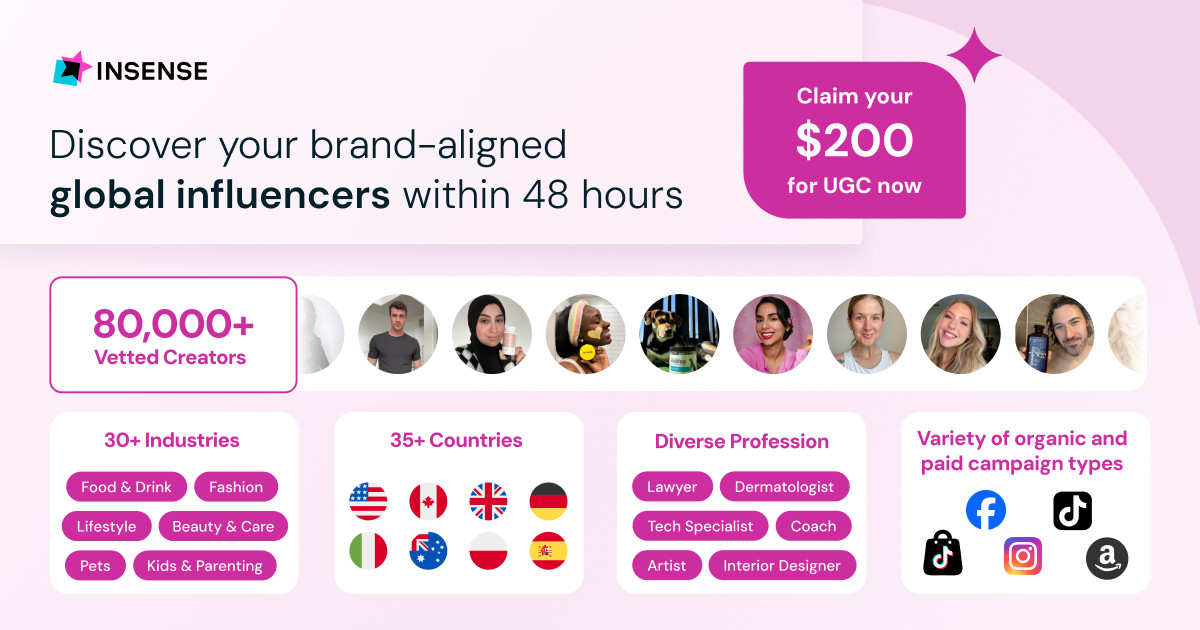
More than 3,500 ecommerce brands use Insense to scale creator marketing without making their teams work extra hours. With 80,000+ vetted creators across 35+ countries and a native Shopify integration for product seeding, Insense helps brands launch UGC, influencer campaigns, and creator-led ads all from one platform.
Most brands begin receiving creator applications within 48 hours, which means less time spent searching and more time getting campaigns live. Sourcing, outreach, contracts, payments, deliverables, and ad activation for Meta Partnership Ads and TikTok Spark Ads are all managed in one place.
And the outcomes are real: Bones Coffee generated $25,000+ in revenue with a 2.16 ROAS from 54 UGC ads in 3 months. Quip achieved 85% influencer activation. Easy A Media sourced 100+ UGC assets in 45 days through product seeding alone.
Ecommerce Fastlane listeners can get $200 off their first campaign through April 10. Book a free demo with Insense to get started.
Episode Summary
Something happened to your Shopify store last week and there’s a good chance you didn’t notice. On March 24, 2026, Shopify activated Agentic Storefronts across all eligible accounts — quietly, by default, with no setup required. Your products are now searchable and shoppable inside ChatGPT, Microsoft Copilot, Google AI Mode, and Gemini. The rollout was opt-out, not opt-in. If you haven’t checked your admin yet, you’re almost certainly already live inside AI conversations happening right now.
In this solo episode, Steve walks through exactly what Shopify built and why the details matter. There was an earlier version of this in January 2026 where OpenAI launched “Instant Checkout” — it kept the entire transaction inside ChatGPT, charged merchants a 4% fee on top of standard Shopify processing, and broke every post-purchase flow in the process. Merchants pushed back. OpenAI retreated. The current model is fundamentally different: when a shopper finds your product inside an AI platform and taps to buy, an in-app browser opens to your own store. Your checkout, your payment methods, your upsell sequences, your thank-you page flows — all intact. No extra fees. And orders flow into your admin with clean ChatGPT or Copilot referral attribution so you can see exactly where they’re coming from.
But Agentic Storefronts is the headline, not the full story. Shopify co-developed the Universal Commerce Protocol (UCP) with Google — an open standard that gives AI agents a common language for discovering products, understanding inventory, and completing transactions. Think of it as what HTML did for the web, but for AI shopping. UCP is already backed by Walmart, Target, Etsy, American Express, Mastercard, Stripe, and Visa. It’s live inside Google AI Mode and Gemini. Meta integrations are coming. And Shopify has now opened an “Agentic Plan” that lets brands on WooCommerce, BigCommerce, or any other platform add their catalog to the Shopify infrastructure and sell through AI channels without migrating their store. This is Shopify’s play to become the commerce layer between every merchant and every AI agent — and if you’re already on Shopify, you’re inside that infrastructure by default.
The three actions Steve recommends this week are practical and immediately executable: confirm Agentic Storefronts is toggled on in your Shopify admin under Sales Channels, audit your top 20 products to rewrite titles and descriptions for conversational search rather than keyword matching, and start tracking AI-referred attribution data in your analytics — because the early signals suggest these visitors convert at 31% higher rates than traffic from any other source. For seven and eight-figure operators, there’s also a competitive intelligence angle worth acting on now: search for your product category inside ChatGPT and see who’s showing up and how. The gap between what surfaces and what you’d want to surface is your optimization roadmap.
This isn’t a trend to monitor. It’s a distribution channel that’s already live, it’s free right now, and the merchants who optimize first are going to build advantages that compound as AI shopping volume scales. The early days of SEO created winners and losers based on who understood the rules earliest. The same dynamic is playing out in conversational commerce right now.
Strategic Takeaways
👉 Verify you’re live before you optimize anything else. Go to Shopify Admin → Sales Channels and confirm Agentic Storefronts is active and each platform toggle is on. The recommendation is to leave all four platforms enabled — ChatGPT, Copilot, Google AI Mode, Gemini — while discovery is free and the competitive field is still thin. US merchants focused on US buyers should be auto-enrolled, but it’s worth a 60-second check this week to be certain.
👉 AI matches products to conversations, not keywords — and your product data needs to reflect that difference. Traditional SEO rewards backlinks and domain authority. Answer Engine Optimization rewards how well your product titles, descriptions, and attributes answer the conversational question a shopper actually asked. A title like “Canvas Weekender Bag, Tan” loses to “Waxed Canvas Weekender Bag, Water Resistant, Fits Airline Overhead, Tan with Leather Handles” every time. Start with your top 20 products by revenue and rewrite them to answer questions, not list SKU attributes.
👉 You stay the merchant of record — and that matters more than it sounds. The key merchant pushback that shaped the current model was about ownership: who holds the customer relationship, who owns the data, who controls the checkout experience. The current Agentic Storefronts model preserves all of it. Your post-purchase flows fire normally. Your upsells work. Your thank-you page sequences trigger. Understanding that you haven’t given up any of this should change how aggressively you approach the channel.
👉 Track AI attribution data from day one, even when the numbers are small. ChatGPT referral data now flows directly into your Shopify analytics. Set up a simple weekly check: sessions, orders, conversion rate, and AOV from AI-referred traffic, benchmarked against your other channels. The early data suggests higher-intent shoppers with higher conversion rates and potentially higher AOV — they’ve already described what they want before they arrive at your store. The trend line matters more than the initial volume.
👉 The Universal Commerce Protocol is infrastructure, not a feature. UCP is the open standard underlying all of this — and the roster of companies backing it (Google, Walmart, Target, Stripe, Visa, Mastercard, Etsy, American Express) tells you this isn’t experimental. For merchants on non-Shopify platforms, the new Agentic Plan lets you add your catalog to Shopify’s commerce layer without migrating your store. Understanding that this is infrastructure-level, not integration-level, should anchor how you think about the longevity of the investment you’re making when you optimize for AI discovery.
👉 The first-mover window in organic AI commerce is open right now — and it won’t stay open forever. Product results inside ChatGPT are currently organic and unsponsored, ranked on relevance. OpenAI has already signaled that advertising for free-tier users is coming. The brands that build trusted product associations through AI recommendations before paid placement arrives are the ones who’ll be hardest to displace. This mirrors exactly what happened in the early days of SEO, and later in social commerce. The merchants who optimize during the organic window capture compounding structural advantages that late movers can’t easily replicate.
Guest Spotlight
Steve Hutt
Host & Founder, eCommerce Fastlane
Steve Hutt brings over 20 years of ecommerce experience to every conversation on eCommerce Fastlane. From his early days as an eBay Power Seller to co-founding and exiting VisionPros.com, he’s lived the full arc of building and scaling online brands.
During his 6 years as a Shopify Senior Merchant Success Manager and working with 100+ brands, including Dr. Squatch, Bulletproof Coffee, Tentree, and Salt & Straw, Steve had a front-row seat to the patterns that separate brands that scale from those that stall.
Today, he leads the eCommerce Fastlane media ecosystem: 450+ podcast episodes with 2M+ downloads, the Fastlane Insider newsletter reaching 40,000+ founders and marketers, and a growing library of resources to help Shopify merchants make better decisions at every stage. Solo episodes like this one distill pattern recognition from hundreds of brand partnerships into practical frameworks you can act on immediately.
Links & Resources
- Shopify Agentic Commerce Announcement — Full Shopify announcement on the March 24th rollout
- Shopify Agentic Storefronts Overview — Winter ’26 Edition feature breakdown
- Universal Commerce Protocol — Open standard for AI-native commerce, co-developed by Shopify and Google
- Shopify Agentic Plan — For non-Shopify brands who want AI channel access without platform migration
- OpenAI Product Discovery in ChatGPT — OpenAI’s overview of how product recommendations work inside ChatGPT
- Harley Finkelstein Upfront Summit coverage — TechCrunch, March 16, 2026
Thanks for Supporting the Pod!
Over 9 seasons, I’ve been incredibly fortunate to chat with some of the brightest founders building amazing Shopify brands and the partners shaping the app and marketing ecosystem. Every conversation has taught me something new, and I’m grateful for the chance to learn alongside you.
What matters most is that this podcast helps you solve real challenges and discover new ways to grow. Your support, feedback, and stories have made this journey truly special. Thanks for tuning in, sharing your wins and losses, and being part of the eCommerce Fastlane community.
Stay Connected: Leave an Honest Rating/Review on Apple Podcasts or Spotify. Follow & Subscribe on YouTube for new episodes.
Like Reading? Here’s the Full Episode Transcript 👇
Steve Hutt:
All right, welcome back to eCommerce Fastlane. You know, one week ago, something really interesting happened to your Shopify store that a lot of you probably didn’t notice: your products are now completely shoppable inside ChatGPT, inside Google’s AI mode, inside Microsoft Copilot, and even inside the Gemini app.
Shopify basically flipped the switch, I believe around March 24th, and more than 5 million stores went live right away inside these AI conversations. There was no setup, no app to install, no email asking for permission. Everything just happened automatically. And what I find really wild is that most merchants I’ve talked to in the last week had no idea this actually happened.
Steve Hutt:
That’s what I’m going to break down today: what happened and what it means for your business. Whether you’re doing your first 10k a month or 5 million a year, it doesn’t really matter. There are three things you should do before the end of this week to take advantage of this new activation inside ChatGPT.
Steve Hutt:
You’re listening to eCommerce Fastlane, the podcast to help you build, manage, grow, and scale a successful and thriving company powered by Shopify. Listen to real conversations with partners and subject-matter experts as they share proven, practical strategies, platforms, and the best Shopify apps to help you accelerate your business. The time is now for you to improve efficiencies, grow revenue and profit, and increase lifetime customer loyalty. Please welcome your host, startup founder and strategic advisor, Steve Hutt.
Steve Hutt:
So let me walk you through what Shopify did here, because the details matter. Shopify has been building something I’ve written a lot about: these agentic storefronts. Basically, it’s a system that connects your product catalog to these AI chat platforms through one panel in your Shopify admin.
There’s one toggle. Products sync automatically through something called the Shopify Catalog, which uses a specialized kind of AI to categorize and standardize your product data. So when someone asks ChatGPT for the best running shoes under 150 dollars, or asks Gemini for a gift for someone who loves cooking, your products can now show up as part of that answer.
All four platforms I mentioned at the start of the show—ChatGPT, Microsoft Copilot, Google’s AI mode in Search, and the Gemini app—are all managed from one place within your Shopify admin. You can toggle each one on or off individually.
Steve Hutt:
Here’s where some of the details that early coverage got wrong come in. There was an earlier version of this back in January. To give you a bit of backstory, OpenAI launched something they called Instant Checkout, where you could buy products without leaving ChatGPT, right in the chat window. It sounded slick; everybody was raving about it, and I even wrote about it. But it came with a 4% fee stacked on top of your normal Shopify processing costs.
And it did a lot of things I didn’t like. It broke a lot of post-purchase flows: upsells wouldn’t fire, your thank-you page sequence didn’t trigger. Merchants were pushing back pretty hard, from what I understand. So OpenAI retreated on that.
The new model now works completely differently. When a shopper finds your products in ChatGPT, they tap to buy and an in-app browser opens up your checkout in Shopify. It’s your site, your full brand experience, your payment methods, your post-purchase tools—everything works as normal, as if they came in through the front end of your website. It opens your store in a new tab, and the nice thing is there are no extra fees.
You just use your standard Shopify processing rates, whatever plan you’re on—Plus or Core, different levels and so on. This matters, and it’s why I’m sharing it today: you stay the merchant of record. You own the customer relationship and you own your data. Orders flow into your admin clearly marked as coming from ChatGPT or Copilot, and that attribution is assigned to each order. You can see exactly where these orders are coming from, which is pretty cool.
I want to put some numbers around this because I think that’s important. A lot of people are hearing about AI shopping and still believe it’s early or experimental.
Steve Hutt:
I’m here to tell you 100% it is not. Harley Finkelstein, Shopify’s president, was recently at a conference called Upfront Summit a few weeks back. He shared that AI-driven traffic to Shopify stores has increased 7x since January 2025. That’s not 7%, that’s seven times.
AI-attributed orders, he mentioned, are up 11x over the same period—and that was before this launch where every store is now completely discoverable by default. ChatGPT alone has, I’d say, 800 to 900 million monthly active users. That’s a larger addressable market than Google Shopping in most merchant categories.
Right now, being listed inside ChatGPT costs you nothing. There’s no ad spend, no additional fees—just your Shopify subscription and your usual payment processing.
I also saw a report from Adobe, around the end of last holiday season. They reported that AI referral traffic to retail sites jumped 300–400% year over year. The number that really caught my attention was this: consumers coming from AI platforms converted at a rate 31% higher than visitors from other sources.
If you think about that, it implies much higher intent. You’re getting higher conversion rates with no incremental acquisition costs, which is pretty compelling.
Steve Hutt:
I want to balance this a bit. It is still early for some people, but the volume is real. This is not completely replacing your Meta ads tomorrow. What it is doing right now is creating a new discovery channel that literally didn’t exist 18 months ago, and it’s growing at a rate that makes every other channel look flat.
The question isn’t whether it matters; the question is whether you’re going to show up when somebody asks AI about your product category. That’s the key takeaway.
So I want to zoom out a bit and share what I think is actually going on. There have been lots of conversations about these agentic storefronts and this launch, but I think there’s a bigger play happening underneath all of this.
Shopify didn’t just build an integration with ChatGPT. I think they co-developed something they’re calling the Universal Commerce Protocol with Google. UCP is an open standard that creates a common language for AI agents to discover products, understand inventory, process transactions—the whole commerce framework.
Think about what HTML did for web pages. UCP is doing that for AI shopping. The companies backing this protocol are interesting: Google, Walmart, Target, Etsy, American Express, Mastercard, Stripe, Visa. This is not a beta test. This is real infrastructure.
UCP is powering checkouts in Google’s AI mode, in the Gemini app, and I can almost guarantee it will power checkout inside some Meta experiences soon. Shopify is positioning itself as the commerce layer that connects every AI surface to almost every merchant.
Here’s the strategic insight I think some people are missing. Shopify didn’t just open a new plan and call it the “agentic” plan. They added merchants’ products for free to Shopify Catalog, and now you can instantly start selling through all these AI channels. If you’re on another platform—WooCommerce, BigCommerce, Magento—you can use Shopify as your agentic commerce middleware without migrating your store.
The front end could be on a different platform, but the back end could be Shopify checkout only, including AI checkout. That’s pretty wild.
Shopify is effectively saying, “We don’t just want to be your ecommerce platform. We want to be the infrastructure layer between every merchant and every AI agent.” That’s a much bigger bet than just acquiring net-new merchants to use Shopify. They’re opening it up everywhere, which I think is fascinating.
If you’re a merchant already inside that infrastructure by default—and a lot of you listening likely have a Shopify store—it gives you an extra advantage. You have a great checkout experience on the web, and now you also have this incredible discovery and potential checkout through large language models and chatbots.
Steve Hutt:
Let’s get into some practicalities. Whether you’re just getting started or running a larger operation, I think there are three things you should do this week.
The first is to confirm you’re live and that all your toggles are on. Go into your admin and look under Sales Channels. Agentic Storefronts should appear as a channel if it’s active on your account. Check which of the four platforms are enabled and make sure they’re toggled on.
My recommendation: leave them all on unless you have a very specific reason to exclude one. You want to maximize your discovery surface. While it’s free and the competitive landscape is still pretty thin, you’re better off leaving everything on.
If for some reason you’re not showing up, make sure you’re set up for Shopify Catalog. As of now, this is for U.S. merchants and U.S. buyers only, and you’re generally auto-enrolled, so double-check that.
The second thing is to audit your product catalog data. This is a big one. I’ve had people on the show talking about this and I’ve written about it. The way AI surfaces your products is fundamentally different from how Google Search works.
For years we’ve taught people about product descriptions, metadata, and SEO. But AI is matching products to conversational questions. When someone asks “What’s a good weekend bag for a long weekend trip?” the AI isn’t looking at your backlink profile or domain authority. It’s looking at how well your titles, descriptions, and attributes match that question.
A product titled “Canvas Weekender Bag – Tan” will get crushed by something like “Waxed canvas weekender bag that’s water-resistant, fits in airline overhead bins, and comes in tan with leather handles,” assuming that’s accurate. That second title is far more discoverable.
I’d start with the 80/20 rule: your top 20 products by revenue. Rewrite titles and descriptions as if you’re answering a customer’s question, not just listing SKU attributes. Include what it is, who it’s for, the problem it solves, key features, and relevant specs. Get all of that into your titles and descriptions.
This is what I’ve been calling Answer Engine Optimization, AEO. Brands that figure this out first are going to have a structural advantage as AI shopping volumes increase.
The third thing is to watch your data, specifically attribution data. Starting now, you should see ChatGPT referral data flowing into your Shopify analytics, and it’s time to track it. Even if the numbers are small initially, the trend line matters. You’re watching a new channel form in real time, which is really cool.
Set up a simple weekly check: sessions, orders, conversion rate, and average order value from AI-referred traffic. Compare those metrics to your other channels. I suspect you’ll see much higher conversion rates and potentially higher AOV, because shoppers coming from large language models and chatbots are higher-intent. They’ve already described what they want and done a lot of research. They’re not just browsing; they’re buying.
For my larger-listener enterprise operators doing seven and eight figures, this is also a competitive intelligence play. Start asking ChatGPT for products in your category and see who shows up. See how your products appear versus your competitors’.
There’s a gap right now between what AI surfaces and where you want to surface. Get this on your optimization roadmap if you’re on the enterprise side.
Steve Hutt:
My genuine perspective on this: it’s tempting to overhype AI shopping or completely dismiss it as years away. I’ve been in ecommerce for more than 15 years and spent six and a half years at Shopify. This is the most significant distribution shift I’ve seen since mobile, and I don’t say that lightly.
When mobile took off, brands that optimized their mobile experience early captured a disproportionate share of market and wallet because they were mobile-friendly, and in many cases mobile-first. The ones who waited, saying “our customers still buy on desktop,” lost years of compounding advantage.
The same dynamic is playing out now. Ecommerce brands that are optimizing their product data, understanding how AI surfaces recommendations differently from traditional SEO, and actively managing their presence across these platforms are building an advantage—almost a competitive moat—that I believe will compound.
Yes, volume is still early, but the habits you build now matter. Harley made a great final comment that really stuck with me: brands that show up first in AI conversations are the ones buyers are going to remember. I think he’s right.
There is a huge first-mover advantage developing in this conversational commerce world. It’s similar to the early days of SEO. Once consumers develop trust in the product associations AI recommends, those associations become sticky.
For years, merchants have been trapped in the paid acquisition cycle. CAC is increasing. Every incremental customer costs more on Meta, Google, TikTok. Margins are compressed, CPCs are up.
What we’re seeing with AI-driven commerce is almost a new organic discovery channel. Right now, product results in ChatGPT are organic, free, unsponsored, and ranked based on relevance. No ad required.
Will it last forever? Probably not. OpenAI has already mentioned they’re introducing advertising for free-tier users. But right now there is a window. It reminds me of Gary Vaynerchuk talking about buying “merlot” and “chardonnay” clicks on Google AdWords for 5 cents. No wonder he did so well with Wine Library.
We’re in a similar window now. Merchants who build their presence during this window will be the hardest to displace when paid options arrive.
This connects directly to what I’ve been writing recently. I’m in the midst of my book, “Thriving with Shopify,” and I’m talking about this convergence advantage—how social, search, and commerce are all merging. That’s what I’m seeing with agentic storefronts. This convergence is happening faster than almost anyone predicted.
These AI conversations are becoming the new storefront for product discovery. It’s happening.
Bottom line: your store is, or should be, live inside ChatGPT. Whether you know it or not, you’re in there. Whether shoppers find you is a separate conversation—that’s the optimization side. But these AI conversations are happening right now.
The three things I mentioned:
1. Confirm your toggles are on in your admin.
2. Audit your top 20–30 products—titles and descriptions—so they’re conversational.
3. Watch your AI-referred attribution data.
Don’t put this on your next-quarter roadmap. It’s live right now, it’s free, and I think early movers are the ones who will really benefit and see this compound over time.
I’ll put links in this episode about the announcement and a few resources. If you want to start tracking your organic and AI model references—where you rank in queries—that’s really interesting, and I’ll help you find the right tools to do that.
Hopefully you found this useful. I’m Steve Hutt. Thanks so much for listening to eCommerce Fastlane. I want you to keep thriving with Shopify, and I’ll see you in the next episode.
