
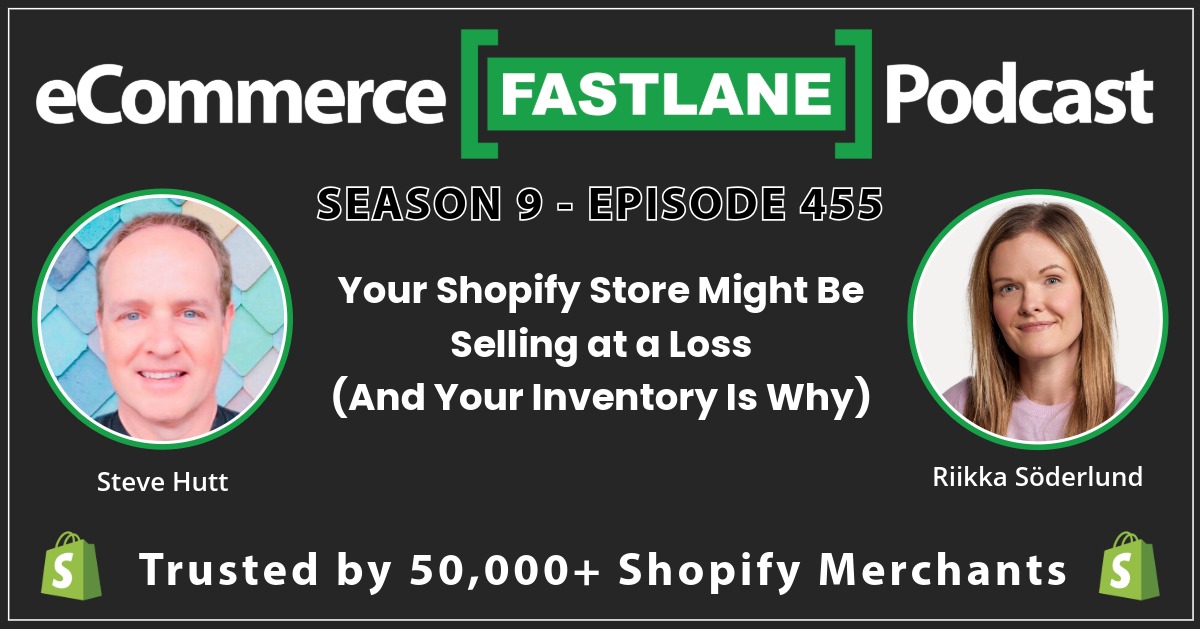
There’s a fast-approaching deadline most Shopify merchants haven’t acted on yet: August 31, 2026.
That’s the day Stocky, Shopify’s free inventory tool used by over 120,000 merchants, disappears for good. No more purchase orders. No more demand forecasting. Just silence where your visibility used to be.
And here’s the hard truth. If your brand assembles, bundles, or manufactures its own products, Shopify’s native admin won’t replace what you’re about to lose. The clock is already running.
But Stocky’s sunset isn’t creating an inventory problem. It’s exposing one. Inventory blindness has quietly plagued Shopify commerce for years. One brand uncovered nearly $40,000 in untracked raw materials. Another doubled revenue in a month after centralizing operations into a single system. These aren’t anomalies. They’re patterns. Many $1M to $10M brands still don’t know their true product costs, current stock position, or if the orders they ship are even profitable.
Riikka Söderlund, COO of Katana, joins this episode to unpack what running blind on inventory really costs. Katana is a cloud inventory platform built for product brands that have outgrown spreadsheets but aren’t ready for a six-figure ERP. With over 1,500 businesses across 70 countries and more than $3 billion in GMV processed annually, Katana recently closed a $14M Series B extension to keep building on that foundation.
In this conversation, Riikka shares what the Google Shopping Graph and the emerging Universal Commerce Protocol mean for brands without real-time data, and how to move from spreadsheet chaos to a system that finally shows whether you’re truly profitable.
Let’s dive in. 👇
✅ Understand why the Stocky shutdown on August 31 isn’t the real crisis. It’s exposing the deeper inventory blindness that’s been eroding Shopify brand margins for years, especially for merchants who assemble, bundle, or manufacture products.
✅ Identify the profitability trap most product brands miss: marketing teams rarely factor in true COGS, small cost increases quietly erase margins, and Katana often uncovers brands selling at a loss during onboarding.
✅ Discover why Google’s Shopping Graph and AI discovery engines now require real-time inventory data, and why brands without connected systems are already invisible to the algorithms driving purchase decisions today.
✅ See how Katana simplifies multi-channel complexity across Shopify, Amazon FBA, TikTok Shop, B2B wholesale, and POS, all pulling from one live inventory with no overselling, no manual reconciliation, and no disconnected tools guessing stock levels.
✅ Learn where to reinvest your recovered operational savings, including Riikka’s case for why that cash flow shouldn’t funnel back into paid ads and why brand investment is the highest-leverage move for Shopify merchants in 2026.
Gladly Connect Live returns May 4–6 in Atlanta, and if you’re building a brand where customer experience is a growth lever, this is the room you want to be in.
GCLive is a curated gathering of CX leaders from brands like HOKA, Deckers, UGG, Crate & Barrel, and Bombas. This year’s agenda goes deep on agentic commerce, specifically how AI agents are starting to shop, discover, and transact on behalf of customers, and what that means for Shopify brands right now.
The sessions are built by practitioners from The Black Tux, Ollie, Pact, StockX, and more. These will be people who have actually shipped AI, not just talked about it.
Space is capped and this sells out.
The conversation opens with a countdown: Shopify’s free inventory tool Stocky shuts down on August 31, 2026, leaving more than 120,000 merchants without their go-to inventory layer. As Riikka Söderlund puts it, this isn’t just a product sunset. It’s proof that inventory management has outgrown what any commerce platform should shoulder. Shopify is world-class at selling, but inventory is its own beast and needs dedicated software.
Stocky’s deadline only spotlights a much deeper issue: inventory blindness. Many Shopify brands operate with patchwork systems, disconnected apps, static spreadsheets, and manual fixes that barely hold together. Riikka describes what Katana often sees firsthand: brands relying on a spreadsheet on someone’s desktop as their “source of truth.” One merchant discovered $40,000 in untracked raw materials. Another doubled monthly revenue after moving to one unified system. These aren’t one-off stories. They’re the reality for most product brands that scaled faster than their operations could keep up.
The discussion then pivots to AI-powered commerce. Steve and Riikka unpack how Google’s Shopping Graph and the Universal Commerce Protocol (UCP), co-developed by Shopify and Google, are setting new expectations for inventory data. Riikka’s warning is clear: this isn’t about the future. If your system isn’t feeding real-time inventory to Google or the major LLMs right now, you’re already invisible to the AI agents influencing consumer purchase decisions. Even ChatGPT paused its checkout pilot because merchant inventory feeds weren’t reliable enough to fulfill orders. That breakdown is happening today, not years from now.
Riikka also gets practical, walking through multi-channel inventory management in action. With Katana’s latest Amazon FBA integration, merchants can now sync Shopify, Amazon, B2B wholesale, and POS retail locations in real time. No overselling, no manual reconciliation, no chaos when a flash sale or influencer drop hits. She explains how having mapped supplier lead times gives brands instant clarity on what they can actually promise when demand surges.
The episode closes on a high-value note: Katana starts free for up to 30 SKUs, no credit card required, with most brands live in weeks and some in hours. Riikka leaves listeners with a parting insight worth underlining: the cash freed up through smarter inventory shouldn’t flow straight back into ads. It should go into brand. Because in 2026, the brands that large language models learn to trust are the ones laying that groundwork now. This isn’t a back-office discussion. It’s a growth strategy.
👉 Inventory blindness is a profitability problem, not an operations one. When marketing doesn’t know true COGS and finance isn’t tied to real-time data, pricing becomes guesswork. Katana often uncovers during onboarding that merchants have been selling at a loss for months without realizing it.
👉 The Stocky shutdown hits August 31, 2026. Don’t wait until July. Over 120,000 merchants lose purchase orders and forecasting with no native Shopify replacement, especially for brands that assemble or manufacture. Katana’s free plan covers up to 30 SKUs with no credit card, and most teams go live in weeks.
👉 Real-time inventory is now table stakes for AI discoverability. Google’s Shopping Graph prioritizes products with live stock data, and ChatGPT paused its checkout pilot because merchant inventory feeds weren’t reliable enough to fulfill orders. Brands connecting their data now are building the trust signals AI models are already learning from.
👉 Every new channel and every demand spike tests the same thing: whether you have a single source of truth. Adding Amazon FBA, TikTok Shop, B2B wholesale, or POS turns inventory into a matrix that Shopify alone can’t track. Katana syncs all of it in real time so you know what’s in stock, where, and whether fulfilling that flash sale order is actually profitable.
👉 Operational efficiency is your most underrated marketing budget in 2026. The cash freed up by clearing dead stock, tightening reorders, and reducing warehousing waste should go into brand, not back into saturated paid channels. Brand is what AI models recognize, reward, and surface to buyers in agentic commerce.
Riikka Söderlund
Chief Operating Officer, Katana
Riikka Söderlund has spent her career at the intersection of marketing and operations. She first ran digital marketing and ecommerce for Lumene, a Nordic beauty brand navigating the shift to DTC, then scaled demand generation as VP of Marketing at Smartly.io, one of the world’s leading paid social automation platforms used by some of the largest ecommerce advertisers on the planet. She joined Katana as CMO in 2023, where she saw firsthand how product businesses were losing money they didn’t know they had. Stale inventory feeds were killing ad performance, spreadsheets were hiding true cost of goods, and operations infrastructure couldn’t keep up with growth.
In May 2024, Riikka stepped into the COO role, taking ownership of the operational engine behind a platform used by thousands of product businesses across 70+ countries. What makes her perspective especially valuable for eCommerce Fastlane listeners is that she’s sat on both sides of the table. She’s been the marketer burning budget on out-of-stock products and the operator fixing the infrastructure that caused it. That combination of brand-side empathy and operational expertise is rare, and it shapes everything about how Katana thinks about helping Shopify merchants scale.
Featured in This Episode:
Over 9 seasons, I’ve been incredibly fortunate to chat with some of the brightest founders building amazing Shopify brands and the partners shaping the app and marketing ecosystem. Every conversation has taught me something new, and I’m grateful for the chance to learn alongside you.
What matters most is that this podcast helps you solve real challenges and discover new ways to grow. Your support, feedback, and stories have made this journey truly special. Thanks for tuning in, sharing your wins and losses, and being part of the eCommerce Fastlane community.
Stay Connected: Leave an Honest Rating/Review on Apple Podcasts or Spotify. Follow & Subscribe on YouTube for new episodes.
Steve Hutt:
Welcome back to eCommerce Fastlane. I’m your host, Steve Hutt.
Today’s conversation comes with a bit of a ticking clock. Hundreds of thousands of Shopify merchants have something happening in the background that many don’t even know about yet, and it’s Stocky.
Stocky is Shopify’s free inventory tool. My last count shows around 120,000 merchants using this tool for purchase orders and some basic demand forecasting. It was pulled from the App Store in February, and it shuts down permanently on August 31st, 2026. If you’re one of those merchants, especially if you assemble or bundle your own products, the Shopify admin alone will not cover what you’re about to lose with Stocky.
I think there’s a bigger picture here too. From my research, even before that deadline, most Shopify brands are running a bit blind when it comes to inventory. They have a sense of what they’ve sold, but not what they’re actually making—what it really costs to make a product or what’s truly available to sell right now, especially if you’re assembling products.
One brand discovered almost $40,000 in raw materials just sitting there completely untracked. Another doubled their monthly revenue after getting their operations into a single system. There are some really interesting stories I want to unpack today.
My guest today is Riikka Söderlund, and she is the Chief Operating Officer of a company called Katana.
Katana is a cloud inventory platform built specifically for product brands doing between $1 and maybe $10 million in annual revenue—brands that have outgrown spreadsheets but aren’t ready for a full ERP solution. Katana works with more than 1,000 businesses—almost 1,500—from 70 countries. They process over $3 billion in gross merchandise value annually. They’re the real deal. They also recently closed a $14 million Series B extension, which is helping them scale even more.
I want to unpack a lot today. I apologize for the long intro, but I think it’s important to set the stage a bit.
I want to dig into inventory accuracy, why I believe it should be a growth lever for a lot of brands—not just a back-office task. I also want to get into Google updates, how the Shopping Graph works, and more.
So, hello, Riikka. Welcome to eCommerce Fastlane.
Riikka Söderlund:
Thank you for having me. I’m happy to be here.
Steve Hutt:
This is going to be a really fun episode because inventory doesn’t always sound sexy, but it’s incredibly important—especially for makers where there are multiple products coming together to manufacture something. That makes things even more complex.
I want to talk about the problem that’s happening in the marketplace right now and the role Katana plays and the gap it fills. It’s interesting to see this Stocky solution being sunset while clearly over 100,000 merchants were getting value from it. Now Katana is here, and I want to talk about that gap and how you fill it.
Riikka Söderlund:
Absolutely. I think you’re spot on. Stocky has been a default solution for so many Shopify brands for years. The fact that Shopify is sunsetting it is obviously an urgent issue for brands and merchants.
But it’s also a symptom of a broader shift in the market. Inventory management is becoming more and more complex with more channels, more locations, and consumers shopping on different surfaces. Inventory is simply not Shopify’s core business. They are the world’s best selling platform, but inventory is its own beast and requires dedicated software.
That’s why Shopify made the decision to sunset Stocky in August this year.
Steve Hutt:
It’s interesting because most merchants assume that when they pair with Shopify, the platform is fully handling their inventory. But I believe there’s a gap, especially when you’re selling in more than one channel or fulfilling from more than one location. I think that’s where Stocky starts to fall short.
Can you talk a bit about multi-channel and multi-location inventory and fulfillment? I think that’s a really interesting topic.
Riikka Söderlund:
Absolutely. That’s the bread and butter of Katana Inventory. A typical scenario is a merchant expanding their operation to a second channel. They have their Shopify store running and then decide to sell on TikTok, or expand to Amazon, or they open a brick-and-mortar store or pop-up locations.
The amount of complexity that a single additional location or sales channel adds to inventory operations often comes as a surprise. Like you said, Shopify is good at tracking inventory inside Shopify, but once you sell across multiple channels, you need to be able to answer questions like: What do I have in my warehouse? How much do I have? How fast does it ship from each location? When do I need to reorder—not too early and not too late?
Those questions become exponentially harder to answer as you add channels and locations.
Steve Hutt:
So what are brands doing before Katana?
When I was at Shopify, whenever I did an app or operational audit, I noticed a lot of duct tape. Team members come and go, and there are apps in the admin that no one really knows the purpose of anymore. You end up with point solutions solving individual needs, but no overall business strategy for why those apps, marketing platforms, or operational tools are there.
What do you see on your end? Katana feels much more like a lightweight, modern ERP. It seems like you’ve really thought about all the pieces, versus the disparate point solutions we see in the marketplace.
Riikka Söderlund:
Absolutely. That’s one layer of the complexity. We do see customers with multiple apps like you described. You might have a forecasting app, a separate app for your 3PL, maybe your own warehouse tools, maybe manufacturing tools—and none of them talk to each other. There’s no central system pulling all that data together.
But honestly, Steve, the issue is often even more fundamental. It’s not just about the tools merchants use—it’s that many aren’t using any proper tools at all. They simply don’t have visibility into their inventory.
They might have an Excel spreadsheet somewhere. A lot of our customers do. You wouldn’t believe how big a company can be while still running inventory off a spreadsheet that doesn’t update, doesn’t link to anything, isn’t connected, and isn’t online. It might sit on a desktop under the CEO’s table.
That spreadsheet becomes the “source of truth” they use to manually update other apps that may or may not have relevant and real-time information to run operations. It becomes a complex web of duct-taped solutions like you described.
Steve Hutt:
When I do app audits, one of the first things I look at is cost. There are countless cases where a brand is paying $500 a month for an app no one is using anymore because the team member who installed it left. So there’s a cost factor.
That might be a side podcast one day—how to do a proper app audit.
There’s something you mentioned that I found interesting. I like to frame it around the marketing and finance sides of the business. I know you’re focused more on back office, inventory, forecasting, and those connections, but I see a common issue: marketing tends to work in a silo.
Marketing might check inventory levels or look at forecast data, but marketing isn’t always speaking to finance. That’s where profitability, cost of goods, and true net profit per transaction can fall through the cracks.
What’s your view on all these separate systems and teams that aren’t talking to each other? And how does Katana close that gap and alleviate these issues?
Riikka Söderlund:
Exactly. Marketing is a great example of where cost of goods sold is rarely discussed or revisited. But it’s not just marketing—that disconnect happens across multiple teams and functions.
The problem compounds over time. I wish it was just a single marketing campaign that pushed COGS down temporarily, but these things add up quickly.
Unfortunately, we see many cases where customers come to us because they’ve realized they’re actually selling at a loss and didn’t know it. That realization is often the spark that gets them to see why a central inventory management system is useful—why it’s a driver not just of growth but of profitability.
Steve Hutt:
I have a suspicion that many brands look at competitors to set pricing or rely on gut feel. Brand positioning can justify a higher price if you’re premium, but if you’re playing in a more commoditized mid-market—say running footwear against other mid-market brands—you tend to price based on competitors.
Katana flips that around and says, “What’s the true landed cost?” It factors in fulfillment, manufacturing, and all the pieces that make up true cost of goods. That leads to much more intelligent pricing decisions.
Riikka Söderlund:
Exactly. And as you would know, many Shopify brands operate on thin margins. It really matters if you’re a product-based business. Unless you’re in a very high-luxury segment, those margins are everything.
It’s easy to get blindsided by costs you weren’t factoring in or were simply miscalculating. To be fair, it’s not an easy environment for merchants right now. There are a lot of curveballs: creeping costs and hidden increases.
We all know oil prices are up, fuel is more expensive, but that also means plastic and packaging are more expensive. Every eCommerce store is packing and shipping goods in something. Then you have freight costs, tariffs, and more.
If you don’t add everything up and calculate properly, margin pressure keeps getting worse. It’s definitely squeezing Shopify merchants. Based on our data, it’s starting to get a little easier now—we’re seeing slightly healthier margins again—but for the past 12 months, margins were shrinking from early last year until Q1 this year.
Steve Hutt:
So interesting. Let’s talk about Google Shopping.
I read in a prep doc that Google has this thing called the Shopping Graph. I think it updates an insane number of times per hour. It’s all about showing the right products to the right customers with accuracy. But I feel a lot of inventory systems might only do a nightly sync.
I’d love to understand how Katana thinks about agentic commerce in general, AI-influenced discovery, and the eventual purchase. How does all of this fit together for you?
Riikka Söderlund:
That’s such a good question, because there’s so much hype around this that it can feel far off or irrelevant. But there are very real things happening right now, like the Google Shopping Graph you mentioned.
Every eCommerce merchant knows Google is a key source of traffic. The Shopping Graph checks inventory—inventory is one of the key product data points Google factors in when deciding which products to show and which not to show.
Some inventory systems update once a day, some once an hour. But if you don’t have any inventory system, there’s no inventory information being updated at all. That’s the big gap.
If you’re not communicating your inventory and stock levels to Google and other AI tools, which use this information to decide whether to surface your products, you’re leaving money on the table today. It’s not a future problem; it’s a current one most merchants haven’t acted on yet.
Steve Hutt:
It’s fascinating. I read that Google has over 50 billion individual product listings, each with price, availability, and reviews attached. This is all tied in with Gemini, their large language model.
It’s interesting how it matches products in real time and enables checkout. There’s also UCP—the Universal Commerce Protocol. My understanding is this was an open standard co-developed by Shopify and Google. It’s out in the wild and being adopted now.
I think even OpenAI decided to scrap their original approach and adopt UCP with Shopify and Google instead.
What’s your take on that?
Riikka Söderlund:
I think it’s absolutely the future.
Consumers aren’t necessarily shopping directly inside an LLM yet, but that shouldn’t stop merchants from making sure they’re visible. At the end of the day, does it really matter where the transaction happens?
If you’re a Shopify merchant, does it matter if the purchase happens inside an LLM or on your website, if the customer can’t find you in the first place?
Merchants need to do the same things to be visible on ChatGPT, Gemini, and other language models and to be purchasable. If you’re a Shopify brand, you can turn on the Agentic commerce features so customers can buy where they choose.
But this is also where customer experience comes in. You need to be able to deliver the products sold and handle returns. One of the reasons ChatGPT discontinued their in-chat checkout pilot was because inventory management wasn’t reliable enough. There wasn’t a solid data source to draw from. You can’t pull from spreadsheets. If the model doesn’t have accurate inventory information, it can’t sell the product. You need to know you can actually fulfill the order.
Steve Hutt:
Wild times.
I’ve written a bit about AI visibility. Old-school SEO is about search engine optimization, but now we have large language model discovery. Google’s AI Overviews are scraping their own organic results and building summaries based on their algorithms.
Other large language models, outside of what Gemini is doing on google.com, have their own scraping and algorithms. A lot of it comes down to metadata, schema, and how you organize your site.
Some progressive brands are getting a first-mover advantage because they’re getting their data and back office in order now in preparation for more agentic purchasing.
It’s quite interesting what’s happening.
Riikka Söderlund:
Absolutely. And it’s important to remember these models are learning. Even if there isn’t a lot of shopping happening through them yet, they’re learning which brands are out there.
The big brands and first movers are gaining an advantage because the models learn which brands are trustworthy and have data they can surface to consumers.
It’s a trend you don’t want to sleep on. The nice part is that becoming visible in agentic commerce is not a difficult or capital-intensive task. It’s very achievable.
Steve Hutt:
I’ll make sure to include links in the show notes to a few things I’ve written about agentic AI and how to get set up and ready. They’ll give people a way to go deeper on this.
I want to pivot to multi-channel complexity. It doesn’t have to be complex, but a lot of people find it so.
You mentioned TikTok Shops and fulfilling orders there. Amazon is obviously a major player—half of eCommerce in North America is on Amazon, and the other half is Shopify stores.
It’s a great marketing decision to be on Amazon, even if you don’t list your entire catalog. The discovery and reach, plus Prime members, make it compelling.
What’s your view on Amazon connections? I know you have a new Amazon FBA integration. I’d like to learn more about what Katana is doing for marketplace sellers—whether they’re strictly using Amazon for fulfillment or running both a Shopify store and an Amazon store. How does Katana fit into that mix?
Riikka Söderlund:
Yes, we did launch a new Amazon integration recently, specifically to answer a need in the market. Like you said, it’s a major channel, and many Shopify merchants also sell on Amazon.
There’s a massive need to keep inventory in sync in real time across eCommerce stores, marketplaces, wholesale orders, and physical locations. You want to avoid overselling, avoid manual reconciliation, and avoid guessing what’s in stock.
Out-of-stock events now have a bigger cost than they used to. Knowing what you can sell, where you can sell it, and then managing the operations of fulfillment becomes critical. If you have multiple warehouses, you might even decide to fulfill an Amazon order from another location if that makes more sense operationally.
Katana solves the whole flow: getting goods in, selling them, delivering them, and replenishing them at the right time.
Steve Hutt:
I want to talk about B2B because wholesale is a very interesting conversation. Shopify has really started to plant its flag there.
When I was inside Shopify for six and a half years, there was a big push to build out B2B, mostly on the Shopify Plus side. They made some acquisitions and acqui-hires to bring in the right people and processes.
B2B is a much larger opportunity than direct-to-consumer. If you think about retail, around 70% of goods and services are still purchased in person, and maybe up to 30% online. So there’s a massive B2B opportunity.
How does Katana fit into that? There are many merchants doing wholesale—higher volumes, lower margins, but more net profit and broader distribution. They also want to sell direct-to-consumer.
My concern is when wholesale and DTC orders are pulling from the same inventory. How do forecasting models handle that? How does Katana manage these two channels drawing from the same stock?
Riikka Söderlund:
You’re exactly right. B2B is much bigger than B2C, and it’s typically the second channel a Shopify merchant opens. Amazon tends to be the third.
Katana has had B2B functionality for a long time: visibility into what you can fulfill and when, managing purchase orders, shipping in partial shipments rather than all at once, and supporting custom pricing. B2B pricing is different from B2C pricing, and again, that ties back to margins.
Having visibility into whether you’re selling at a profit, and then planning replenishment and forecasting across both B2B and B2C, becomes nearly impossible to manage in spreadsheets. They operate very differently. Larger orders often come with longer transit times, among other factors.
While it might seem counterintuitive to manage both in one platform, it actually streamlines operations to see both at the same time and control how separate or connected they are. Katana gives customers that flexibility to set things up their way.
Steve Hutt:
It’s interesting because, again from my time at Shopify, we saw a lot of brands doing flash sales or using VIP offerings as part of their retention strategy—early product drops, pop-ups in certain markets, and so on.
How does Katana think about that? Overselling during a flash sale is a massive problem. There are some famous case studies of large influencers, especially in the makeup space, where things collapsed because of overselling. The customer experience takes a hit: “You let me buy, now you’re refunding me.” Or there’s a pre-authorization that never gets captured because the product doesn’t exist in inventory.
What’s Katana’s perspective on special product drops and flash sales? How do you ensure accurate inventory and make that data available on the front end so you don’t oversell?
Riikka Söderlund:
It’s a funny problem because on the surface it might seem like a champagne problem: “Oh my God, I’m overselling.” I’m sure some listeners are thinking, “I wish I had that problem.”
But it’s actually a massive issue for the reasons you mentioned. If you can’t deliver those orders, the hit to your brand is huge.
At the very least, a real-time system gives you full visibility into when you can fulfill orders because you have supplier lead times mapped and can see when suppliers deliver to you and when you can deliver to customers. You have instant visibility into when you can live up to the promise of a flash sale, influencer drop, or even Black Friday. Black Friday still surprises merchants.
The other crucial piece is profitability. It’s easy in these situations to focus on fulfilling a big order at all costs. But if it wasn’t profitable—if your margin wasn’t healthy—those events can tank an entire year. One TikTok post can have a huge impact on your bottom line.
Katana also helps with future forecasting. While a single flash sale or viral moment isn’t enough to predict future demand accurately, it gives much better signals, especially with AI and machine learning, about what preparations you need for next time.
You don’t want to overstock, either. The goal is to find an optimal balance for future events.
Steve Hutt:
What about Shopify POS?
A lot of brands go to conferences or run pop-ups. Many now have a retail location attached to their online store. Does it all work together? Is the store’s inventory treated as live stock that can be used for fulfillment?
I’ve seen brands fulfilling online orders from the closest store, using Shopify POS to power it. It almost feels like per-store inventory becomes part of the fulfillment network.
What’s your view on how Katana connects with Shopify POS and this last-mile delivery opportunity?
Riikka Söderlund:
Absolutely. Katana connects retail locations to a central inventory, tracking stock movements, transfers, and sales in real time as you run the business.
This is where warehouse management comes in. It’s not just about fulfilling orders; it’s about knowing what you have in each store and what’s left after each sale. When I mention spreadsheets, remember: nothing gets into a spreadsheet unless someone manually puts it there.
Tools like warehouse management via an iPhone app or tablet are available through Katana, which makes tracking much more reliable than manual spreadsheets.
Steve Hutt:
What about connections to other solutions?
One pushback I hear from some brands is: “We already have a tech stack that’s working. Things feel okay.” From an inventory and forecasting perspective, they might learn today that there’s room for improvement, but the first reaction is: “We’re already running these tools—our accounting systems like QuickBooks or Xero, and other platforms.”
What’s your view on how Katana connects to existing tech—non-competitive systems that are part of the broader business workflow?
Riikka Söderlund:
That’s core to why Katana was built in the first place. In bigger enterprises, what you’re describing would typically be handled by an ERP like SAP or NetSuite. Those systems cost hundreds of thousands of dollars and take months or years to implement.
Eight years ago, our founders saw that there was no easy-to-use solution that connected seamlessly to best-of-breed tools like Shopify, QuickBooks, or HubSpot. They didn’t want a one-size-fits-all solution that does everything poorly. That doesn’t feel very “2020s” as an approach.
Connectivity was the core idea behind Katana. We like to say Katana is best served with QuickBooks or Shopify or now Amazon. The central thesis is that Katana connects to your tech stack rather than trying to replace it or become your only tool.
Steve Hutt:
You’re not trying to be a Swiss Army knife of operations. I totally get it and agree. A lot of brands are using tools like ShipBob or ShipHero for fulfillment, because that’s where their 3PL is.
On the accounting side, many are using QuickBooks for day-to-day bookkeeping and then pushing that data to their accountant for year end. That all makes sense.
I want to pivot to what happens when someone decides, “Hey, this Stocky situation, or our spreadsheet craziness, needs to change. I want to see what Katana can do.”
Can you walk us through what happens when they decide to start a trial and activate an instance? What happens in the background, and when can they actually start using the system?
Riikka Söderlund:
Katana is simple enough that you can go to the website, start a trial, and implement it yourself. You can self-serve into this ERP-lite setup.
The first question you’ll see is which integrations you’d like to set up, and we’ll configure those automatically. If you feel you need more help, we also offer a dedicated solutions engineer—free of charge—to walk through your workflows and tech setup and create a plan for getting set up with Katana.
If you’re also implementing QuickBooks at the same time and want to understand how they fit together, we have a team dedicated to advising on that process.
Steve Hutt:
So that would include understanding the current workflow and data structure—what tools you’re using, what the current state looks like. That might be spreadsheets or some other system.
Is there a data migration involved? I imagine there’s going to be legacy data that’s important to bring forward.
Riikka Söderlund:
Yes, exactly. That’s a key variable we can’t know upfront.
We can migrate data from existing systems. We can take spreadsheets and upload them. In some cases, data has literally been on Post-it notes—we’ve seen that too. We get that information online as well.
This is where a dedicated team comes in to advise on the easiest way to get up and running. Typically, customers are up and running in a matter of weeks. A few weeks is usually enough to handle even more complex data needs.
Steve Hutt:
Some of my takeaways, just thinking out loud here, relate to where we are in 2026.
Acquisition costs are high. Meta, Google, even TikTok—it’s expensive. Often, acquisition is close to net-zero profit. That’s why retention strategies are so important.
What’s your perspective on all of this? We have AI checkout with UCP, shopping via ChatGPT with direct links to Shopify stores, and so on. My feeling is the operational stack is now just as important as the marketing stack.
How is Katana framing these changes? When you think about inventory, pricing, and profitability, and then layer in agentic commerce and discovery via large language models and AI checkout—how do you see it all coming together?
Riikka Söderlund:
For sure. My background is in marketing, so I think about this every day. It’s a fascinating moment in the market.
Interestingly, I genuinely believe the best thing a brand can do right now is find efficiency and cost savings in their operations. It’s amazing how big a difference it makes when you streamline operations and order raw materials or products from suppliers at the right time—not too early so you overpay on warehousing and end up with stale inventory you have to sell at a loss.
All those small operational improvements compound. You end up with better cash flow to spend on marketing.
But I wouldn’t necessarily put that extra cash into Meta, Google, and demand gen. I’d put it into branding right now.
It’s vital to have a strong brand in this era of agentic commerce. There’s a layer of product and inventory data, and a layer of brand. Those two are going to get closer over the coming years.
That’s where I’d reinvest the savings you find in inventory operations.
Steve Hutt:
I’m aligned with you on brand.
I’ve been recommending some tools around tracking brand and non-brand mentions in AI citations. It ties back to Google’s older SEO framing—E-E-A-T: experience, expertise, authoritativeness, and trustworthiness. A lot of that is built around brand. It’s not just logo and colors; it’s how people feel when they’re on your site, when they’re shopping, and when they’re using your product.
Building a brand, telling a story, and creating those touchpoints is key.
Riikka Söderlund:
Exactly. And I think smaller brands often underinvest in branding, but now is not the time to pull back. It’s the time to push harder.
Steve Hutt:
Let’s talk about next steps.
For listeners who are stuck in spreadsheet chaos, or who are among the 100,000-plus affected by the Stocky sunset—by August 31st, it’s completely shut off—what do you recommend?
Who is the sweet-spot customer for Katana? Can it be a “crawl, walk, run” process where most merchants see value early and then use more of the platform as they grow more complex or expand?
Riikka Söderlund:
Absolutely. Katana can work for a wide range of merchants.
You can get started for free, and up to 30 SKUs you can run on our free plan. You can get going with your first steps in inventory management in a day or two.
For brands with more complex needs—multiple sales channels, locations, warehouses, or integrations—the easiest way to start is to contact us and have a solutions engineer map out your needs and advise on the best next steps.
Steve Hutt:
Beautiful.
I’ll make sure all of this is in the show notes. You have a great blog and strong resources at katanamrp.com, so I’ll link to those as well.
This has been really good. I always joke on this podcast that I measure episodes by how many pages of notes I take. I have a “life of learning” mantra because everyone doubles down in their area of expertise.
You’ve got a strong marketing background, and as the Chief Operating Officer of Katana, you clearly understand the full scope of how this solves problems for Shopify brands.
I’ve got two pages of notes here. This has been a very educational episode for me. I’ve been in this industry for 15-plus years, and every time I record a podcast, I learn something new—“Oh, that’s what it does. Very cool.”
Listeners will put themselves in these scenarios—inventory challenges, forecasting issues, the Stocky sunset—and realize there’s a solution. There’s a free solution they can try right away.
Riikka Söderlund:
Exactly.
Steve Hutt:
A 30-day trial, and you can start that journey with help from a solutions engineer. I think that’s fantastic.
Riikka Söderlund:
Exactly. It’s a fascinating time with all these changes. I don’t think any Shopify merchant should spend all their time worrying about inventory. There are plenty of other things to worry about. This is one thing we can take off the list.
Steve Hutt:
Exactly.
If you’re affected by the Stocky shutdown, I just want to reiterate: you have until August 31st.
Katana, even at the bare minimum, with the free plan, lets you start today. There’s no credit card required. You can go to the website or to the Shopify App Store and download it.
Most brands can be live within a week or less with a solutions engineer. And within a few hours, you can at least start seeing what’s going on in your business and answer the big questions confidently—about inventory and profitability.
This has been a great show.
Riikka Söderlund:
Thank you so much.
Steve Hutt:
Thanks, Riikka. Have a great afternoon.
Well, that’s it for today’s episode. I’d like to thank you personally for being a loyal listener of eCommerce Fastlane. It’s my hope that this podcast is offering you a ton of value through growth strategies, tactics, and exclusive insider tips on the best Shopify apps and marketing platforms—all with my goal of helping you build, manage, grow, and scale a successful and thriving company powered by Shopify.
Thanks for investing some time today and listening to the show. I’m proud and excited that you have a growth mindset and are a constant learner. I truly appreciate you and your entrepreneurial journey.
Enjoy the rest of the week and keep thriving with Shopify.




