Key Takeaways
- Secure a competitive edge by choosing recycled polyester for high-volume campaigns to capture superior logo vibrance while meeting modern eco-mandates.
- Select your bag material by matching the event goal to the fabric’s profile, using polyester for mass distribution and nylon for premium employee gifts.
- Save your team time and frustration by opting for polyester when using full-color digital printing to ensure logos never crack or peel over time.
- Leverage the surprising strength of lightweight nylon to reduce your shipping costs while still providing a bag that can carry heavy gear for years.
In 2026, visibility isn’t enough; durability and sustainability define brand reputation.
With reusable bag demand surging 15% due to new eco-mandates, marketing directors face a critical choice: Polyester or Nylon?
While they appear similar, choosing the wrong material can lead to peeled logos and wasted budget. This guide compares these synthetic giants to help you secure the best ROI for your next campaign.
What is Polyester?
Polyester (Polyethylene Terephthalate or PET) is the most widely used fiber in the world. In the promotional bag industry, it is prized for its incredible versatility. Unlike natural fibers, polyester is a polymer that can be molded into various thicknesses, measured in “Denier” (D). You’ll often see specs like 210D (lightweight) or 600D (heavy-duty backpack material).
The 2026 Evolution: The Rise of rPET
The biggest shift in recent years is the transition to rPET (Recycled Polyester). This material is created by melting down consumer plastics (like water bottles) and spinning them into new fibers.
- Sustainability Win: Using rPET reduces energy consumption by up to 50% compared to virgin polyester.
- The Circular Innovation: It’s not just about using recycled materials; it’s about being recyclable. Forward-thinking manufacturers like Bk-Bags now offer uncoated rPET bags. By removing the non-recyclable PVC backing often found on cheaper bags, they create a product that is both durable and fully recyclable at the end of its life.
- Marketing Angle: Brands can explicitly state on the label: “This bag removed 5 bottles from the ocean.”
Why B2B Buyers Choose Polyester
- Cost-Efficiency: It scales affordably for bulk orders.
- UV Resistance: Polyester resists sun damage better than nylon, meaning the fabric color won’t fade as quickly when used outdoors.
- Versatility: Whether you need a simple drawstring pouch or a structured backpack, a standard polyester bag offers the perfect balance of durability and affordability for mass-market campaigns.
- The “Canvas” Effect: Because it absorbs less moisture and has a lower melting point, polyester is the superior choice for high-definition digital printing (more on this in the printing section).
What is Nylon?
Nylon is a polyamide, originally developed as a synthetic replacement for silk. It is famous for its exceptional strength-to-weight ratio. If you’ve ever touched a parachute or a military flak jacket, you’ve felt the resilience of nylon.
Common Variations in Swag:
- Ripstop Nylon: Woven with a special reinforcing technique that stops small tears from spreading.
- Ballistic Nylon: A thick, tough weave originally intended to protect airmen from debris.
Why B2B Buyers Choose Nylon
- Tensile Strength: Nylon is stronger than polyester strand-for-strand. It stretches rather than breaks, making it ideal for carrying heavy loads (like tech gear or books).
- Tactile Feel: Nylon often has a smoother, silkier finish compared to the slightly rougher texture of polyester.
- Abrasion Resistance: It creates a “premium” perception, suitable for high-end corporate gifts rather than mass market giveaways.
Head-to-Head: Polyester vs. Nylon (Technical Breakdown)
To cut through the hype, here is a precise breakdown across key B2B decision factors based on 2026 manufacturing benchmarks.
| Feature | Polyester | Nylon | The Winner |
| Durability | Good (7/10). Resistant to abrasion but can tear under high stress. | Excellent (9.5/10). High tensile strength; often tear-proof (Ripstop). | Nylon (For rugged use) |
| Cost Efficiency | High. 20-30% cheaper due to simpler weaving and abundant rPET feedstocks. | Medium. Premium pricing reflects complex processing. | Polyester (For bulk buys) |
| Print Quality | Superior. Best for Sublimation & DTG. Inks bond deeply for fade resistance. | Good. Best for Screen Printing, but requires primers for vibrancy. | Polyester (For branding) |
| Sustainability | Leader. Closed-loop rPET is mature and water-efficient. | Improving. Bio-nylon is emerging, but virgin nylon is energy-intensive. | Polyester (For eco-compliance) |
| Feel & Weight | Lightweight, crisp, dries instantly. | Silky, stronger, but heavier. | Tie (Use case dependent) |
The Technical Showdown: A Feature-by-Feature Comparison
To make an informed decision, we need to look beyond the surface. Here is how these materials perform under the microscope.
A. Printability & Branding (Crucial for Marketing)
This is where the battle is often won or lost.
- Polyester (The Winner for Graphics): Polyester is hydrophobic (repels water) but loves ink. It is the only choice for Dye Sublimation printing. In this process, heat turns ink into gas, which bonds permanently with the fabric fibers. The result? Photo-realistic images that never crack or peel.
- Nylon (The Challenge): Nylon is notoriously difficult to print on because it is often treated with silicone for water resistance. To print on nylon, printers must use special acid-based dyes or add a bonding catalyst to the ink. While screen printing works, you cannot easily sublimate onto nylon.
B. Water Resistance
- Polyester: Naturally repels water. It is quick-drying and resists mildew, making it safer for storage in humid warehouses.
- Nylon: Actually absorbs water (hygroscopic). If untreated nylon gets wet, it becomes heavier and takes longer to dry. However, most promotional nylon bags are treated with a DWR (Durable Water Repellent) coating to mitigate this.
Strategic Recommendations: Which Bag for Which Occasion?
Don’t use a “one size fits all” approach. Segment your sourcing strategy based on the event:
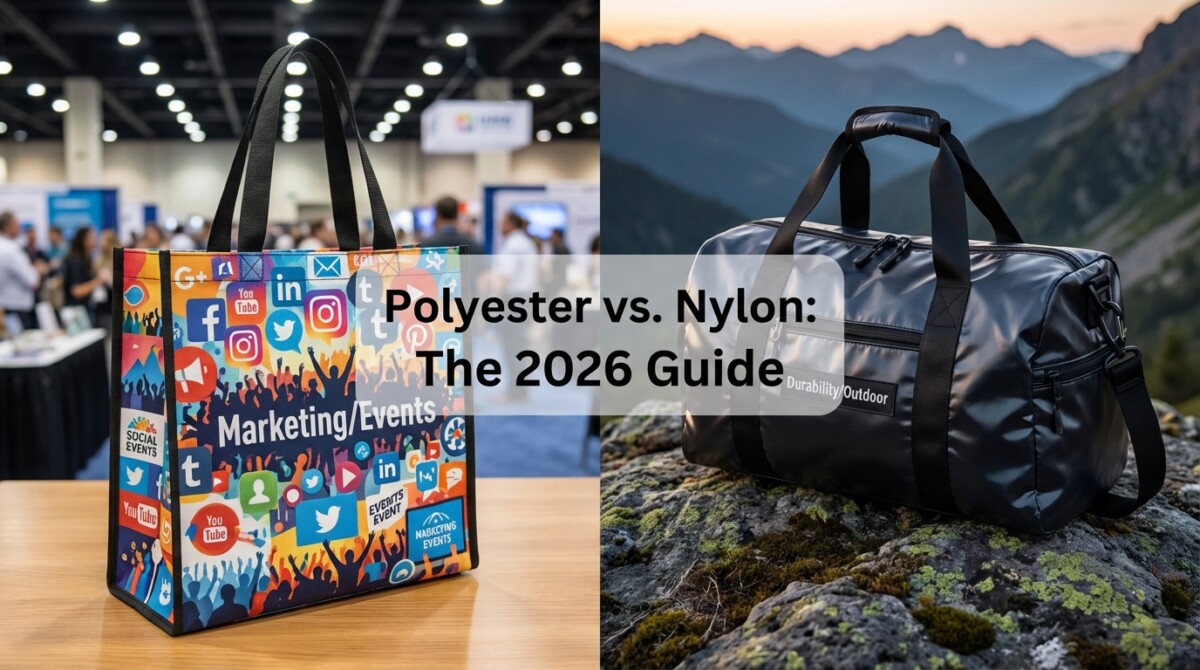
Scenario A: The Trade Show & Expo
- Goal: Maximum distribution, high visibility.
- Recommendation: Non-Woven or 600D Polyester Totes.
- Why: Low cost allows you to hand out thousands. The flat surface is perfect for a giant, bold logo that can be seen from across the hall.
Scenario B: The Employee “Welcome Kit”
- Goal: Appreciation, long-term usage, premium feel.
- Recommendation: Ripstop Nylon Backpack or Duffle.
- Why: Employees will use this for the gym or travel. The durability reflects well on the company culture.
Scenario C: The Retail “Green” Initiative
- Goal: Replacing single-use plastic bags in stores.
- Recommendation: Foldable rPET Polyester Bags.
- Why: They are washable (hygienic for groceries), eco-certified, and cheap enough to sell at the counter.
Before finalizing your order, it is crucial to understand the properties of your chosen fabric. Selecting the right shopping bag material goes beyond just price; it involves analyzing the lifecycle, environmental impact, and user experience of the product.
Cost Analysis: The Hidden Logistics
When sourcing bags globally, the price per unit is only part of the equation.
- Upfront Cost: Polyester is generally 20-30% cheaper than nylon. The manufacturing process for polyester is simpler and feedstocks are more abundant.
- Shipping Weight: Nylon is stronger, so manufacturers can use a thinner fabric (lower Denier) to achieve the same strength as a thicker polyester. This can result in lighter shipping weights for air freight, potentially offsetting the higher material cost. Experienced exporters like Bk-Bags can help you calculate these volumetric weights accurately to optimize your landed cost.
- Longevity ROI: If a cheap bag tears after one week, your brand impression dies with it. A nylon bag that lasts 3 years provides thousands of extra impressions (CPI – Cost Per Impression), making it cheaper in the long run for heavy-use items.
Conclusion: Sourcing Smarter in 2026
The debate between polyester and nylon isn’t about which material is “better” in the abstract, it’s about which material solves your specific business problem.
- Choose Polyester if you need vibrant full-color branding, eco-compliance (rPET), and budget efficiency for high volumes.
- Choose Nylon if you need superior strength, a premium tactile experience, and a product that survives rough handling.
As supply chains become more transparent, ensuring your bags are free from harmful chemicals and ethically stitched is just as important as the fabric choice. Partnering with a specialized manufacturer like Bk-Bags, who operates ethical facilities across Vietnam, Cambodia, China, and India, ensures you get the right balance of quality, customization, and compliance. Don’t let your brand fall apart at the seams; choose the material and the partner that carries your message into the future.
Frequently Asked Questions (FAQ)
Which material is stronger?
Nylon. It has superior tensile strength and stretchability, making it less likely to tear under heavy loads compared to polyester.
Which is better for printing logos?
Polyester. It supports Dye Sublimation for photo-realistic, fade-proof images. Nylon is difficult to print on and is usually limited to simple, one-color designs.
Which is more water-resistant?
Polyester. It naturally repels water and dries instantly. Nylon absorbs moisture and requires a chemical coating to be water-resistant.
Why is Polyester cheaper?
Polyester is typically 20-30% cheaper to produce than Nylon, making it the most budget-friendly option for high-volume trade shows.
What is rPET?
rPET (Recycled Polyester) is fabric made from recycled plastic bottles. It is the 2026 industry standard for sustainable packaging, using 50% less energy than virgin plastic.