





Quick Decision Framework
- Who This Is For: Growth to established Shopify brands ($50K to $2M+ monthly) who are leaving revenue on the table by showing every shopper the same checkout experience regardless of who they are, where they live, or what they are buying.
- Skip If: You are under $50K monthly revenue and do not yet have meaningful order volume to segment. PDQ’s per-order pricing model and white glove onboarding require enough throughput to justify the investment. Come back when you are consistently doing 500 or more orders per month.
- Key Benefit: PDQ is the only platform that combines AI-powered checkout segmentation, A/B testing at the checkout level, delivery optimization, and branded post-purchase tracking into a single connected system built natively for Shopify.
- What You’ll Need: Shopify Plus or Advanced plan for full checkout extensibility. A willingness to let PDQ’s team run structured tests (they plan the tests; you approve them). Realistic timeline of 3 to 6 weeks before you see statistically significant results from A/B testing.
- Time to Complete: 12 minutes to read this review; 30 minutes to connect to Shopify and complete setup; 3 business days to receive your free checkout audit; 3 to 6 weeks to first meaningful test results.
If you are evaluating PrettyDamnQuick, you are almost certainly also looking at Checkout Blocks (Shopify’s native extension builder) and ShipStation (for the shipping and fulfillment side). These three represent different philosophies: PDQ takes the approach of a fully managed, AI-driven optimization partner that runs your checkout like a revenue program. Checkout Blocks is a self-serve customization tool that gives you the canvas but leaves the strategy entirely to you. ShipStation is a shipping operations platform that handles label printing and carrier management but does not touch checkout conversion at all. By the end of this review, you will know exactly which combination fits where you are today and what PDQ actually does that neither of those alternatives can replicate.
Is PrettyDamnQuick Actually Worth It for Your Shopify Store?
The honest answer is: for growth and established stage brands, PDQ is one of the highest ROI tools in the Shopify ecosystem right now. Not because of hype, but because checkout is the one place in your entire funnel where you have already paid to bring someone, they have already decided to buy, and yet most brands are still showing them a one-size-fits-all experience that treats a first-time $30 buyer in rural Montana the same as a loyal $300 VIP in Manhattan. That gap is where PDQ operates, and the case study results they publish are not outliers. They are what happens when you stop guessing and start testing.
I have been in and around the Shopify ecosystem since its early growth years, working with hundreds of DTC brands across my time as a Shopify Merchant Success Manager and through the 440 plus conversations on the eCommerce Fastlane podcast. I have watched checkout optimization go from an afterthought to one of the most contested categories in the Shopify app ecosystem. What makes PDQ different is not the feature list. It is the model: they bring the testing strategy, you bring the approvals. That distinction matters enormously for operators who do not have a dedicated CRO team.
This review is based on direct analysis of PDQ’s platform as of March 2026, evaluation of their published case studies across multiple brand stages and categories, review of all 84 Shopify App Store reviews (including the one negative review, which I will address honestly), comparison against Checkout Blocks and ShipStation across the specific use cases that matter most to Shopify merchants, and conversations with operators who have used the platform at the $100K to $2M monthly revenue range.
Who Is PrettyDamnQuick Actually For?
Emerging Stage ($0 to $50K Monthly)
The Promise: Free to install, and PDQ will deliver a checkout audit within 3 business days of connecting. You get immediate visibility into what your checkout is leaving on the table.
The Reality: The per-order pricing model at $0.24 per order is not a burden at this stage in dollar terms, but the bigger constraint is volume. A/B testing requires statistical significance to produce reliable results, and at under 500 orders per month, tests take too long to reach conclusions you can act on. The managed testing model also assumes a level of operational bandwidth that most emerging founders do not yet have.
The Trigger: When you are consistently hitting 500 or more orders per month and you have noticed that your checkout conversion rate is below 65%, that is the signal. Before that, focus on product, traffic, and basic conversion fundamentals.
Skip If: You are still figuring out product-market fit or your primary conversion problem is happening upstream of checkout, not inside it.
Growth Stage ($50K to $500K Monthly)
The Promise: This is PDQ’s sweet spot. At this revenue level, you have enough order volume for A/B tests to produce actionable results within weeks rather than months. The segmentation engine starts to show real differences between customer cohorts, and even a 3 to 5 point improvement in checkout conversion at $200K monthly revenue translates to $6K to $10K in incremental monthly revenue before you have touched a single other part of your funnel.
The Reality: You will need to be on Shopify Plus or Advanced to access the full checkout extensibility that makes PDQ’s deepest features work. If you are on Basic or Shopify plan, the integration is limited. Budget for the plan upgrade alongside PDQ if you are not already there.
The Trigger: When your paid media CAC is rising and you are looking for ways to extract more value from the traffic you are already paying for, checkout optimization becomes the highest-leverage move available to you. That is the moment PDQ earns its cost back quickly.
Skip If: Your primary operational bottleneck is fulfillment, not conversion. Fix the back end first or use PDQ’s delivery optimization module alongside checkout optimization.
Established Stage ($500K to $2M+ Monthly)
The Promise: At this stage, PDQ operates as a genuine revenue partner. The Laura Geller case study (AS Beauty, $1.5M annual profit uplift from checkout optimization) and the Underoutfit case study ($984K additional annual revenue) are not marketing fiction. They reflect what happens when you have enough volume for rapid iteration and a team that can act on PDQ’s recommendations with speed.
The Reality: At this scale, you may also be evaluating enterprise-grade solutions like Checkout.com or custom Shopify Plus checkout builds. PDQ’s managed model is a strength for most operators at this stage, but if you have an in-house CRO team that wants full autonomy over test design, the collaborative model may feel like a constraint rather than a benefit.
The Trigger: When your checkout conversion rate has plateaued despite traffic growth and your team has run out of obvious hypotheses to test, PDQ’s AI-driven segmentation will find patterns your team has not considered.
Skip If: You are already running a sophisticated in-house CRO program with dedicated engineering resources and need full programmatic control over every test variable.
Stage Recommendation at a Glance
What PrettyDamnQuick Actually Does Well
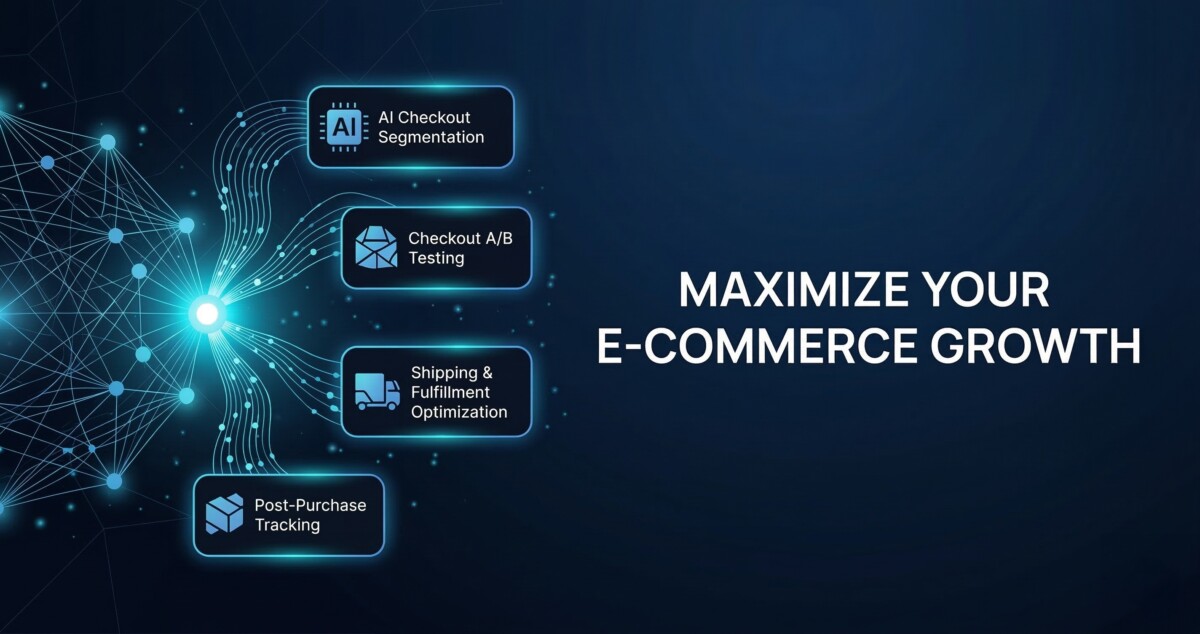
Capability 1: AI-Powered Checkout Segmentation
The core insight behind PDQ is that your checkout is not one experience. It is hundreds of potential experiences, and showing everyone the same one is a choice you are making by default rather than by design. PDQ’s segmentation engine uses thousands of data points, including purchase history, cart value and contents, delivery location, time of day and day of week, acquisition channel, and spend sensitivity signals, to classify each shopper in real time and route them to the checkout experience most likely to convert them at the highest margin. This is not rule-based segmentation where you manually define “if cart value is over $150, show free shipping.” This is machine learning finding patterns across your order history that you would never identify manually, and it runs at checkout, not after the fact.
The Stat That Matters
Gains In Bulk saw a 12% conversion rate increase and $3.97 more revenue per checkout after implementing PDQ’s segmented checkout experiences, translating to $382K in annualized incremental revenue. The conversion improvement came specifically from differentiating the checkout experience between first-time shoppers and returning customers rather than treating both cohorts identically. (Source: PDQ published case study, verified March 2026)
Emerging ($0 to $50K): Segmentation requires data to work well. At this stage, you do not yet have enough order history for the AI to find statistically meaningful patterns. You can still install PDQ and receive the free checkout audit, which will surface manual improvements you can implement immediately, but the AI-driven segmentation layer will not be operating at full capability.
Growth ($50K to $500K): This is where segmentation starts to compound. You likely have 6 to 12 months of order history, enough for PDQ to identify your top 3 to 5 distinct customer cohorts and build differentiated checkout experiences for each. The difference between showing a loyal repeat customer a personalized delivery promise versus showing them the same generic checkout as a first-time visitor is measurable in conversion points within weeks.
Established ($500K to $2M+): At this scale, the segmentation model becomes increasingly precise. You have enough data for micro-segmentation: differentiating not just between new and returning customers but between customers in different geographic zones, customers who respond to urgency versus those who respond to social proof, and customers whose AOV signals premium service sensitivity. Each additional layer of segmentation is an additional lever on revenue per checkout.
vs. Checkout Blocks and ShipStation: Checkout Blocks offers no AI segmentation. It is a canvas tool: you design the experience, and every shopper gets whatever you have built. ShipStation has no checkout presence at all. PDQ’s segmentation capability is genuinely differentiated in the Shopify ecosystem at this level of sophistication.
Capability 2: Managed A/B Testing at the Checkout Level
Most Shopify brands do zero A/B testing at checkout. Not because they do not want to, but because running statistically valid tests inside Shopify checkout requires technical setup that most teams do not have the bandwidth to manage. PDQ removes that barrier by taking on the test planning themselves. Their team analyzes your store data, proposes specific tests (delivery messaging, shipping rate presentation, upsell placement, offer timing, checkout layout variations), and runs those tests only after you approve them. Winning experiences are automatically applied across the relevant segment. Underperforming tests go back to the drawing board. The result is a checkout that gets measurably better over time without requiring your team to own the CRO program internally.
The Stat That Matters
Laura Geller (AS Beauty) generated $1.4M in revenue impact from a single A/B test run through PDQ, and $1.5M in annual profit uplift total from their checkout optimization program. VP Digital Bobby Missry described it as “insane not to try.” The tests focused on delivery promise messaging, price sensitivity, and segment-specific offer presentation. (Source: PDQ published case study, verified March 2026)
Emerging ($0 to $50K): A/B tests at this stage will take too long to reach statistical significance to be actionable. The free checkout audit will identify quick wins you can implement directly without testing, and those are where to focus first.
Growth ($50K to $500K): This is where the managed testing model pays for itself. You get the benefit of a structured CRO program without hiring a CRO specialist. PDQ’s team brings test ideas informed by what is working across their entire merchant base, not just your store in isolation. That cross-merchant pattern recognition is something you cannot replicate internally at this stage.
Established ($500K to $2M+): At this volume, tests reach significance faster, which means you can run more tests per quarter and compound improvements more rapidly. Brands at this stage typically run 4 to 8 active tests simultaneously across different customer segments, each optimizing a different dimension of the checkout experience.
vs. Checkout Blocks and ShipStation: Checkout Blocks has no A/B testing capability. It is a design tool, not a testing platform. ShipStation has no A/B testing capability at all. PDQ’s managed testing program is a category-defining differentiator in the Shopify app ecosystem.
Capability 3: Real-Time Delivery Promises and Shipping Optimization
One of the most underrated drivers of checkout abandonment is delivery uncertainty. When a shopper in Chicago does not know whether their order will arrive in 2 days or 8 days, the default behavior is to abandon and look for a retailer who gives them a clearer answer. PDQ addresses this by connecting checkout to real carrier and fulfillment data in real time, so the delivery promise shown at checkout is accurate to the shopper’s actual location and your current inventory position, not a generic estimate. This is not just a conversion tool. It is also a customer service tool. Groove Life saw 80% fewer “where is my order” requests after implementing PDQ’s delivery promise system, which translates directly into reduced support costs and team time.
The Stat That Matters
Soul replaced ShipStation with PDQ’s delivery optimization module and saw a 130% increase in shipping revenue, a $23.60 AOV increase, and 6% higher checkout conversion than the industry average. The key driver was PDQ’s ability to display accurate, location-specific delivery promises at checkout while simultaneously optimizing carrier selection for cost on the fulfillment side. (Source: PDQ published case study, verified March 2026)
Emerging ($0 to $50K): Even at this stage, showing accurate delivery dates at checkout is a meaningful conversion lever. PDQ’s free audit will tell you whether vague delivery messaging is contributing to your abandonment rate. The delivery promise feature does not require high order volume to work, so this is one area where emerging brands can get immediate value.
Growth ($50K to $500K): At this stage, delivery promise accuracy starts to interact with your shipping costs in meaningful ways. PDQ’s AI-powered carrier selection automatically routes each order to the lowest-cost carrier that will still meet the delivery promise shown at checkout. That means you can offer competitive delivery timelines without overpaying on shipping rates, which is a margin lever that compounds across every order.
Established ($500K to $2M+): Multi-warehouse routing becomes critical at this stage. PDQ’s delivery workspace handles orders flowing from multiple fulfillment locations, automatically routing each order to the closest facility and selecting the optimal carrier for that origin-destination pair. An apparel brand doing 82,000 orders per month replaced ShipStation with PDQ for exactly this capability.
vs. Checkout Blocks and ShipStation: Checkout Blocks cannot display real-time delivery promises. ShipStation handles the fulfillment side well but has no checkout presence and cannot influence conversion. PDQ is the only platform that connects the delivery promise shown at checkout to the actual carrier selection made at fulfillment, closing the loop between what you promise and what you deliver.
Capability 4: Checkout Extensions (Upsells, Badges, Post-Purchase Ads, and Tracking Pages)
PDQ’s checkout extensions layer allows you to add upsells, gift offers, trust badges, delivery assurance messaging, and post-purchase ads directly into the checkout and post-purchase flow. Their Track360 branded tracking pages turn what is typically a dead-end transactional page into a repeat purchase driver, allowing you to surface product recommendations, promotional offers, and loyalty messaging at the moment when customer satisfaction is highest (right after a successful delivery). The post-purchase ad placement is particularly interesting for brands with complementary product lines: you are showing an ad to someone who just converted, which is categorically different from cold traffic.
The Stat That Matters
PDQ reports a 40% shipping revenue uplift and $19 average revenue uplift per checkout across brands using their checkout extension and upsell capabilities. Obvi specifically saw a $177 customer lifetime value increase alongside a 4.1% new shopper conversion increase after implementing PDQ’s segmented checkout with extensions. (Source: PDQ website and published case studies, verified March 2026)
Emerging ($0 to $50K): Post-purchase upsells and tracking page monetization are available even at lower order volumes. If you have complementary products that make sense as add-ons, the checkout extension layer can drive incremental AOV without requiring the full segmentation engine to be operational.
Growth ($50K to $500K): The combination of segmented checkout experiences and targeted post-purchase offers creates a compounding effect. A returning high-value customer sees a different upsell than a first-time buyer, and the tracking page experience is personalized to their purchase history. This is where PDQ starts to function as a retention tool, not just a conversion tool.
Established ($500K to $2M+): At scale, the tracking page becomes a meaningful revenue channel in its own right. With 82,000 orders per month, even a 2% click-through rate on a post-purchase offer represents 1,640 incremental purchase opportunities per month from customers who have already demonstrated buying intent.
vs. Checkout Blocks and ShipStation: Checkout Blocks can add static content blocks to checkout but lacks the AI-driven personalization that makes PDQ’s extensions context-aware. ShipStation has no checkout extension capability. PDQ’s extension layer is unique in connecting checkout personalization to post-purchase experience in a single managed system.
Shopify Integration: What Actually Syncs
What Syncs Natively: All Shopify order data, customer purchase history, cart contents and value, customer location data, Shopify customer accounts, Shopify Flow automations, Klaviyo customer segments and email flows, Gorgias support ticket data, carrier rate data from 100 or more carriers, and Snowflake data warehouse for enterprise analytics.
What Requires Configuration: Custom carrier accounts (PDQ can integrate any carrier, but new carriers not already in their system may take a few days to configure), multi-warehouse routing rules (requires setup with PDQ’s team), and Shopify Flow automation triggers (require manual workflow creation).
What Doesn’t Sync Automatically: Third-party subscription platforms (Recharge, for example, requires separate configuration), custom ERP or inventory management systems outside the standard Shopify ecosystem, and international tax calculation tools that operate outside Shopify’s native tax system.
Integration Depth in Context
PDQ’s native checkout extension architecture means it operates inside Shopify’s checkout rather than wrapping around it. This matters because third-party checkout overlays (a common approach among older checkout optimization tools) are increasingly fragile as Shopify tightens its checkout extensibility policies. PDQ’s architecture is aligned with where Shopify is taking the platform, not fighting against it. (Source: Shopify Checkout Extensibility documentation and PDQ App Store listing, verified March 2026)
Emerging: The Klaviyo integration is particularly valuable even at this stage. PDQ can trigger Klaviyo flows based on checkout behavior, including abandoned checkout sequences that are informed by which segment the shopper fell into, making your email recovery flows more targeted than a generic abandoned cart sequence.
Growth: The Shopify Flow integration becomes powerful here. You can build automations that trigger based on PDQ checkout outcomes, for example, tagging customers who converted through a specific checkout variant for a loyalty campaign, or flagging high-value orders for priority fulfillment routing.
Established: The Snowflake integration is the key enterprise capability. It allows you to pipe PDQ’s checkout and delivery data directly into your data warehouse for custom reporting, cohort analysis, and integration with your broader BI stack. This is what separates PDQ from simpler checkout tools when you need to answer complex questions about checkout performance across customer segments.
Pricing vs. ROI: The Honest Calculation
PDQ operates as a specialist tool that adds to your existing stack rather than replacing it wholesale. Here is the ROI math for a growth stage brand doing $200K monthly revenue with 1,500 orders per month:
The ROI Math at the Growth Stage
- PDQ cost at $0.24 per order: $360 per month at 1,500 orders
- Industry-reported checkout conversion improvement from segmentation: 3 to 7 percentage points (Source: PDQ published case studies, verified March 2026)
- On $200K monthly revenue with checkout currently converting at 65%: a 3-point lift to 68% = approximately $9,200 in incremental monthly revenue at current traffic levels
- Additional revenue per checkout from upsells and extensions: PDQ reports $19 average uplift per checkout across their merchant base
- At 1,500 orders and a conservative $8 uplift per checkout: $12,000 additional monthly revenue from checkout optimization alone
- Platform cost: $360 per month
- Net ROI: 25x to 33x on platform cost at the growth stage
- The constraint is never the platform cost. It is whether you have the operational bandwidth to engage with PDQ’s testing program and act on recommendations with speed.
Emerging Stage ROI: At under 500 orders per month, the per-order cost is manageable ($120 or less per month) but the ROI from the testing program will be limited by the time required to reach statistical significance. The free checkout audit alone may surface $5K to $20K in quick wins depending on how suboptimal your current checkout is. That is worth the install even if you do not engage the full testing program immediately.
Growth Stage ROI: At 1,000 to 5,000 orders per month, this is PDQ’s highest ROI zone. The math above applies, and case studies consistently show 3x to 15x ROI on platform cost within the first 90 days of active testing. The managed model means you are not paying for a CRO consultant separately, which at this stage would cost $3,000 to $8,000 per month for comparable expertise.
Established Stage ROI: At 5,000 or more orders per month, the annual plan pricing becomes important to negotiate. At $0.24 per order, a brand doing 20,000 orders per month would be paying $4,800 per month on the standard plan. At that volume, the ROI is still compelling based on case study results, but the annual plan negotiation is worth having before committing.
User Experience and Team Adoption
Who Manages This Day to Day:
- Emerging: Founder or head of ecommerce. 30 to 60 minutes per week reviewing PDQ’s recommendations and approving or declining test proposals.
- Growth: Head of ecommerce or marketing director. 1 to 2 hours per week engaging with test results, approving new tests, and implementing quick wins from the audit. The Slack channel makes this feel more like a team conversation than a vendor relationship.
- Established: Dedicated ecommerce or CRO manager, potentially with input from the marketing and operations teams. At this stage, PDQ functions as an extension of your team rather than a tool you manage, and the weekly cadence of test reviews becomes a standing meeting rather than an ad-hoc check-in.
The Honest Reality from Long Term Users
ThirdLove, after more than a year on the platform, described PDQ as “a true partner that wants to drive our business as much as theirs” and specifically called out PDQ’s honesty as a differentiator: “I was recently so impressed with their honesty.” Andar, after 2 years, highlighted the proactive planning and idea generation from PDQ’s team as the key differentiator from other app relationships. The consistent theme across long-term reviews is that PDQ operates more like a retained CRO consultant than a self-serve SaaS tool. (Source: Shopify App Store reviews, January 2026)
Pros and Cons: The Honest Assessment
Strategic Advantages
Advantage 1: Managed CRO Without the Consultant Cost
(Source: Shopify App Store reviews and PDQ case studies, March 2026)
PDQ’s team plans and manages your A/B testing program, which means you get the benefit of a structured CRO function without hiring a dedicated CRO specialist or agency. At the growth stage, a CRO consultant costs $3,000 to $8,000 per month. PDQ’s per-order model at typical growth stage volumes runs $300 to $1,200 per month with the testing program included.
Advantage 2: Checkout-to-Fulfillment Continuity
(Source: PDQ product pages and case studies, March 2026)
No other platform in the Shopify ecosystem connects the delivery promise shown at checkout to the actual carrier selection made at fulfillment. PDQ closes this loop, which means your customers see accurate delivery dates (improving conversion) and your operations team gets AI-optimized carrier selection (reducing shipping costs). Soul’s 130% shipping revenue increase came directly from this connected architecture.
Advantage 3: Native Shopify Architecture
(Source: Shopify App Store listing and PDQ product documentation, March 2026)
PDQ is built on Shopify’s official checkout extensibility framework. This matters because Shopify is actively deprecating checkout overlays and third-party checkout wrappers. PDQ’s architecture is aligned with Shopify’s platform direction, which means you are not building on a foundation that Shopify may break in a future update.
Advantage 4: Over 1 Billion Checkouts of Cross-Merchant Pattern Recognition
(Source: PDQ website, verified March 2026)
PDQ has served over 1 billion checkouts across their merchant base. That scale means their AI segmentation and test recommendation engine is informed by patterns across thousands of stores, not just your own data. When PDQ’s team suggests a test, it is because they have seen that test work at similar brands at similar stages, not because they are guessing.
Honest Limitations
Three Things Most PDQ Reviews Won’t Tell You
- The Blueprint Bryan Johnson Situation. In February 2026, Blueprint (Bryan Johnson’s brand) left a 1-star review alleging that PDQ’s recommendations were “deceptive to customers” and that when they tried to remove PDQ’s extensions, the company contacted their CFO and co-founders using “fear-based tactics.” PDQ’s response acknowledged the complaint and stated that nothing they recommend is intended to be deceptive. I am flagging this because it is a real review from a real brand with a large public profile, and it raises a legitimate question: are all of PDQ’s recommended tests aligned with your brand’s standards for customer communication? The answer is that you control what gets approved. PDQ proposes. You decide. But this review is a reminder to review every test recommendation critically before approving it, not as a rubber stamp. (Source: Shopify App Store, February 2026)
- Pricing Transparency at Scale. The $0.24 per-order model is clear at entry level, but pricing for the Delivery Optimization module, annual plans, and enterprise configurations is not publicly listed. At 10,000 or more orders per month, you need to negotiate directly with PDQ’s sales team before you can model the full cost. Build in time for that conversation before committing. (Source: Shopify App Store listing and PDQ website, March 2026)
- Shopify Plus or Advanced Required for Full Value. PDQ’s deepest checkout extensibility features require Shopify Plus or Advanced. If you are on a lower Shopify plan, you will not have access to the full checkout customization capability that makes segmentation and A/B testing possible at the level PDQ’s case studies demonstrate. The app listing says “free to install” without prominently surfacing this plan requirement, so verify your plan eligibility before investing time in onboarding. (Source: Shopify checkout extensibility documentation, March 2026)
PrettyDamnQuick vs. Checkout Blocks vs. ShipStation: The Deciding Factor
Reading the comparison: The “Tie” on carrier optimization reflects different contexts rather than equal capability. ShipStation is a mature, standalone OMS with deep carrier relationships and is the right choice if your only need is fulfillment operations without checkout integration. PDQ’s carrier optimization is specifically designed to connect to the delivery promise shown at checkout, which ShipStation cannot do. The “Tie” on checkout design reflects a genuine philosophical difference: Checkout Blocks gives you full creative control with zero AI, while PDQ gives you AI-driven personalization with less manual design flexibility. Which is better depends entirely on whether you have the internal expertise and bandwidth to run your own checkout design strategy.
Real Results: How Shopify Brands Are Using PrettyDamnQuick
Case Study 1: Established Apparel Brand, $500K to $2M+ Monthly
The Problem: UnderOutfit had a checkout that treated every shopper identically, with no differentiation between first-time visitors and loyal repeat customers, and no segment-specific delivery promises or offers.
What Changed: PDQ segmented their shoppers and ran targeted A/B tests on checkout experiences for each cohort, including delivery messaging, offer timing, and price sensitivity testing.
The Outcome: $984K additional annual revenue, 14% decrease in abandoned first-time shoppers, 3 basis points checkout conversion uplift.
Verification: Results reported directly by Felix Leshno, Co-founder and CEO of UnderOutfit. Last verified March 2026 via PDQ published case study.
Case Study 2: Established Beauty Brand, $2M+ Monthly
The Problem: Laura Geller (AS Beauty) had plateaued on checkout conversion and needed a structured testing program to find new revenue levers without increasing traffic spend.
What Changed: PDQ ran 7 segmented A/B tests focused on delivery promise presentation, price sensitivity, and segment-specific offer design.
The Outcome: $1.5M annual profit uplift, 7.9% more checkout conversion, $3.4M annual revenue increase. Single highest-impact test generated $1.4M in revenue impact.
Verification: Results reported directly by Bobby Missry, VP Digital at AS Beauty and Laura Geller. Last verified March 2026 via PDQ published case study.
Case Study 3: Growth Stage Supplements Brand, $50K to $500K Monthly
The Problem: Gains In Bulk wanted to improve checkout conversion and revenue per checkout without increasing their paid media budget, and needed to differentiate the experience between new and returning customers.
What Changed: PDQ implemented segmented checkout experiences and AI-powered dynamic upsells and offers, with A/B testing to identify the highest-converting variant per segment.
The Outcome: 12% conversion rate increase, $3.97 more revenue per checkout, $382K increase in annualized revenue.
Verification: Results reported directly by Kaleb Mattice, CMO of Gains In Bulk. Last verified March 2026 via PDQ published case study.
My Verdict by Stage
Emerging Stage ($0 to $50K Monthly): Not Yet
If you are under $50K monthly, the free checkout audit is genuinely worth installing for. PDQ will tell you within 3 business days what your checkout is leaving on the table, and some of those quick wins are implementable immediately without a testing program. But do not expect the AI segmentation and A/B testing engine to deliver meaningful results at this volume. Come back when you are consistently at 500 or more orders per month.
The trigger: When you cross 500 orders per month and your checkout conversion is below 65%.
The risk of waiting: Every month you delay is a month of checkout data you are not collecting and a month of compounding test results you are not accumulating. The brands that start the testing program earlier have a larger data advantage over time.
Growth Stage ($50K to $500K Monthly): Strong Yes
This is where I would prioritize PDQ over almost any other tool in the Shopify ecosystem. You have enough volume for tests to produce actionable results, your CAC is likely rising as paid channels mature, and extracting more value from the traffic you are already paying for is the highest-leverage move available to you. The managed model means you are not adding internal workload, you are adding a CRO function you probably do not have yet.
The trigger: When your checkout conversion has been flat for 60 or more days despite traffic growth, or when your AOV has plateaued despite product expansion.
The risk of waiting: Every month at a suboptimal checkout conversion rate is compounding revenue loss. At $200K monthly revenue, a 3-point conversion improvement is worth approximately $9K per month. That is $108K per year you are leaving on the table while you wait.
Established Stage ($500K to $2M+ Monthly): Strong Yes
At this scale, PDQ functions as a revenue program, not a tool. The case study results at this stage are in the seven-figure annual impact range, and the per-order pricing model becomes increasingly favorable to negotiate on annual terms. The one caveat: if you already have a sophisticated in-house CRO team that wants full programmatic control, have an honest conversation with PDQ about how much autonomy you will have over test design before committing.
The trigger: When you are spending $50K or more per month on paid media and your checkout conversion has not improved meaningfully in the past 6 months.
The risk of waiting: At this revenue level, the opportunity cost of a suboptimal checkout is measured in hundreds of thousands of dollars per year. The Laura Geller case study is not an outlier. It is what happens when you commit to a structured testing program at scale.
The Question Worth Sitting With
If you knew that your current checkout was converting at 3 percentage points below what it could be with the right segmentation and testing, and you knew the gap was worth $100K or more per year at your current revenue level, what would you need to see before you decided it was worth 30 minutes to find out?
Frequently Asked Questions About PrettyDamnQuick for Shopify
What does PrettyDamnQuick actually do for my Shopify checkout?
PDQ segments your shoppers in real time using thousands of data points (purchase history, cart value, location, time of day, and more), then shows each segment the checkout experience most likely to convert them at the highest margin. It also runs A/B tests on your checkout with PDQ’s team managing the test design and your team approving each test before it goes live. The result is a checkout that improves continuously over time rather than staying static.
How does PrettyDamnQuick compare to Checkout Blocks and ShipStation for Shopify brands?
Checkout Blocks is a self-serve design tool: you build the checkout experience yourself with no AI or testing capability. ShipStation is a shipping operations platform with no checkout presence. PDQ is the only platform that combines AI-driven checkout segmentation, managed A/B testing, real-time delivery promises, and carrier-optimized fulfillment in a single connected system. They solve different problems, and many brands use PDQ alongside ShipStation for different functions.
How much does PrettyDamnQuick cost for a Shopify store?
The Checkout Optimizer plan is free to install with a $0.24 per-order charge. At 1,000 orders per month, that is $240 per month. Annual plans with lower per-order rates are available by contacting PDQ directly. Delivery Optimization pricing is not publicly listed and requires a direct conversation with their sales team. There is no flat monthly fee at the entry level.
How long does it take to set up PrettyDamnQuick on Shopify?
The app connects to Shopify in approximately 30 minutes. PDQ’s team delivers a free checkout audit within 3 business days of installation. Your first live A/B test typically launches within 2 to 4 weeks of onboarding, after PDQ’s team analyzes your data and you approve their initial test proposals.
Does PrettyDamnQuick work with Shopify Basic or do I need Shopify Plus?
PDQ’s full checkout extensibility features, including AI segmentation, A/B testing, and dynamic checkout experiences, require Shopify Plus or Advanced. On Basic or Shopify plans, the checkout customization capability is limited by Shopify’s platform restrictions, not by PDQ. If you are not on Plus or Advanced, factor in the plan upgrade cost when evaluating PDQ’s ROI.
What are the best alternatives to PrettyDamnQuick for Shopify checkout optimization?
For self-serve checkout design without AI: Checkout Blocks (free, available on Shopify App Store). For shipping and fulfillment operations: ShipStation (strong multi-carrier OMS, no checkout presence). For post-purchase upsells specifically: ReConvert or Zipify Pages. No single alternative replicates PDQ’s combination of AI segmentation, managed testing, and delivery promise integration in one platform.
Who should NOT use PrettyDamnQuick?
Brands under $50K monthly revenue who do not yet have enough order volume for A/B testing to produce statistically significant results. Brands on Shopify Basic or Shopify plan who want the full feature set without upgrading. Brands with a highly opinionated in-house CRO team that wants full programmatic control over every test variable without a managed approval workflow. And, based on the Blueprint Bryan Johnson review, brands with very specific ethical standards around customer-facing messaging who want to review every recommended test against their brand guidelines before approving.
Review Information: Published March 2026 | Last Verified: March 2026 | Next Scheduled Review: June 2026 | Reviewer: Steve Hutt, eCommerce Fastlane | Pricing verified directly from apps.shopify.com/prettydamnquick (March 2026) | App Store rating verified March 2026 (4.9/5.0, 84 reviews) | Case study data verified from prettydamnquick.com/our-case-studies (March 2026)
