






Verified & Reviewed
Published on March 12, 2026 Written By Meredith Flora

Published on March 12, 2026 Written By Meredith Flora

Subscribe for More
Receiving inventory is a foundational process that can make or break your ecommerce operations. From the moment goods arrive at your warehouse or fulfillment center, every detail matters. Poor receiving practices can lead to inaccurate inventory counts, fulfillment delays, and costly errors that ripple across your supply chain.
In this guide, we’ll walk through how to create a streamlined, accurate, and scalable receiving process. You’ll also learn how advanced tactics like EDI integration and distributed inventory models can boost accuracy and efficiency. Plus, we’ll explore how a fulfillment provider like ShipBob can help you simplify and strengthen your receiving operations to support long-term growth.
What is receiving inventory?
Receiving inventory is the systematic process of accepting, verifying, and recording incoming stock into a warehouse or fulfillment center. It’s the critical first step in the inventory management lifecycle for ecommerce businesses, setting the stage for accurate order fulfillment and customer satisfaction.
While often confused with other inventory processes like purchasing or storage, receiving is a distinct function that focuses on ensuring the accuracy and integrity of inbound goods. Effective inventory receiving procedures verify that what arrives at your facility matches what you ordered from your suppliers, both in terms of quantity and quality.
Why receiving inventory matters for ecommerce success
Proper receiving directly impacts customer satisfaction through accurate order fulfillment. When your receiving process is efficient and error-free, you can confidently sell products knowing that you have the right items in the right quantities on hand.
Conversely, receiving errors can cascade into stockouts, backorders, and shipping delays that frustrate customers and damage your brand reputation.
Beyond customer experience, efficient receiving processes also reduce holding costs and improve cash flow by quickly making new inventory available for sale. Plus, real-time visibility during the receiving process supports better business decisions by providing accurate data on what’s in stock and what’s on the way.
Getting receiving right is essential for ecommerce success. It’s the foundation upon which your entire inventory management operation is built.
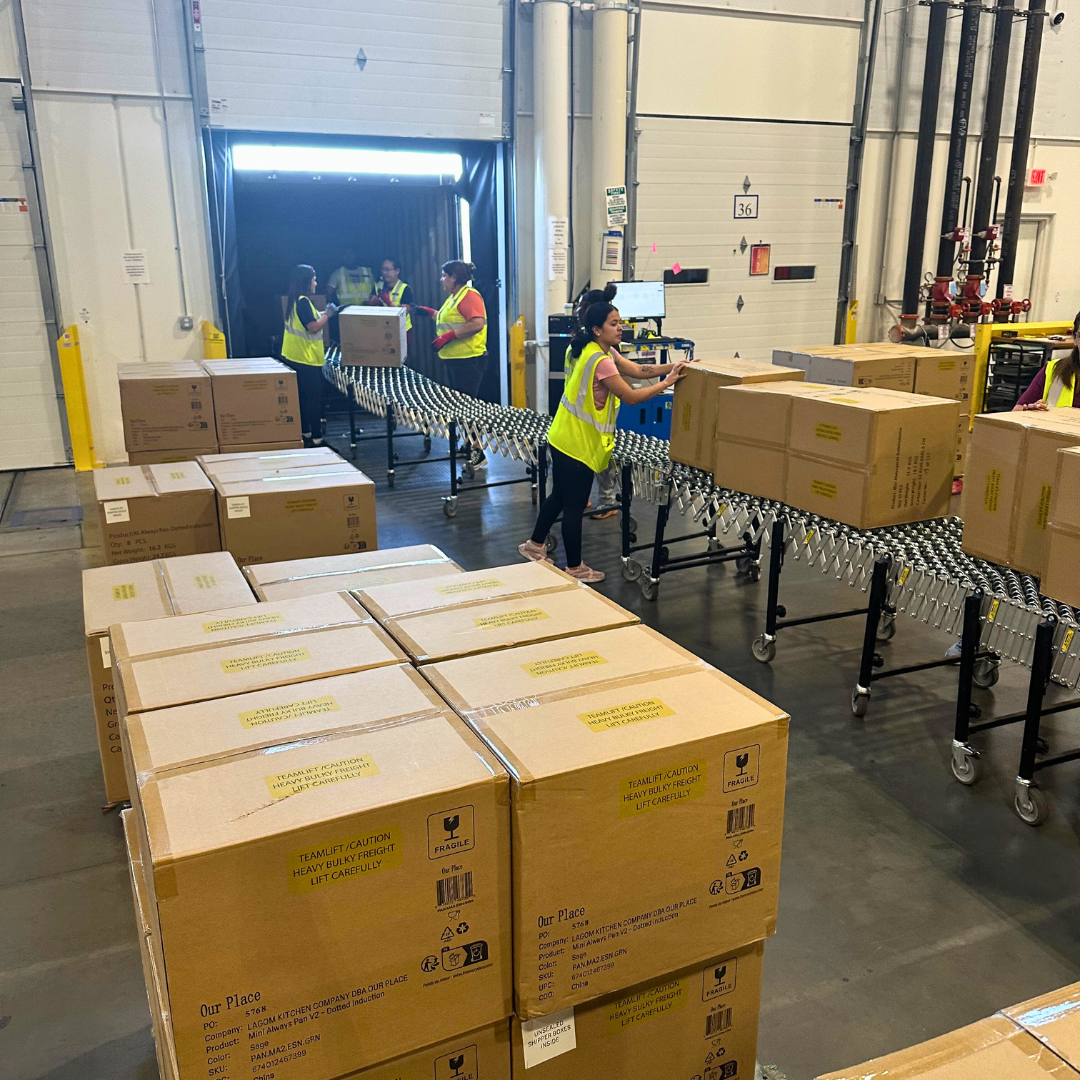
The inventory receiving process: 6 essential steps
Receiving inventory is a multi-step process that requires careful attention to detail and a systematic approach. By following this comprehensive framework, you can ensure accuracy, efficiency, and visibility throughout your receiving operations.
1. Prepare and verify purchase orders
The receiving process begins before any physical goods arrive at your warehouse. It starts with creating clear, detailed purchase orders that communicate your expectations to suppliers. Your POs should include SKUs, quantities, and expected delivery dates, and any special handling instructions or packaging requirements.
Once you’ve submitted your POs, it’s crucial to verify that your suppliers have received and acknowledged them. This simple step can prevent countless headaches down the line, from missed deliveries to incorrect quantities. Consider setting up a digital PO system that integrates with your inventory management software for seamless tracking and updates.
As you establish relationships with suppliers, take the time to develop vendor compliance guidelines. These requirements can cover everything from labeling and packaging to delivery scheduling and documentation. By setting clear expectations upfront, you can streamline your receiving process and minimize discrepancies.
2. Inspect and reconcile shipments
When your shipments arrive, it’s time to put your receiving process into action. Start by carefully comparing the delivered goods against your original purchase order. Check the quantities, SKUs, and any other relevant details to ensure they match your expectations.
Next, conduct a thorough physical inspection of the items. Look for any signs of damage, defects, or quality issues. If you’re dealing with large shipments, you may need to use quality control sampling techniques to efficiently assess the condition of the goods.
As you inspect the shipment, document any discrepancies you encounter, including short shipments or over shipments. Develop a clear process for communicating these issues to your suppliers and requesting appropriate resolutions, such as partial credits or replacement shipments.
Depending on the severity of the discrepancies, you may need to make decisions about accepting, rejecting, or partially accepting the delivery. Having a predetermined set of criteria can help guide these choices and ensure consistency across your receiving team.
3. Label and barcode items
Once you’ve verified the accuracy and quality of your received goods, it’s time to integrate them into your inventory management system. This starts with labeling and barcoding each item or package.
Your labeling system should be consistent and connected to your inventory database. There are several common approaches, such as SKU-based labels, location-based labels, or batch/lot tracking labels. The right choice will depend on your products, storage setup, and picking processes.
When it comes to barcodes, you have options like UPC codes, QR codes, or proprietary barcodes. Again, the best fit will depend on your specific needs and systems. Whichever you choose, ensure that your labels are scannable, durable, and easy to read.
Proper labeling during the receiving stage is crucial for preventing future inventory discrepancies. It sets the foundation for accurate tracking and efficient picking down the line.
4. Update inventory records
The next step is to update your inventory records. This step is critical for maintaining accurate stock levels and ensuring that your team has visibility into what’s available for sale.
Ideally, your receiving process should include real-time updates to your inventory management system. As soon as items are verified and labeled, their quantities should be reflected in your database. This real-time approach prevents delays and errors that can occur with batch processing.
As you record your newly received inventory, don’t forget to reconcile the data with your accounting systems. It’s important to keep your financial records in sync with your physical stock levels. This integration can also help you track landed costs, including shipping, duties, and insurance.
Your inventory management system should also be equipped to handle special cases, such as pre-orders or backorders. Develop clear processes for recording and tracking these scenarios to maintain accuracy and visibility across your supply chain.
5. Store and organize products
With your inventory records updated, it’s time to move your newly received products to their designated storage locations. This putaway process is an opportunity to optimize your warehouse organization for efficient picking and replenishment.
Start by developing a clear system for mapping out your storage areas. This might involve assigning bin numbers, aisle markers, or other location identifiers. Your goal is to create a logical, easy-to-navigate layout that minimizes travel time for your pickers.
As you assign products to storage locations, consider factors like product velocity, size, and special requirements. Fast-moving items should be easily accessible, while slower-moving products can be stored in less convenient areas. If you have items that require special handling, like refrigeration or hazardous materials storage, ensure that your putaway process accounts for these needs.
Effective inventory slotting can have a significant impact on your overall efficiency. By strategically organizing your products based on demand and other characteristics, you can reduce picking time and minimize the risk of errors.
Additionally, don’t forget to plan for overflow inventory during peak seasons or promotional periods. Develop a strategy for temporarily expanding your storage capacity without compromising your organization or efficiency. This might involve adding temporary shelving, renting additional space, or partnering with a third-party logistics provider.
6. Communicate with cross-functional teams
Receiving inventory is not an isolated process. It has implications for multiple departments across your organization, from sales and marketing to accounting and customer service. That’s why effective communication is a critical component of your receiving workflow.
As soon as new inventory is received and available for sale, notify your relevant teams. This might involve sending automated alerts through your inventory management system or providing regular updates via email or messaging tools.
For your sales and marketing teams, timely communication about new or replenished stock can help them plan promotions, update product listings, and manage customer expectations. For your accounting department, prompt notification of received goods can facilitate invoice reconciliation and ensure that financial records are up to date.
Develop a communication plan that keeps everyone informed without overwhelming them with unnecessary details. Consider setting up automated notifications based on predefined triggers, such as when a PO is marked as fully received or when a product’s stock level reaches a certain threshold.
By fostering cross-functional visibility and collaboration, you can ensure that your newly received inventory is put to use as quickly and efficiently as possible. This not only reduces the risk of stockouts or delays but also helps you capitalize on sales opportunities and maintain high levels of customer satisfaction.
From purchase order to fulfillment: Building a hub and spoke receiving model
As your ecommerce business expands, a single warehouse often becomes inadequate. The hub-and-spoke model solves this by creating a central receiving hub that processes all inventory before sending it to smaller regional fulfillment centers.
This approach centralizes your receiving operations, boosting efficiency and accuracy. Rather than managing multiple receiving locations, you perfect one process at the hub and implement technology in a single place.
Once processed, inventory is distributed to regional centers based on demand, location, and capacity, allowing you to fulfill orders from locations closest to customers, reducing shipping costs and delivery times.
Here’s how it works: When manufacturer shipments arrive, they go to your central hub where your team verifies and processes them before strategically distributing products to regional centers.
While this model requires initial investment in processes and inventory management systems with multi-location visibility, the payoff is significant, especially for multi-channel sellers who benefit from simplified stock management and channel-specific distribution strategies.
Ultimately, the hub-and-spoke model creates a more responsive fulfillment network that scales with your business. Though initially more complex, the long-term benefits in efficiency, cost savings, and customer satisfaction make it worthwhile for growing ecommerce operations.

Best practices for optimizing your receiving inventory workflow
There are several advanced strategies you can implement to create a competitive advantage through operational excellence. These practices can be adopted incrementally as your operations mature, allowing you to continuously improve your receiving efficiency and accuracy.
Train your receiving team
Investing in your receiving staff is one of the most effective ways to optimize your workflow. Start by identifying the essential skills and knowledge required for accurate and efficient receiving, such as attention to detail, familiarity with your inventory system, and understanding of quality control procedures.
Develop clear standard operating procedures (SOPs) and visual work instructions to ensure consistency and reduce errors. Implement cross-training strategies to ensure adequate coverage during absences and peak periods. Regular training sessions can help your team stay up-to-date as products and processes evolve.
Set up a dedicated receiving area
Creating a well-organized, dedicated space for receiving inventory can significantly streamline your process. The ideal layout should facilitate efficient movement of goods from the loading dock to inspection areas and then to storage or forwarding locations.
Equip your receiving area with essential tools like scales, inspection tables, computers, and barcode scanners. Ensure adequate space for staging incoming shipments, conducting quality checks, and temporarily holding items pending further action.
Consider traffic flow when designing your receiving layout to minimize bottlenecks and congestion. Clearly delineate areas for different stages of the process, such as a quarantine zone for items awaiting inspection and a cleared area for goods ready to be put away.
If space is limited, look for creative ways to maximize your receiving area’s functionality. Vertical storage, mobile workstations, and multi-purpose equipment can help you make the most of your available square footage.
Leverage technology for real-time visibility
Technology is a powerful tool for optimizing your receiving process. Barcode scanners, RFID tags, and mobile devices can help you quickly and accurately capture information about incoming goods, reducing manual data entry and associated errors.
Implementing a cloud-based inventory management system enables real-time updates as items are received, ensuring that your entire organization has accurate, up-to-date information about stock levels and availability. Automated notifications can alert relevant teams as soon as items are received, reducing delays between arrival and availability for sale or fulfillment.
Dashboards and reporting tools can provide valuable insights into your receiving performance, helping you track metrics like receiving cycle time, accuracy rates, and cost per unit received. By monitoring these KPIs, you can identify opportunities for improvement and measure the impact of process changes.
Ultimately, a technology-driven approach to receiving inventory can help you reduce errors, improve accuracy, and make data-driven decisions about your operations.
Handle seasonality and high-volume periods
Seasonal demand fluctuations, product launches, and sales promotions can all lead to spikes in inbound shipments that strain your receiving capacity.
Proactive planning is essential for managing these high-volume periods. Start by forecasting your inventory needs based on historical sales data, market trends, and upcoming promotions. Work closely with your suppliers to coordinate delivery schedules that align with your expected peak season demand.
Consider adjusting your receiving procedures during peak times to prioritize efficiency without sacrificing accuracy. This may involve implementing temporary staging areas, streamlining inspection protocols, or increasing staffing levels to handle the extra volume.
Effective communication is critical during these busy periods. Coordinate with your sales and marketing teams to align promotions with expected inventory arrival times. Notify suppliers of any changes to your receiving schedule or capacity. And keep your customers informed of any potential delays or backorders.
By proactively managing seasonality and high-volume periods, you can ensure that your receiving process supports your business goals without becoming a bottleneck.
How to bridge accounting and receiving inventory operations
Receiving inventory isn’t just a physical process; it also has important financial implications. The value of your inventory directly impacts your balance sheet, tax liabilities, and profitability. That’s why it’s essential to establish a strong connection between your receiving operations and your accounting systems.
Integrating your inventory management and financial platforms creates a single source of truth for inventory valuation, ensuring that your financial statements accurately reflect your physical stock levels. This integration also reduces the risk of manual data entry errors and discrepancies between systems.
Connecting your accounting system
When setting up your receiving process, establish clear guidelines for when and how to record incoming inventory in your accounting system. This may involve creating purchase orders in your financial platform and then marking them as received once the goods have been physically verified.
For partial shipments or backordered items, develop a consistent approach for recording the received quantities and updating the purchase order accordingly. This ensures that your financial records accurately reflect the value of inventory on hand and any outstanding liabilities to suppliers.
If you’re using a platform like QuickBooks or NetSuite, explore options for automating the synchronization of inventory data between your receiving system and your accounting software. This can help reduce manual data entry and ensure real-time accuracy of financial records.
Regular reconciliation between your physical inventory counts and your financial records is essential for identifying and resolving any discrepancies. Establish a schedule for comparing system quantities to actual counts and investigating any variances.
EDI and advanced integrations for complete accuracy
For businesses with high volumes of inbound inventory or complex supplier relationships, advanced integration technologies like Electronic Data Interchange (EDI) can take your receiving accuracy to the next level.
EDI enables the automatic, electronic exchange of standardized business documents like purchase orders, invoices, and shipping notices between your systems and your suppliers’ systems. By eliminating manual data entry and paper-based communication, EDI reduces errors and streamlines the receiving process.
Advance Shipping Notices (ASNs) are a particularly valuable EDI document for receiving operations. ASNs provide detailed information about pending deliveries, including item quantities, descriptions, and tracking numbers. By receiving this data electronically ahead of the physical shipment, you can better prepare your receiving team and identify any discrepancies before the goods even arrive.
Implementing EDI does require some upfront investment and coordination with your suppliers, but the benefits in terms of accuracy, efficiency, and visibility can be substantial. For larger businesses or those with complex supply chains, EDI can be a powerful tool for optimizing receiving operations.
By integrating your financial systems and leveraging advanced technologies like EDI, you can establish a robust, accurate connection between your physical inventory receiving and your accounting processes. This foundation of data integrity is essential for effective inventory management and financial decision-making.
Overcoming common challenges in receiving inventory
Even with a well-designed process, inventory receiving comes with challenges that can disrupt operations. Proactive planning and standard solutions are essential to minimize their impact on your business.
Damaged goods and shipment discrepancies
Create a standardized damage reporting form that includes item details, damage extent, and photos. Train your team to properly document these issues.
Additionally, communicate with suppliers about discrepancies and provide clear documentation to support your claims. Work together to find solutions such as partial credits, replacements, or returns. For items that can’t be returned, establish a clear disposition process (e.g., repair, sell at a discount, or dispose of them).
Preventing data inaccuracies
Accurate inventory data is essential, but receiving errors can quickly throw off your counts. Implement regular cycle counting to verify physical quantities against system records, focusing on high-value or fast-moving items first.
Reduce manual data entry by using barcode scanning, RFID tagging, or supplier system integration to automate data capture. Regularly audit your receiving process to identify error-prone areas and develop targeted improvements through training or process redesign.
Handling returns and restocking
Standardize your returns process to prevent disruptions to your receiving operations. Inspect returned items just as you would new inventory, determining whether each item can be resold, needs repair, or should be disposed of.
Update your inventory system for resalable items and reconcile the return with the original sales transaction. Track return reasons (quality issues, incorrect items, buyer’s remorse) to identify trends and address root causes with suppliers or internal teams.

Transform your receiving process with ShipBob’s fulfillment solutions
Managing the receiving process can be a major challenge for ecommerce businesses, especially as they scale and deal with increasing volumes of inbound inventory. That’s where partnering with a trusted fulfillment provider like ShipBob can be a game-changer.
With ShipBob’s end-to-end fulfillment solution, you can hand off the complexity of receiving and rest assured that your inventory will be processed quickly and accurately.
Warehouse receiving order (WRO) process
One of the key features of ShipBob’s solution is the WRO process. This structured workflow ensures that every inbound shipment is carefully inspected, verified against your purchase orders, and recorded in real-time. You can track the status of your WROs directly in ShipBob’s dashboard, giving you full visibility into what’s arrived and what’s still in transit.
“ShipBob is a lot more clear and transparent about what customers can expect compared to the other 3PL we used. ShipBob’s warehouse receiving process and documentation are really detailed. I like being able to see the SLAs so I can know when receiving will be fulfilled. ShipBob’s analytics dashboard is quite helpful and straightforward.”
– Peter Liu, Co-Founder of RIFRUF
Hub-and-spoke fulfillment network
ShipBob also leverages a network of strategically located hub facilities to optimize the flow of your inventory. When your shipments arrive at these hubs, they are quickly processed and then forwarded to the appropriate fulfillment centers based on your inventory allocation strategy. This hub-and-spoke model helps ensure that your products are positioned as close to your customers as possible, enabling faster and more cost-effective order fulfillment.
“By letting ShipBob handle physically distributing our inventory for us across their hub-and-spoke fulfillment center network, we’re actually saving money. We’ve seen that shipping to customers is $3 cheaper on average using IPP compared to similar 3PLs’ services, which is a huge upside.”
– Oscar Gutierrez, Operations Fulfillment Manager at goPure
Seamless inventory receiving
Another major benefit of ShipBob’s solution is the seamless integration between receiving and the rest of the fulfillment process. As soon as your inventory is received and stowed, it is immediately visible and available for order processing. This means no more delays or manual interventions to get your products ready for sale.
Inventory expertise
But perhaps most importantly, partnering with ShipBob allows you to tap into a deep well of expertise and best practices around inventory receiving. ShipBob’s team has honed their processes over years of working with thousands of ecommerce businesses, and they bring that knowledge to bear in ensuring that your receiving operation is as efficient and accurate as possible.
So if you’re looking to take your receiving process to the next level and free up your time to focus on growing your business, consider partnering with ShipBob. With their end-to-end solution and proven expertise, you can transform your inbound logistics from a headache to a competitive advantage.
FAQs about the receiving inventory process
Here are answers to common questions about receiving inventory.
How can I reduce errors when receiving inventory?

Implement barcode scanning to verify products and quantities automatically, eliminating manual counting errors. Create clear SOPs and train your team regularly to ensure consistency. Establish quality control checkpoints (comparing purchase orders to packing slips and inspecting items for damage). Work with suppliers on compliance programs for consistent labeling and packaging to streamline the process.
What’s the difference between receiving inventory and checking inventory levels?
Receiving inventory is the initial intake of goods, involving verification against purchase orders, quality inspection, and system updates. Checking inventory levels (cycle counting) is the ongoing verification that your recorded inventory matches physical stock. Both processes work together to maintain accuracy and prevent stockouts.
How does automation benefit my receiving process?
Automation improves accuracy and efficiency through barcode scanning, eliminating manual counting and data entry errors. Integration with your inventory system provides real-time updates and visibility, enabling better decision-making and preventing stock issues. As you grow, automation becomes essential for handling higher volumes without sacrificing accuracy.
When should I record newly arrived goods in my accounting software?
This depends on your company policies and systems integration. Recording upon receipt provides real-time financial visibility but may require adjustments if inspection reveals discrepancies. Recording after inspection ensures only verified stock is counted but creates slight delays. Base your decision on your reporting needs, process reliability, and software capabilities.
How can I optimize receiving for multiple sales channels?
Establish a unified inventory system that tracks stock levels and sales velocity across all channels. Prioritize allocation to high-performing channels or those at risk of stockouts. Implement channel-specific labeling during receiving to streamline fulfillment. Tailoring your process to each channel’s needs improves overall inventory management and business performance.
What are the best KPIs to measure receiving efficiency?
Track receiving cycle time (from arrival to putaway) to identify bottlenecks. Measure accuracy rate by comparing error-free receipts to total receipts processed. Monitor cost per unit received to optimize labor and resources. Establish benchmarks and improvement targets for these KPIs to continuously refine your process.
How does ShipBob handle receiving at their fulfillment centers?
ShipBob uses a structured process with advanced technology for accuracy and visibility. Their team verifies shipments against Warehouse Receiving Orders, inspects items, and updates inventory in real-time. Merchants receive live status updates from arrival through availability. ShipBob’s hub-and-spoke model strategically distributes inventory across fulfillment centers based on sales velocity and geographic demand, enabling faster, more cost-effective fulfillment. They also handle special scenarios like international shipments, facility transfers, and Amazon FBA inventory.
