





Quick Decision Framework
- Who This Is For: Independent restaurant owners and multi-location operators doing between $500K and $5M in annual revenue who feel like their customer data is scattered, siloed, or simply nonexistent.
- Skip If: You are pre-revenue or still in your first 90 days of operation. Come back once you have at least 200 covers a month and a repeating customer base worth tracking.
- Key Benefit: Build a guest data system that increases your average check size by 15 to 25% and measurably improves return visit rates within 60 days of implementation.
- What You’ll Need: A POS system with API access or native CRM connectors (Toast, Square, Lightspeed, or Shopify POS all qualify), a basic email marketing tool, and two to four hours per week to review your data during the first month.
- Time to Complete: 20 minutes to read. Two to six weeks to fully integrate and configure your first automated guest flows.
The restaurants that outperform their market are not the ones with the best menu. They are the ones that know their guests better than their guests know themselves.
What You’ll Learn
- Why guest data is the single most underutilized profit lever in food service today, and how to start capturing it without overhauling your entire operation.
- How to turn a first-time diner into a loyal regular using automated, behavior-triggered communication that runs without staff involvement.
- What seamless POS integration actually looks like in practice, and why most operators get this wrong before they ever choose a CRM tool.
- How real operators at the $1M to $5M revenue stage have used customer segmentation to outperform generic promotional campaigns by 200 to 300%.
- When to prioritize data unification over new marketing spend, and what the actual ROI timeline looks like for operators who make that shift.
Sixty percent of restaurant guests who visit once never come back. Not because the food was bad. Not because the service fell short. Because nobody followed up, nobody remembered them, and nobody gave them a reason to return. The operators who break through $1M and keep climbing have solved this problem. The ones stuck at $400K usually have not.
I have spent years inside the Shopify ecosystem talking to founders and operators across hundreds of podcast interviews. The pattern that separates growing hospitality brands from stagnant ones is almost always the same: the ones who grow know their customers. They are not guessing. They are not hoping the dining room fills up on a Tuesday. They have built systems that make return visits predictable. A restaurant customer management system, often called a restaurant CRM, is the infrastructure that makes that possible. This guide explains how to use it, whether you are running a 40-seat bistro or managing a regional chain.
Why Your Restaurant Is Leaving Revenue on the Table Right Now
The dining room looks full. Revenue feels okay. But your re-order rate is quietly telling a different story. Most independent operators I have spoken with are spending 80% of their marketing budget trying to acquire new guests, while their existing customers drift away unnoticed. This is the same mistake I see DTC brands make before they figure out retention. Acquiring a new customer costs five to seven times more than keeping one you already have. Hospitality is no different.
The operators who figure this out first build a measurable advantage. When you know that a specific guest visits every three to four weeks, orders a particular wine, and always requests a quieter table, you stop treating them like a stranger on every visit. You start treating them like the valuable relationship they actually are. That shift in approach does not require a massive technology investment. It requires a system that captures context automatically and makes it available to your team at the right moment.
Brands that actively manage guest data see significantly higher return rates than those that do not. Illustrative benchmark: operators who implement even basic CRM flows, such as a 45-day re-engagement email, typically see 15 to 20% of lapsed guests return within 30 days of receiving a personalized offer. That is revenue you are currently leaving on the table every single month.
The Real Cost of Disconnected Guest Data
Most restaurant operators have guest data. The problem is that it lives in three or four different places that do not talk to each other. Your reservation platform has one slice of it. Your POS has another. Your loyalty app, if you have one, has a third. Your email list, if you have built one, has a fourth. None of these systems are sharing information, which means none of them can give you a complete picture of who your best guests actually are.
I spoke with a founder of a regional pizza chain who was plateauing at $7 million in annual revenue. Great local marketing, strong brand, loyal neighborhood following. But their customer data lived in three disconnected spreadsheets. They knew who ordered, but they could not connect purchase behavior to loyalty status or marketing response. They invested six weeks migrating and unifying their data into a modern customer management platform. The immediate cost was significant staff time spent cleaning records. The long-term result was clear: within three months, their personalized segmented offer campaign outperformed their generic 20% off blast by 300% in redemption rate. They stopped renting their audience from third-party delivery apps and started building one they owned.
The lesson for operators at every stage is the same. Data unification is not a sunk cost. It is the cost of admission for the next growth stage. Whether you are doing $50K a month or $500K, the principle holds. You cannot personalize what you cannot see, and you cannot retain guests you do not actually know.
Look For Seamless Point Of Sale Integration First
Before you evaluate any CRM tool, loyalty platform, or marketing automation system, answer one question: does your POS talk to it natively? If the answer is no, or if the integration requires a manual export and import step, you have already introduced the bottleneck that will kill your data quality over time. Manual steps introduce errors. They create processing delays. They frustrate staff who are already managing a full dining room. And they guarantee that your customer profiles will always be incomplete.
The goal is frictionless data flow. When a guest pays through your mobile ordering app, that purchase history, preference tag, and visit timestamp should instantly update their profile in your central system. When a reservation is made, the guest’s previous visit notes should surface automatically at the host stand before they walk in the door. This is not aspirational technology. It exists today, and it is available at every price point.
For operators just starting to build their tech stack, look for POS systems that offer native connectors to common reservation and marketing tools. Toast, for example, integrates directly with several email marketing and loyalty platforms. Square has a growing ecosystem of CRM-adjacent apps. If you are already running Shopify for any online ordering or retail component of your business, the native data infrastructure is already there. Reviewing the six best POS systems for small businesses reviewed gives you a solid starting point for evaluating what integrates cleanly out of the box. For growth-focused operators managing multiple locations, you need deep two-way API connections that support complex triggering events, not just one-directional data pushes.
Automated Marketing That Works While You Sleep
A restaurant CRM is not just a database. It is the team member who handles outreach perfectly, never forgets a birthday, and never lets a lapsed guest disappear without a follow-up. The operators who unlock the most value from these systems are the ones who build behavior-triggered automation early and then leave it running.
The most impactful flow to build first is the win-back sequence. If a guest has not visited in 45 days, the system automatically sends a personalized message, ideally referencing something specific to their visit history. Not a generic discount. A message that says, “We noticed it has been a while since you had the truffle pasta you loved in January. Here is a reason to come back this week.” That level of specificity is what turns a re-engagement email from noise into revenue.
For a single-location operator, this might mean one automated birthday email per week and a 45-day lapse trigger for your top 20% of guests by visit frequency. For a regional chain, this means location-specific promotions triggered by the guest’s last visited location, automated upsell suggestions based on their order history, and loyalty tier communications that feel personal even at scale. The automation does not replace hospitality. It creates the infrastructure that lets your team focus on hospitality instead of spending their energy chasing down who came in last month.
Restaurants that connect their CRM to their POS system and activate even basic behavioral automation typically see measurable revenue lifts within 60 days. The best results come from automated follow-ups sent within 24 hours of a visit, while the experience is still fresh.
How Efficient Systems Save Time For Your Staff
The conversation about restaurant CRM tools almost always focuses on marketing ROI. That is the right conversation to have. But there is a second benefit that operators often overlook until they have lived it: the administrative time savings for the people running the floor every day.
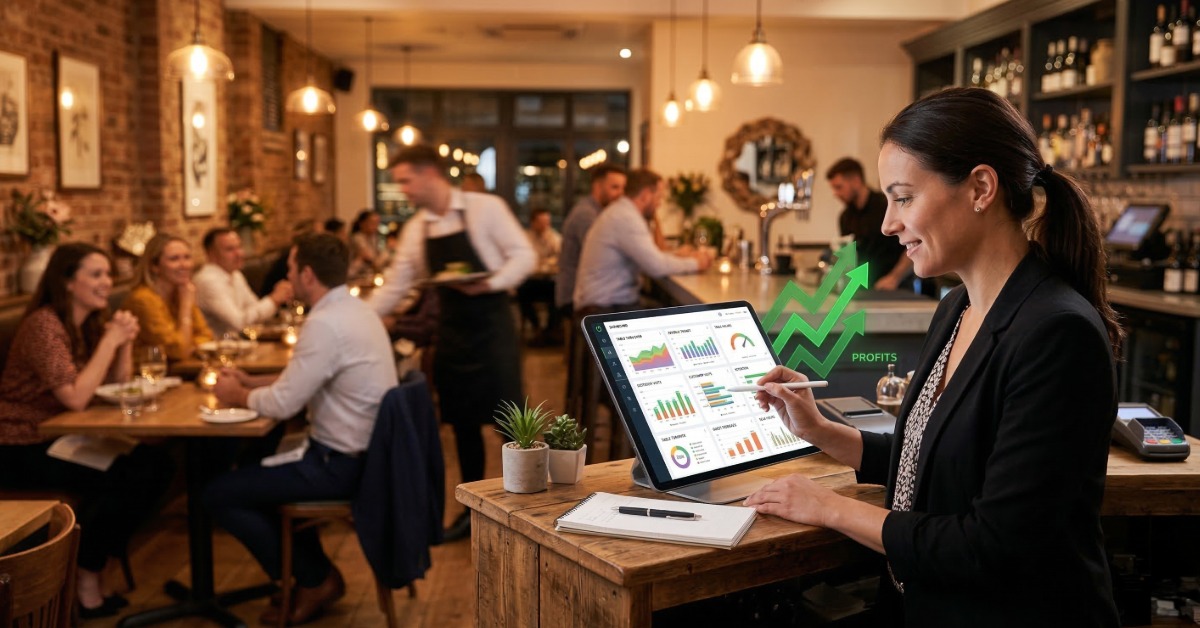
When your customer management system is integrated with your reservation tool, the front-of-house manager does not need to dig through notes or rely on memory. They open their tablet and see: gluten sensitivity, prefers the corner booth, always orders the Pinot Noir, sent a thank-you note after their anniversary dinner last spring. That information is available before the guest walks in. The hostess can acknowledge them by name. The server can make a recommendation that feels like genuine intuition rather than a scripted upsell. The guest feels known. And feeling known is what drives loyalty more reliably than any discount program ever will.
This is where the operational transformation becomes real. Automation does not just improve marketing outcomes. It reduces cognitive load for every member of your team. Servers stop asking redundant questions. The kitchen gets cleaner prep notes because dietary preferences are flagged before the order is placed. Routine lookup tasks disappear, and the time that was spent on those tasks gets redirected toward the human elements of hospitality that technology is designed to support, not replace. For operators who want to understand the full scope of what modern systems make possible, the guide on streamlining restaurant operations with cafe POS software covers the integration depth available to operators today.
Turning Guest Insights Into Higher Average Check Size
Every interaction your guest has with your restaurant is a data point. Most operators capture the transaction. The ones who grow capture the context around it. If your POS only tells you what they bought, you are missing the why and the who, which are the two data points that actually drive upsell revenue.
Here is a concrete example. If your data shows that 78% of your premium steak orders are accompanied by a specific truffle butter add-on, you stop treating that butter as an afterthought. You make it a default suggestion in your server prompts. You feature it in your pre-visit email to guests who have ordered steak before. You build it into your automated post-visit message as a reason to return. That single insight, surfaced from your CRM data, can add $8 to $12 to the average check for a meaningful segment of your guests.
For operators just starting out, this level of analysis begins with simply capturing preference tags during the reservation or ordering process. For established chains, this is where AI-driven recommendation engines start to pay for themselves. The tools exist at every price point. What separates operators who use them effectively from those who do not is the discipline to review the data weekly and act on what it tells them. Operators who want a broader view of how data-driven operations work across different business types will find useful context in this guide on how to manage a large retail store, which covers inventory, staff, and customer data systems in a way that translates directly to food service operations.
Finalizing Your Customer Data Blueprint
The foundation of steady growth in the restaurant business is not finding the next viral menu item or nailing a social media moment. It is reliably bringing back the guest you served last Tuesday. A restaurant customer management system is the infrastructure that makes that possible. It captures the details from every transaction and converts them into the kind of personalized, relationship-driven experience that keeps guests coming back and spending more when they do.
For operators just starting to build this infrastructure, the priority is clear: get your POS integration right first. Everything else, the automated flows, the segmentation, the upsell prompts, depends on clean, connected data at the source. For operators who are already running a connected stack and want to move to the next level, the focus shifts to building out behavioral segmentation flows and testing personalized offers against your generic promotions. The performance gap between those two approaches is not marginal. It is the difference between a business that grows and one that plateaus.
The operators who win in the next five years of the restaurant industry will be the ones who treated their guest data as a strategic asset starting today. The tools are available. The playbook is proven. The only question is whether you will build this infrastructure before your competitors do.
Frequently Asked Questions
What is a restaurant customer management system and how is it different from a regular CRM?
A restaurant customer management system, often called a restaurant CRM, is a platform specifically designed to capture, organize, and act on guest data in a food service context. Unlike generic CRM tools built for sales teams, a restaurant CRM integrates directly with your POS system, reservation platform, and loyalty program to create a unified guest profile that includes visit frequency, menu preferences, dietary restrictions, and spending patterns. The key difference is context: a restaurant CRM is built to surface the right guest information at the right moment in the service flow, whether that is at the host stand, in a pre-visit email, or in an automated win-back campaign. The practical result is that your team can deliver genuinely personalized service without relying on memory or manual note-keeping.
How do I choose the right restaurant CRM for my size of operation?
The most important factor is POS compatibility. Before evaluating any CRM tool, confirm that it integrates natively with your existing point of sale system. A single-location operator doing under $1M in annual revenue should look for simple, affordable tools that offer basic guest profile tracking, automated birthday and lapse emails, and a clean dashboard without unnecessary complexity. Toast, Square, and Lightspeed all have CRM-adjacent features built in or available through their app ecosystems. Multi-location operators doing $2M and above should prioritize platforms with two-way API access, behavioral segmentation capabilities, and location-specific campaign triggers. The wrong choice at this stage is a tool that requires manual data exports, because that manual step will degrade your data quality within weeks.
How long does it take to see ROI from a restaurant customer management system?
Most operators who implement a connected CRM with at least one automated behavioral flow, such as a 45-day lapse re-engagement or a post-visit follow-up, see measurable results within 30 to 60 days. The speed of ROI depends on three factors: how clean your existing guest data is, how quickly your POS integration is configured, and whether you activate automation immediately or wait to build the “perfect” campaign. The operators who see the fastest returns are the ones who launch a simple win-back flow in week one and optimize from there, rather than spending months designing a complex system before sending a single message. Illustrative benchmark: a 45-day lapse email with a personalized offer typically recovers 10 to 20% of targeted guests within 30 days of deployment.
What guest data should I be collecting from day one?
Start with four categories: contact information (email and phone), visit frequency (how often and when they come in), order history (what they buy, what they skip, what add-ons they choose), and preference tags (dietary restrictions, seating preferences, special occasions). These four data points give you enough context to personalize communication, trigger behavioral automation, and make meaningful upsell recommendations. You do not need to capture everything at once. A simple opt-in at the point of reservation or payment, combined with server-entered notes in your POS, is enough to start building profiles that are genuinely useful within 60 to 90 days. Avoid the temptation to build a complex data capture form before you have the integration infrastructure to use the data.
Can a restaurant CRM actually improve my average check size, or is it mainly a retention tool?
A well-configured restaurant CRM does both, and the two outcomes are connected. Retention improves because guests feel known and valued, which makes them more likely to return. Average check size improves because you are using guest data to make smarter, more relevant upsell recommendations rather than generic prompts. If your data shows that a specific guest always orders a particular appetizer but rarely orders dessert, your server can focus their energy on a dessert recommendation rather than an appetizer upsell the guest does not need. At the campaign level, pre-visit emails that reference a guest’s previous order history and suggest a complementary new menu item consistently outperform generic promotional emails on both open rate and redemption. Operators who use their CRM data to inform both their service prompts and their marketing campaigns typically see check size improvements of 12 to 20% among their most engaged guest segments.
