Author’s Bio:
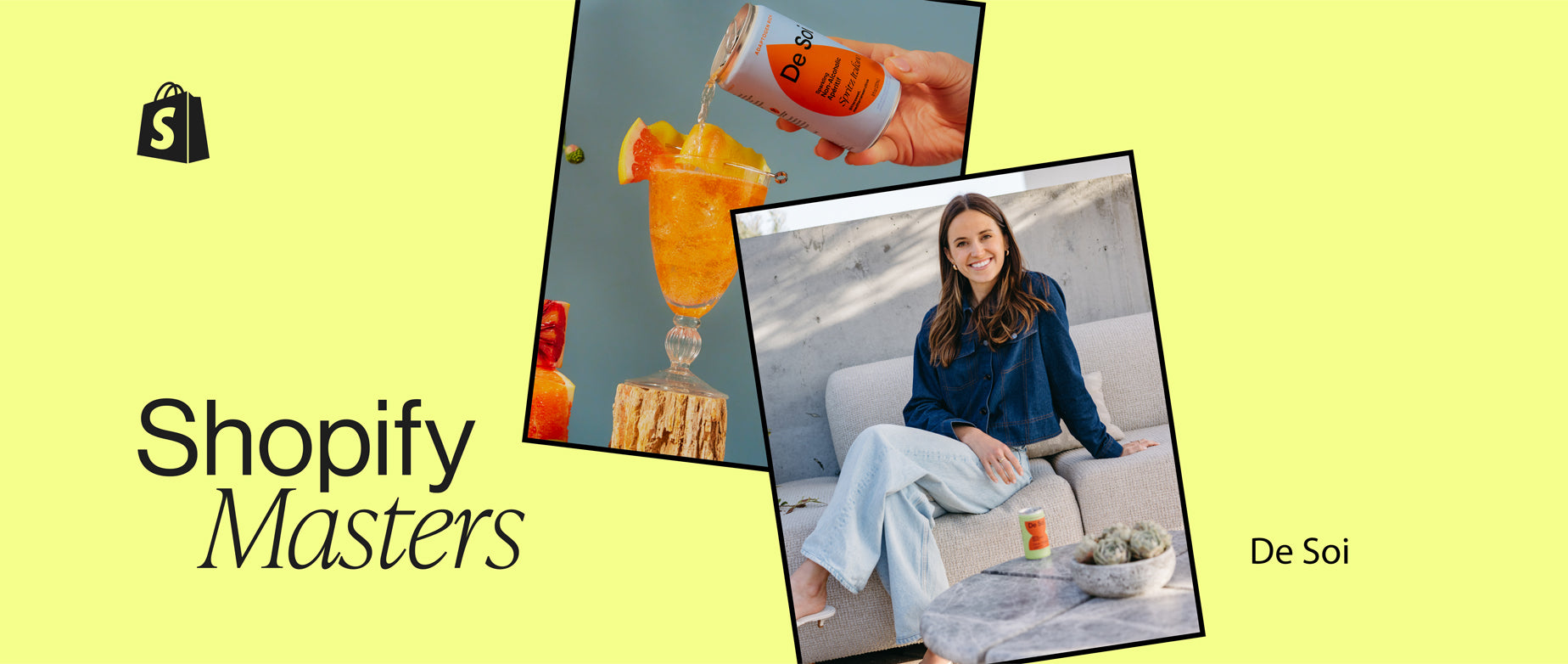
Scout Brisson is the CEO of De Soi, a nonalcoholic aperitif brand known for its distinctive botanical flavor profiles. Before De Soi, she launched Deux Foods, bringing a frugal, ROI-focused approach to building consumer brands. Under her leadership, De Soi has grown its subscriber rate on first purchase from 15% to more than 40% by prioritizing experiential marketing and strategic sampling programs.
When I watched Morgan McLachlan, De Soi’s cofounder and master distiller, insist on adding chamomile tea to our rosé formulation during a production run, I didn’t immediately understand why it mattered. Chamomile isn’t a dominant flavor. But when we tasted the versions side by side, the difference was undeniable.


The chamomile completely changed the mid-palate experience of the drink, bringing a fullness and complexity it had lacked before. It wasn’t something you could communicate through copy or tasting notes alone. You had to experience it.

That moment crystallized something fundamental about De Soi: small formulation choices can materially change how a product tastes and feels. And when that’s true, description breaks down. The clearest way for someone to understand what makes the product different is to taste it.
That reality has shaped how we think about sampling from the very beginning.
Last year, we gave away samples to more than 54,000 people. Sampling is now one of our largest marketing spend buckets, intentionally. Not because it’s flashy or easy, but because for a product like ours, it’s foundational.
Sampling has to match how customers actually buy
Sampling only works if there’s somewhere for that customer to go next.
For us, there’s no point in putting product in people’s hands if they can’t easily buy it afterward. That’s why we’re very intentional about where we sample. We’ve passed on incredible opportunities in markets like NYC because we didn’t yet have the right distribution in place. Awareness without access doesn’t build a business.
Of course, customers can always buy online, and that’s a critical part of our strategy. But food and beverage is still a high-friction online purchase until someone is fully sold on the product. That’s where sampling becomes one of our biggest growth levers. It removes the risk, creates belief, and turns curiosity into confidence.

Sampling has played a huge role in driving our direct-to-consumer (DTC) growth, especially subscription. Today, more than 40% of first-time customers subscribe on their very first purchase. That means nearly half of the people who find us are committing to De Soi before they’ve ever bought from us online. While we can’t perfectly attribute every conversion, we consistently hear the same story: people tried De Soi at a friend’s dinner party, at a Pilates studio, or at a small local event. Then they went home, found us online, and subscribed.
Our job is to make that next step incredibly easy and compelling. We’ve optimized pack sizes, pricing, and promotional strategy to fit how people actually consume De Soi, and we’ve built subscription around that behavior. The result is a stronger acquisition engine, a healthier recurring revenue base, and a much clearer return on every sampling dollar we spend.
Sampling creates the spark. A clear path to purchase is what turns it into growth.
Two distinct types of sampling & why the difference matters
One of the biggest mistakes brands make is treating all sampling the same. In practice, we think about sampling in two very different ways, depending on the goal.
Conversion-focused sampling
Grocery demos are a clear example of conversion-focused sampling. When done well, they create a closed loop: someone tries the product, grabs a four-pack, and checks out immediately. These moments are designed to drive purchase on the spot, and they’re one of the most effective sampling formats we’ve seen.
Because the goal is conversion, success is measured quantitatively; units sold during the demo, conversion rates, and performance against established benchmarks.
Trial, discovery, and awareness sampling
Other sampling moments are designed for trial and discovery rather than immediate purchase.
A recent example was our participation in Apricot Lane Farms’ Family Friday. The goal wasn’t conversion or social sharing. It was trial. Families tasted the product together, and we knew it resonated not because of Instagram posts, but because customers wrote to us afterward telling us how much they loved the flavor and referenced the event in post-purchase surveys.
Similarly, we partnered with Graza on a rooftop movie series across Los Angeles, New York, and Miami, pairing their olive oil popcorn with De Soi. Those events were designed for an urban millennial audience and optimized for awareness and memorability rather than immediate sales.
For these types of activations, we look at a mix of qualitative and quantitative signals to evaluate success:
- Qualitative indicators like social sharing (when that’s the goal), customer outreach, and post-purchase attribution
- Quantitative metrics like the number of samples delivered per event and against monthly or annual targets
Not every sampling moment is meant to convert immediately. What matters is being clear about the goal before you show up and measuring accordingly.
What actually makes sampling work
Execution is everything, especially in a category that requires education.
Early on, our team and I personally ran demos. Not because it’s scalable, but because it’s the fastest way to learn what actually works. Being on the floor helped us refine our talking points, understand real objections, and see what truly drives trial. Sometimes tiny shifts made a massive difference. Something as simple as calling De Soi a “spritz” instead of a “cocktail” at events before 2 p.m. significantly increased willingness to try.
As we scaled, the focus became training and belief. We built a tight education process and a brand ambassador program made up of true De Soi superfans. People who genuinely love the product sell it better. That energy and credibility change everything.
No matter the format, we remove friction immediately. Every tasting includes clear education, physical takeaways, QR codes, and a direct path to purchase. Sampling moments disappear fast if you don’t capture them.
Sampling isn’t cheap, so it can’t be casual. Inventory has to be in stock, teams have to be trained, and performance has to be evaluated like any other acquisition channel. When execution is strong, sampling becomes a real growth lever.
The bigger lesson
Sampling isn’t automatically smart. But when you’re building a product that truly needs to be experienced—where small details materially change the outcome—it can become one of the most effective growth systems you have.
For us, sampling isn’t a tactic. It’s how customers discover what we’ve built, decide whether it’s for them, and choose how they want to buy again.
To hear more about how we think about growth, distribution, and customer acquisition at De Soi, you can catch the full conversation on Shopify Masters.