





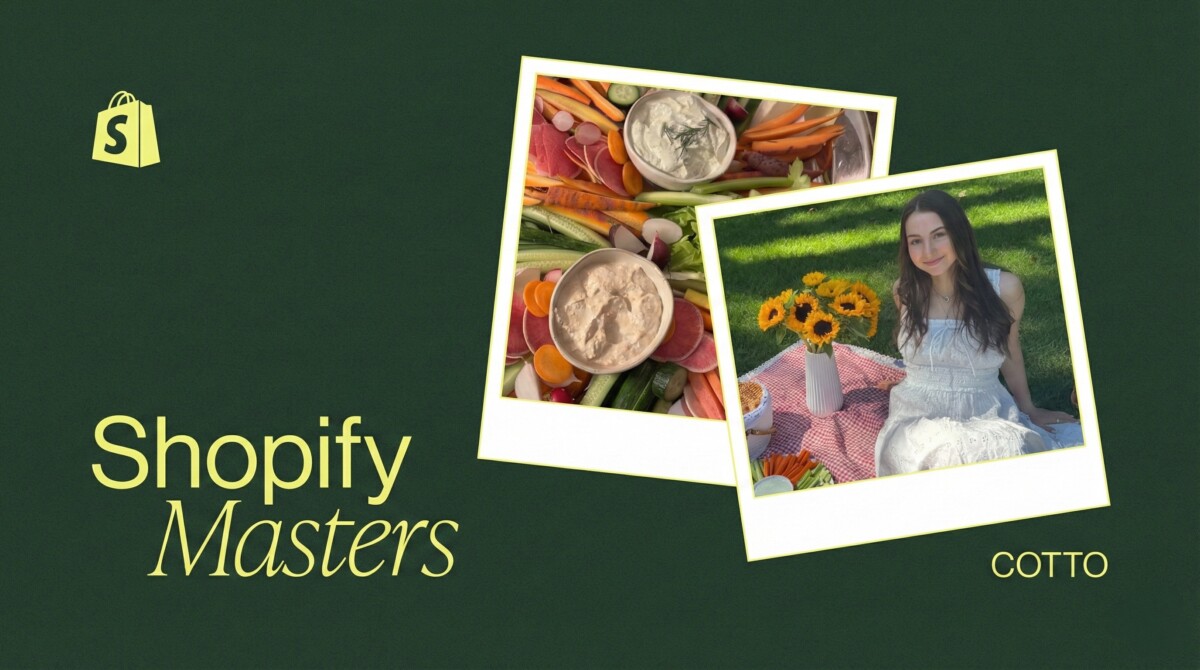
Kendall Kransdorf didn’t know what to expect when she launched her first product drop in October 2025. She’d spent months posting about cottage cheese dips she wasn’t ready to actually sell yet, wondering if anyone would show up when the time finally came. Then it happened—and the entire first batch sold out in 30 minutes. Hundreds of people were ready and waiting to buy.

Kendall couldn’t afford to make dips—a refrigerated product with a limited shelf life—and hope customers would eventually appear. She needed customers ready to buy before she had the finished product. That constraint forced her into what became her biggest advantage: building an audience before she was ready to launch. If you’re waiting until everything is perfect to start putting yourself out there, you’re making a mistake. Learn how Kendall built Cotto in public and found her superfans.
View this post on Instagram
Ahead, discover how to sell out your first batch by building an audience with no product to sell.


1. Start posting months before you’re ready to sell
Kendall started posting about Cotto on social media in late August, even though she wouldn’t be able to fulfill a single order until mid-October. Kendall began sharing behind-the-scenes content of recipe development, showed herself testing different flavor combinations, and explained why she was so obsessed with creating her dips. The goal wasn’t sales, but rather to build anticipation and, more importantly, validate whether an interested audience existed for her product.
People started asking where they could buy her product. She’d respond with “coming soon,” and her audience stuck around to learn more. By launch day, there were hundreds of eager customers ready to buy. That 30-minute sellout wasn’t luck; it was the result of months of strategic audience building.
This strategy can work even if you don’t have to worry about limited shelf life. The pre-launch period doubles as market research and marketing, where you’re learning what resonates, who your audience is, and what they’re most excited about—all before you’ve spent serious money on production.
2. Use your pre-launch period to test your core assumptions
Kendall went back and forth on the role cottage cheese should play on her packaging. At first, she featured the words in small text, because she was worried about alienating people who don’t like cottage cheese. Her original thought was, “I need to appeal to everyone,” she recalls.
However, she learned the people who were most excited about her product—the ones commenting, sharing, and asking when they could buy—were obsessed with cottage cheese. They were eating it multiple ways daily and were thrilled to find a product that featured it prominently.
That realization completely changed Cotto’s packaging approach for the better. No one can make a product that appeals to everyone, so lean into what sets you apart. Your pre-launch audience tells you exactly who your core customer is, if you’re willing to listen.
“Brands will pay lots of money to have focus groups and people come in and give them opinions,” Kendall says. “I can, with very limited time and resources, post a video on social media and share what I’m thinking for my new packaging, before I actually commit to an order. That’s an incredible advantage for a small brand.”
3. Turn early followers into evangelists, not just customers
“People are freaking out over this product and will literally come meet me in the most inconvenient places to get it. I’m talking about park pickups in freezing New York weather,” Kendall says. She also does coffee shop handoffs at odd hours and even sells to passersby whose interest she catches on the spot.

That level of enthusiasm doesn’t happen when someone just discovers your product on a shelf. It happens because they’ve been following your journey for months. Some customers film taste-test videos and post them on their own social media—and that kind of organic advocacy is worth more than any ad Kendall could buy. When you build in public and bring people along for the journey, they become part of your success story. They want you to win.
4. Know what proof you need before you start building
Kendall had a specific, strategic goal before she first started posting on social media. “I needed to prove retail viability before I could raise significant capital to grow,” she says.
When leaving her job to focus on Cotto full-time, she gave herself about a year of runway. This included more than just living expenses; she began mapping out exactly how much capital was needed to get into local New York specialty stores. “I wanted to make sure I had the financial runway to get to that point so that I had a really clear story to eventually say, ‘Hey, this product works’ versus saying, ‘Hey, I have this idea and I think it will work, but I have no real proof,’” Kendal explains.
Thanks to the social media following she’s built and her in-person sales, Kendall can now walk into retail conversations armed with compelling evidence of demand. “It’s a great story to be able to communicate to potential retailers of why they should carry Cotto,” she says.
For other founders: Think about what proof point you need to unlock your next phase of growth, then work backward. How can building an audience early help you demonstrate that proof?
5. Balance building in public with realistic expectations
Building in public means sharing your mistakes with an audience, and it’s not all glamorous. “There are some overly glamorized pieces of being a founder, and I think people will make it seem all fun and sexy to start your own thing. And it’s a lot of work at the end of the day,” Kendall explains.
The reality is chaotic days of Kendall running around New York with her cooler backpack, coordinating park pickups to get Cotto to her customers. While this system may not be scalable for the long-term, Kendall says it’s worth it, especially for a new brand with limited resources.
“As a small brand, social media opens up doors that would otherwise stay closed. It connects you to potential customers, yes, but also to other founders who can offer guidance, to retailers who discover your brand organically, and even to future investors who can watch you prove your concept in real time,” Kendall says.
The key is being genuine. When Kendall initially shared her first packaging mistakes, she framed it intentionally. “Version one … definitely [had] mistakes, but it allowed me to get the product out there quickly, and now I got all of your amazing feedback and can incorporate it into version two,” Kendall says. People appreciate that honesty because it’s real.
Looking back at that first launch day, watching the entire batch of her product disappear in 30 minutes is a huge accomplishment. It’s also a great reminder that sometimes the element you think is the biggest liability becomes the best competitive advantage.
Catch Kendall’s full interview on Shopify Masters and hear how she’s gearing up to pitch specialty grocery stores and her plans to scale operations.
