


Verified & Reviewed
Published on April 4, 2025 Written By Meredith Flora

Published on April 4, 2025 Written By Meredith Flora

Shipping is one of the most important yet complicated aspects of running an online business. Not only do you have to consider the costs and logistics of sending out orders to your customers, but you also have to make sure that those orders are accompanied by the right paperwork. Otherwise, you could end up with serious delays or even the dreaded “Package Stuck in Customs” notification for international shipments.
The best way to avoid major shipping issues is to make sure that your packages go out with all the necessary documents. So what documents do you need to include? That’s exactly what you’ll find out in this guide.
Read on to learn all about the most common shipping documents for domestic, international, and hazardous shipping.
Shipping documents, as the name suggests, are the documents necessary to transport an item from one location to another. They’re made up of applicable records, forms, and certificates that provide information about the item being shipped. This may include details such as the item description and specification, quantity, price, ship date, delivery address, and shipping method.
The exact documents required may vary depending on factors such as the shipping method, delivery destination, and type of goods. However, most packages will require waybills, commercial invoices, packing lists, and certificates of origin.
As these documents provide information about the goods being shipped, they help ensure that packages are delivered on time and to the right addresses. They help courier services determine how to route the package and deliver them in the most efficient manner.
Moreover, these documents are also necessary in international shipments to ensure that the package is in compliance with the import regulations of the countries through which it is routed. Ensuring all the necessary documents are included with the correct information will streamline the customs clearance process and allow for speedy international deliveries.
With international shipping, laws and regulations in different countries may vary. As such, the documents needed for import or export may also vary. In most cases, you’d need the following documents for international shipping.
A proforma invoice is a type of estimated invoice or a preliminary bill that is sent to international prospects. Basically, it’s like a quote that you send before the actual purchase. It enables them to arrange the necessary finances and documentation such as import licenses.
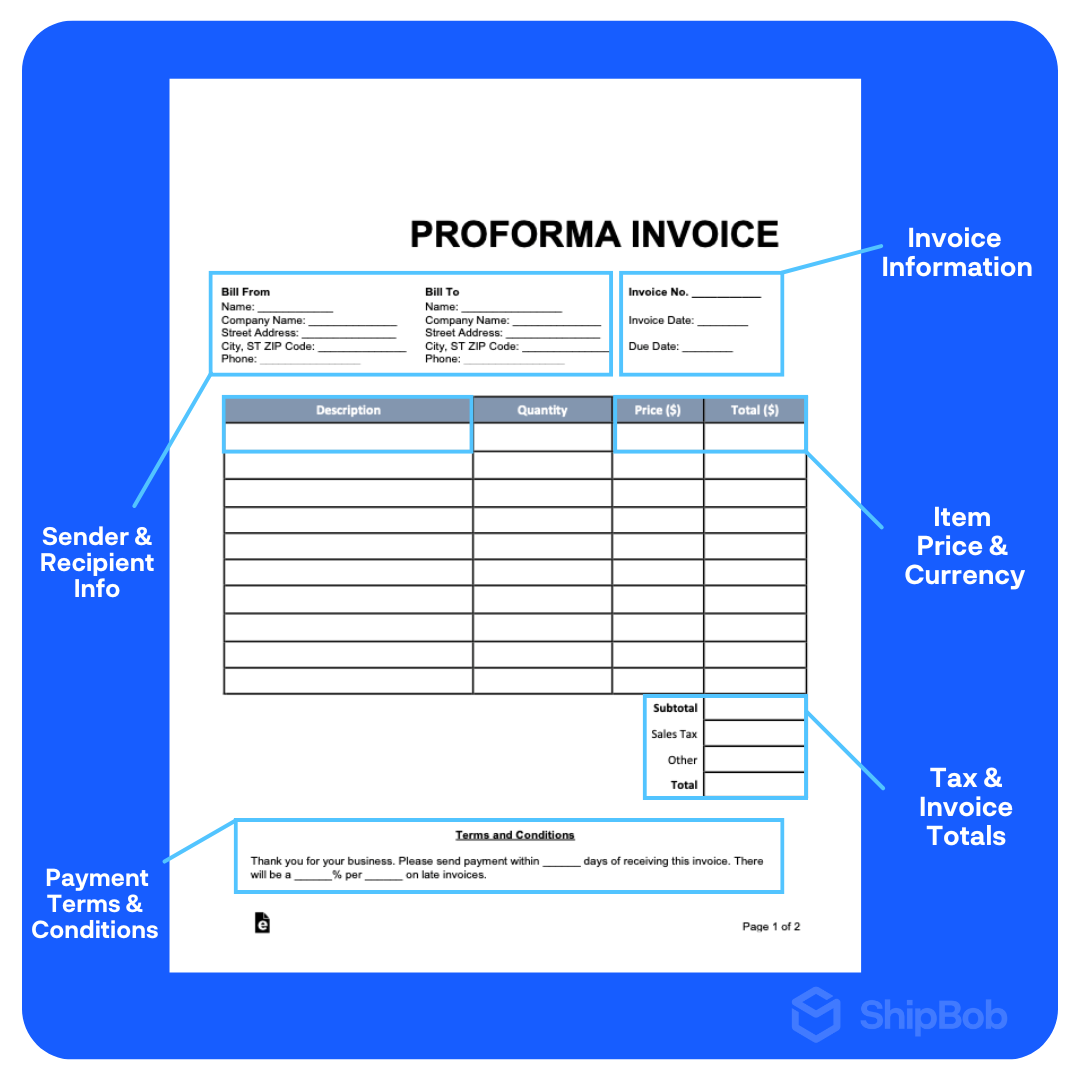
The following details must be included in a proforma invoice:
The commercial invoice, often generated using an invoice maker, is the proof of sale that must accompany all international shipments. It can be similar to your proforma invoice but may contain additional details such as the order number and PO number.
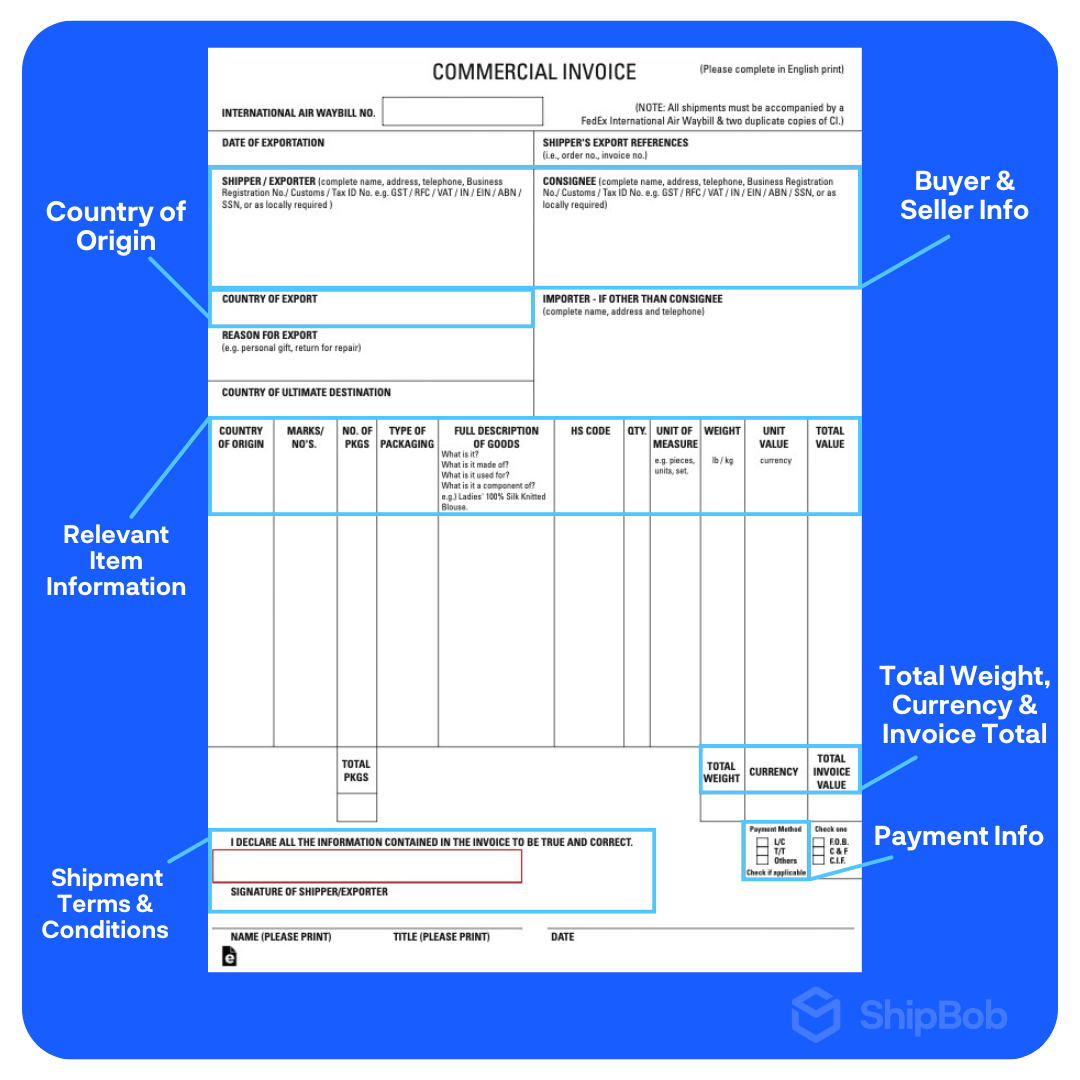
Commercial invoices are very similar to standard invoices but must include other details that will help with customs clearance. This includes details such as:
An export packing list contains an itemized list of all the goods included in a shipment along with important details about each item. This document may be used for issuing other important documents such as a bill of lading and a letter of credit. In international shipments, the packing list is essential for the shipment to clear customs. It can also be used if any dispute arises between the shipper and the carrier.
The export packing list will include key information such as:
Most international shipments require a certificate of origin to declare where the items originated from. They must be provided in accordance with the rules and regulations of the importing country and certified by the export country’s consulate office or the chamber of commerce.
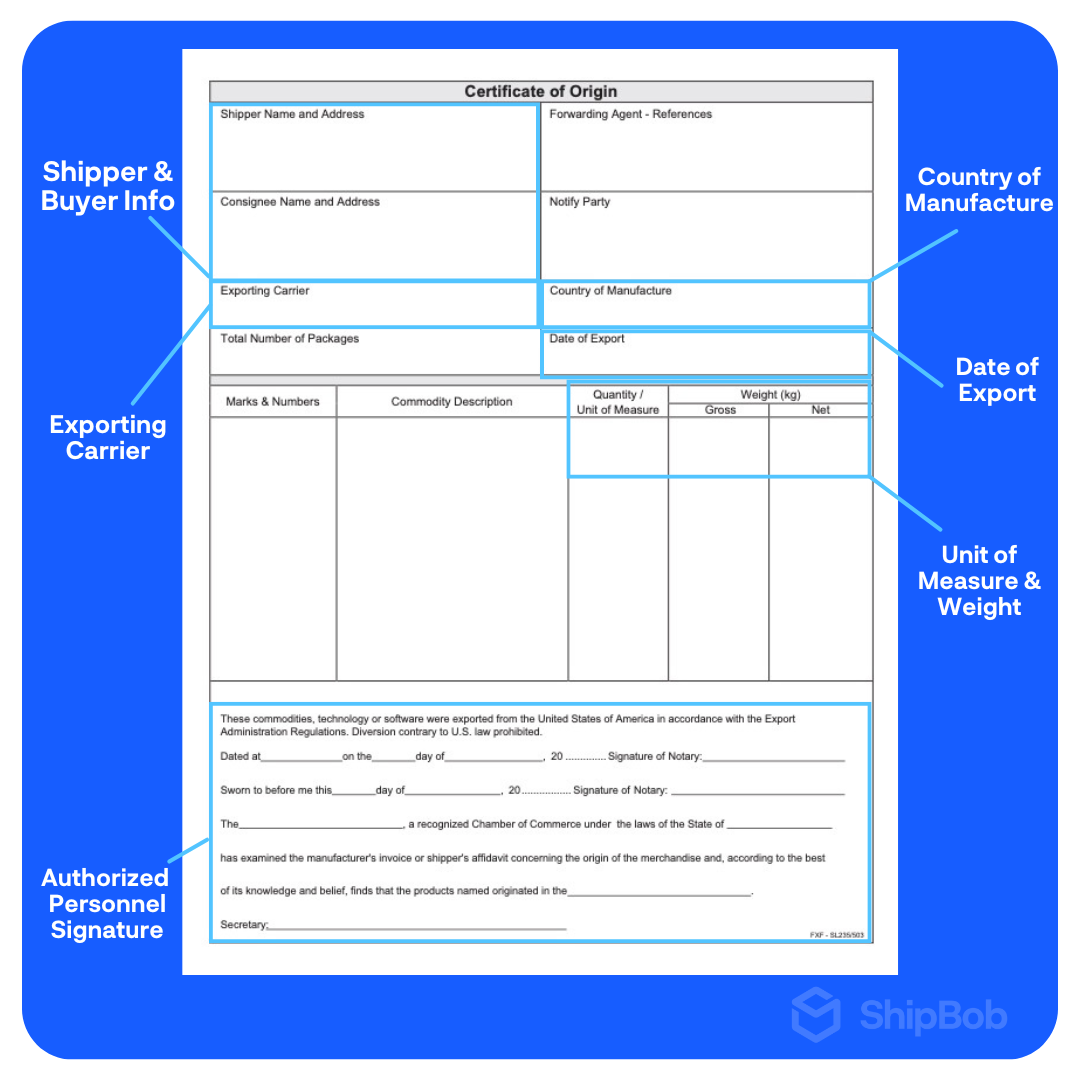
Certificates of origin must include the following details:
Also called a certificate of export, this document serves as evidence that the item being shipped is sold or distributed legally in the open market and that there are no restrictions on them in the country of origin. A certificate of free sale indicates that the item has been approved by relevant regulatory authorities and is eligible for export.
This document is typically needed for certain types of products such as cosmetics, food items, medical devices, and biologics.
This document contains specific instructions to successfully transport international shipments. Usually provided to freight forwarders, this document will include details like:
The inland bill of lading is a contract of carriage that’s consigned to the shipping carrier rather than the buyer for the transportation of goods via road, railway, or inland water. It states where the goods are being transported and serves as evidence that the goods have been picked up. The inland bill of lading may include details such as:
As the name suggests, this document is required for shipments made across international waters. It serves as a contract between the exporter or seller and the shipping carrier, ensuring that the buyer receives the product, and the seller gets paid. The ocean bill of lading may include details such as:
This is a contract of carriage for goods shipped by plane, indicating an agreement between the seller and the carrier. It’s non-negotiable and serves as a receipt of goods for the airline carrier once the goods arrive at the destination airport.
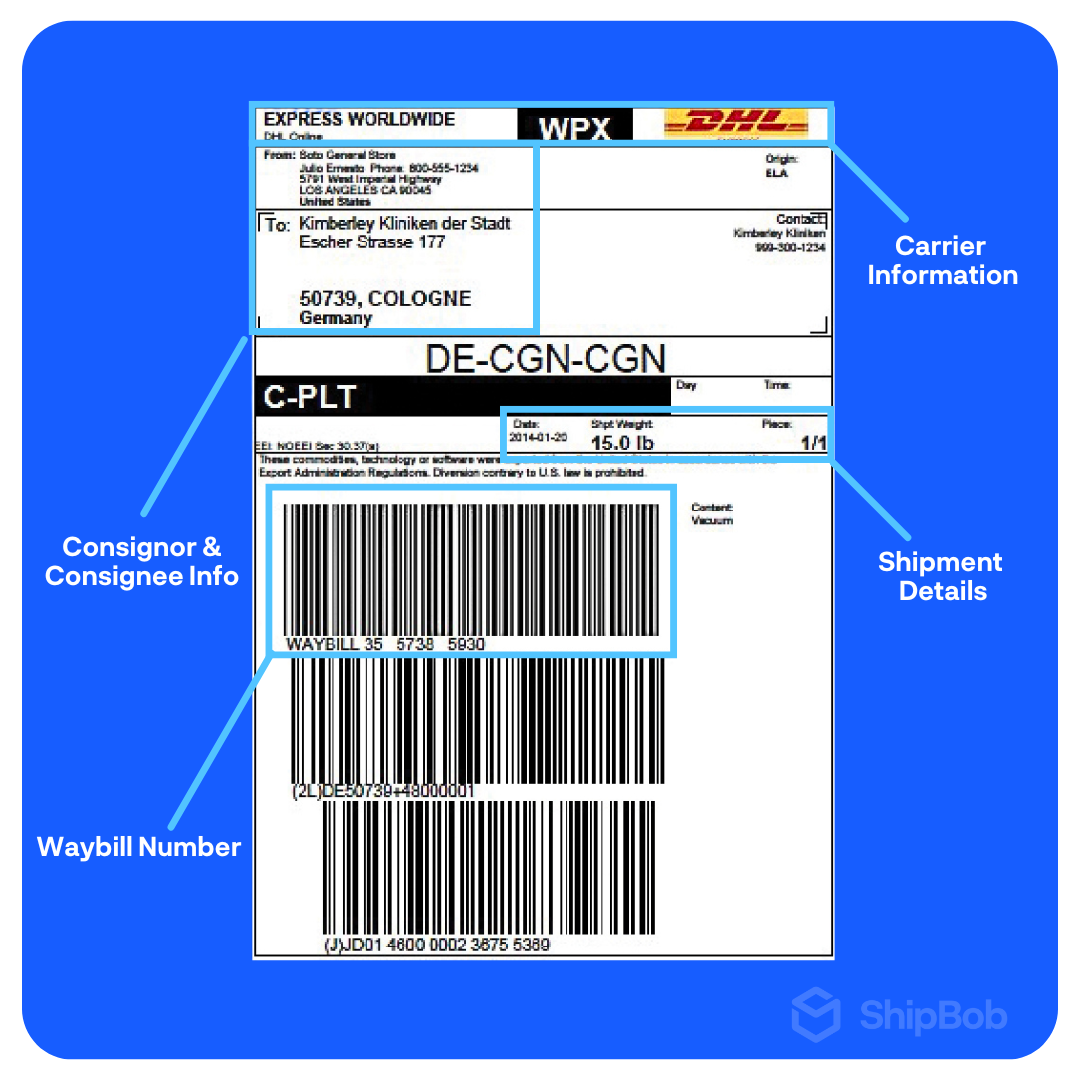
An air waybill typically includes the following information:
This is a popular means of payment for international transactions. It’s formal and binding, making it irrevocable by default. It’s a promise of payment to the seller by the bank on behalf of the importer or seller.
Domestic shipping is a little less complicated than international shipping. You’ll typically require the following three shipping documents.
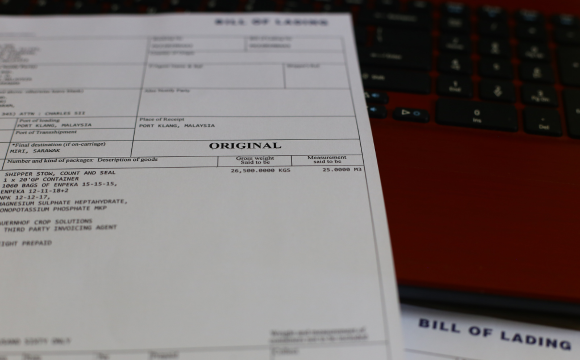
Bill of lading ,or BOL, is a transportation contract between the transportation company or carrier and the business that’s sending out the package. It helps to confirm the receipt of goods that need to be shipped and it needs to be signed by an authorized representative from the carrier’s end.
Typically, a BOL must include the following details:
A packing list or a packing slip contains an itemized list of all the goods included in a shipment. This helps to ensure that everything’s included in the shipment, confirm that all the items were received, and identify any damaged items.
It includes details such as:
A commercial invoice serves as a proof of purchase and includes all the details of the sales transaction between the seller and the customer. It will include details such as:
Shipping heavy items or hazardous materials is a whole other game. As such, you’d need to include additional shipping documents in addition to the above.
This is a declaration indicating that the seller has packed, labeled, and declared the consignment in accordance with the applicable regulations. It will include details like:
This document specifies what action must be taken in case of an emergency pertaining to the hazardous materials being shipped. It should include the following details:

When you choose ShipBob’s fulfillment service, the team handles the entire fulfillment process for you. You can send your inventory to ShipBob, where it’ll be stored until an order comes in. The fulfillment team will pick and pack the orders and get them ready for shipment, which means ensuring that all the necessary shipping documents are included.
For international orders, you can take advantage of ShipBob’s global fulfillment network and store inventory countries close to your end customer. This minimizes the need for additional documentation when catering to orders made by international customers.
ShipBob can even help you manage shipping dangerous goods domestically and internationally. You can use the platform to mark the item as “Dangerous Goods” so ShipBob can take appropriate measures when managing the order.
“Shipping cross-border is never easy, especially when you’re shipping a product that qualifies as a dangerous good since our products contain alcohol.
By storing inventory in ShipBob’s facilities within the countries or near the geographies we’re shipping to, we can bypass a lot of the complexities of international shipping. It makes our lives significantly easier.”
Sergio Tache, CEO of Dossier
If you’re ready to get started with ShipBob, request a quote to connect with our team.
Here are answers to the most common questions about shipping documents.

Every shipment requires a commercial invoice, a packing list, and a bill of lading (BOL).
International shipments typically require a commercial invoice, a letter of free sale, a bill of lading, a certificate of origin, and an export packing list.
A bill of lading (BOL) and a waybill contain almost all the same information about a shipment. The biggest difference is that a bill of lading is contractually binding while a waybill is not.





